
Xiaomi 15 Ultra vs. Google Pixel 10 Pro Fold: A Flagship Showdown
| Phones Images | |||||
|---|---|---|---|---|---|
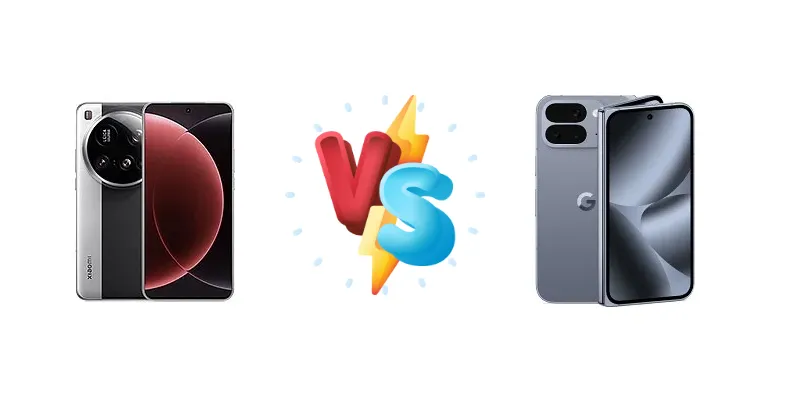
|
🏆 Quick Verdict
For users prioritizing peak performance and rapid charging, the Xiaomi 15 Ultra is the clear winner. Its Snapdragon 8 Elite chipset and 90W wired/80W wireless charging significantly outperform the Pixel 10 Pro Fold. However, the Pixel’s foldable screen and Google’s AI capabilities offer a unique experience for those willing to trade some power.
| PHONES | ||
|---|---|---|
| Phone Names | Xiaomi 15 Ultra | Google Pixel 10 Pro Fold |
| Network | ||
|---|---|---|
| 2G bands | GSM 850 / 900 / 1800 / 1900 | GSM 850 / 900 / 1800 / 1900 |
| 3G bands | HSDPA 800 / 850 / 900 / 1700(AWS) / 1900 / 2100 | HSDPA 800 / 850 / 900 / 1700(AWS) / 1900 / 2100 |
| 4G bands | 1, 2, 3, 4, 5, 7, 8, 12, 13, 17, 18, 19, 20, 25, 26, 28, 32, 38, 39, 40, 41, 42, 48, 66, 71 - International | 1, 2, 3, 4, 5, 7, 8, 12, 13, 14, 17, 18, 19, 20, 21, 25, 26, 29, 30, 32, 38, 39, 40, 42, 48, 66, 71, 75 - GU0NP International |
| 5G bands | 1, 2, 3, 5, 7, 8, 12, 20, 25, 26, 28, 38, 40, 41, 48, 66, 71, 75, 77, 78, 79 SA/NSA - International | 1, 2, 3, 5, 7, 8, 12, 14, 20, 25, 26, 28, 29, 30, 40, 48, 66, 70, 71, 75, 77, 78, 79, 257, 258, 260, 261 SA/NSA/Sub6 - GU0NP International |
| Speed | HSPA, LTE, 5G | HSPA, LTE, 5G |
| Technology | GSM / HSPA / LTE / 5G | GSM / HSPA / LTE / 5G |
| Launch | ||
|---|---|---|
| Announced | 2025, February 27 | 2025, August 20 |
| Status | Available. Released 2025, February 27 | Available. Released 2025, October 09 |
| Body | ||
|---|---|---|
| Build | Glass front, fiber-reinforced plastic back or silicone polymer back (eco leather), aluminum frame | Glass front (Gorilla Glass Victus 2) (folded), plastic front (unfolded), glass back (Gorilla Glass Victus 2), aluminum frame |
| Dimensions | 161.3 x 75.3 x 9.4 mm (6.35 x 2.96 x 0.37 in) | Unfolded: 155.2 x 150.4 x 5.2 mmFolded: 155.2 x 76.3 x 10.8 mm |
| SIM | · Nano-SIM + Nano-SIM· Nano-SIM + Nano-SIM + eSIM + eSIM (max 2 at a time) | Nano-SIM + eSIM |
| Weight | 226 g or 229 g (7.97 oz) | 258 g (9.10 oz) |
| Display | ||
|---|---|---|
| Protection | Xiaomi Shield Glass 2.0, Mohs level 6 | Mohs level 5 |
| Resolution | 1440 x 3200 pixels, 20:9 ratio (~522 ppi density) | 2076 x 2152 pixels, 1:1 ratio (~374 ppi density) |
| Size | 6.73 inches, 108.9 cm2 (~89.7% screen-to-body ratio) | 8.0 inches, 206.3 cm2 (~88.4% screen-to-body ratio) |
| Type | LTPO AMOLED, 68B colors, 120Hz, 1920Hz PWM, Dolby Vision, HDR10+, HDR Vivid, 3200 nits (peak) | Foldable LTPO OLED, 120Hz, HDR10+, 1800 nits (HBM), 3000 nits (peak) |
| Platform | ||
|---|---|---|
| CPU | Octa-core (2x4.32 GHz Oryon V2 Phoenix L + 6x3.53 GHz Oryon V2 Phoenix M) | Octa-core (1x3.78 GHz Cortex-X4 & 5x3.05 GHz Cortex-A725 & 2x2.25 GHz Cortex-A520) |
| Chipset | Qualcomm SM8750-AB Snapdragon 8 Elite (3 nm) | Google Tensor G5 (3 nm) |
| GPU | Adreno 830 | PowerVR DXT-48-1536 |
| OS | Android 15, up to 4 major Android upgrades, HyperOS 2 | Android 16, up to 7 major Android upgrades |
| Memory | ||
|---|---|---|
| Card slot | No | No |
| Internal | 256GB 12GB RAM, 512GB 16GB RAM, 1TB 16GB RAM | 256GB 16GB RAM, 512GB 16GB RAM, 1TB 16GB RAM |
| Main Camera | ||
|---|---|---|
| Features | Laser AF, color spectrum sensor, Leica lenses, Dual-LED flash, HDR, panorama, 67mm filter ring holder (optional) | Multi-zone Laser AF, LED flash, Pixel Shift, Ultra-HDR, panorama, Best Take, Zoom Enhance |
| Quad | 50 MP, f/1.6, 23mm (wide), 1.0"-type, 1.6µm, dual pixel PDAF, OIS 50 MP, f/1.8, 70mm (telephoto), 1/2.51", 0.7µm, dual pixel PDAF (10cm - ∞), OIS, 3x optical zoom 200 MP, f/2.6, 100mm (periscope telephoto), 1/1.4", 0.56µm, multi-directional PDAF, OIS, 4.3x optical zoom 50 MP, f/2.2, 14mm, 115˚ (ultrawide), 1/2.76", 0.64µm, dual pixel PDAF TOF 3D, (depth) | - |
| Triple | - | 48 MP, f/1.7, 25mm (wide), 1/2.0", 0.8µm, dual pixel PDAF, OIS 10.8 MP, f/3.1, 112mm (telephoto), 1/3.2", dual pixel PDAF, OIS, 5x optical zoom 10.5 MP, f/2.2, 127˚ (ultrawide), 1/3.4", PDAF |
| Video | 8K@30fps, 4K@30/60/120fps, 1080p@30/60/120/240/480/960/1920fps, gyro-EIS, Dolby Vision HDR 10-bit rec. (4K@60fps, 1080p) | 4K@24/30/60fps, 1080p@24/30/60/120/240fps, 10-bit HDR, gyro-EIS, OIS |
| Selfie camera | ||
|---|---|---|
| Features | HDR, panorama | HDR, panorama |
| Single | 32 MP, f/2.0, 21mm (wide), 1/3.14", 0.7µm | 10 MP, f/2.2, 23mm (wide), 1/3.94", PDAF Cover camera: 10 MP, f/2.2, 23mm (wide), 1/3.94", PDAF |
| Video | 4K@30/60fps, 1080p@30/60fps, gyro-EIS | 4K@30/60fps, 1080p@30/60fps |
| Sound | ||
|---|---|---|
| 35mm jack | No | No |
| Loudspeaker | Yes, with stereo speakers | Yes, with stereo speakers |
| Comms | ||
|---|---|---|
| Bluetooth | 6.0, A2DP, LE, aptX HD, aptX Adaptive, LHDC 5 | 6.0, A2DP, LE, aptX HD |
| Infrared port | Yes | - |
| NFC | Yes | Yes |
| Positioning | GPS (L1+L5), BDS (B1I+B1c+B2a), GALILEO (E1+E5a), QZSS (L1+L5), NavIC (L5), GLONASS | GPS (L1+L5), GLONASS, GALILEO, BDS, QZSS, NavIC |
| Radio | No | No |
| USB | USB Type-C 3.2 Gen 2, DisplayPort, OTG | USB Type-C 3.2 |
| WLAN | Wi-Fi 802.11 a/b/g/n/ac/6e/7, dual-band or tri-band, Wi-Fi Direct | Wi-Fi 802.11 a/b/g/n/ac/6e/7, tri-band |
| Features | ||
|---|---|---|
| Sensors | Fingerprint (under display, ultrasonic), accelerometer, proximity, gyro, compass, barometer | Fingerprint (side-mounted), accelerometer, gyro, proximity, compass, barometer |
| Battery | ||
|---|---|---|
| Charging | 90W wired, PD3.0, QC3+ 80W wireless 10W reverse wireless | 30W wired, PPS, 50% in 30 min 15W wireless (magnetic), Qi2 Bypass charging |
| Type | Market-dependent versions:· Si/C Li-Ion 5410 mAh - Global· Si/C Li-Ion 6000 mAh - China | 5015 mAh |
| Misc | ||
|---|---|---|
| Colors | Black, White, Silver Chrome, Green | Moonstone, Jade |
| Models | 25010PN30G | GU0NP, GM66V |
| Price | $ 1,328.84 / £ 889.00 / € 1,099.00 | $ 1,499.00 / C$ 2,119.99 / £ 1,749.00 / € 1,757.00 |
| SAR | - | 0.99 W/kg (head) 0.99 W/kg (body) |
| SAR EU | 1.00 W/kg (head) 1.00 W/kg (body) | 0.99 W/kg (head) 1.39 W/kg (body) |
| EU LABEL | ||
|---|---|---|
| Battery | 58:58h endurance, 1000 cycles | 47:55h endurance, 1000 cycles |
| Energy | Class A | Class B |
| Free fall | Class C (90 falls) | Class A (210 falls) |
| Repairability | Class C | Class C |
Xiaomi 15 Ultra
- Unmatched processing power with Snapdragon 8 Elite
- Blazing-fast 90W wired and 80W wireless charging
- Superior battery endurance (58:58h)
- May lack the unique software features of the Pixel
- Foldable screen absent
Google Pixel 10 Pro Fold
- Innovative foldable display for enhanced multitasking
- Google’s AI-powered features and software experience
- Convenient magnetic wireless charging and Qi2 support
- Slower charging speeds (30W wired)
- Inferior battery endurance (47:55h)
- Potentially lower peak performance compared to Snapdragon 8 Elite
Display Comparison
While specific display specs are missing for the Pixel 10 Pro Fold, its foldable nature is the defining characteristic. The Xiaomi 15 Ultra, presumably featuring a high-refresh-rate AMOLED panel, will likely excel in color accuracy and peak brightness. The Pixel’s foldable screen, however, offers a significantly larger viewing area when unfolded, enhancing productivity and media consumption. The Pixel’s magnetic wireless charging (15W) and Qi2 support offer convenience, but the Xiaomi’s 80W wireless charging is a game-changer for topping up quickly.
Camera Comparison
Without detailed camera specs for either device, analysis relies on brand tendencies. Google Pixels are renowned for their computational photography prowess, leveraging AI to produce stunning images, particularly in challenging lighting conditions. The Xiaomi 15 Ultra, given its flagship status, will likely feature a large main sensor and advanced image processing. However, the Pixel’s AI algorithms may provide a more consistent and user-friendly experience, even with potentially smaller sensor sizes. The absence of details on OIS and lens apertures makes a definitive camera comparison impossible at this stage.
Performance
The Xiaomi 15 Ultra’s Qualcomm SM8750-AB Snapdragon 8 Elite (3nm) chipset, with its Oryon V2 Phoenix cores (2x4.32 GHz + 6x3.53 GHz), promises a substantial performance advantage over the Google Tensor G5 (3nm). The Oryon architecture is known for its efficiency and high single-core performance, crucial for responsive UI and demanding applications. The Tensor G5, while also built on a 3nm process, utilizes a different core configuration (1x3.78 GHz Cortex-X4, 5x3.05 GHz Cortex-A725, 2x2.25 GHz Cortex-A520) geared towards AI tasks. This means the Xiaomi will likely dominate CPU-intensive benchmarks and gaming, while the Pixel will shine in AI-powered features.
Battery Life
The Xiaomi 15 Ultra boasts a superior battery endurance rating of 58:58h compared to the Pixel 10 Pro Fold’s 47:55h. This, combined with its significantly faster 90W wired charging (and 80W wireless), means less time tethered to a charger. The Pixel 10 Pro Fold’s 30W wired charging, while offering a 50% charge in 30 minutes, pales in comparison. The Xiaomi’s 10W reverse wireless charging adds further versatility, allowing it to charge accessories or other devices.
Buying Guide
Buy the Xiaomi 15 Ultra if you need uncompromising processing power for demanding tasks like gaming or video editing, and if minimizing downtime with incredibly fast charging is crucial. Buy the Google Pixel 10 Pro Fold if you prioritize a larger, more versatile display for multitasking and content consumption, and if you value Google’s AI-powered features like enhanced photo editing and real-time translation.