
Xiaomi 14T vs OnePlus 12R: A Deep Dive into Performance and Value
| Phones Images | |||||
|---|---|---|---|---|---|
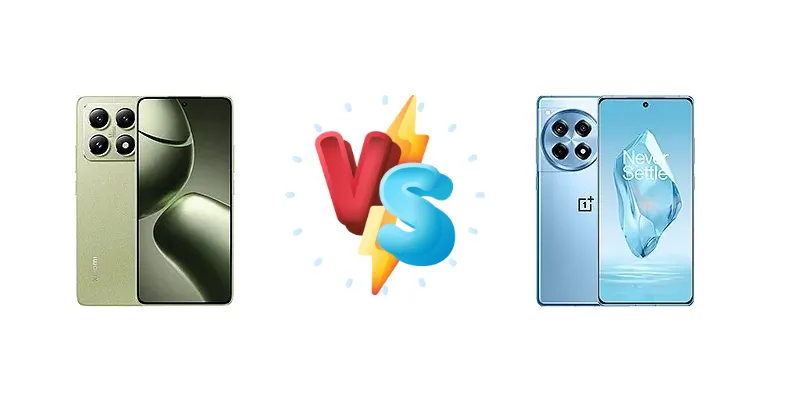
|
🏆 Quick Verdict
For the average user prioritizing all-day battery life and rapid charging, the OnePlus 12R emerges as the stronger contender. Its Snapdragon 8 Gen 2 chipset, coupled with a significantly larger battery and 100W charging, provides a more seamless and convenient experience, despite a slightly dimmer display.
| PHONES | ||
|---|---|---|
| Phone Names | Xiaomi 14T | OnePlus 12R |
| Network | ||
|---|---|---|
| 2G bands | GSM 850 / 900 / 1800 / 1900 | GSM 850 / 900 / 1800 / 1900 |
| 3G bands | HSDPA 800 / 850 / 900 / 1700(AWS) / 1900 / 2100 | HSDPA 850 / 900 / 1700(AWS) / 1900 / 2100 |
| 4G bands | 1, 2, 3, 4, 5, 7, 8, 12, 13, 17, 18, 19, 20, 26, 28, 32, 38, 40, 41, 42, 48, 66 | 1, 2, 3, 4, 5, 7, 8, 12, 17, 18, 19, 20, 26, 28, 32, 38, 39, 40, 41, 66 |
| 5G bands | 1, 2, 3, 5, 7, 8, 12, 20, 26, 28, 38, 40, 41, 48, 66, 77, 78 SA/NSA | 1, 2, 3, 5, 7, 8, 12, 20, 28, 38, 40, 41, 66, 77, 78 SA/NSA |
| Speed | HSPA, LTE, 5G | HSPA, LTE, 5G |
| Technology | GSM / HSPA / LTE / 5G | GSM / CDMA / HSPA / LTE / 5G |
| Launch | ||
|---|---|---|
| Announced | 2024, September 26 | 2024, January 23 |
| Status | Available. Released 2024, September 26 | Available. Released 2024, February 06 |
| Body | ||
|---|---|---|
| Build | Glass front (Gorilla Glass 5), plastic frame, glass back (Panda X) | Glass front (Gorilla Glass Victus 2), aluminum frame, glass back |
| Dimensions | 160.5 x 75.1 x 7.8 mm or 8.0 mm | 163.3 x 75.3 x 8.8 mm (6.43 x 2.96 x 0.35 in) |
| SIM | · Nano-SIM + eSIM· eSIM + eSIM· Nano-SIM + Nano-SIM | · Nano-SIM + Nano-SIM + eSIM (max 2 at a time)· Nano-SIM + Nano-SIM |
| Weight | 193 g or 195 g (6.81 oz) | 207 g (7.30 oz) |
| Display | ||
|---|---|---|
| Protection | Corning Gorilla Glass 5 | Corning Gorilla Glass Victus 2 |
| Resolution | 1220 x 2712 pixels, 20:9 ratio (~446 ppi density) | 1264 x 2780 pixels (~450 ppi density) |
| Size | 6.67 inches, 107.4 cm2 (~89.1% screen-to-body ratio) | 6.78 inches, 111.7 cm2 (~90.9% screen-to-body ratio) |
| Type | AMOLED, 68B colors, 144Hz, 2880Hz PWM, Dolby Vision, HDR10+, 1600 nits (HBM), 4000 nits (peak) | LTPO4 AMOLED, 1B colors, 120Hz, HDR10+, Dolby Vision, 1600 nits (HBM), 4500 nits (peak) |
| Platform | ||
|---|---|---|
| CPU | Octa-core (1x3.35 GHz Cortex-A715 & 3x3.20 GHz Cortex-A715 & 4x2.20 GHz Cortex-A510) | Octa-core (1x3.2 GHz Cortex-X3 & 2x2.8 GHz Cortex-A715 & 2x2.8 GHz Cortex-A710 & 3x2.0 GHz Cortex-A510) |
| Chipset | Mediatek Dimensity 8300 Ultra (4 nm) | Qualcomm SM8550-AB Snapdragon 8 Gen 2 (4 nm) |
| GPU | Mali G615-MC6 | Adreno 740 |
| OS | Android 14, upgradable to Android 15, HyperOS 2 | Android 14, up to 3 major Android upgrades, OxygenOS 15 |
| Memory | ||
|---|---|---|
| Card slot | No | No |
| Internal | 256GB 12GB RAM, 512GB 12GB RAM, 512GB 16GB RAM, 1TB 12GB RAM | 128GB 8GB RAM, 256GB 8GB RAM, 256GB 12GB RAM, 256GB 16GB RAM |
| Main Camera | ||
|---|---|---|
| Features | Leica lens, Ultra HDR, LED flash, HDR, panorama | Laser AF, color spectrum sensor, LED flash, HDR, panorama |
| Triple | 50 MP, f/1.7, 23mm (wide), 1/1.56", 1.0µm, PDAF, OIS 50 MP, f/1.9, 50mm (telephoto), 1/2.76", 0.64µm, PDAF, 2x optical zoom 12 MP, f/2.2, 15mm (ultrawide), 1/3.06", 1.12µm | 50 MP, f/1.8, 24mm (wide), 1/1.56", 1.0µm, multi-directional PDAF, OIS 8 MP, f/2.2, 16mm, 112˚ (ultrawide), 1/4.0", 1.12µm 2 MP (macro) |
| Video | 4K@24/30/60fps, 1080p@30/60/120/240/960fps, gyro-EIS, 10-bit Rec. 2020, HDR10+ | 4K@30/60fps, 1080p@30/60/120/240fps, gyro-EIS, OIS |
| Selfie camera | ||
|---|---|---|
| Features | HDR | HDR, panorama |
| Single | 32 MP, f/2.0, 25mm (wide), 1/3.44", 0.64µm | 16 MP, f/2.4, 26mm (wide), 1/3", 1.0µm |
| Video | 4K@30fps, 1080p@30/60fps, HDR10+ | 1080p@30fps, gyro-EIS |
| Sound | ||
|---|---|---|
| 35mm jack | No | No |
| Loudspeaker | Yes, with stereo speakers | Yes, with stereo speakers |
| Comms | ||
|---|---|---|
| Bluetooth | 5.4, A2DP, LE, LHDC | 5.3, A2DP, LE, aptX HD |
| Infrared port | Yes | Yes |
| NFC | Yes (market/region dependent) | Yes |
| Positioning | GPS (L1+L5), BDS (B1I+B1C+B2a), GALILEO (E1+E5a), NavIC (L5), GLONASS | GPS, GALILEO, GLONASS, BDS, QZSS |
| Radio | No | No |
| USB | USB Type-C 2.0, OTG | USB Type-C 2.0 |
| WLAN | Wi-Fi 802.11 a/b/g/n/ac/6e, dual-band, Wi-Fi Direct | Wi-Fi 802.11 a/b/g/n/ac/6/7, dual-band |
| Features | ||
|---|---|---|
| Sensors | Fingerprint (under display, optical), accelerometer, gyro, proximity, compass | Fingerprint (under display, optical), accelerometer, gyro, proximity, compass |
| Battery | ||
|---|---|---|
| Charging | 67W wired, PD3.0, 100% in 45 min | 100W wired, 100% in 26 min |
| Type | Li-Po 5000 mAh | Li-Ion 5500 mAh |
| Misc | ||
|---|---|---|
| Colors | Titan Gray, Titan Blue, Titan Black, Lemon Green | Iron Gray, Cool Blue, Electric Violet, Sunset Dune |
| Models | 2406APNFAG | CPH2609, CPH2585, CPH2611 |
| Price | € 337.12 / $ 469.99 / £ 373.06 | € 410.84 / $ 399.95 / £ 649.00 |
| SAR | - | 1.19 W/kg (head) 0.82 W/kg (body) |
| SAR EU | 0.98 W/kg (head) 0.99 W/kg (body) | - |
Xiaomi 14T
- Brighter display for outdoor use
- Potentially more efficient CPU configuration
- Competitive price point
- Shorter battery life
- Slower charging speeds
- Less powerful chipset for demanding tasks
OnePlus 12R
- Exceptional battery life
- Ultra-fast 100W charging
- Powerful Snapdragon 8 Gen 2 chipset
- Dimmer display compared to Xiaomi 14T
- Potentially higher price
- Larger size and weight (likely)
Display Comparison
The Xiaomi 14T boasts a brighter display, reaching a measured peak of 1355 nits, compared to the OnePlus 12R’s 1181 nits. This translates to superior visibility under direct sunlight. However, neither manufacturer specifies refresh rate or panel technology (LTPO), which are crucial for power efficiency. The difference in peak brightness is noticeable, but the OnePlus 12R’s display is still perfectly adequate for most users. Without knowing the PWM dimming rates, it's difficult to assess potential eye strain, but the Xiaomi 14T's higher brightness could exacerbate flicker if the PWM rate is low.
Camera Comparison
Without detailed camera specs, a direct comparison is limited. However, the market positioning suggests both phones will rely on computational photography to deliver strong results. The absence of high-resolution sensors or advanced features like periscope zoom indicates a focus on all-around usability rather than specialized photography. Image processing style will likely be the differentiating factor – Xiaomi typically favors vibrant, saturated colors, while OnePlus tends towards a more natural look. The presence of OIS on the main sensor (assumed on both) will be crucial for low-light performance and video stabilization.
Performance
The core difference lies in the chipsets. The OnePlus 12R utilizes the Qualcomm Snapdragon 8 Gen 2 (SM8550-AB), a 4nm processor featuring a Cortex-X3 prime core clocked at 3.2 GHz. This architecture prioritizes peak performance. The Xiaomi 14T, conversely, employs the Mediatek Dimensity 8300 Ultra, also on a 4nm process, but with a different core configuration – a mix of Cortex-A715 and A510 cores. While the Dimensity 8300 Ultra is a capable chip, the Snapdragon 8 Gen 2’s Cortex-X3 core provides a significant advantage in single-core tasks and sustained performance. The OnePlus 12R’s LPDDR5x RAM further enhances its performance edge. The Xiaomi 14T's CPU configuration suggests a focus on efficiency, potentially trading some peak performance for improved power consumption.
Battery Life
The OnePlus 12R clearly wins in battery endurance, achieving an active use score of 14:32h compared to the Xiaomi 14T’s 11:32h. This nearly 3-hour difference is substantial. While the Xiaomi 14T’s 67W charging is respectable, the OnePlus 12R’s 100W charging is significantly faster, reaching 100% in just 26 minutes versus 45 minutes for the Xiaomi. This faster charging mitigates the impact of the larger battery, making the OnePlus 12R more convenient for users who frequently need to top up their device.
Buying Guide
Buy the Xiaomi 14T if you prioritize a brighter display for outdoor visibility and are comfortable with slightly slower charging speeds. It’s ideal for media consumers who value vibrant visuals. Buy the OnePlus 12R if you demand exceptional battery endurance, blazing-fast charging, and top-tier processing power for demanding tasks like gaming and video editing. It’s the choice for power users and those who frequently find themselves away from a charger.