
Xiaomi 12X vs Xiaomi 12 Lite: A Head-to-Head Showdown
| Phones Images | |||||
|---|---|---|---|---|---|
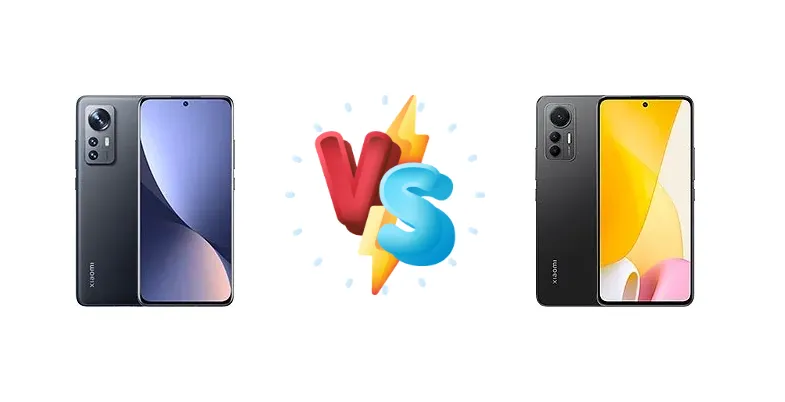
|
🏆 Quick Verdict
The Xiaomi 12X takes the crown for raw performance thanks to its Snapdragon 870 chipset. However, the 12 Lite shines with its brighter display and potentially more appealing design for some. Ultimately, the best choice depends on your priorities: power or aesthetics.
| PHONES | ||
|---|---|---|
| Phone Names | Xiaomi 12X | Xiaomi 12 Lite |
| Network | ||
|---|---|---|
| 2G bands | GSM 850 / 900 / 1800 / 1900 | GSM 850 / 900 / 1800 / 1900 |
| 3G bands | HSDPA 800 / 850 / 900 / 1700(AWS) / 1900 / 2100 | HSDPA 850 / 900 / 1700(AWS) / 1900 / 2100 |
| 4G bands | 1, 2, 3, 4, 5, 7, 8, 12, 13, 17, 18, 19, 20, 26, 28, 32, 38, 39, 40, 41, 42, 48, 66 - International | 1, 2, 3, 4, 5, 7, 8, 12, 13, 17, 18, 19, 20, 26, 28, 32, 38, 40, 41, 42, 48, 66 |
| 5G bands | 1, 3, 5, 7, 8, 20, 28, 38, 40, 41, 66, 77, 78 SA/NSA - International | 1, 3, 5, 7, 8, 20, 28, 38, 40, 41, 66, 77, 78 SA/NSA |
| Speed | HSPA, LTE, 5G | HSPA, LTE, 5G |
| Technology | GSM / CDMA / HSPA / EVDO / LTE / 5G | GSM / HSPA / LTE / 5G |
| 1, 3, 5, 8, 28, 38, 40, 41, 77, 78 SA/NSA - China | - | |
| Launch | ||
|---|---|---|
| Announced | 2021, December 28 | 2022, July 09 |
| Status | Available. Released 2021, December 31 | Available. Released 2022, July 11 |
| Body | ||
|---|---|---|
| Build | - | Glass front (Gorilla Glass 5), glass back, plastic frame |
| Dimensions | 152.7 x 69.9 x 8.2 mm (6.01 x 2.75 x 0.32 in) | 159.3 x 73.7 x 7.3 mm (6.27 x 2.90 x 0.29 in) |
| SIM | Nano-SIM + Nano-SIM | Nano-SIM + Nano-SIM |
| Weight | 176 g (6.21 oz) | 173 g (6.10 oz) |
| Display | ||
|---|---|---|
| Protection | Corning Gorilla Glass Victus | Corning Gorilla Glass 5 |
| Resolution | 1080 x 2400 pixels, 20:9 ratio (~419 ppi density) | 1080 x 2400 pixels, 20:9 ratio (~402 ppi density) |
| Size | 6.28 inches, 95.2 cm2 (~89.2% screen-to-body ratio) | 6.55 inches, 103.6 cm2 (~88.2% screen-to-body ratio) |
| Type | AMOLED, 68B colors, 120Hz, Dolby Vision, HDR10+, 1100 nits (peak) | AMOLED, 68B colors, 120Hz, Dolby Vision, HDR10+, 950 nits (peak) |
| Platform | ||
|---|---|---|
| CPU | Octa-core (1x3.2 GHz Kryo 585 & 3x2.42 GHz Kryo 585 & 4x1.80 GHz Kryo 585) | Octa-core (1x2.4 GHz Cortex-A78 & 3x2.2 GHz Cortex-A78 & 4x1.9 GHz Cortex-A55) |
| Chipset | Qualcomm SM8250-AC Snapdragon 870 5G (7 nm) | Qualcomm SM7325 Snapdragon 778G 5G (6 nm) |
| GPU | Adreno 650 | Adreno 642L |
| OS | Android 11, MIUI 13 | Android 12, upgradable to Android 14, HyperOS |
| Memory | ||
|---|---|---|
| Card slot | No | No |
| Internal | 128GB 8GB RAM, 256GB 8GB RAM, 256GB 12GB RAM | 128GB 6GB RAM, 128GB 8GB RAM, 256GB 8GB RAM |
| UFS 3.1 | UFS 2.2 | |
| Main Camera | ||
|---|---|---|
| Features | Dual-LED dual-tone flash, HDR, panorama | Dual-LED dual-tone flash, HDR, panorama |
| Single | 32 MP, f/2.5, 26mm (wide), 0.7µm | 32 MP, f/2.5, (wide), 1/2.8", 0.8µm, AF |
| Triple | 50 MP, f/1.9, 26mm (wide), 1/1.56", 1.0µm, PDAF, OIS 13 MP, f/2.4, 12mm, 123˚ (ultrawide), 1/3.06", 1.12µm 5 MP, f/2.4, 50mm (telephoto macro), AF | 108 MP, f/1.9, 26mm (wide), 1/1.52", 0.7µm, PDAF 8 MP, f/2.2, 120˚ (ultrawide), 1/4.0", 1.12µm 2 MP (macro) |
| Video | 8K@24fps, 4K@30/60fps, 1080p@30/120/240/960fps, gyro-EIS | 4K@30fps, 1080p@30/60/120fps; gyro-EIS |
| Selfie camera | ||
|---|---|---|
| Features | HDR, panorama | HDR, panorama |
| Single | 32 MP, f/2.5, 26mm (wide), 0.7µm | 32 MP, f/2.5, (wide), 1/2.8", 0.8µm, AF |
| Video | 1080p@30/60fps, 720p@120fps, HDR | 1080p@30/60fps, 720p@120fps |
| Sound | ||
|---|---|---|
| 3.5mm jack | No | No |
| 35mm jack | No | No |
| Loudspeaker | Yes, with stereo speakers | Yes, with dual speakers |
| 24-bit/192kHz audio Tuned by Harman Kardon | 24-bit/192kHz audio | |
| Comms | ||
|---|---|---|
| Bluetooth | 5.1 / 5.2, A2DP, LE | 5.2, A2DP, LE, aptX HD, aptX Adaptive |
| Infrared port | Yes | Yes |
| NFC | Yes (market/region dependent) | Yes (market/region dependent) |
| Positioning | GPS (L1+L5), GLONASS (L1), BDS (B1I+B1c+B2a), GALILEO (E1+E5a), QZSS (L1+L5), NavIC (L5) | GPS (L1), GLONASS (G1), BDS (B1I+B1c), GALILEO (E1), QZSS (L1) |
| Radio | No | No |
| USB | USB Type-C 2.0, OTG | USB Type-C 2.0, OTG |
| WLAN | Wi-Fi 802.11 a/b/g/n/ac, Wi-Fi 6 (market dependent), dual-band, Wi-Fi Direct | Wi-Fi 802.11 a/b/g/n/ac/6, dual-band, Wi-Fi Direct |
| Features | ||
|---|---|---|
| Sensors | Fingerprint (under display, optical), accelerometer, proximity, gyro, compass | Fingerprint (under display, optical), accelerometer, gyro, compass |
| - | Virtual proximity sensing | |
| Battery | ||
|---|---|---|
| Charging | 67W wired, PD3.0, QC4, 100% in 39 min | 67W wired, PD3.0, QC4, 50% in 13 min |
| Type | Li-Po 4500 mAh | Li-Po 4300 mAh |
| Misc | ||
|---|---|---|
| Colors | Gray, Blue, Purple | Black, Lite Green, Lite Pink |
| Models | 2112123AC, 2112123AG | 2203129G |
| Price | About 180 EUR | € 119.80 / $ 269.00 / £ 121.15 |
| SAR | - | 1.09 W/kg (head) 0.73 W/kg (body) |
| SAR EU | 0.59 W/kg (head) 1.00 W/kg (body) | 0.60 W/kg (head) 1.00 W/kg (body) |
| Tests | ||
|---|---|---|
| Battery life | Endurance rating 105h | Endurance rating 100h |
| Camera | Photo / Video | Photo / Video |
| Display | Contrast ratio: Infinite (nominal) | Contrast ratio: Infinite (nominal) |
| Loudspeaker | -25.6 LUFS (Very good) | -25.2 LUFS (Very good) |
| Performance | AnTuTu: 598003 (v8), 690298 (v9) GeekBench: 3168 (v5.1) GFXBench: 47fps (ES 3.1 onscreen) | AnTuTu: 528905 (v9) GeekBench: 2943 (v5.1) GFXBench: 29fps (ES 3.1 onscreen) |
Xiaomi 12X
- Superior Performance (Snapdragon 870)
- Faster Charging (39 min to 100%)
- Potentially better image processing
- 'Infinite' contrast ratio is vague
- Design might be less appealing to some
- Potentially higher price
Xiaomi 12 Lite
- Brighter Display (824 nits)
- Stylish Design
- Potentially better selfie camera
- More affordable
- Lower Performance (Snapdragon 778G)
- Slower charging to 100% (estimated 55-60 mins)
- Less powerful chipset for demanding tasks
Display Comparison
The Xiaomi 12X boasts a 'nominal' infinite contrast ratio, which is a marketing term and doesn't provide concrete data. The Xiaomi 12 Lite, however, offers a measured peak brightness of 824 nits, making it significantly better for outdoor visibility and HDR content. While both have excellent color reproduction, the 12 Lite's brightness gives it a noticeable edge.
Camera Comparison
Both phones offer capable camera systems, but the 12X likely has a slight edge in image processing due to the more powerful chipset. The 12 Lite may have a slightly better selfie camera due to potentially higher resolution sensors. Low-light performance is likely comparable, but the 12X's processing might yield slightly better results. Detailed camera tests would be needed for a definitive answer.
Performance
Here's where the 12X truly shines. Its Snapdragon 870 chipset is a flagship-level processor, offering significantly faster performance than the 12 Lite's Snapdragon 778G. Expect smoother gaming, quicker app loading times, and better overall responsiveness on the 12X. The 12 Lite is still capable, but not in the same league.
Battery Life
Both phones have similar endurance ratings (105h vs 100h), suggesting comparable battery life in typical usage. The 12X's 67W charging is slightly faster, reaching 100% in 39 minutes, while the 12 Lite charges to 50% in 13 minutes. Overall, battery performance is a draw.
Buying Guide
The Xiaomi 12X is ideal for users who prioritize performance and smooth multitasking, especially gamers or those who frequently use demanding apps. The Xiaomi 12 Lite is a better fit for those who value a stylish design, a vibrant display for media consumption, and a more budget-friendly price point.