
Xiaomi 12S vs Xiaomi 12 Pro: The Ultimate Showdown
| Phones Images | |||||
|---|---|---|---|---|---|
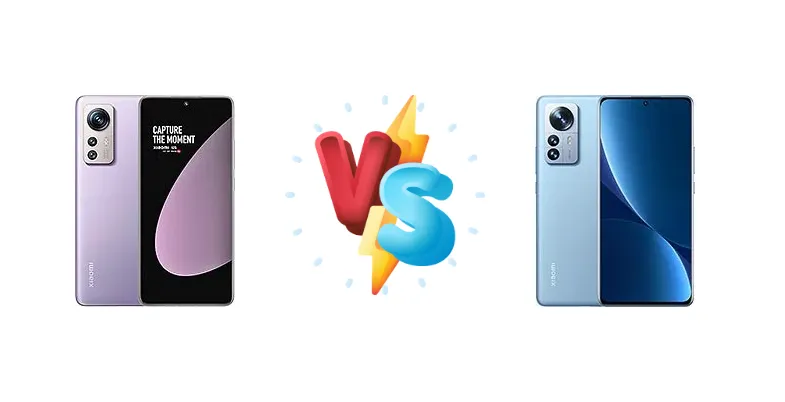
|
🏆 Quick Verdict
The Xiaomi 12 Pro boasts significantly faster charging and a potentially brighter display, while the 12S features the more efficient Snapdragon 8+ Gen 1 chipset. Ultimately, the 12S offers better sustained performance, while the 12 Pro prioritizes charging speed and potentially display brightness. It depends on your priorities.
| PHONES | ||
|---|---|---|
| Phone Names | Xiaomi 12S | Xiaomi 12 Pro |
| Network | ||
|---|---|---|
| 2G bands | GSM 850 / 900 / 1800 / 1900 | GSM 850 / 900 / 1800 / 1900 |
| 3G bands | HSDPA 800 / 850 / 900 / 1700(AWS) / 1900 / 2100 | HSDPA 800 / 850 / 900 / 1700(AWS) / 1900 / 2100 |
| 4G bands | 1, 2, 3, 4, 5, 7, 8, 18, 19, 26, 34, 38, 39, 40, 41, 42 | 1, 2, 3, 4, 5, 7, 8, 12, 13, 17, 18, 19, 20, 25, 26, 28, 32, 38, 39, 40, 41, 42, 48, 66 - International |
| 5G bands | 1, 3, 5, 8, 28, 38, 40, 41, 77, 78 SA/NSA | 1, 3, 5, 7, 8, 20, 28, 38, 40, 41, 66, 77, 78, 79 SA/NSA - International |
| Speed | HSPA, LTE, 5G | HSPA, LTE, 5G |
| Technology | GSM / CDMA / HSPA / EVDO / LTE / 5G | GSM / CDMA / HSPA / EVDO / LTE / 5G |
| CDMA2000 1xEV-DO | 1, 3, 5, 8, 28, 38, 40, 41, 77, 78, 79 SA/NSA - China | |
| Launch | ||
|---|---|---|
| Announced | 2022, July 04 | 2021, December 28 |
| Status | Available. Released 2022, July 07 | Available. Released 2021, December 31 |
| Body | ||
|---|---|---|
| Build | Glass front (Gorilla Glass Victus), glass back or eco leather back, aluminum frame | Glass front (Gorilla Glass Victus), glass back, aluminum frame |
| Dimensions | 152.7 x 69.9 x 8.2 mm or 8.7 mm | 163.6 x 74.6 x 8.2 mm (6.44 x 2.94 x 0.32 in) |
| SIM | Nano-SIM + Nano-SIM | Nano-SIM + Nano-SIM |
| Weight | 179 g / 182 g (6.31 oz) | 204 g or 205 g (7.20 oz) |
| Display | ||
|---|---|---|
| Protection | Corning Gorilla Glass Victus | Corning Gorilla Glass Victus |
| Resolution | 1080 x 2400 pixels, 20:9 ratio (~419 ppi density) | 1440 x 3200 pixels, 20:9 ratio (~521 ppi density) |
| Size | 6.28 inches, 95.2 cm2 (~89.2% screen-to-body ratio) | 6.73 inches, 109.4 cm2 (~89.6% screen-to-body ratio) |
| Type | AMOLED, 68B colors, 120Hz, Dolby Vision, HDR10+, 1100 nits (peak) | LTPO AMOLED, 1B colors, 120Hz, Dolby Vision, HDR10+, 1000 nits (HBM), 1500 nits (peak) |
| Platform | ||
|---|---|---|
| CPU | Octa-core (1x3.19 GHz Cortex-X2 & 3x2.75 GHz Cortex-A710 & 4x1.80 GHz Cortex-A510) | Octa-core (1x3.00 GHz Cortex-X2 & 3x2.50 GHz Cortex-A710 & 4x1.80 GHz Cortex-A510) |
| Chipset | Qualcomm SM8475 Snapdragon 8+ Gen 1 (4 nm) | Qualcomm SM8450 Snapdragon 8 Gen 1 (4 nm) |
| GPU | Adreno 730 | Adreno 730 |
| OS | Android 12, MIUI 13 | Android 12, MIUI 13 |
| Memory | ||
|---|---|---|
| Card slot | No | No |
| Internal | 128GB 8GB RAM, 256GB 8GB RAM, 256GB 12GB RAM, 512GB 12GB RAM | 128GB 8GB RAM, 256GB 8GB RAM, 256GB 12GB RAM |
| UFS 3.1 | UFS 3.1 | |
| Main Camera | ||
|---|---|---|
| Features | Leica lens, color spectrum sensor, Dual-LED dual-tone flash, HDR, panorama | Color spectrum sensor, Dual-LED dual-tone flash, HDR, panorama |
| Single | 32 MP, f/2.5, 26mm (wide), 0.7µm | 32 MP, f/2.5, 26mm (wide), 0.7µm |
| Triple | 50 MP, f/1.9, 24mm (wide), 1/1.28", 1.22µm, dual pixel PDAF, OIS 13 MP, f/2.4, 15mm, 123˚ (ultrawide), 1/3.06", 1.12µm 5 MP, f/2.4, 50mm (telephoto macro), AF | 50 MP, f/1.9, 24mm (wide), 1/1.28", 1.22µm, dual pixel PDAF, OIS 50 MP, f/1.9, 48mm (telephoto), PDAF, 2x optical zoom 50 MP, f/2.2, 115˚ (ultrawide) |
| Video | 8K@24fps, 4K@30/60fps, 1080p@30/60fps, 720p@1920fps, gyro-EIS | 8K@24fps (HDR), 4K@30/60fps (HDR10+), 1080p@30/120/240/960fps, 720p@1920fps, gyro-EIS |
| Selfie camera | ||
|---|---|---|
| Features | HDR, panorama | HDR, panorama |
| Single | 32 MP, f/2.5, 26mm (wide), 0.7µm | 32 MP, f/2.5, 26mm (wide), 0.7µm |
| Video | 1080p@30/60fps, 720p@120fps, HDR | 1080p@30/60fps, 720p@120fps, HDR10+ |
| Sound | ||
|---|---|---|
| 3.5mm jack | No | No |
| 35mm jack | No | No |
| Loudspeaker | Yes, with stereo speakers | Yes, with stereo speakers (4 speakers) |
| 24-bit/192kHz audio Tuned by Harman Kardon | 24-bit/192kHz audio Tuned by Harman Kardon | |
| Comms | ||
|---|---|---|
| Bluetooth | 5.2, A2DP, LE, aptX HD, aptX Adaptive | 5.2, A2DP, LE, aptX HD, aptX Adaptive |
| Infrared port | Yes | Yes |
| NFC | Yes | Yes (market/region dependent) |
| Positioning | GPS (L1+L5), GLONASS (L1), BDS (B1I+B1c+B2a), GALILEO (E1+E5a), QZSS (L1+L5), NavIC (L5) | GPS (L1+L5), GLONASS (L1), BDS (B1I+B1c+B2a), GALILEO (E1+E5a), QZSS (L1+L5), NavIC (L5) |
| Radio | No | No |
| USB | USB Type-C 2.0, OTG | USB Type-C 2.0, OTG |
| WLAN | Wi-Fi 802.11 a/b/g/n/ac/6e, dual-band, Wi-Fi Direct | Wi-Fi 802.11 a/b/g/n/ac/6 or 6e (market dependent), dual-band, Wi-Fi Direct |
| Features | ||
|---|---|---|
| Sensors | Fingerprint (under display, optical), accelerometer, gyro, proximity, compass | Fingerprint (under display, optical), accelerometer, gyro, compass, barometer |
| - | Virtual Proximity Sensing | |
| Battery | ||
|---|---|---|
| Charging | 67W wired, PD3.0, QC4, 100% in 42 min 50W wireless, 100% in 57 min 10W reverse wireless | 120W wired, PD3.0, QC4, 100% in 18 min 50W wireless, 100% in 42 min 10W reverse wireless |
| Type | Li-Po 4500 mAh | Li-Po 4600 mAh |
| Misc | ||
|---|---|---|
| Colors | Gray, White, Purple, Green | Gray, Blue, Purple, Green |
| Models | 2206123SC | 2201122C, 2201122G |
| Price | About 570 EUR | € 317.40 / $ 349.99 / £ 364.66 / ₹ 41,999 |
| SAR | - | 1.09 W/kg (head) 1.05 W/kg (body) |
| SAR EU | - | 0.60 W/kg (head) 1.00 W/kg (body) |
| Tests | ||
|---|---|---|
| Battery life | - | Endurance rating 74h |
| Camera | - | Photo / Video |
| Display | - | Contrast ratio: Infinite (nominal) |
| Loudspeaker | - | -29.5 LUFS (Average) |
| Performance | - | AnTuTu: 985226 (v9) GeekBench: 3682 (v5.1) GFXBench: 46fps (ES 3.1 onscreen) |
Xiaomi 12S
- More efficient Snapdragon 8+ Gen 1 chipset
- Potentially more compact design
- Excellent display quality
- Good camera performance
- Slower charging speeds compared to 12 Pro
- Less information available on camera hardware
Xiaomi 12 Pro
- Incredibly fast 120W wired charging
- Potentially brighter display
- Excellent battery life (74h endurance)
- Versatile camera system
- Snapdragon 8 Gen 1 can throttle under sustained load
- Larger size compared to 12S
- Less efficient chipset
Display Comparison
Both phones feature excellent AMOLED displays, but the 12 Pro is reported to reach a higher peak brightness of 1050 nits (measured), potentially offering better visibility in direct sunlight. The 12S's display is still vibrant and sharp, but may not be quite as bright. Contrast ratio is listed as 'infinite' for the 12 Pro, which is a nominal value indicating excellent contrast.
Camera Comparison
Both phones offer excellent camera systems, but specific details on the 12S's camera hardware are less readily available. The 12 Pro's camera is known for its versatility and image quality. Expect both to capture detailed photos and videos, but the 12 Pro might have a slight edge in overall versatility due to potentially more advanced hardware.
Performance
The Xiaomi 12S holds a clear advantage here. Its Snapdragon 8+ Gen 1 chipset is more efficient and generally performs better under sustained load compared to the Snapdragon 8 Gen 1 in the 12 Pro. This translates to smoother gaming and less thermal throttling over extended periods. While both offer flagship-level performance, the 12S's chip is the superior choice.
Battery Life
The 12 Pro has a reported endurance rating of 74 hours, suggesting excellent battery life. The 12S's battery life is likely still very good, but the 12 Pro's larger battery and more efficient charging give it an edge in this category. The 12 Pro's 120W wired charging is a game-changer, allowing for incredibly fast top-ups.
Buying Guide
The Xiaomi 12S is ideal for users who prioritize sustained performance, efficient power management, and a slightly more compact design. The Xiaomi 12 Pro is a better choice for those who value incredibly fast charging, potentially higher display brightness, and don't mind a slightly larger device.