
Xiaomi 12S Pro vs Xiaomi 12T Pro: A Detailed Showdown
| Phones Images | |||||
|---|---|---|---|---|---|
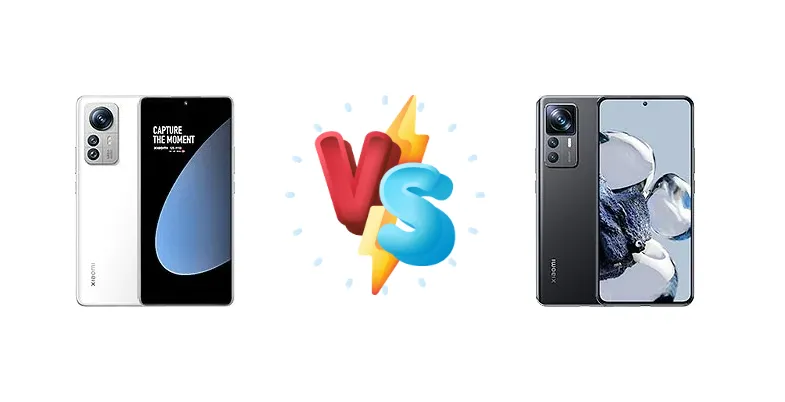
|
🏆 Quick Verdict
The Xiaomi 12S Pro offers a more premium build, refined camera system (especially with its Leica partnership), and potentially better software support. The 12T Pro excels in value, offering a brighter display and impressive charging speeds at a more accessible price point. It depends on your priorities!
| PHONES | ||
|---|---|---|
| Phone Names | Xiaomi 12S Pro | Xiaomi 12T Pro |
| Network | ||
|---|---|---|
| 2G bands | GSM 850 / 900 / 1800 / 1900 | GSM 850 / 900 / 1800 / 1900 |
| 3G bands | HSDPA 800 / 850 / 900 / 1700(AWS) / 1900 / 2100 | HSDPA 800 / 850 / 900 / 1700(AWS) / 1900 / 2100 |
| 4G bands | 1, 2, 3, 4, 5, 7, 8, 12, 17, 18, 19, 26, 34, 38, 39, 40, 41, 42 | 1, 2, 3, 4, 5, 7, 8, 12, 13, 17, 18, 19, 20, 25, 26, 28, 32, 38, 39, 40, 41, 42, 48, 66 |
| 5G bands | 1, 3, 5, 8, 28, 38, 40, 41, 77, 78, 79 SA/NSA | 1, 3, 5, 7, 8, 20, 28, 38, 40, 41, 66, 77, 78, 75 SA/NSA |
| Speed | HSPA, LTE, 5G | HSPA, LTE, 5G |
| Technology | GSM / CDMA / HSPA / EVDO / LTE / 5G | GSM / HSPA / LTE / 5G |
| CDMA2000 1xEV-DO | - | |
| Launch | ||
|---|---|---|
| Announced | 2022, July 04 | 2022, October 04 |
| Status | Available. Released 2022, July 07 | Available. Released 2022, October 06 |
| Body | ||
|---|---|---|
| Build | Glass front (Gorilla Glass Victus), glass back or eco leather back, aluminum frame | - |
| Dimensions | 163.6 x 74.6 x 8.2 mm or 8.7 mm | 163.1 x 75.9 x 8.6 mm (6.42 x 2.99 x 0.34 in) |
| SIM | Nano-SIM + Nano-SIM | · Nano-SIM + eSIM· Nano-SIM + Nano-SIM |
| Weight | 203 g / 204 g (7.16 oz) | 205 g (7.23 oz) |
| - | IP53, dust and splash resistant | |
| Display | ||
|---|---|---|
| Protection | Corning Gorilla Glass Victus | Corning Gorilla Glass 5 |
| Resolution | 1440 x 3200 pixels, 20:9 ratio (~521 ppi density) | 1220 x 2712 pixels, 20:9 ratio (~446 ppi density) |
| Size | 6.73 inches, 109.4 cm2 (~89.6% screen-to-body ratio) | 6.67 inches, 107.4 cm2 (~86.7% screen-to-body ratio) |
| Type | LTPO AMOLED, 1B colors, 120Hz, Dolby Vision, HDR10+, 1000 nits (HBM), 1500 nits (peak) | AMOLED, 68B colors, 120Hz, Dolby Vision, HDR10+, 500 nits (typ), 900 nits (peak) |
| Platform | ||
|---|---|---|
| CPU | Octa-core (1x3.19 GHz Cortex-X2 & 3x2.75 GHz Cortex-A710 & 4x1.80 GHz Cortex-A510) | Octa-core (1x3.19 GHz Cortex-X2 & 3x2.75 GHz Cortex-A710 & 4x2.0 GHz Cortex-A510) |
| Chipset | Qualcomm SM8475 Snapdragon 8+ Gen 1 (4 nm) | Qualcomm SM8475 Snapdragon 8+ Gen 1 (4 nm) |
| GPU | Adreno 730 | Adreno 730 |
| OS | Android 12, MIUI 13 | Android 12, upgradable to Android 14, HyperOS |
| Memory | ||
|---|---|---|
| Card slot | No | No |
| Internal | 128GB 8GB RAM, 256GB 8GB RAM, 256GB 12GB RAM, 512GB 12GB RAM | 128GB 8GB RAM, 256GB 8GB RAM, 256GB 12GB RAM |
| UFS 3.1 | UFS 3.1 | |
| Main Camera | ||
|---|---|---|
| Features | Leica lens, color spectrum sensor, Dual-LED dual-tone flash, HDR, panorama | Color spectrum sensor, Dual-LED dual-tone flash, HDR, panorama |
| Single | 32 MP, f/2.5, 26mm (wide), 0.7µm | - |
| Triple | 50 MP, f/1.9, 24mm (wide), 1/1.28", 1.22µm, dual pixel PDAF, OIS 50 MP, f/1.9, 50mm (telephoto), PDAF, 2x optical zoom 50 MP, f/2.2, 115˚ (ultrawide) | 200 MP, f/1.7, (wide), 1/1.22", 0.64µm, PDAF, OIS 8 MP, f/2.2, 120˚ (ultrawide), 1/4.0", 1.12µm 2 MP (macro) |
| Video | 8K@24fps (HDR), 4K@30/60fps (HDR10+), 1080p@30/120/240/960fps, 720p@1920fps, gyro-EIS | 8K@24fps, 4K@30/60fps, 1080p@30/60/120/240fps, HDR10+ |
| Selfie camera | ||
|---|---|---|
| Features | HDR, panorama | HDR, panorama |
| Single | 32 MP, f/2.5, 26mm (wide), 0.7µm | 20 MP, f/2.2, (wide), 1/3.47", 0.8µm |
| Video | 1080p@30/60fps, 720p@120fps, HDR10+ | 1080p@30/60fps, HDR |
| Sound | ||
|---|---|---|
| 3.5mm jack | No | No |
| 35mm jack | No | No |
| Loudspeaker | Yes, with stereo speakers | Yes, with stereo speakers |
| 24-bit/192kHz audio Tuned by Harman Kardon | Tuned by Harman Kardon 24-bit/192kHz audio | |
| Comms | ||
|---|---|---|
| Bluetooth | 5.2, A2DP, LE, aptX HD, aptX Adaptive | 5.2, A2DP, LE, aptX HD |
| Infrared port | Yes | Yes |
| NFC | Yes | Yes (market/region dependent) |
| Positioning | GPS (L1+L5), GLONASS (L1), BDS (B1I+B1c+B2a), GALILEO (E1+E5a), QZSS (L1+L5), NavIC (L5) | GPS (L1+L5), GLONASS (L1), BDS (B1I+B1c+B2a), GALILEO (E1+E5a), QZSS (L1+L5), NavIC (L5) |
| Radio | No | No |
| USB | USB Type-C 2.0, OTG | USB Type-C 2.0, OTG |
| WLAN | Wi-Fi 802.11 a/b/g/n/ac/6e, dual-band, Wi-Fi Direct | Wi-Fi 802.11 a/b/g/n/ac/6, dual-band, Wi-Fi Direct |
| Features | ||
|---|---|---|
| Sensors | Fingerprint (under display, optical), accelerometer, gyro, compass | Fingerprint (under display, optical), accelerometer, gyro, proximity, compass |
| Virtual proximity sensing | - | |
| Battery | ||
|---|---|---|
| Charging | 120W wired, PD3.0, QC4, 100% in 19 min 50W wireless, 100% in 42 min 10W reverse wireless | 120W wired, 100% in 19 min |
| Type | Li-Po 4600 mAh | Li-Po 5000 mAh |
| Misc | ||
|---|---|---|
| Colors | Gray, White, Purple, Green | Black, Silver, Blue |
| Models | 2206122SC | 22081212UG, 22081212G |
| Price | About 670 EUR | $ 208.76 / € 167.62 |
| SAR | - | 1.08 W/kg (head) 1.07 W/kg (body) |
| SAR EU | - | 1.00 W/kg (head) 1.00 W/kg (body) |
| Tests | ||
|---|---|---|
| Battery life | - | Endurance rating 91h |
| Camera | - | Photo / Video |
| Display | - | Contrast ratio: Infinite (nominal) |
| Loudspeaker | - | -24.1 LUFS (Very good) |
| Performance | - | AnTuTu: 1032185 (v9) GeekBench: 4081 (v5.1) GFXBench: 65fps (ES 3.1 onscreen) |
Xiaomi 12S Pro
- Premium build quality
- Leica-branded camera system
- Excellent image quality
- 50W wireless charging
- 10W reverse wireless charging
- Potentially better software support
- Higher price
- May not offer a significant performance advantage over 12T Pro
Xiaomi 12T Pro
- Brighter display (913 nits)
- Excellent value for money
- Fast 120W wired charging
- Impressive battery life (claimed)
- Sleek design
- Less refined camera system
- No wireless charging
- Potentially shorter software support
Display Comparison
The Xiaomi 12T Pro takes a slight edge here. While the 12S Pro has a good AMOLED display, the 12T Pro boasts a measured peak brightness of 913 nits, making it noticeably brighter in outdoor conditions. Both offer smooth 120Hz refresh rates and vibrant colors, but the 12T Pro's brightness is a tangible advantage. The 12T Pro's contrast ratio is listed as 'Infinite' (nominal), suggesting excellent blacks.
Camera Comparison
This is where the 12S Pro shines. Its Leica-branded camera system offers a more refined and consistent image quality, particularly in challenging lighting conditions. The 12T Pro's camera is capable, but lacks the same level of tuning and image processing as the 12S Pro. Expect better dynamic range and more natural colors from the 12S Pro.
Performance
Both phones are powered by the Snapdragon 8+ Gen 1, ensuring flagship-level performance. The CPU configurations are very similar, with the 12S Pro having a slightly higher Cortex-X2 clock speed. In real-world usage, you're unlikely to notice a significant difference in everyday tasks or gaming. Thermal management might be a differentiating factor, with the 12S Pro potentially having slightly better cooling due to its design.
Battery Life
The 12T Pro claims an endurance rating of 91 hours, suggesting superior battery life. While this rating can be subjective, it indicates a potential advantage for the 12T Pro. Both phones offer incredibly fast 120W wired charging, getting you from 0 to 100% in around 19 minutes. The 12S Pro also includes 50W wireless charging and 10W reverse wireless charging, features absent in the 12T Pro.
Buying Guide
The Xiaomi 12S Pro is ideal for users prioritizing camera quality, a premium design, and potentially longer software support. The Xiaomi 12T Pro is a great choice for those seeking flagship performance and fast charging without breaking the bank, especially if display brightness is a key factor.