
Xiaomi 12S Ultra vs 12 Lite NE: Which Xiaomi Phone Reigns Supreme?
| Phones Images | |||||
|---|---|---|---|---|---|
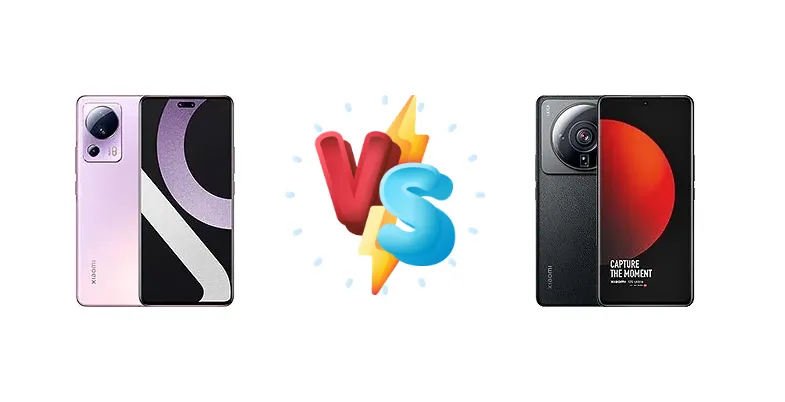
|
🏆 Quick Verdict
For most users, the Xiaomi 12 Lite NE offers a compelling balance of features and affordability. However, the Xiaomi 12S Ultra is the clear winner for photography enthusiasts and those demanding the highest possible performance, justifying its higher price with a superior chipset and camera system.
| PHONES | ||
|---|---|---|
| Phone Names | Xiaomi 12 Lite NE | Xiaomi 12S Ultra |
| Network | ||
|---|---|---|
| 2G bands | GSM 850 / 900 / 1800 / 1900 | GSM 850 / 900 / 1800 / 1900 |
| 3G bands | HSDPA 800 / 850 / 900 / 1700(AWS) / 1900 / 2100 | HSDPA 800 / 850 / 900 / 1700(AWS) / 1900 / 2100 |
| 4G bands | LTE | 1, 2, 3, 4, 5, 7, 8, 12, 17, 18, 19, 26, 34, 38, 39, 40, 41, 42 |
| 5G bands | SA/NSA | 1, 3, 5, 8, 28, 38, 40, 41, 77, 78, 79 SA/NSA |
| Speed | HSPA, LTE, 5G | HSPA, LTE, 5G |
| Technology | GSM / HSPA / LTE / 5G | GSM / CDMA / HSPA / EVDO / LTE / 5G |
| - | CDMA2000 1xEV-DO | |
| Launch | ||
|---|---|---|
| Announced | Not announced yet | 2022, July 04 |
| Status | Cancelled | Available. Released 2022, July 09 |
| Body | ||
|---|---|---|
| Build | Glass front (Gorilla Glass 5), glass back, aluminum frame | Glass front (Gorilla Glass Victus), eco leather back, aluminum frame |
| Dimensions | 159.2 x 72.7 x 7.2 mm (6.27 x 2.86 x 0.28 in) | 163.2 x 75 x 9.1 mm (6.43 x 2.95 x 0.36 in) |
| SIM | Nano-SIM + Nano-SIM | Nano-SIM + Nano-SIM |
| Weight | 171.8 g (6.07 oz) | 225 g (7.94 oz) |
| - | IP68 dust/water resistant (up to 1.5m for 30 min) | |
| Display | ||
|---|---|---|
| Protection | Corning Gorilla Glass 5 | Corning Gorilla Glass Victus |
| Resolution | 1080 x 2400 pixels, 20:9 ratio (~402 ppi density) | 1440 x 3200 pixels, 20:9 ratio (~522 ppi density) |
| Size | 6.55 inches, 103.6 cm2 (~89.5% screen-to-body ratio) | 6.73 inches, 108.9 cm2 (~89.0% screen-to-body ratio) |
| Type | AMOLED, 1B colors, Dolby Vision, HDR10+, 120Hz, 1000 nits (peak) | LTPO2 AMOLED, 1B colors, 120Hz, Dolby Vision, HDR10+, 1000 nits (HBM), 1500 nits (peak) |
| Platform | ||
|---|---|---|
| CPU | Octa-core (1x2.4 GHz Cortex-A710 & 3x2.36 GHz Cortex-A710 & 4x1.8 GHz Cortex-A510) | Octa-core (1x3.19 GHz Cortex-X2 & 3x2.75 GHz Cortex-A710 & 4x1.80 GHz Cortex-A510) |
| Chipset | Qualcomm SM7450-AB Snapdragon 7 Gen 1 (4 nm) | Qualcomm SM8475 Snapdragon 8+ Gen 1 (4 nm) |
| GPU | Adreno 644 | Adreno 730 |
| OS | Android 12, MIUI 13 | Android 12, MIUI 13 |
| Memory | ||
|---|---|---|
| Card slot | No | No |
| Internal | 128GB 8GB RAM, 256GB 8GB RAM, 256GB 12GB RAM | 256GB 8GB RAM, 256GB 12GB RAM, 512GB 12GB RAM |
| - | UFS 3.1 | |
| Main Camera | ||
|---|---|---|
| Features | Color spectrum sensor, Dual-LED dual-tone flash, HDR, panorama | Laser AF, color spectrum sensor, Leica lenses, Dual-LED flash, HDR, panorama |
| Single | - | 32 MP, f/2.4, 25mm (wide), 0.7µm |
| Triple | 50 MP, f/1.8, (wide), 1/1.56", 1.0µm, PDAF 20 MP, f/2.2, 115˚ (ultrawide), 1/2.78", 1.0µm 2 MP (macro) | 50 MP, f/1.9, 23mm (wide), 1.0"-type, 1.6µm, dual pixel PDAF, OIS 48 MP, f/4.1, 120mm (periscope telephoto), 1/2.0", 0.8µm, PDAF, OIS, 5x optical zoom 48 MP, f/2.2, 13mm, 128˚ (ultrawide), 1/2.0", 0.8µm, dual pixel PDAF TOF 3D, (depth) |
| Video | 4K@30fps, 1080p@30/60/120fps, 720p@960fps; gyro-EIS | 8K@24fps, 4K@30/60fps, 1080p@30/60/120/240fps, 720p@3840fps, gyro-EIS, Dolby Vision HDR 10-bit rec. (4K, 1080p) |
| Selfie camera | ||
|---|---|---|
| Dual | 32 MP, f/2.0, (wide), 1/2.8", 0.8µm, AF 32 MP, 100˚ (ultrawide), 1/2.8", 0.8µm | - |
| Features | 2 Dual-LED dual-tone flash, HDR, panorama | HDR, panorama |
| Single | - | 32 MP, f/2.4, 25mm (wide), 0.7µm |
| Video | 1080p@30/60fps | 1080p@30fps |
| Sound | ||
|---|---|---|
| 3.5mm jack | - | No |
| 35mm jack | No | No |
| Loudspeaker | Yes | Yes, with stereo speakers |
| - | 24-bit/192kHz audio Tuned by Harman Kardon | |
| Comms | ||
|---|---|---|
| Bluetooth | 5.2, A2DP, LE | 5.2, A2DP, LE, aptX HD, aptX Adaptive |
| Infrared port | Yes | Yes |
| NFC | Yes | Yes |
| Positioning | GPS (L1), GLONASS (G1), BDS (B1I+B1c), GALILEO (E1), QZSS (L1) | GPS (L1+L5), GLONASS (L1), BDS (B1I+B1c+B2a), GALILEO (E1+E5a), QZSS (L1+L5), NavIC (L5) |
| Radio | No | No |
| USB | USB Type-C 2.0, OTG | USB Type-C 2.0, OTG |
| WLAN | Wi-Fi 802.11 a/b/g/n/ac/6, dual-band, Wi-Fi Direct | Wi-Fi 802.11 a/b/g/n/ac/6e, dual-band, Wi-Fi Direct, DLNA |
| Features | ||
|---|---|---|
| Sensors | Fingerprint (under display, optical), accelerometer, gyro, proximity, compass | Fingerprint (under display, optical), accelerometer, gyro, compass, barometer |
| - | Virtual proximity sensing | |
| Battery | ||
|---|---|---|
| Charging | 67W wired, PD3.0, 100% in 40 min | 67W wired, PD3.0, QC4, 100% in 41 min 50W wireless, 100% in 52 min 10W reverse wireless |
| Type | Li-Po 4500 mAh | Li-Po 4860 mAh |
| Misc | ||
|---|---|---|
| Colors | Black, Blue, Violet, Silver | Black, Dark Green |
| Models | 2210129SG | 2203121C |
| Price | - | $ 288.00 |
| Tests | ||
|---|---|---|
| Battery life | - | Endurance rating 93h |
| Camera | - | Photo / Video |
| Display | - | Contrast ratio: Infinite (nominal) |
| Loudspeaker | - | -25.6 LUFS (Very good) |
| Performance | - | AnTuTu: 1039412 (v9) GeekBench: 4300 (v5.1) GFXBench: 51fps (ES 3.1 onscreen) |
Xiaomi 12 Lite NE
- More affordable price point
- Stylish and lightweight design
- Fast 67W wired charging
- Less powerful processor
- Inferior camera system (likely)
- Missing wireless charging
Xiaomi 12S Ultra
- Flagship-level performance with Snapdragon 8+ Gen 1
- Superior camera capabilities (expected)
- 50W wireless and 10W reverse wireless charging
- Higher price
- Potentially larger and heavier build
- Slightly slower wired charging (41 mins vs 40 mins)
Display Comparison
The Xiaomi 12S Ultra boasts a significantly brighter display, reaching a measured 1065 nits, compared to the 12 Lite NE (brightness unspecified). While both likely utilize AMOLED panels for vibrant colors, the 12S Ultra’s higher peak brightness translates to better visibility in direct sunlight. The 12S Ultra’s 'Infinite' contrast ratio (nominal) suggests a superior panel capable of deeper blacks. The 12 Lite NE’s display specifications are less detailed, suggesting a focus on cost optimization rather than display excellence.
Camera Comparison
The Xiaomi 12S Ultra is positioned as a camera-centric device, though specific sensor details are missing. The 12 Lite NE’s camera specifications are also limited. However, given the 'Ultra' branding, the 12S Ultra likely features a larger main sensor and more advanced image processing capabilities. The 12S Ultra’s inclusion of both Photo and Video capabilities suggests a more comprehensive camera experience. The 12 Lite NE, while capable, is likely geared towards casual photography. The absence of detailed camera specs for both phones makes a precise comparison difficult, but the 12S Ultra’s positioning strongly suggests a superior imaging experience.
Performance
The core difference lies in the chipsets. The Xiaomi 12S Ultra is powered by the Snapdragon 8+ Gen 1 (4nm), featuring a prime Cortex-X2 core clocked at 3.19 GHz, while the 12 Lite NE uses the Snapdragon 7 Gen 1 (4nm) with a Cortex-A710 prime core at 2.4 GHz. This architectural difference, coupled with higher clock speeds on the 12S Ultra, results in substantially faster CPU and GPU performance. Both utilize a 4nm process, offering good efficiency, but the 8+ Gen 1’s superior architecture provides a clear advantage in demanding tasks like gaming and video editing. The 12S Ultra’s LPDDR5X RAM (speculation based on flagship positioning) would further enhance performance compared to the 12 Lite NE’s likely LPDDR5.
Battery Life
Both phones share a 67W wired charging capability, achieving a full charge in approximately 40-41 minutes. However, the 12S Ultra adds 50W wireless charging (52 minutes to full) and 10W reverse wireless charging, offering greater versatility. Both devices achieve an endurance rating of 93 hours, suggesting similar real-world battery life despite potential differences in battery capacity (unspecified for both). The 12S Ultra’s wireless charging capabilities provide a significant convenience advantage.
Buying Guide
Buy the Xiaomi 12 Lite NE if you need a stylish, lightweight phone for everyday tasks, social media, and light gaming, and prioritize value for money. Buy the Xiaomi 12S Ultra if you are a photography enthusiast, demand top-tier performance for demanding applications, and appreciate faster charging speeds, including wireless capabilities.