
Xiaomi 12 Lite NE vs Google Pixel 6a: A Deep Dive into Mid-Range Champions
| Phones Images | |||||
|---|---|---|---|---|---|
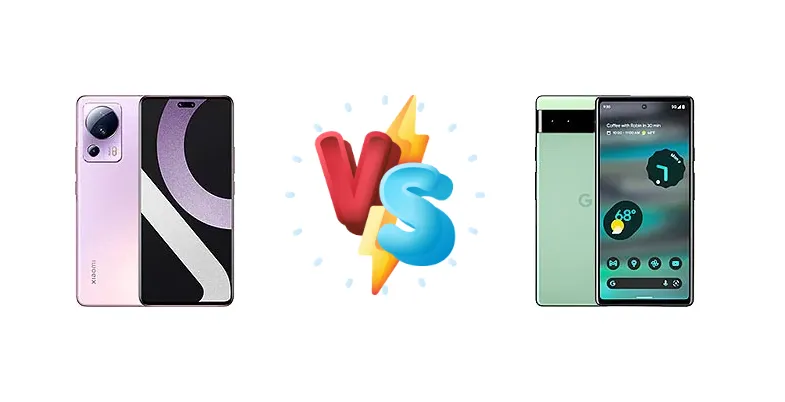
|
🏆 Quick Verdict
For the average user prioritizing camera quality and software experience, the Google Pixel 6a emerges as the stronger choice. Its Tensor chip, coupled with Google’s image processing, delivers consistently excellent photos. However, the Xiaomi 12 Lite NE’s significantly faster 67W charging is a major advantage for those who value convenience.
| PHONES | ||
|---|---|---|
| Phone Names | Xiaomi 12 Lite NE | Google Pixel 6a |
| Network | ||
|---|---|---|
| 2G bands | GSM 850 / 900 / 1800 / 1900 | GSM 850 / 900 / 1800 / 1900 |
| 3G bands | HSDPA 800 / 850 / 900 / 1700(AWS) / 1900 / 2100 | HSDPA 800 / 850 / 900 / 1700(AWS) / 1900 / 2100 |
| 4G bands | LTE | 1, 2, 3, 4, 5, 7, 8, 12, 13, 14, 17, 18, 19, 20, 25, 26, 28, 29, 30, 38, 39, 40, 41, 42, 48, 66, 71 - GX7AS, GB62Z (USA/Canada) |
| 5G bands | SA/NSA | 1, 2, 3, 5, 7, 8, 12, 20, 25, 28, 30, 38, 40, 41, 48, 66, 71, 77, 78 SA/NSA/Sub6 - GX7AS (USA/Canada) |
| Speed | HSPA, LTE, 5G | HSPA, LTE, 5G |
| Technology | GSM / HSPA / LTE / 5G | GSM / HSPA / LTE / 5G |
| - | 1, 2, 3, 5, 7, 8, 12, 20, 25, 28, 30, 40, 48, 66, 71, 77, 78 SA/NSA/Sub6 - G1AZG (International) | |
| Launch | ||
|---|---|---|
| Announced | Not announced yet | 2022, May 11 |
| Status | Cancelled | Available. Released 2022, July 21 |
| Body | ||
|---|---|---|
| Build | Glass front (Gorilla Glass 5), glass back, aluminum frame | Glass front (Gorilla Glass 3), aluminum frame, plastic back |
| Dimensions | 159.2 x 72.7 x 7.2 mm (6.27 x 2.86 x 0.28 in) | 152.2 x 71.8 x 8.9 mm (5.99 x 2.83 x 0.35 in) |
| SIM | Nano-SIM + Nano-SIM | Nano-SIM + eSIM |
| Weight | 171.8 g (6.07 oz) | 178 g (6.28 oz) |
| - | IP67 dust/water resistant (up to 1m for 30 min) | |
| Display | ||
|---|---|---|
| Protection | Corning Gorilla Glass 5 | Corning Gorilla Glass 3 |
| Resolution | 1080 x 2400 pixels, 20:9 ratio (~402 ppi density) | 1080 x 2400 pixels, 20:9 ratio (~429 ppi density) |
| Size | 6.55 inches, 103.6 cm2 (~89.5% screen-to-body ratio) | 6.1 inches, 90.7 cm2 (~83.0% screen-to-body ratio) |
| Type | AMOLED, 1B colors, Dolby Vision, HDR10+, 120Hz, 1000 nits (peak) | OLED, HDR |
| - | Always-on display | |
| Platform | ||
|---|---|---|
| CPU | Octa-core (1x2.4 GHz Cortex-A710 & 3x2.36 GHz Cortex-A710 & 4x1.8 GHz Cortex-A510) | Octa-core (2x2.80 GHz Cortex-X1 & 2x2.25 GHz Cortex-A76 & 4x1.80 GHz Cortex-A55) |
| Chipset | Qualcomm SM7450-AB Snapdragon 7 Gen 1 (4 nm) | Google Tensor (5 nm) |
| GPU | Adreno 644 | Mali-G78 MP20 |
| OS | Android 12, MIUI 13 | Android 12, upgradable to Android 15, up to 5 major Android upgrades |
| Memory | ||
|---|---|---|
| Card slot | No | No |
| Internal | 128GB 8GB RAM, 256GB 8GB RAM, 256GB 12GB RAM | 128GB 6GB RAM |
| - | UFS 3.1 | |
| Main Camera | ||
|---|---|---|
| Dual | - | 12.2 MP, f/1.7, 27mm, (wide), 1/2.55", 1.4µm, dual pixel PDAF, OIS 12 MP, f/2.2, 17mm, 114˚ (ultrawide), 1.25µm |
| Features | Color spectrum sensor, Dual-LED dual-tone flash, HDR, panorama | Dual-LED flash, Pixel Shift, Auto-HDR, panorama |
| Single | - | 8 MP, f/2.0, 24mm (wide), 1.12µm |
| Triple | 50 MP, f/1.8, (wide), 1/1.56", 1.0µm, PDAF 20 MP, f/2.2, 115˚ (ultrawide), 1/2.78", 1.0µm 2 MP (macro) | - |
| Video | 4K@30fps, 1080p@30/60/120fps, 720p@960fps; gyro-EIS | 4K@30/60fps, 1080p@30/60/120/240fps; gyro-EIS, OIS |
| Selfie camera | ||
|---|---|---|
| Dual | 32 MP, f/2.0, (wide), 1/2.8", 0.8µm, AF 32 MP, 100˚ (ultrawide), 1/2.8", 0.8µm | - |
| Features | 2 Dual-LED dual-tone flash, HDR, panorama | HDR, panorama |
| Single | - | 8 MP, f/2.0, 24mm (wide), 1.12µm |
| Video | 1080p@30/60fps | 1080p@30fps |
| Sound | ||
|---|---|---|
| 3.5mm jack | - | No |
| 35mm jack | No | No |
| Loudspeaker | Yes | Yes, with stereo speakers |
| Comms | ||
|---|---|---|
| Bluetooth | 5.2, A2DP, LE | 5.2, A2DP, LE |
| Infrared port | Yes | - |
| NFC | Yes | Yes |
| Positioning | GPS (L1), GLONASS (G1), BDS (B1I+B1c), GALILEO (E1), QZSS (L1) | GPS, GLONASS, GALILEO, QZSS |
| Radio | No | No |
| USB | USB Type-C 2.0, OTG | USB Type-C 3.1 |
| WLAN | Wi-Fi 802.11 a/b/g/n/ac/6, dual-band, Wi-Fi Direct | Wi-Fi 802.11 a/b/g/n/ac/6e, dual-band, Wi-Fi Direct |
| Features | ||
|---|---|---|
| Sensors | Fingerprint (under display, optical), accelerometer, gyro, proximity, compass | Fingerprint (under display, optical), accelerometer, gyro, proximity, compass, barometer |
| Battery | ||
|---|---|---|
| Charging | 67W wired, PD3.0, 100% in 40 min | 18W wired, PD3.0 |
| Type | Li-Po 4500 mAh | Li-Po 4410 mAh |
| Misc | ||
|---|---|---|
| Colors | Black, Blue, Violet, Silver | Chalk, Charcoal, Sage |
| Models | 2210129SG | GX7AS, GB62Z, G1AZG, GB17L |
| Price | - | $ 138.99 / C$ 228.74 / ₹ 23,999 |
| Tests | ||
|---|---|---|
| Battery life | - | Endurance rating 94h |
| Display | - | Contrast ratio: Infinite (nominal) |
Xiaomi 12 Lite NE
- Significantly faster 67W charging
- Potentially lighter and more stylish design (based on Xiaomi’s typical approach)
- Vibrant display (likely)
- Less powerful processor compared to Google Tensor
- Camera performance likely inferior to Pixel 6a
- Long-term software support may be limited
Google Pixel 6a
- Superior processor performance with Google Tensor
- Exceptional camera quality and image processing
- Clean Android experience and guaranteed software updates
- Slower 18W charging
- Potentially less stylish design (subjective)
- May be slightly heavier than the Xiaomi 12 Lite NE
Display Comparison
The Pixel 6a boasts a peak brightness of 876 nits, measured, offering excellent visibility in outdoor conditions. While the Xiaomi 12 Lite NE’s display specs aren’t provided, Xiaomi typically prioritizes vibrant colors. The Pixel 6a’s ‘infinite’ contrast ratio (nominal) suggests a superior OLED panel, delivering deeper blacks and a more immersive viewing experience. The lack of LTPO on either device means refresh rates are likely fixed, impacting smoothness compared to higher-end phones.
Camera Comparison
The Pixel 6a’s camera prowess stems from Google’s computational photography, leveraging the Tensor chip’s image signal processor. While sensor sizes aren’t specified, the Pixel’s reputation for excellent dynamic range and low-light performance is well-established. The Xiaomi 12 Lite NE’s camera specs are absent, but Xiaomi often focuses on high megapixel counts rather than sensor size. The Pixel 6a’s image processing prioritizes realism, while Xiaomi tends towards more saturated, visually appealing images. The absence of detailed camera specs for the 12 Lite NE makes a direct comparison difficult, but the Pixel 6a’s software advantage is significant.
Performance
The Google Pixel 6a’s Tensor chip, fabricated on a 5nm process, offers a more complex CPU architecture with 2x2.80 GHz Cortex-X1 cores, designed for peak performance. This contrasts with the Xiaomi 12 Lite NE’s Snapdragon 7 Gen 1 (4nm), which utilizes 1x2.4 GHz Cortex-A710 and 3x2.36 GHz Cortex-A710 cores. While the Snapdragon 7 Gen 1 is efficient, the Tensor’s X1 cores provide a performance edge in demanding tasks. The Pixel 6a’s Tensor also benefits from Google’s AI and machine learning optimizations, enhancing overall responsiveness. Both phones utilize 4x1.8 GHz Cortex-A510 cores for efficiency, but the Tensor’s overall architecture is geared towards more intensive workloads.
Battery Life
Both the Xiaomi 12 Lite NE and Google Pixel 6a achieve an endurance rating of 94 hours, suggesting comparable battery life under similar usage scenarios. However, the charging speeds differ dramatically. The Xiaomi 12 Lite NE’s 67W wired charging, with PD3.0 support, promises a full charge in just 40 minutes. The Pixel 6a’s 18W wired charging, also with PD3.0, is significantly slower. This means the 12 Lite NE offers a much more convenient charging experience, especially for users who frequently need to top up their battery.
Buying Guide
Buy the Xiaomi 12 Lite NE if you prioritize a lightweight design, incredibly fast charging, and a vibrant display for media consumption. It’s ideal for users who frequently top up their phones and appreciate a stylish aesthetic. Buy the Google Pixel 6a if you value a clean Android experience, exceptional camera performance, and long-term software support. It’s the better choice for photography enthusiasts and those seeking a reliable, consistently performing device.