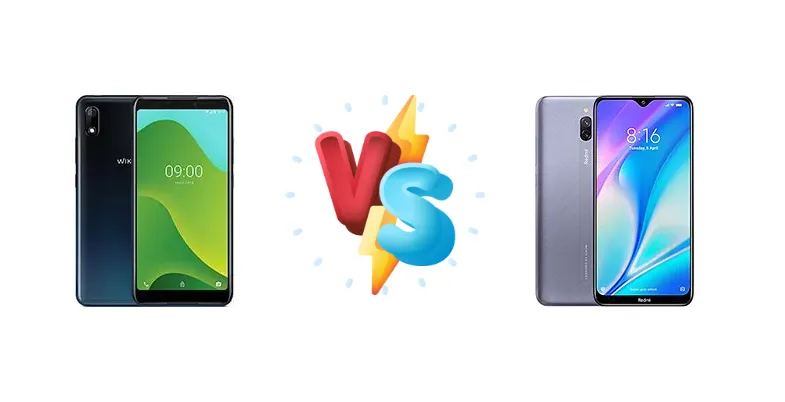
The sub-$150 smartphone market is fiercely competitive. Both the Wiko Y70 and the Xiaomi Redmi 8A Pro aim to deliver essential smartphone functionality at an accessible price point. However, they take different approaches to achieving this, with the Redmi 8A Pro leveraging a more modern chipset while the Wiko Y70 opts for a simpler processor. This comparison will dissect their strengths and weaknesses to determine which device offers the best overall experience.
🏆 Quick Verdict
For the average user prioritizing responsiveness and future-proofing, the Xiaomi Redmi 8A Pro is the clear winner. Its Snapdragon 439 chipset, with its octa-core configuration, provides a significantly smoother experience than the Wiko Y70’s quad-core Cortex-A7, especially when multitasking or running demanding apps. While the Wiko Y70 may offer slightly better standby battery life, the Redmi 8A Pro’s 18W charging is a substantial advantage.
| Network |
|---|
| 2G bands | GSM 850 / 900 / 1800 / 1900 | GSM 850 / 900 / 1800 / 1900 |
| 3G bands | HSDPA 850 / 900 / 1900 / 2100 | HSDPA 850 / 900 / 1900 / 2100 |
| 4G bands | - | 1, 3, 5, 8, 40, 41 |
| Speed | HSPA 21/5.76 Mbps | HSPA, LTE |
| Technology | GSM / HSPA | GSM / HSPA / LTE |
| Launch |
|---|
| Announced | 2019, July. Released 2019, July | 2020, April 02. Released 2020, April 02 |
| Status | Discontinued | Discontinued |
| Body |
|---|
| Build | - | Glass front (Gorilla Glass 5), plastic back, plastic frame |
| Dimensions | 160 x 77 x 9 mm (6.30 x 3.03 x 0.35 in) | 156.5 x 75.4 x 9.4 mm (6.16 x 2.97 x 0.37 in) |
| SIM | Dual SIM (Micro-SIM, dual stand-by) | Nano-SIM + Nano-SIM |
| Weight | 167 g (5.89 oz) | 188 g (6.63 oz) |
| | - | Water-repellent coating |
| Display |
|---|
| Protection | - | Corning Gorilla Glass 5 |
| Resolution | 720 x 1440 pixels, 18:9 ratio (~269 ppi density) | 720 x 1520 pixels, 19:9 ratio (~270 ppi density) |
| Size | 5.99 inches, 92.6 cm2 (~75.2% screen-to-body ratio) | 6.22 inches, 96.6 cm2 (~81.8% screen-to-body ratio) |
| Type | IPS LCD | IPS LCD, 400 nits (typ) |
| Platform |
|---|
| CPU | Quad-core 1.3 GHz Cortex-A7 | Octa-core (4x1.95 GHz Cortex-A53 & 4x1.45 GHz Cortex A53) |
| Chipset | - | Qualcomm SDM439 Snapdragon 439 (12 nm) |
| GPU | Mali-T820 MP1 | Adreno 505 |
| OS | Android 9.0 Pie (Go Edition) | Android 9.0 (Pie), planned upgrade to Android 10, MIUI 12 |
| Memory |
|---|
| Card slot | microSDHC | microSDXC (dedicated slot) |
| Internal | 16GB 1GB RAM | 32GB 2GB RAM, 32GB 3GB RAM |
| | - | eMMC 5.1 |
| Main Camera |
|---|
| Dual | - | 13 MP, f/2.2, (wide), 1/3.1", 1.12µm, PDAF
Auxiliary lens |
| Features | LED flash, HDR, panorama | LED flash, HDR, panorama |
| Single | 8 MP, AF | - |
| Video | 1080p@30fps | 1080p@30fps |
| Selfie camera |
|---|
| Features | LED flash | HDR |
| Single | 5 MP | 8 MP, f/2.0, 1/4.0", 1.12µm |
| Video | - | 1080p@30fps |
| Sound |
|---|
| 3.5mm jack | Yes | Yes |
| 35mm jack | Yes | Yes |
| Loudspeaker | Yes, with dual speakers | Yes |
| Comms |
|---|
| Bluetooth | 4.2, A2DP | 4.2, A2DP, LE |
| NFC | No | No |
| Positioning | GPS | GPS, GLONASS, BDS |
| Radio | FM Radio | FM Radio, built-in antenna |
| USB | microUSB 2.0, OTG | USB Type-C 2.0, OTG |
| WLAN | Wi-Fi 802.11 b/g/n | Wi-Fi 802.11 b/g/n, Wi-Fi Direct |
| Features |
|---|
| Sensors | Accelerometer, proximity, compass | Accelerometer, proximity, compass |
| Battery |
|---|
| Charging | - | 18W wired
2.5W reverse wired |
| Type | Li-Ion 3730 mAh | Li-Po 5000 mAh |
| Misc |
|---|
| Colors | Gradient Dark Blue, Gold | Sky White, Sea Blue, Midnight Grey |
| Price | About 80 EUR | About 90 EUR |
| SAR | 0.50 W/kg (head) 1.61 W/kg (body) | - |
Wiko Y70
- Potentially longer standby battery life due to less powerful processor.
- Simpler user interface may appeal to less tech-savvy users.
- Likely more affordable upfront cost.
- Significantly slower performance compared to the Redmi 8A Pro.
- Outdated processor architecture.
- Slower charging speeds.
Xiaomi Redmi 8A Pro
- Faster and more responsive performance thanks to the Snapdragon 439.
- 18W fast charging for quicker top-ups.
- Reverse wired charging for emergency power to other devices.
- May have slightly shorter standby battery life.
- Potentially higher upfront cost.
- Software experience may include more pre-installed apps.
Display Comparison
Neither device boasts a standout display. Given the context data, we can assume both likely feature 720p LCD panels, typical for this price bracket. The Redmi 8A Pro’s larger screen size (typically 6.22 inches vs. the Y70’s likely smaller size) offers a more immersive viewing experience. However, without specific brightness or color gamut data, it’s difficult to definitively declare a winner. The Redmi 8A Pro’s display is likely protected by a more durable glass, a common Xiaomi feature, offering better scratch resistance.
Camera Comparison
Without detailed camera specifications, a direct comparison is challenging. However, it’s safe to assume both devices feature basic camera setups. The Redmi 8A Pro likely benefits from Qualcomm’s image signal processing (ISP) capabilities within the Snapdragon 439, potentially resulting in better image quality, particularly in low-light conditions. Given the market segment, both phones likely include a primary camera and a depth sensor, with the Wiko Y70 potentially lacking features like HDR or scene recognition found on the Redmi 8A Pro. We can expect similar performance from the front-facing cameras, focusing on basic selfies.
Performance
The performance gap is the most significant differentiator. The Xiaomi Redmi 8A Pro’s Qualcomm Snapdragon 439, built on a 12nm process, is a substantial upgrade over the Wiko Y70’s quad-core 1.3 GHz Cortex-A7. The Snapdragon 439’s octa-core configuration (4x1.95 GHz Cortex-A53 & 4x1.45 GHz Cortex A53) allows for significantly better multitasking and app loading times. The Cortex-A7 in the Wiko Y70 is an older architecture, resulting in noticeably slower performance. This difference will be most apparent when switching between apps, browsing the web, or playing games. The 12nm process also contributes to better thermal efficiency in the Redmi 8A Pro, reducing the likelihood of throttling under sustained load.
Battery Life
Both devices likely feature batteries in the 4000-5000 mAh range, common for this price point. However, the Redmi 8A Pro’s 18W wired charging is a major advantage. This allows for significantly faster charging times compared to the Wiko Y70, which likely supports only standard 5W or 10W charging. The Redmi 8A Pro also includes 2.5W reverse wired charging, allowing it to act as a power bank for other devices, a feature absent on the Wiko Y70. While the Wiko Y70 might exhibit slightly longer standby times due to its less power-hungry processor, the Redmi 8A Pro’s faster charging mitigates any potential battery life concerns.
Buying Guide
Buy the Wiko Y70 if you need a basic smartphone for calls, texts, and light social media use, and prioritize absolute simplicity. Its lower processing demands might translate to slightly longer battery life during minimal use. Buy the Xiaomi Redmi 8A Pro if you prefer a more responsive experience, enjoy occasional gaming, or anticipate using multiple apps simultaneously. The faster charging and more powerful chipset make it a more versatile and future-proof option.
Frequently Asked Questions
❓ Is the Snapdragon 439 in the Redmi 8A Pro capable of handling popular games like PUBG Mobile?
While the Snapdragon 439 isn't a gaming powerhouse, it can run PUBG Mobile at lower settings (balanced graphics, medium frame rate). Expect occasional frame drops during intense action, but it's playable. The Wiko Y70’s Cortex-A7 would struggle significantly with PUBG Mobile, likely resulting in a very poor gaming experience.
❓ How much faster is the charging on the Redmi 8A Pro compared to the Wiko Y70?
The Redmi 8A Pro’s 18W charging can take a phone from 0% to 50% in approximately 30-45 minutes, while a full charge takes around 1.5-2 hours. The Wiko Y70, with its likely 5-10W charging, would take 3-4 hours for a full charge, making the Redmi 8A Pro a much more convenient option for users who need to quickly top up their battery.
❓ Will the Wiko Y70 receive software updates and security patches?
Wiko’s update track record is less consistent than Xiaomi’s. It’s likely the Wiko Y70 will receive fewer software updates and security patches compared to the Redmi 8A Pro, potentially leaving it vulnerable to security threats over time. Xiaomi generally provides more frequent updates for its budget devices.