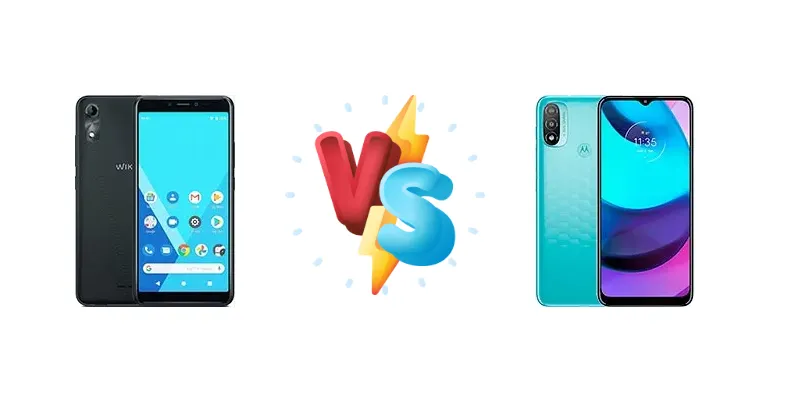
The sub-$150 smartphone market is fiercely competitive. Both the Wiko Sunny5 Lite and Motorola Moto E20 aim to deliver essential smartphone functionality at an incredibly accessible price point. However, they take different approaches to achieving this, with the Moto E20 leveraging a more modern chipset architecture while the Sunny5 Lite opts for a simpler, potentially more power-efficient design. This comparison will dissect their key differences to help you choose the right device.
🏆 Quick Verdict
For most users, the Motorola Moto E20 is the better choice. Its Unisoc T606 chipset, featuring Cortex-A75 cores, provides a significantly more responsive experience for everyday tasks and light multitasking compared to the Wiko Sunny5 Lite’s older Cortex-A7 processor. While charging is slower, the performance uplift justifies the trade-off.
| Network |
|---|
| 2G bands | GSM 850 / 900 / 1800 / 1900 | GSM 850 / 900 / 1800 / 1900 |
| 3G bands | HSDPA 850 / 900 / 1900 / 2100 | HSDPA 850 / 900 / 1900 / 2100 |
| 4G bands | - | LTE |
| Speed | HSPA 21.1/5.76 Mbps | HSPA 42.2/5.76 Mbps, LTE Cat4 150/50 Mbps |
| Technology | GSM / HSPA | GSM / HSPA / LTE |
| Launch |
|---|
| Announced | 2020, November. Released 2020, November | 2021, September 15 |
| Status | Discontinued | Available. Released 2021, October 04 |
| Body |
|---|
| Build | - | Glass front, plastic frame, plastic back |
| Dimensions | 146.6 x 72.3 x 9 mm (5.77 x 2.85 x 0.35 in) | 164.8 x 75.5 x 8.5 mm (6.49 x 2.97 x 0.33 in) |
| SIM | Nano-SIM + Micro-SIM | Nano-SIM + Nano-SIM |
| Weight | 175 g (6.17 oz) | 184 g (6.49 oz) |
| | - | Water-repellent coating |
| Display |
|---|
| Resolution | 480 x 960 pixels, 18:9 ratio (~197 ppi density) | 720 x 1600 pixels, 20:9 ratio (~270 ppi density) |
| Size | 5.45 inches, 76.7 cm2 (~72.3% screen-to-body ratio) | 6.5 inches, 102.0 cm2 (~82.0% screen-to-body ratio) |
| Type | TN LCD | IPS LCD |
| Platform |
|---|
| CPU | Quad-core 1.3 GHz Cortex-A7 | Octa-core (2x1.6 GHz Cortex-A75 & 6x1.6 GHz Cortex-A55) |
| Chipset | - | Unisoc T606 (12 nm) |
| GPU | Mali-T820 MP1 | Mali-G57 MP1 |
| OS | Android 10 (Go Edition) | Android 11 (Go edition) |
| Memory |
|---|
| Card slot | microSDXC | microSDXC (uses shared SIM slot) |
| Internal | 32GB 1GB RAM | 32GB 2GB RAM, 32GB 3GB RAM |
| | eMMC 5.1 | eMMC 5.1 |
| Main Camera |
|---|
| Dual | - | 13 MP, f/2.2, 26mm (wide), PDAF
2 MP (macro) |
| Features | LED flash, HDR | LED flash, HDR, panorama |
| Single | 5 MP | - |
| Video | 720p@30fps | 1080p@30fps |
| Selfie camera |
|---|
| Features | - | HDR |
| Single | 5 MP | 5 MP, f/2.2 |
| Video | - | 1080p@30fps |
| Sound |
|---|
| 3.5mm jack | Yes | Yes |
| 35mm jack | Yes | Yes |
| Loudspeaker | Yes | Yes |
| Comms |
|---|
| Bluetooth | 4.2, A2DP | 5.0, A2DP, LE |
| NFC | No | No |
| Positioning | GPS, GLONASS | GPS |
| Radio | FM radio | FM radio |
| USB | microUSB 2.0 | USB Type-C 2.0 |
| WLAN | Wi-Fi 802.11 b/g/n | Wi-Fi 802.11 b/g/n |
| Features |
|---|
| Sensors | Accelerometer, proximity | Fingerprint (rear-mounted), accelerometer, proximity |
| Battery |
|---|
| Charging | - | 10W wired |
| Type | Li-Ion 2500 mAh, removable | Li-Po 4000 mAh |
| Misc |
|---|
| Colors | Deep Grey, Gold, Mint | Blue, Gray |
| Models | - | XT2155, XT2155-1, XT2155-3, XT2155-6 |
| Price | About 60 EUR | About 90 EUR |
| SAR | 0.70 W/kg (head) 1.55 W/kg (body) | - |
Wiko Sunny5 Lite
- Potentially longer standby time due to less powerful processor
- Simpler user experience for basic tasks
- Likely more affordable
- Significantly slower performance
- Outdated processor architecture
- Limited multitasking capabilities
Motorola Moto E20
- Faster and more responsive performance thanks to Cortex-A75 cores
- More modern chipset architecture (Unisoc T606)
- Better suited for running modern apps
- Slower 10W charging
- Potentially shorter battery life under heavy use
- May be slightly more expensive
Display Comparison
Neither device boasts a standout display. The Wiko Sunny5 Lite’s display specifications are unavailable, but given its price point, we can assume a basic LCD panel with a resolution likely around 720p+. The Motorola Moto E20 also features a 720p+ LCD, but the key difference lies in processing power to drive it. The lack of information on the Wiko’s panel makes accurate color accuracy or brightness comparisons impossible, but it’s safe to assume both will struggle in direct sunlight. Bezels are likely to be substantial on both devices, typical of this price bracket.
Camera Comparison
Both phones are unlikely to deliver impressive camera performance. Details on the Wiko Sunny5 Lite’s camera are unavailable, but budget phones often rely on low-resolution sensors. The Moto E20 features a 13MP main camera, which is a reasonable specification for its price range. However, image quality will heavily depend on the image signal processor (ISP) within the Unisoc T606, and software processing. Expect decent results in good lighting conditions, but significant noise and a lack of detail in low light. The presence of a 2MP macro camera on the Moto E20 is largely marketing fluff; its limited resolution offers minimal practical benefit.
Performance
This is where the Moto E20 pulls ahead significantly. The Wiko Sunny5 Lite’s Quad-core 1.3 GHz Cortex-A7 CPU is based on an older ARM architecture. In contrast, the Motorola Moto E20’s Unisoc T606 utilizes an Octa-core configuration with 2x1.6 GHz Cortex-A75 performance cores and 6x1.6 GHz Cortex-A55 efficiency cores, fabricated on a more efficient 12nm process. The Cortex-A75 cores represent a substantial architectural leap over the A7, offering significantly improved single-core and multi-core performance. This translates to faster app loading times, smoother scrolling, and a more responsive user experience on the Moto E20. The Wiko will likely struggle with even moderately demanding apps.
Battery Life
Battery life is a complex equation. While the Wiko Sunny5 Lite’s battery capacity is unknown, its less powerful processor *could* translate to longer standby times. The Moto E20’s battery capacity is also unspecified, but its more powerful processor will consume more energy during active use. The Moto E20 supports 10W wired charging, which is slow by modern standards. The Wiko’s charging speed is unknown, but likely similar. The performance advantage of the Moto E20 means users may be less inclined to spend extended periods using the device, potentially offsetting some of the battery drain.
Buying Guide
Buy the Wiko Sunny5 Lite if you prioritize absolute simplicity and potentially longer battery life for extremely basic usage – think calls, texts, and very light web browsing. It’s best suited for first-time smartphone users or those needing a durable, no-frills device. Buy the Motorola Moto E20 if you want a phone that feels more responsive and capable of handling modern apps and occasional multitasking. It’s a better fit for users who want a smoother experience and aren’t willing to compromise on performance for a minimal battery life gain.
Frequently Asked Questions
❓ Will the Motorola Moto E20 struggle with popular social media apps like Facebook and Instagram?
While the Unisoc T606 isn't a powerhouse, it's capable of running Facebook and Instagram smoothly. You might experience occasional slowdowns with multiple apps open simultaneously, but for typical social media usage, it should be adequate. The Wiko Sunny5 Lite's older processor is more likely to struggle with these apps.
❓ Is the Motorola Moto E20 a good choice for mobile gaming?
The Moto E20 is not designed for demanding mobile games. While it can handle simpler titles, you'll likely need to lower graphics settings and accept lower frame rates for more intensive games. The Wiko Sunny5 Lite is even less suitable for gaming due to its significantly weaker processor.
❓ Does the Motorola Moto E20 support software updates?
Motorola typically provides at least one major Android update and a few security patches for its budget phones. However, the Moto E20 is an entry-level device, so long-term software support is not guaranteed. The Wiko Sunny5 Lite's update schedule is even less predictable.