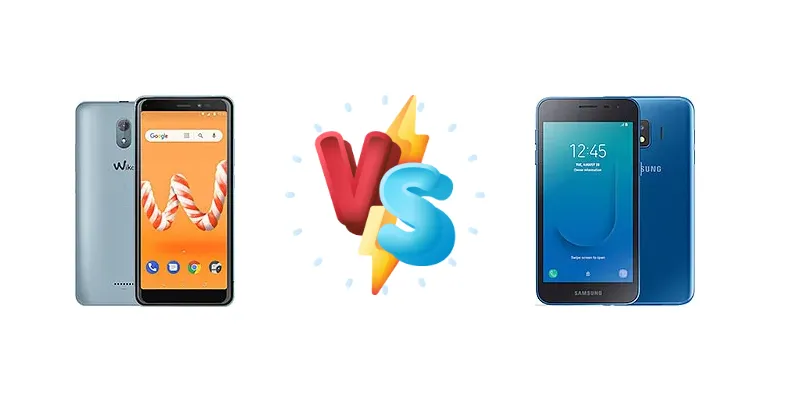
The Wiko Sunny3 Plus and Samsung Galaxy J2 Core (2020) represent the absolute bottom end of the smartphone market. Both aim to deliver basic functionality at the lowest possible price point, but significant differences in their underlying hardware dictate vastly different user experiences. This comparison dissects those differences, focusing on where each phone excels and where it falls short.
🏆 Quick Verdict
For the average user prioritizing responsiveness and a slightly smoother experience, the Samsung Galaxy J2 Core (2020) is the better choice. Its Qualcomm Snapdragon 425 chipset, built on a 28nm process, offers a noticeable performance advantage over the Wiko Sunny3 Plus’s older Cortex-A7 architecture, despite the slightly lower clock speed.
| Network |
|---|
| 2G bands | GSM 850 / 900 / 1800 / 1900 | GSM 850 / 900 / 1800 / 1900 |
| 3G bands | HSDPA 850 / 900 / 2100 | HSDPA 850 / 900 / 2100 |
| 4G bands | - | 1, 3, 5, 8, 40, 41 |
| Speed | HSPA 21.1/5.76 Mbps | HSPA 42.2/5.76 Mbps, LTE Cat4 150/50 Mbps |
| Technology | GSM / HSPA | GSM / HSPA / LTE |
| Launch |
|---|
| Announced | 2019. Released 2019 | 2020, April 27. Released 2020, April 27 |
| Status | Discontinued | Discontinued |
| Body |
|---|
| Build | - | Glass front, plastic back, plastic frame |
| Dimensions | 148 x 72 x 9.3 mm (5.83 x 2.83 x 0.37 in) | 143.4 x 72.1 x 8.9 mm (5.65 x 2.84 x 0.35 in) |
| SIM | Dual SIM (Micro-SIM, dual stand-by) | Dual SIM (Micro-SIM, dual stand-by) |
| Weight | 175 g (6.17 oz) | 154 g (5.43 oz) |
| Display |
|---|
| Resolution | 480 x 960 pixels, 18:9 ratio (~197 ppi density) | 540 x 960 pixels, 16:9 ratio (~220 ppi density) |
| Size | 5.45 inches, 76.7 cm2 (~71.9% screen-to-body ratio) | 5.0 inches, 68.9 cm2 (~66.7% screen-to-body ratio) |
| Type | TN TFT LCD | PLS LCD |
| Platform |
|---|
| CPU | Quad-core 1.3 GHz Cortex-A7 | Quad-core 1.4 GHz Cortex-A53 |
| Chipset | - | Qualcomm MSM8917 Snapdragon 425 (28 nm) |
| GPU | Mali-400 MP2 | Adreno 308 |
| OS | Android 8.0 Oreo (Go edition) | Android 8.1 Oreo (Go edition) |
| Memory |
|---|
| Card slot | microSDXC | microSDXC (dedicated slot) |
| Internal | 8GB 1GB RAM | 16GB 1GB RAM |
| | - | eMMC 5.0 |
| Main Camera |
|---|
| Features | LED flash, HDR | LED flash, HDR, panorama |
| Single | 5 MP | 8 MP, f/2.2, AF |
| Video | 1080p@30fps | 1080p@30fps |
| Selfie camera |
|---|
| Single | 2 MP | 5 MP, f/2.2 |
| Sound |
|---|
| 3.5mm jack | Yes | Yes |
| 35mm jack | Yes | Yes |
| Loudspeaker | Yes | Yes |
| Comms |
|---|
| Bluetooth | 4.0, A2DP, LE | 4.2, A2DP |
| NFC | No | No |
| Positioning | GPS | GPS, GLONASS, BDS |
| Radio | FM radio | FM radio |
| USB | microUSB 2.0 | microUSB 2.0, OTG |
| WLAN | Wi-Fi 802.11 b/g/n | Wi-Fi 802.11 b/g/n, Wi-Fi Direct |
| Features |
|---|
| Sensors | Accelerometer, proximity | Accelerometer, proximity |
| Battery |
|---|
| Type | Li-Ion 2200 mAh | Li-Ion 2600 mAh, removable |
| Misc |
|---|
| Colors | Anthracite, Gold, Cherry Red, Grey | Black, Gold, Blue |
| Models | - | SM-J260GU, SM-J260GU/DS, SM-J260FU, SM-J260MU |
| Price | About 50 EUR | About 130 EUR |
| SAR | - | 0.99 W/kg (head) |
Wiko Sunny3 Plus
- Potentially lower price point
- Compact and lightweight design (likely)
- Basic functionality for calls and messaging
- Outdated Cortex-A7 processor
- Poor performance for multitasking
- Limited app compatibility (potentially)
Samsung Galaxy J2 Core (2020)
- More modern Snapdragon 425 chipset
- Improved performance and responsiveness
- Better power efficiency
- Slightly higher price point
- Still limited overall performance
- Basic camera capabilities
Display Comparison
Neither device boasts a standout display. Given the context of these phones, display specs are likely very similar and not provided. We can assume both utilize low-resolution panels, likely TN LCDs, prioritizing cost over image quality. Bezels are expected to be substantial on both, maximizing screen real estate within a compact form factor. Color accuracy and viewing angles will be limited on both devices.
Camera Comparison
Camera performance on both devices will be extremely limited. Without specific sensor details, it’s safe to assume both feature basic, low-resolution sensors. Any marketing around camera capabilities should be viewed with extreme skepticism. Image quality will be acceptable only in ideal lighting conditions. The absence of Optical Image Stabilization (OIS) on either device means low-light performance will be poor, and images will likely suffer from significant noise and blur. The focus should be on functional image capture for basic documentation, not photography.
Performance
The core difference lies in the chipset. The Samsung Galaxy J2 Core (2020) utilizes the Qualcomm MSM8917 Snapdragon 425, a 28nm chipset with a quad-core 1.4 GHz Cortex-A53 CPU. This architecture is significantly more efficient and capable than the Wiko Sunny3 Plus’s quad-core 1.3 GHz Cortex-A7. The Cortex-A53 offers improved instructions per clock cycle (IPC) and benefits from Qualcomm’s optimizations. While both are quad-core, the Snapdragon 425’s architecture translates to faster app launches, smoother multitasking, and a more responsive overall experience. The 28nm process node also contributes to better thermal management, reducing the likelihood of throttling under sustained load.
Battery Life
Battery life will depend heavily on usage patterns. Without mAh specifications, it’s difficult to make a definitive statement. However, the Snapdragon 425’s 28nm process is more power-efficient than the Cortex-A7, potentially giving the Galaxy J2 Core a slight edge in battery endurance. Charging speeds are likely to be slow on both devices, utilizing standard micro-USB charging. Expect several hours for a full charge from 0%.
Buying Guide
Buy the Wiko Sunny3 Plus if you absolutely need the lowest possible upfront cost and are willing to tolerate significant performance limitations for basic tasks like calls and messaging. Buy the Samsung Galaxy J2 Core (2020) if you value a more responsive user interface, slightly better app loading times, and a more modern chipset architecture, even if it means spending a bit more.
Frequently Asked Questions
❓ Will the Samsung Galaxy J2 Core (2020) struggle with popular apps like WhatsApp or Facebook?
While the Snapdragon 425 is more capable than the Wiko's processor, it's still an entry-level chipset. Expect some lag and slower loading times with these apps, especially when multitasking. It will function, but don't expect a fluid experience.
❓ Is the Wiko Sunny3 Plus suitable for a first-time smartphone user?
The Wiko Sunny3 Plus is suitable only for users with extremely basic needs – primarily calls and texts. Its limited performance will frustrate anyone attempting more demanding tasks. It's best suited for those who simply need a functional communication device.
❓ Can either of these phones run modern mobile games?
Neither phone is capable of running modern, graphically intensive games. Simple, older games might be playable at low settings, but expect significant frame rate drops and a generally poor gaming experience.