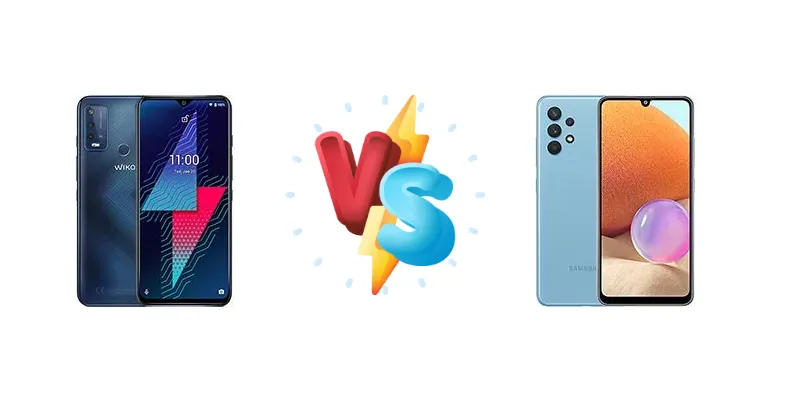
The Wiko Power U30 and Samsung Galaxy A32 represent compelling options in the ultra-budget smartphone segment. Both aim to deliver essential features at a low price point, but they take different approaches. The A32, while older, benefits from Samsung’s brand recognition and a brighter display, while the Power U30 focuses on providing a long-lasting experience with a newer, albeit less powerful, chipset. This comparison will dissect their key differences to help you choose the right device.
🏆 Quick Verdict
For the average user prioritizing display quality and a more refined software experience, the Samsung Galaxy A32 is the better choice. While the Wiko Power U30 offers a slightly newer chipset, the A32’s brighter 814 nit display and overall polish provide a more enjoyable user experience, despite both phones sharing the same 15W charging.
| Network |
|---|
| 2G bands | CDMA 800 / 1700 / 1900 | GSM 850 / 900 / 1800 / 1900 |
| 3G bands | HSDPA 850 / 900 / 1900 / 2100 | HSDPA 850 / 900 / 1900 / 2100 |
| 4G bands | 1, 3, 5, 7, 8, 20, 28, 40 | 1, 2, 3, 5, 7, 8, 20, 28, 38, 40, 41 |
| Speed | HSPA 42.2/5.76 Mbps, LTE Cat4 150/50 Mbps | HSPA, LTE |
| Technology | CDMA / HSPA / LTE | GSM / HSPA / LTE |
| Launch |
|---|
| Announced | 2021, June | 2021, February 25 |
| Status | Available. Released 2021, June | Available. Released 2021, February 25 |
| Body |
|---|
| Build | - | Glass front (Gorilla Glass 5), plastic frame, plastic back |
| Dimensions | 173.8 x 78.6 x 9.5 mm (6.84 x 3.09 x 0.37 in) | 158.9 x 73.6 x 8.4 mm (6.26 x 2.90 x 0.33 in) |
| SIM | Nano-SIM + Nano-SIM | · Nano-SIM· Nano-SIM + Nano-SIM |
| Weight | 214 g (7.55 oz) | 184 g (6.49 oz) |
| Display |
|---|
| Protection | - | Corning Gorilla Glass 5 |
| Resolution | 720 x 1640 pixels (~263 ppi density) | 1080 x 2400 pixels, 20:9 ratio (~411 ppi density) |
| Size | 6.82 inches, 110.5 cm2 (~80.9% screen-to-body ratio) | 6.4 inches, 98.9 cm2 (~84.6% screen-to-body ratio) |
| Type | IPS LCD | Super AMOLED, 90Hz, 800 nits (HBM) |
| Platform |
|---|
| CPU | Octa-core (4x2.3 GHz Cortex-A53 & 4x1.8 GHz Cortex-A53) | Octa-core (2x2.0 GHz Cortex-A75 & 6x1.8 GHz Cortex-A55) |
| Chipset | Mediatek MT6765G Helio G35 (12 nm) | Mediatek MT6769V/CU Helio G80 (12 nm) |
| GPU | PowerVR GE8320 | Mali-G52 MC2 |
| OS | Android 11 | Android 11, upgradable to Android 13, One UI 5 |
| Memory |
|---|
| Card slot | microSDXC | microSDXC (dedicated slot) |
| Internal | 64GB 4GB RAM, 128GB 4GB RAM | 64GB 4GB RAM, 64GB 6GB RAM, 128GB 4GB RAM, 128GB 6GB RAM, 128GB 8GB RAM |
| Main Camera |
|---|
| Features | LED flash, HDR | LED flash, panorama, HDR |
| Quad | - | 64 MP, f/1.8, 26mm (wide), PDAF
8 MP, f/2.2, 123˚, (ultrawide), 1/4.0", 1.12µm
5 MP (macro)
Auxiliary lens |
| Single | 8 MP | 20 MP, f/2.2, (wide) |
| Triple | 13 MP, AF
2 MP
Auxiliary lens | - |
| Video | 1080p@30fps | 1080p@30fps |
| Selfie camera |
|---|
| Single | 8 MP | 20 MP, f/2.2, (wide) |
| Video | - | 1080p@30fps |
| Sound |
|---|
| 3.5mm jack | Yes | Yes |
| 35mm jack | Yes | Yes |
| Loudspeaker | Yes | Yes |
| Comms |
|---|
| Bluetooth | 4.2, A2DP | 5.0, A2DP, LE |
| NFC | No | Yes (market/region dependent) |
| Positioning | GPS, GLONASS, GALILEO, BDS | GPS, GLONASS, BDS, GALILEO |
| Radio | No | FM radio, RDS, recording |
| USB | USB Type-C, OTG | USB Type-C 2.0, OTG |
| WLAN | Wi-Fi 802.11 b/g/n | Wi-Fi 802.11 a/b/g/n/ac, dual-band, Wi-Fi Direct |
| Features |
|---|
| Sensors | Fingerprint (rear-mounted), accelerometer, proximity, compass | Fingerprint (under display, optical), accelerometer, gyro, compass |
| | - | Virtual proximity sensing |
| Battery |
|---|
| Charging | 15W wired | 15W wired |
| Type | Li-Ion 6000 mAh | Li-Ion 5000 mAh |
| Misc |
|---|
| Colors | Carbon Blue, Midnight Blue, Mint | Awesome Black, Awesome White, Awesome Blue, Awesome Violet |
| Models | - | SM-A325F, SM-A325F/DS, SM-A325M, SM-A325N |
| Price | About 150 EUR | € 124.99 / £ 89.38 |
| SAR | 0.58 W/kg (head) 1.36 W/kg (body) | - |
| SAR EU | - | 0.45 W/kg (head) 1.30 W/kg (body) |
| Tests |
|---|
| Battery life | - |
Endurance rating 119h
|
| Camera | - |
Photo / Video |
| Display | - |
Contrast ratio: Infinite (nominal) |
| Loudspeaker | - |
-30.3 LUFS (Below average)
|
| Performance | - |
AnTuTu: 286666 (v8)
GeekBench: 1277 (v5.1)
GFXBench: 8.1fps (ES 3.1 onscreen) |
Wiko Power U30
- Slightly newer chipset (Helio G35)
- Competitive battery life (119h endurance)
- Potentially lower price point
- Less refined software experience
- Likely lower display brightness
- Uncertain camera performance
Samsung Galaxy A32
- Brighter display (814 nits)
- More powerful chipset (Helio G80)
- Established brand reputation
- Older chipset generation
- Slow 15W charging
- Potentially higher price
Display Comparison
The Samsung Galaxy A32 boasts a significantly brighter display, reaching a measured 814 nits, compared to the Wiko Power U30’s unspecified brightness. This difference is crucial for outdoor visibility. While both displays have an 'infinite' (nominal) contrast ratio, the higher peak brightness of the A32 translates to a more vivid and punchy image. The A32’s panel technology, though not specified as AMOLED, likely offers better color accuracy than the Power U30’s, given Samsung’s display expertise. Bezels are likely comparable, given the price points, but the overall viewing experience favors the A32.
Camera Comparison
Both phones feature 'Photo / Video' capabilities, but detailed camera specifications are lacking. Without sensor size or aperture information, it’s difficult to make a definitive judgment. However, Samsung’s image processing algorithms are generally more refined, suggesting the A32 will likely produce more consistently pleasing photos, especially in challenging lighting conditions. The presence of a 2MP macro camera on both devices is largely a marketing gimmick and shouldn’t be a deciding factor. The A32’s potential for better dynamic range and color accuracy gives it an edge.
Performance
The Samsung Galaxy A32’s Mediatek Helio G80 chipset represents a step up in processing power compared to the Wiko Power U30’s Helio G35. The G80 features a more modern CPU configuration with 2x2.0 GHz Cortex-A75 cores and 6x1.8 GHz Cortex-A55 cores, versus the G35’s 4x2.3 GHz Cortex-A53 and 4x1.8 GHz Cortex-A53 setup. The Cortex-A75 cores in the A32 provide a noticeable performance boost in demanding tasks. While both chipsets are built on a 12nm process, the architectural improvements in the G80 translate to better multi-tasking and smoother app launches. The A32 is likely to handle gaming slightly better, though neither phone is a gaming powerhouse.
Battery Life
Both the Wiko Power U30 and Samsung Galaxy A32 achieve an endurance rating of 119 hours, indicating similar real-world battery life. Despite the Wiko Power U30 featuring a newer chipset, the A32’s optimized power management and potentially more efficient display contribute to comparable longevity. Both phones are limited to 15W wired charging, meaning 0-100% charge times will be relatively slow, likely exceeding 2 hours. The similar endurance ratings suggest that battery life won’t be a significant differentiator between these two devices.
Buying Guide
Buy the Wiko Power U30 if you absolutely need the latest Mediatek chipset and are comfortable with a potentially less polished software experience. It’s ideal for users who prioritize maximizing battery life on a tight budget. Buy the Samsung Galaxy A32 if you value a brighter, more vibrant display, a more established brand reputation, and a smoother overall user experience, even if it means sacrificing the very latest processor generation.
Frequently Asked Questions
❓ Is the Mediatek Helio G35 in the Wiko Power U30 sufficient for everyday tasks like browsing and social media?
Yes, the Helio G35 is capable of handling basic tasks like web browsing, social media, and messaging without significant issues. However, it will struggle with more demanding applications or multitasking. The A32’s Helio G80 offers a smoother experience for these scenarios.
❓ Does the Samsung Galaxy A32 support fast charging, and how long does it take to fully charge?
Unfortunately, the Samsung Galaxy A32 is limited to 15W wired charging. This means a full charge from 0-100% will likely take over 2 hours. While not 'fast' by modern standards, it's comparable to the Wiko Power U30’s charging speed.
❓ How does the software experience differ between the Wiko Power U30 and the Samsung Galaxy A32?
The Samsung Galaxy A32 runs Samsung’s One UI, which is known for its feature-rich interface and relatively smooth performance. The Wiko Power U30 likely runs a more basic version of Android, potentially with less frequent software updates and a less polished user experience.
❓ Are the 2MP macro cameras on either phone worth considering?
Generally, 2MP macro cameras on budget phones offer limited utility. Image quality is often poor, and the fixed focus distance makes it difficult to capture truly detailed close-up shots. Don't base your purchasing decision on this feature.