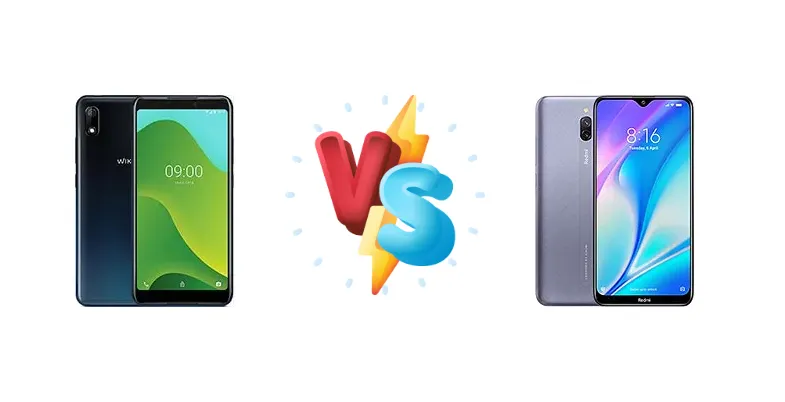
The Wiko Jerry4 and Xiaomi Redmi 8A Pro represent the extreme end of the smartphone price spectrum. Both aim to deliver essential functionality at a minimal cost, but they take drastically different approaches to achieving this. This comparison dissects their core components to determine which offers the best value for users prioritizing affordability.
🏆 Quick Verdict
For the average user, the Xiaomi Redmi 8A Pro is the superior choice. Its Snapdragon 439 chipset provides a significantly more responsive experience than the Wiko Jerry4’s aging Cortex-A7 processor, and the inclusion of 18W fast charging is a substantial convenience. While the Jerry4 is cheaper, the performance trade-off is too significant for most.
| Network |
|---|
| 2G bands | GSM 850 / 900 / 1800 / 1900 | GSM 850 / 900 / 1800 / 1900 |
| 3G bands | HSDPA 900 / 2100 | HSDPA 850 / 900 / 1900 / 2100 |
| 4G bands | - | 1, 3, 5, 8, 40, 41 |
| Speed | HSPA 21.1/5.76 Mbps | HSPA, LTE |
| Technology | GSM / HSPA | GSM / HSPA / LTE |
| Launch |
|---|
| Announced | 2019, July. Released 2019, July | 2020, April 02. Released 2020, April 02 |
| Status | Discontinued | Discontinued |
| Body |
|---|
| Build | - | Glass front (Gorilla Glass 5), plastic back, plastic frame |
| Dimensions | 160 x 77 x 9 mm (6.30 x 3.03 x 0.35 in) | 156.5 x 75.4 x 9.4 mm (6.16 x 2.97 x 0.37 in) |
| SIM | Dual SIM (Micro-SIM, dual stand-by) | Nano-SIM + Nano-SIM |
| Weight | 167 g (5.89 oz) | 188 g (6.63 oz) |
| | - | Water-repellent coating |
| Display |
|---|
| Protection | - | Corning Gorilla Glass 5 |
| Resolution | 720 x 1440 pixels, 18:9 ratio (~269 ppi density) | 720 x 1520 pixels, 19:9 ratio (~270 ppi density) |
| Size | 5.99 inches, 92.6 cm2 (~75.2% screen-to-body ratio) | 6.22 inches, 96.6 cm2 (~81.8% screen-to-body ratio) |
| Type | IPS LCD | IPS LCD, 400 nits (typ) |
| Platform |
|---|
| CPU | Quad-core 1.3 GHz Cortex-A7 | Octa-core (4x1.95 GHz Cortex-A53 & 4x1.45 GHz Cortex A53) |
| Chipset | - | Qualcomm SDM439 Snapdragon 439 (12 nm) |
| GPU | Mali-T820 MP1 | Adreno 505 |
| OS | Android 9.0 Pie (Go Edition) | Android 9.0 (Pie), planned upgrade to Android 10, MIUI 12 |
| Memory |
|---|
| Card slot | microSDHC | microSDXC (dedicated slot) |
| Internal | 16GB 1GB RAM | 32GB 2GB RAM, 32GB 3GB RAM |
| | - | eMMC 5.1 |
| Main Camera |
|---|
| Dual | - | 13 MP, f/2.2, (wide), 1/3.1", 1.12µm, PDAF
Auxiliary lens |
| Features | LED flash, HDR, panorama | LED flash, HDR, panorama |
| Single | 8 MP, AF | - |
| Video | 1080p@30fps | 1080p@30fps |
| Selfie camera |
|---|
| Features | LED flash | HDR |
| Single | 5 MP | 8 MP, f/2.0, 1/4.0", 1.12µm |
| Video | - | 1080p@30fps |
| Sound |
|---|
| 3.5mm jack | Yes | Yes |
| 35mm jack | Yes | Yes |
| Loudspeaker | Yes, with dual speakers | Yes |
| Comms |
|---|
| Bluetooth | 4.2, A2DP | 4.2, A2DP, LE |
| NFC | No | No |
| Positioning | GPS | GPS, GLONASS, BDS |
| Radio | FM radio | FM Radio, built-in antenna |
| USB | microUSB 2.0, OTG | USB Type-C 2.0, OTG |
| WLAN | Wi-Fi 802.11 b/g/n | Wi-Fi 802.11 b/g/n, Wi-Fi Direct |
| Features |
|---|
| Sensors | Accelerometer, proximity, compass | Accelerometer, proximity, compass |
| Battery |
|---|
| Charging | - | 18W wired
2.5W reverse wired |
| Type | Li-Po 3730 mAh | Li-Po 5000 mAh |
| Misc |
|---|
| Colors | Gradient Dark Blue, Gold | Sky White, Sea Blue, Midnight Grey |
| Price | About 80 EUR | About 90 EUR |
| SAR | 0.50 W/kg (head) 1.61 W/kg (body) | - |
Wiko Jerry4
- Lowest possible price point
- Simple and easy to use
- Compact form factor (likely)
- Significantly slower performance
- Outdated processor architecture
- Slow charging speeds
Xiaomi Redmi 8A Pro
- Faster and more responsive performance
- 18W fast charging
- More efficient processor (Snapdragon 439)
- Slightly higher price
- May have more bloatware (typical of Xiaomi)
- Potentially larger size
Display Comparison
Neither device boasts a standout display. Given the context data, we can assume both utilize LCD panels, typical for this price bracket. The Redmi 8A Pro likely has a larger display, given its overall dimensions, but without specific nit brightness or color gamut data, a direct comparison is difficult. The Jerry4’s display is likely adequate for basic tasks, but will struggle in direct sunlight. The Redmi 8A Pro’s larger screen offers a more immersive experience, even if the panel technology remains standard.
Camera Comparison
Without detailed camera specifications, a precise comparison is challenging. However, it’s safe to assume both devices feature basic camera setups geared towards casual photography. The Redmi 8A Pro likely benefits from Qualcomm’s image signal processing (ISP) within the Snapdragon 439, potentially resulting in better image quality and faster processing. The Wiko Jerry4’s camera performance will likely be limited by its older processor and less sophisticated image processing capabilities. We can expect both to struggle in low-light conditions.
Performance
The performance gap is the most significant differentiator. The Wiko Jerry4’s Quad-core 1.3 GHz Cortex-A7 CPU is a dated architecture. In contrast, the Xiaomi Redmi 8A Pro’s Qualcomm Snapdragon 439 features an Octa-core configuration (4x1.95 GHz Cortex-A53 & 4x1.45 GHz Cortex A53) built on a more efficient 12nm process. This translates to a substantial performance advantage for the Redmi 8A Pro in multitasking, app loading times, and overall responsiveness. The Cortex-A53 cores are significantly more capable than the Cortex-A7, offering a smoother experience even with similar RAM configurations (which are not specified in the provided data, but likely limited on both devices).
Battery Life
While the battery capacity isn’t specified for either device, the Redmi 8A Pro’s 18W wired charging is a major advantage. This allows for significantly faster charging times compared to the Jerry4, which likely supports standard 5W or 10W charging. Even if the Jerry4 has a slightly larger battery capacity, the Redmi 8A Pro’s faster charging will result in less downtime. The 2.5W reverse wired charging on the Redmi 8A Pro, while slow, offers a convenient way to top up accessories like wireless earbuds.
Buying Guide
Buy the Wiko Jerry4 if you absolutely need the lowest possible price and only require basic functionality like calls, texts, and light web browsing. It’s a suitable option for first-time smartphone users or as a temporary device. Buy the Xiaomi Redmi 8A Pro if you prioritize a smoother user experience, faster charging, and a more capable processor for running modern apps and occasional gaming. It’s the better all-rounder for everyday use.
Frequently Asked Questions
❓ Is the Snapdragon 439 in the Redmi 8A Pro capable of playing modern mobile games?
While not a gaming powerhouse, the Snapdragon 439 can handle many popular mobile games at medium settings. Expect playable frame rates in titles like PUBG Mobile and Call of Duty Mobile, but don't anticipate high graphics settings or consistently smooth performance. The Wiko Jerry4’s Cortex-A7 processor would struggle significantly with these games.
❓ How much storage does the Xiaomi Redmi 8A Pro typically offer, and is it expandable?
The Xiaomi Redmi 8A Pro generally comes in 32GB or 64GB storage configurations. Crucially, it includes a dedicated microSD card slot, allowing for storage expansion up to 512GB. This is a significant advantage over devices that rely on shared SIM slots for storage expansion, as it allows you to use both SIM cards and a microSD card simultaneously.
❓ What kind of software experience can I expect on the Wiko Jerry4?
Wiko typically uses a lightly customized version of Android on its devices. Expect a relatively clean interface, but potentially slower software updates compared to Xiaomi. The Jerry4’s older processor may also struggle with newer Android versions, potentially limiting its long-term software support.