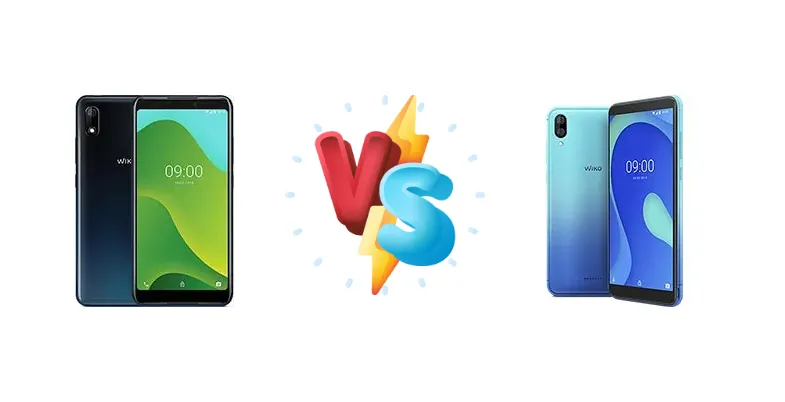
Wiko positions both the Jerry4 and Y80 as ultra-affordable smartphones, but they target slightly different users. The Jerry4 represents a baseline entry point, while the Y80 attempts to offer a more modern experience with an octa-core processor. This comparison dissects the key differences to determine which device delivers the best value.
🏆 Quick Verdict
For most users, the Wiko Y80 is the superior choice. Its Unisoc SC9863A chipset, featuring eight cores, provides a significantly smoother experience for multitasking and app loading compared to the Jerry4’s aging quad-core Cortex-A7. While the Jerry4 is cheaper, the performance gains of the Y80 justify the price difference.
| Network |
|---|
| 2G bands | GSM 850 / 900 / 1800 / 1900 | GSM 850 / 900 / 1800 / 1900 |
| 3G bands | HSDPA 900 / 2100 | HSDPA 850 / 900 / 1900 / 2100 |
| 4G bands | - | 1, 3, 5, 7, 8, 20 |
| Speed | HSPA 21.1/5.76 Mbps | HSPA 42.2/5.76 Mbps, LTE Cat4 150/50 Mbps |
| Technology | GSM / HSPA | GSM / HSPA / LTE |
| Launch |
|---|
| Announced | 2019, July. Released 2019, July | 2019, April. Released 2019, April |
| Status | Discontinued | Discontinued |
| Body |
|---|
| Dimensions | 160 x 77 x 9 mm (6.30 x 3.03 x 0.35 in) | 160 x 76.5 x 8.6 mm (6.30 x 3.01 x 0.34 in) |
| SIM | Dual SIM (Micro-SIM, dual stand-by) | Nano-SIM + Micro-SIM |
| Weight | 167 g (5.89 oz) | 185 g (6.53 oz) |
| Display |
|---|
| Resolution | 720 x 1440 pixels, 18:9 ratio (~269 ppi density) | 720 x 1440 pixels, 18:9 ratio (~269 ppi density) |
| Size | 5.99 inches, 92.6 cm2 (~75.2% screen-to-body ratio) | 5.99 inches, 92.6 cm2 (~75.6% screen-to-body ratio) |
| Type | IPS LCD | IPS LCD |
| Platform |
|---|
| CPU | Quad-core 1.3 GHz Cortex-A7 | Octa-core (4x1.6 GHz Cortex-A55 & 4x1.2 GHz Cortex-A55) |
| Chipset | - | Unisoc SC9863A (28 nm) |
| GPU | Mali-T820 MP1 | IMG8322 |
| OS | Android 9.0 Pie (Go Edition) | Android 9.0 Pie |
| Memory |
|---|
| Card slot | microSDHC | microSDXC |
| Internal | 16GB 1GB RAM | 16GB 2GB RAM |
| Main Camera |
|---|
| Dual | - | 13 MP, AF
2 MP |
| Features | LED flash, HDR, panorama | LED flash, HDR, panorama |
| Single | 8 MP, AF | - |
| Video | 1080p@30fps | 1080p@30fps |
| Selfie camera |
|---|
| Features | LED flash | - |
| Single | 5 MP | 5 MP |
| Sound |
|---|
| 3.5mm jack | Yes | Yes |
| 35mm jack | Yes | Yes |
| Loudspeaker | Yes, with dual speakers | Yes |
| Comms |
|---|
| Bluetooth | 4.2, A2DP | 4.2, A2DP, LE |
| NFC | No | No |
| Positioning | GPS | GPS |
| Radio | FM radio | FM radio |
| USB | microUSB 2.0, OTG | microUSB 2.0, OTG |
| WLAN | Wi-Fi 802.11 b/g/n | Wi-Fi 802.11 b/g/n |
| Features |
|---|
| Languages | - | Dark Blue, Bleen, Gold |
| Sensors | Accelerometer, proximity, compass | Accelerometer, proximity, compass |
| Battery |
|---|
| Type | Li-Po 3730 mAh | Li-Po 4000 mAh, non-removable |
| Misc |
|---|
| Colors | Gradient Dark Blue, Gold | - |
| Models | - | W-V720-SUN |
| Price | About 80 EUR | About 80 EUR |
| SAR | 0.50 W/kg (head) 1.61 W/kg (body) | - |
| SAR EU | - | 0.49 W/kg (head) 1.35 W/kg (body) |
Wiko Jerry4
- Lowest possible price point
- Simple and easy to use
- Compact size (likely)
- Outdated processor
- Slow performance
- Limited multitasking capabilities
Wiko Y80
- Octa-core processor for smoother performance
- More efficient processor for better battery life
- Improved multitasking capabilities
- Slightly higher price
- Still a budget device with limitations
- Likely slow charging
Display Comparison
Neither Wiko provides display specifications beyond size, so a detailed analysis is limited. However, given the price points, both likely utilize IPS LCD panels. The Jerry4’s age suggests a lower resolution and potentially narrower viewing angles. The Y80, being a newer model, may benefit from slight improvements in color accuracy and brightness, though neither is expected to compete with higher-end displays. Bezels are likely substantial on both devices, reflecting their budget nature.
Camera Comparison
Without detailed camera specs, a direct comparison is difficult. Both phones likely feature basic camera setups geared towards casual photography. Given the market segment, image quality will be adequate in good lighting conditions but will struggle in low light. The Y80 *may* have a slightly better image sensor, but the processor’s image signal processor (ISP) will play a larger role in overall image quality. Expect limited features like HDR and potentially a basic portrait mode on the Y80. Any 2MP macro or depth sensors on either device should be considered marketing filler rather than genuinely useful features.
Performance
The core difference lies in the processors. The Wiko Jerry4’s Quad-core 1.3 GHz Cortex-A7 is an older architecture, designed for basic smartphone functions. The Wiko Y80’s Unisoc SC9863A, built on a 28nm process, features an Octa-core configuration (4x1.6 GHz Cortex-A55 & 4x1.2 GHz Cortex-A55). This represents a substantial leap in processing power. The Cortex-A55 cores are significantly more efficient and capable than the A7, resulting in faster app launches, smoother multitasking, and improved responsiveness. The Y80 will handle more demanding apps and light gaming far better than the Jerry4. The 28nm process node, while not cutting-edge, allows for reasonable power efficiency.
Battery Life
Battery capacity is not specified for either device. However, given their similar size and target market, they likely house batteries in the 3000-4000 mAh range. The Y80’s more efficient Unisoc chipset will likely translate to longer battery life despite potentially having a similar capacity to the Jerry4. Charging wattage is also unknown, but both are likely to ship with basic 5W chargers, resulting in relatively slow charging times – expect several hours for a full charge.
Buying Guide
Buy the Wiko Jerry4 if you absolutely need the lowest possible price and your smartphone usage is limited to basic tasks like calls, texts, and light web browsing. Buy the Wiko Y80 if you want a more responsive device capable of handling social media, streaming video, and occasional gaming without significant lag. The Y80 is the better option for anyone who values a fluid user experience.
Frequently Asked Questions
❓ Will the Wiko Y80 be able to run popular social media apps like TikTok and Instagram smoothly?
Yes, the Wiko Y80’s octa-core processor and Cortex-A55 cores are significantly more capable of handling the demands of social media apps like TikTok and Instagram compared to the Jerry4. You should experience smoother scrolling, faster loading times, and fewer instances of lag.
❓ Is the Unisoc SC9863A chipset known for overheating during prolonged use?
The Unisoc SC9863A is a relatively low-power chipset designed for budget smartphones. While it can get warm during extended gaming sessions or heavy multitasking, it is not generally known for significant overheating issues. The 28nm process node is not the most efficient, but the chipset’s overall power draw is low enough to prevent critical thermal throttling in most scenarios.
❓ Can I expect to play demanding games like PUBG Mobile on the Wiko Y80?
While the Wiko Y80 can *run* PUBG Mobile, you’ll need to lower the graphics settings to the lowest possible levels to achieve playable frame rates. The integrated GPU is not powerful enough for smooth gameplay at higher settings. The Jerry4 would struggle significantly even at the lowest settings.
❓ What type of charging port does the Wiko Y80 use?
While not officially specified, most Wiko devices in this price range utilize a Micro-USB port for charging and data transfer. Expect relatively slow charging speeds with the included 5W charger.