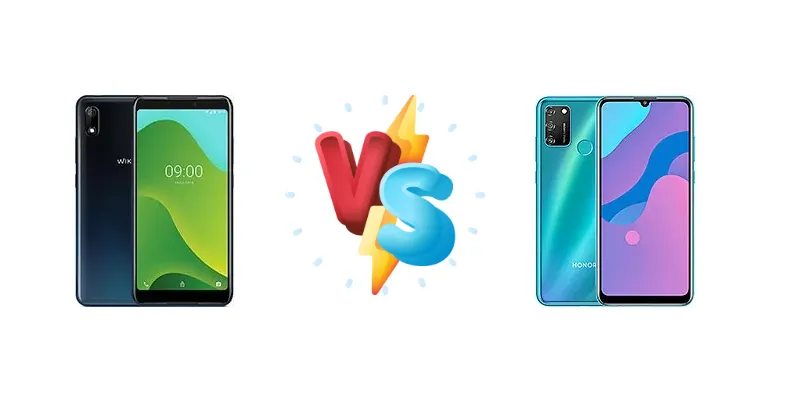
The Wiko Jerry4 and Honor 9A represent the extreme end of the smartphone price spectrum. Both aim to deliver essential functionality at a minimal cost, but they take different approaches. The Jerry4 prioritizes basic usability, while the 9A attempts to offer a more modern experience with a more powerful chipset. This comparison will dissect their strengths and weaknesses to determine which device provides the best value.
🏆 Quick Verdict
For the average user, the Honor 9A is the clear winner. Its Mediatek Helio P22 chipset, with its octa-core configuration, provides a significantly smoother and more responsive experience than the Wiko Jerry4’s quad-core Cortex-A7. While the Jerry4 may have a slightly longer battery life due to its less demanding processor, the 9A’s improved performance outweighs this benefit.
| Network |
|---|
| 2G bands | GSM 850 / 900 / 1800 / 1900 | GSM 850 / 900 / 1800 / 1900 |
| 3G bands | HSDPA 900 / 2100 | HSDPA 850 / 900 / 1900 / 2100 |
| 4G bands | - | 1, 2, 3, 4, 5, 7, 8, 20, 28, 34, 38, 39, 40, 41 |
| Speed | HSPA 21.1/5.76 Mbps | HSPA 42.2/5.76 Mbps, LTE Cat4 150/50 Mbps |
| Technology | GSM / HSPA | GSM / HSPA / LTE |
| Launch |
|---|
| Announced | 2019, July. Released 2019, July | 2020, April 29. Released 2020, May 04 |
| Status | Discontinued | Discontinued |
| Body |
|---|
| Build | - | Glass front, plastic back, plastic frame |
| Dimensions | 160 x 77 x 9 mm (6.30 x 3.03 x 0.35 in) | 159.1 x 74.1 x 9 mm (6.26 x 2.92 x 0.35 in) |
| SIM | Dual SIM (Micro-SIM, dual stand-by) | Nano-SIM + Nano-SIM |
| Weight | 167 g (5.89 oz) | 185 g (6.53 oz) |
| Display |
|---|
| Resolution | 720 x 1440 pixels, 18:9 ratio (~269 ppi density) | 720 x 1600 pixels, 20:9 ratio (~278 ppi density) |
| Size | 5.99 inches, 92.6 cm2 (~75.2% screen-to-body ratio) | 6.3 inches, 95.8 cm2 (~81.3% screen-to-body ratio) |
| Type | IPS LCD | IPS LCD |
| Platform |
|---|
| CPU | Quad-core 1.3 GHz Cortex-A7 | Octa-core (4x2.0 GHz Cortex-A53 & 4x1.5 GHz Cortex-A53) |
| Chipset | - | Mediatek MT6762R Helio P22 (12 nm) |
| GPU | Mali-T820 MP1 | PowerVR GE8320 |
| OS | Android 9.0 Pie (Go Edition) | Android 10, Magic UI 3.1, no Google Play Services |
| Memory |
|---|
| Card slot | microSDHC | microSDXC (dedicated slot) |
| Internal | 16GB 1GB RAM | 64GB 3GB RAM |
| | - | eMMC 5.1 |
| Main Camera |
|---|
| Features | LED flash, HDR, panorama | LED flash, HDR, panorama |
| Single | 8 MP, AF | - |
| Triple | - | 13 MP, f/1.8, (wide), PDAF
5 MP, f/2.2, (ultrawide)
Auxiliary lens |
| Video | 1080p@30fps | 1080p@30fps |
| Selfie camera |
|---|
| Features | LED flash | HDR |
| Single | 5 MP | 8 MP, f/2.0, (wide) |
| Video | - | 1080p@30fps |
| Sound |
|---|
| 3.5mm jack | Yes | Yes |
| 35mm jack | Yes | Yes |
| Loudspeaker | Yes, with dual speakers | Yes |
| Comms |
|---|
| Bluetooth | 4.2, A2DP | 5.0, A2DP, LE |
| NFC | No | Yes (market/region dependent) |
| Positioning | GPS | GPS, GLONASS, BDS |
| Radio | FM radio | FM radio; built-in antenna |
| USB | microUSB 2.0, OTG | microUSB 2.0, OTG |
| WLAN | Wi-Fi 802.11 b/g/n | Wi-Fi 802.11 b/g/n, Wi-Fi Direct |
| Features |
|---|
| Sensors | Accelerometer, proximity, compass | Fingerprint (rear-mounted), accelerometer, proximity |
| Battery |
|---|
| Type | Li-Po 3730 mAh | Li-Po 5000 mAh |
| Misc |
|---|
| Colors | Gradient Dark Blue, Gold | Black, Blue, Green |
| Models | - | MOA-LX9N |
| Price | About 80 EUR | About 150 EUR |
| SAR | 0.50 W/kg (head) 1.61 W/kg (body) | - |
| Tests |
|---|
| Loudspeaker | - |
-26.2 LUFS (Good)
|
Wiko Jerry4
- Lowest possible price point
- Potentially longer battery life due to less demanding processor
- Simple and easy to use
- Significantly slower performance
- Likely low-quality display
- Limited multitasking capabilities
Honor 9A
- Much faster and more responsive performance
- Superior display quality (brightness and contrast)
- More efficient processor (12nm node)
- Slightly higher price
- Potentially shorter battery life (though mitigated by efficiency)
- Camera performance likely still limited
Display Comparison
The Honor 9A boasts a significantly more impressive display, with a measured peak brightness of 546 nits and a 1583:1 contrast ratio. This translates to a much more visible screen outdoors and richer, more vibrant colors. The Wiko Jerry4’s display specifications are not provided, suggesting a lower-quality panel. Given its price point, it likely features lower brightness and contrast, resulting in a washed-out appearance, especially in direct sunlight. The Honor 9A’s superior display makes it the better choice for media consumption and general usability.
Camera Comparison
Neither device is expected to excel in the camera department. Without specific sensor details for the Wiko Jerry4, it’s safe to assume it features a basic camera setup. The Honor 9A’s camera specifications are also not detailed, but the presence of a chipset capable of image signal processing suggests a slightly more refined camera experience. It’s likely both phones will struggle in low-light conditions and produce images with limited detail. Focusing on the primary sensor resolution is key; any secondary sensors (like 2MP macro lenses) are unlikely to provide meaningful improvements.
Performance
The performance gap between these two devices is substantial. The Wiko Jerry4 is equipped with a quad-core 1.3 GHz Cortex-A7 processor, an older architecture designed for basic tasks. In contrast, the Honor 9A features the Mediatek MT6762R Helio P22, an octa-core chipset (4x2.0 GHz Cortex-A53 & 4x1.5 GHz Cortex-A53) built on a more efficient 12nm process. The Helio P22’s eight cores and newer architecture provide a significant boost in multitasking, app loading times, and overall responsiveness. The Cortex-A53 cores, while not high-end, are considerably more capable than the Cortex-A7 found in the Jerry4. This difference will be particularly noticeable when running multiple apps or playing games.
Battery Life
The Wiko Jerry4’s less powerful processor may translate to slightly better battery life, as it consumes less energy. However, the Honor 9A’s 12nm process node is more efficient than older nodes, potentially mitigating the power draw of its octa-core processor. Without knowing the battery capacity of either device, it’s difficult to definitively declare a winner. However, the Honor 9A’s faster processor allows for quicker task completion, potentially reducing the overall time spent using the phone and conserving battery life. Charging speeds are also unknown for both devices, further complicating the comparison.
Buying Guide
Buy the Wiko Jerry4 if you absolutely need the lowest possible price and only intend to use the phone for basic tasks like calls, texts, and light web browsing. It’s a suitable option for first-time smartphone users or as a temporary device. Buy the Honor 9A if you want a more capable smartphone that can handle social media, streaming video, and casual gaming without significant lag. The 9A offers a better overall user experience for a small price premium.
Frequently Asked Questions
❓ Will the Honor 9A struggle with popular apps like Facebook and WhatsApp?
While the Helio P22 isn't a powerhouse, it's more than capable of running apps like Facebook and WhatsApp smoothly. You may experience some slowdown with multiple apps open simultaneously, but for typical social media usage, the Honor 9A should provide a satisfactory experience. The Wiko Jerry4 will likely struggle more with these apps, exhibiting noticeable lag.
❓ Is the Honor 9A suitable for playing mobile games?
The Honor 9A can handle casual mobile games, but don't expect to play demanding titles like PUBG Mobile at high settings. You'll likely need to lower the graphics settings and frame rate to achieve playable performance. The Wiko Jerry4 is unlikely to provide a good gaming experience at all, even with the lowest settings.
❓ How much storage does the Honor 9A typically offer, and is it expandable?
While not specified in the provided data, Honor 9A models typically come with 32GB or 64GB of internal storage, and almost always include a microSD card slot for expandable storage. This is crucial for budget phones, allowing users to store more photos, videos, and apps.