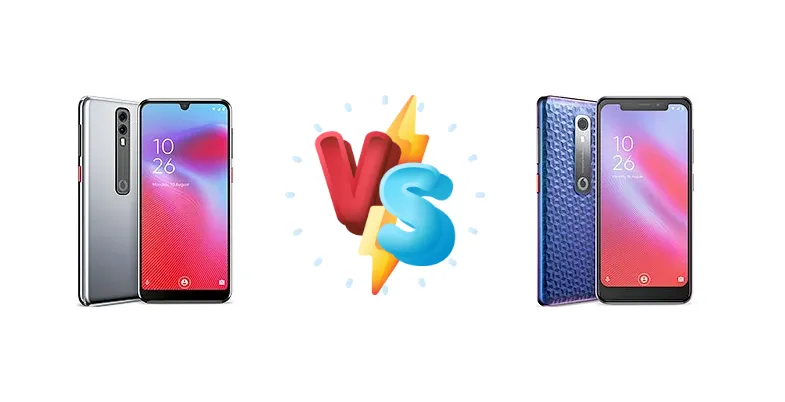
The Vodafone Smart V10 and N10 represent Vodafone’s attempts to deliver affordable Android experiences. Both target the entry-level market, but utilize different chipsets – Qualcomm’s Snapdragon 429 in the V10 and MediaTek’s Helio A22 in the N10. This comparison dissects these core differences to determine which device provides the better user experience for the price.
🏆 Quick Verdict
For the average user prioritizing consistent, if modest, performance, the Vodafone Smart V10 edges out the N10. While both phones share a 2.0 GHz quad-core CPU configuration, the Snapdragon 429 generally exhibits slightly better sustained performance and GPU capabilities, making it a more reliable choice for everyday tasks and light gaming.
| Network |
|---|
| 2G bands | GSM 850 / 900 / 1800 / 1900 | GSM 850 / 900 / 1800 / 1900 |
| 3G bands | HSDPA 850 / 900 / 1900 / 2100 | HSDPA 850 / 900 / 1900 / 2100 |
| 4G bands | 1, 3, 5, 7, 8, 28 | 1, 3, 5, 7, 8, 28 |
| Speed | HSPA 42.2/5.76 Mbps, LTE Cat4 150/50 Mbps | HSPA 42.2/5.76 Mbps, LTE (2CA) Cat6 300/50 Mbps |
| Technology | GSM / HSPA / LTE | GSM / HSPA / LTE |
| Launch |
|---|
| Announced | 2019, May. Released 2019, June | 2019, May. Released 2019, May |
| Status | Discontinued | Discontinued |
| Body |
|---|
| Dimensions | 151.3 x 69.9 x 8.2 mm (5.96 x 2.75 x 0.32 in) | 148.8 x 69.9 x 8.4 mm (5.86 x 2.75 x 0.33 in) |
| SIM | Nano-SIM | Nano-SIM |
| Weight | 145 g (5.11 oz) | 160 g (5.64 oz) |
| Display |
|---|
| Protection | Asahi Dragontrail Glass | Asahi Dragontrail Glass |
| Resolution | 720 x 1560 pixels, 19.5:9 ratio (~291 ppi density) | 720 x 1500 pixels (~293 ppi density) |
| Size | 5.9 inches, 85.5 cm2 (~80.8% screen-to-body ratio) | 5.67 inches, 80.9 cm2 (~77.8% screen-to-body ratio) |
| Type | IPS LCD | IPS LCD |
| Platform |
|---|
| CPU | Quad-core 2.0 GHz Cortex-A53 | Quad-core 2.0 GHz Cortex-A53 |
| Chipset | Qualcomm SDM429 Snapdragon 429 (12 nm) | Mediatek MT6761V/WA Helio A22 (12 nm) |
| GPU | Adreno 504 | PowerVR GE8320 |
| OS | Android 9.0 (Pie) | Android 9.0 (Pie) |
| Memory |
|---|
| Card slot | microSDXC (dedicated slot) | microSDXC (dedicated slot) |
| Internal | 32GB 3GB RAM | 16GB 2GB RAM |
| | eMMC 5.1 | eMMC 5.1 |
| Main Camera |
|---|
| Dual | 13 MP, AF
5 MP | - |
| Features | LED flash, HDR, panorama | LED flash, HDR, panorama |
| Single | - | 13 MP, AF |
| Video | 1080p@30fps | 1080p@30fps |
| Selfie camera |
|---|
| Single | 8 MP | 8 MP |
| Video | - | 1080p@30fps |
| Sound |
|---|
| 3.5mm jack | Yes | Yes |
| 35mm jack | Yes | Yes |
| Loudspeaker | Yes | Yes |
| Comms |
|---|
| Bluetooth | 4.2, A2DP, LE | 4.2, A2DP, LE |
| NFC | No | No |
| Positioning | GPS | GPS |
| Radio | FM radio | FM radio |
| USB | microUSB 2.0 | microUSB 2.0 |
| WLAN | Wi-Fi 802.11 b/g/n | Wi-Fi 802.11 b/g/n |
| Features |
|---|
| Sensors | Accelerometer, proximity | Accelerometer, gyro, proximity |
| Battery |
|---|
| Type | Li-Ion 3400 mAh, non-removable | Li-Ion 2920 mAh, non-removable |
| Misc |
|---|
| Colors | Chrome Pewter | Blue Borealis |
| Models | - | VFD 630, 5048Y |
| Price | About 180 EUR | About 150 EUR |
Vodafone Smart V10
- Slightly better GPU performance with Snapdragon 429
- Potentially more efficient CPU architecture
- Likely more consistent performance under load
- May be slightly more expensive than the N10
- Limited camera capabilities (details unknown)
Vodafone Smart N10
- Most affordable option
- Adequate for basic tasks like calls and texts
- Potentially longer battery life with conservative usage
- Helio A22 chipset offers lower performance
- May struggle with multitasking and demanding apps
- Likely limited software support
Display Comparison
Both the V10 and N10 likely feature similar LCD panels, given their price points. Specifics like resolution and brightness are not provided, but we can assume they are optimized for power efficiency rather than visual fidelity. The absence of details regarding panel technology (IPS, TFT) suggests neither device will excel in color accuracy or viewing angles. Bezels are likely substantial on both, maximizing screen real estate within a compact form factor.
Camera Comparison
Without detailed camera specifications, a direct comparison is difficult. Both phones likely feature basic camera setups geared towards casual photography. The absence of information regarding sensor size, aperture, or image stabilization suggests neither device will excel in low-light conditions or offer advanced photographic features. Any additional cameras (likely a depth sensor or macro) on either device will likely be of low resolution and limited utility.
Performance
The core difference lies in the chipsets. The Vodafone Smart V10’s Qualcomm Snapdragon 429 (12nm) and the N10’s MediaTek Helio A22 (12nm) both utilize a quad-core Cortex-A53 CPU clocked at 2.0 GHz. However, the Snapdragon 429 generally demonstrates superior GPU performance, offering a smoother experience with graphically demanding apps and games. While both are entry-level, Qualcomm’s architecture tends to be more efficient, potentially leading to slightly better sustained performance under load. The 12nm process node is shared, meaning thermal efficiency differences will be minimal.
Battery Life
Battery capacity details are missing for both devices. However, given their entry-level nature, we can expect capacities around 3000-4000 mAh. Charging wattage is also unknown, but likely falls in the 5W-10W range. Real-world battery life will heavily depend on usage patterns, but both phones should be capable of lasting a full day with moderate use, prioritizing power-saving features.
Buying Guide
Buy the Vodafone Smart V10 if you need a phone that can handle basic multitasking and occasional gaming without significant slowdowns. Its Snapdragon 429 chipset offers a small but noticeable performance advantage. Buy the Vodafone Smart N10 if you prioritize absolute affordability and are primarily using the device for calls, texts, and very light app usage. The N10 represents the absolute bottom of the budget spectrum.
Frequently Asked Questions
❓ Will the Vodafone Smart N10 struggle with popular social media apps like Facebook and Instagram?
While the N10 can run these apps, the MediaTek Helio A22 chipset may result in noticeable lag and slower loading times, especially when multitasking or using features like video playback. The V10, with its Snapdragon 429, will offer a smoother experience.
❓ Is either phone suitable for playing mobile games like PUBG Mobile or Call of Duty Mobile?
Neither phone is ideally suited for demanding games. Both chipsets are entry-level and will likely require significant graphics settings reductions to achieve playable frame rates. The V10’s Snapdragon 429 will provide a slightly better gaming experience, but don’t expect high performance.
❓ How long will software updates be supported on the Vodafone Smart V10 and N10?
Given their budget nature, both devices are likely to receive limited software updates. Expect at most one major Android version update, and security patches may be infrequent. Long-term software support is not a strength of either device.