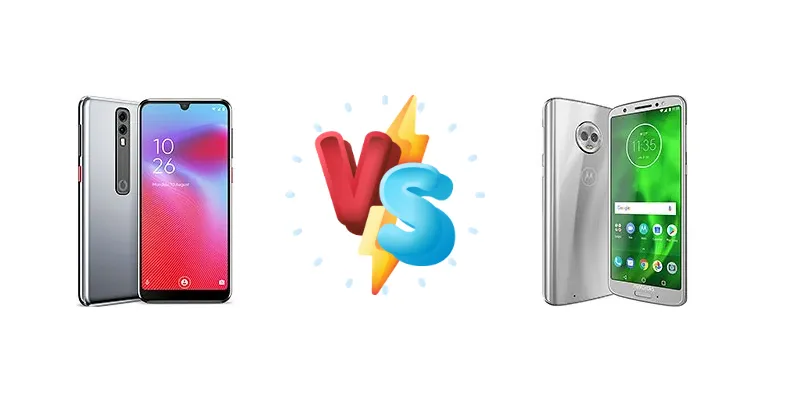
The Vodafone Smart V10 and Motorola Moto G6 were popular budget contenders. Both offer a lot for the price, but which one reigns supreme? This comprehensive comparison dives deep into their specs, performance, and features to help you make an informed decision.
🏆 Quick Verdict
The Motorola Moto G6 edges out the Vodafone Smart V10 thanks to its superior chipset, slightly better performance, and impressive battery life. While the V10 might be more readily available in certain regions, the G6 offers a more well-rounded experience for most users.
| Network |
|---|
| 2G bands | GSM 850 / 900 / 1800 / 1900 | GSM 850 / 900 / 1800 / 1900 - SIM 1 & SIM 2 (dual-SIM model only) |
| 3G bands | HSDPA 850 / 900 / 1900 / 2100 | HSDPA 850 / 900 / 1900 / 2100 - Europe, Brazil |
| 4G bands | 1, 3, 5, 7, 8, 28 | 1, 3, 5, 7, 8, 20, 38 - Europe |
| Speed | HSPA 42.2/5.76 Mbps, LTE Cat4 150/50 Mbps | HSPA 42.2/5.76 Mbps, LTE Cat4 150/50 Mbps or LTE (2CA) Cat6 300/50 Mbps |
| Technology | GSM / HSPA / LTE | GSM / CDMA / HSPA / EVDO / LTE |
| | - | 1, 2, 3, 5, 7, 8, 18, 19, 26, 28, 38, 40, 41 - India |
| Launch |
|---|
| Announced | 2019, May. Released 2019, June | 2018, April. Released 2018, April |
| Status | Discontinued | Discontinued |
| Body |
|---|
| Build | - | Glass front (Gorilla Glass 3), glass back (Gorilla Glass 3), aluminum frame |
| Dimensions | 151.3 x 69.9 x 8.2 mm (5.96 x 2.75 x 0.32 in) | 153.8 x 72.3 x 8.3 mm (6.06 x 2.85 x 0.33 in) |
| SIM | Nano-SIM | · Nano-SIM· Nano-SIM + Nano-SIM |
| Weight | 145 g (5.11 oz) | 167 g (5.89 oz) |
| | - | Water-repellent coating |
| Display |
|---|
| Protection | Asahi Dragontrail Glass | Corning Gorilla Glass 3 |
| Resolution | 720 x 1560 pixels, 19.5:9 ratio (~291 ppi density) | 1080 x 2160 pixels, 18:9 ratio (~424 ppi density) |
| Size | 5.9 inches, 85.5 cm2 (~80.8% screen-to-body ratio) | 5.7 inches, 83.8 cm2 (~75.4% screen-to-body ratio) |
| Type | IPS LCD | IPS LCD |
| Platform |
|---|
| CPU | Quad-core 2.0 GHz Cortex-A53 | Octa-core 1.8 GHz Cortex-A53 |
| Chipset | Qualcomm SDM429 Snapdragon 429 (12 nm) | Qualcomm SDM450 Snapdragon 450 (14 nm) |
| GPU | Adreno 504 | Adreno 506 |
| OS | Android 9.0 (Pie) | Android 8.0 (Oreo), upgradable to Android 9.0 (Pie) |
| Memory |
|---|
| Card slot | microSDXC (dedicated slot) | microSDXC (dedicated slot) |
| Internal | 32GB 3GB RAM | 32GB 3GB RAM, 64GB 4GB RAM |
| | eMMC 5.1 | eMMC 5.1 |
| Main Camera |
|---|
| Dual | 13 MP, AF
5 MP | 12 MP, f/1.8, 1/2.55", 1.4µm, PDAF
Auxiliary lens |
| Features | LED flash, HDR, panorama | Dual-LED dual-tone flash, panorama, auto-HDR |
| Video | 1080p@30fps | 1080p@60/30fps |
| Selfie camera |
|---|
| Features | - | LED flash |
| Single | 8 MP | 8 MP
or
16 MP, f/2.2, 1/3.06", 1.0µm |
| Video | - | 1080p@30fps |
| Sound |
|---|
| 3.5mm jack | Yes | Yes |
| 35mm jack | Yes | Yes |
| Loudspeaker | Yes | Yes |
| Comms |
|---|
| Bluetooth | 4.2, A2DP, LE | 4.2, A2DP, LE, EDR |
| NFC | No | Yes (Europe model) |
| Positioning | GPS | GPS, GLONASS, BDS |
| Radio | FM radio | FM radio |
| USB | microUSB 2.0 | USB Type-C 2.0 |
| WLAN | Wi-Fi 802.11 b/g/n | Wi-Fi 802.11 a/b/g/n, dual-band, Wi-Fi Direct |
| Features |
|---|
| Sensors | Accelerometer, proximity | Fingerprint (front-mounted), accelerometer, gyro, proximity, compass |
| Battery |
|---|
| Charging | - | 15W wired |
| Type | Li-Ion 3400 mAh, non-removable | Li-Ion 3000 mAh, non-removable |
| Misc |
|---|
| Colors | Chrome Pewter | Deep Indigo, Silver, Blush, Black |
| Models | - | XT1925, XT1925-10 |
| Price | About 180 EUR | About 200 EUR |
| SAR | - | 1.10 W/kg (head) 1.41 W/kg (body) |
| SAR EU | - | 0.64 W/kg (head) 1.36 W/kg (body) |
| Tests |
|---|
| Audio quality | - |
Noise -88.5dB / Crosstalk -88.8dB |
| Battery life | - |
Endurance rating 64h
|
| Camera | - |
Photo / Video |
| Display | - |
Contrast ratio: 1090:1 (nominal), 3.448 (sunlight) |
| Loudspeaker | - |
Voice 81dB / Noise 75dB / Ring 83dB
|
| Performance | - |
AnTuTu: 70845 (v7)
GeekBench: 3972 (v4.4)
GFXBench: 3.2fps (ES 3.1 onscreen) |
Vodafone Smart V10
- Potentially more affordable
- Decent display
- Compact size
- Weaker chipset
- Shorter battery life
- Less readily available in some regions
Motorola Moto G6
- Better performance
- Excellent battery life
- Good camera
- 15W charging
- May be slightly more expensive
- Design can be considered dated
Display Comparison
Both phones feature a 5.7-inch display, likely with an HD+ resolution. The Moto G6's contrast ratio is excellent, and its sunlight readability is notably strong. The V10's display is likely adequate but may not match the G6's vibrancy and outdoor visibility. The Moto G6's slightly larger screen and potentially better color accuracy give it a slight edge.
Camera Comparison
Camera performance is generally comparable, but the Moto G6 likely has slightly better image processing and low-light capabilities. Both phones offer standard photo and video features. The G6's camera app might offer more features and customization options. Expect decent image quality from both, but the G6 is likely the better choice for photography enthusiasts.
Performance
The Motorola Moto G6's Snapdragon 450 (Octa-core 1.8 GHz) offers a noticeable performance advantage over the Vodafone Smart V10's Snapdragon 429 (Quad-core 2.0 GHz). The G6's eight cores and more efficient 14nm process translate to smoother multitasking and app loading. While both are budget phones, the G6 handles everyday tasks more comfortably.
Battery Life
The Motorola Moto G6 boasts an exceptional endurance rating of 64 hours, a significant advantage over the V10. This translates to multiple days of use on a single charge. The V10's battery life is respectable, but it won't match the G6's longevity. The G6's 15W wired charging is also a plus.
Buying Guide
The Vodafone Smart V10 is a good option if you prioritize affordability and are in a region where it's easily accessible. The Motorola Moto G6 is ideal for users seeking a reliable, long-lasting phone with decent performance and a good camera for the price.
Frequently Asked Questions
❓ Which phone is better for gaming?
The Motorola Moto G6 is the better choice for gaming due to its more powerful Snapdragon 450 chipset.
❓ Is the Vodafone Smart V10 still worth buying?
If you find a significantly cheaper deal on the V10 and are primarily using it for basic tasks, it can be a viable option. However, the Moto G6 offers a more compelling overall package.