
Vodafone Smart V10 vs. iPhone SE (2020): A Clash of Titans (on a Budget)
| Phones Images | |||||
|---|---|---|---|---|---|
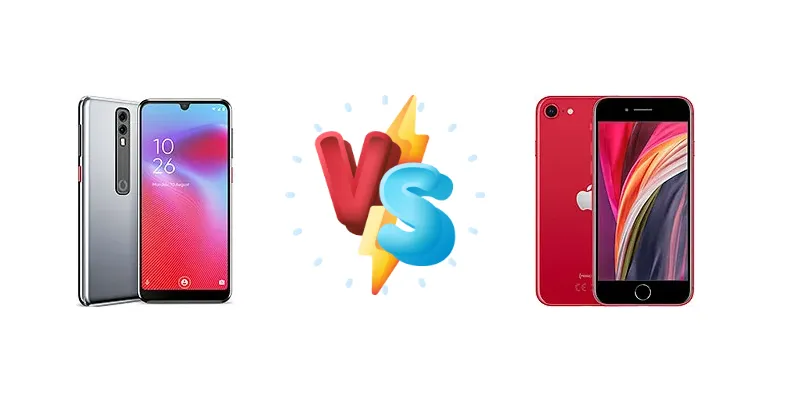
|
🏆 Quick Verdict
The iPhone SE (2020) decisively wins thanks to its vastly superior performance (A13 Bionic chip), excellent camera, and iOS ecosystem. While the Vodafone V10 offers a larger screen and potentially more RAM for the price, the iPhone's overall quality and longevity make it the better choice.
| PHONES | ||
|---|---|---|
| Phone Names | Vodafone Smart V10 | Apple iPhone SE (2020) |
| Network | ||
|---|---|---|
| 2G bands | GSM 850 / 900 / 1800 / 1900 | GSM 850 / 900 / 1800 / 1900 |
| 3G bands | HSDPA 850 / 900 / 1900 / 2100 | HSDPA 850 / 900 / 1700(AWS) / 1900 / 2100 |
| 4G bands | 1, 3, 5, 7, 8, 28 | 1, 2, 3, 4, 5, 7, 8, 11, 12, 13, 17, 18, 19, 20, 21, 25, 26, 28, 29, 30, 32, 34, 38, 39, 40, 41, 42, 46, 48, 66 - A2296 |
| Speed | HSPA 42.2/5.76 Mbps, LTE Cat4 150/50 Mbps | HSPA 42.2/5.76 Mbps, LTE (5CA) Cat16 1024/150 Mbps, EV-DO Rev.A 3.1 Mbps |
| Technology | GSM / HSPA / LTE | GSM / CDMA / HSPA / EVDO / LTE |
| - | 1, 2, 3, 4, 5, 7, 8, 12, 13, 14, 17, 18, 19, 20, 25, 26, 29, 30, 34, 38, 39, 40, 41, 42, 46, 48, 66, 71 - A2275, A2298 | |
| Launch | ||
|---|---|---|
| Announced | 2019, May. Released 2019, June | 2020, April 15 |
| Status | Discontinued | Available. Released 2020, April 24 |
| Body | ||
|---|---|---|
| Build | - | Glass front, glass back, aluminum frame |
| Dimensions | 151.3 x 69.9 x 8.2 mm (5.96 x 2.75 x 0.32 in) | 138.4 x 67.3 x 7.3 mm (5.45 x 2.65 x 0.29 in) |
| SIM | Nano-SIM | Nano-SIM + eSIM |
| Weight | 145 g (5.11 oz) | 148 g (5.22 oz) |
| - | IP67 dust/water resistant (up to 1m for 30 min) Apple Pay (Visa, MasterCard, AMEX certified) | |
| Display | ||
|---|---|---|
| Protection | Asahi Dragontrail Glass | Ion-strengthened glass |
| Resolution | 720 x 1560 pixels, 19.5:9 ratio (~291 ppi density) | 750 x 1334 pixels, 16:9 ratio (~326 ppi density) |
| Size | 5.9 inches, 85.5 cm2 (~80.8% screen-to-body ratio) | 4.7 inches, 60.9 cm2 (~65.4% screen-to-body ratio) |
| Type | IPS LCD | Retina IPS LCD, 625 nits (typ) |
| Platform | ||
|---|---|---|
| CPU | Quad-core 2.0 GHz Cortex-A53 | Hexa-core (2x2.65 GHz Lightning + 4x1.8 GHz Thunder) |
| Chipset | Qualcomm SDM429 Snapdragon 429 (12 nm) | Apple A13 Bionic (7 nm+) |
| GPU | Adreno 504 | Apple GPU (4-core graphics) |
| OS | Android 9.0 (Pie) | iOS 13, upgradable to iOS 26.1 |
| Memory | ||
|---|---|---|
| Card slot | microSDXC (dedicated slot) | No |
| Internal | 32GB 3GB RAM | 64GB 3GB RAM, 128GB 3GB RAM, 256GB 3GB RAM |
| eMMC 5.1 | NVMe | |
| Main Camera | ||
|---|---|---|
| Dual | 13 MP, AF 5 MP | - |
| Features | LED flash, HDR, panorama | Quad-LED dual-tone flash, HDR, panorama |
| Single | - | 12 MP, f/1.8 (wide), PDAF, OIS |
| Video | 1080p@30fps | 4K@24/30/60fps, 1080p@30/60/120/240fps, HDR, OIS, stereo sound rec. |
| Selfie camera | ||
|---|---|---|
| Features | - | HDR |
| Single | 8 MP | 7 MP, f/2.2 |
| Video | - | 1080p@30fps; gyro-EIS |
| Sound | ||
|---|---|---|
| 3.5mm jack | Yes | No |
| 35mm jack | Yes | No |
| Loudspeaker | Yes | Yes, with stereo speakers |
| Comms | ||
|---|---|---|
| Bluetooth | 4.2, A2DP, LE | 5.0, A2DP, LE |
| NFC | No | Yes |
| Positioning | GPS | GPS, GLONASS |
| Radio | FM radio | No |
| USB | microUSB 2.0 | Lightning, USB 2.0 |
| WLAN | Wi-Fi 802.11 b/g/n | Wi-Fi 802.11 a/b/g/n/ac/6, dual-band, hotspot |
| Features | ||
|---|---|---|
| Sensors | Accelerometer, proximity | Fingerprint (front-mounted), accelerometer, proximity, gyro, compass, barometer |
| Battery | ||
|---|---|---|
| Charging | - | 18W wired, 50% in 30 min 7.5W wireless (Qi) |
| Type | Li-Ion 3400 mAh, non-removable | Li-Ion 1821 mAh (6.91 Wh) |
| Misc | ||
|---|---|---|
| Colors | Chrome Pewter | Black, White, Red |
| Models | - | A2275, A2296, A2298, iPhone12,8 |
| Price | About 180 EUR | $ 120.00 / C$ 165.75 / £ 99.95 / € 130.89 |
| SAR | - | 1.17 W/kg (head) 1.16 W/kg (body) |
| SAR EU | - | 0.98 W/kg (head) 0.99 W/kg (body) |
| Tests | ||
|---|---|---|
| Battery life | - | Endurance rating 59h |
| Camera | - | Photo / Video |
| Display | - | Contrast ratio: 1544:1 (nominal) |
| Loudspeaker | - | -24.1 LUFS (Very good) |
| Performance | - | AnTuTu: 462253 (v8) GeekBench: 3237 (v5.1) |
Vodafone Smart V10
- Larger screen
- Potentially more RAM
- Lower price point
- Significantly slower performance
- Inferior camera
- Less polished software
- Slower charging
Apple iPhone SE (2020)
- Blazing-fast performance (A13 Bionic)
- Excellent camera
- iOS ecosystem
- Fast charging (wired & wireless)
- Long-term software support
- Smaller screen
- Higher price
- Limited storage options (base model)
Display Comparison
The iPhone SE (2020) boasts a brighter display (670 nits vs. likely lower on the V10) and a similar contrast ratio (1544:1). While the V10 likely has a larger screen size, the iPhone's display quality is noticeably superior. Color accuracy and viewing angles are also expected to be better on the iPhone.
Camera Comparison
The iPhone SE (2020) has a reputation for excellent image quality, even in its budget category. Its computational photography is top-notch. The Vodafone V10's camera is likely adequate for casual snapshots, but won't match the iPhone's detail, dynamic range, or low-light performance.
Performance
This is where the iPhone SE (2020) truly shines. The A13 Bionic chip is significantly faster than the Snapdragon 429. Expect smoother multitasking, faster app loading times, and better gaming performance on the iPhone. The V10 will handle basic tasks adequately, but struggles with demanding applications.
Battery Life
Both phones have an endurance rating of 59h, suggesting comparable battery life in typical usage. However, the iPhone SE (2020) supports faster wired (18W) and wireless (7.5W) charging, offering a significant convenience advantage.
Buying Guide
Who should buy the Vodafone Smart V10? Users prioritizing a larger screen and potentially more RAM on a very tight budget. Who should buy the Apple iPhone SE (2020)? Anyone seeking a reliable, fast, and long-lasting smartphone with a great camera and access to the iOS ecosystem, even if it means a smaller screen.