
Vodafone Smart N9 vs. iPhone 14 Pro Max: A David vs. Goliath Battle
| Phones Images | |||||
|---|---|---|---|---|---|
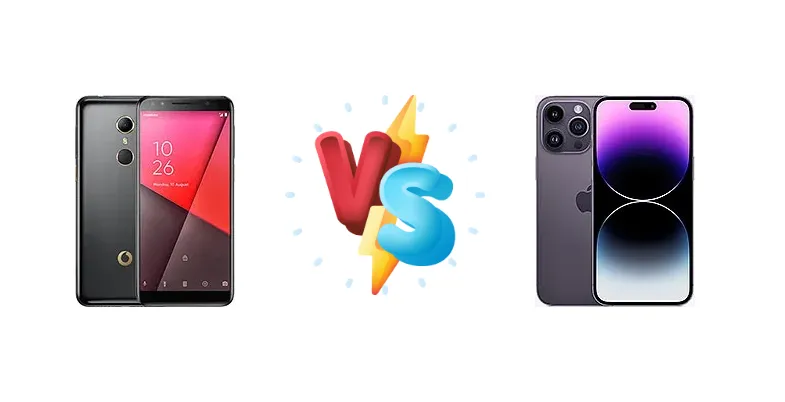
|
🏆 Quick Verdict
The iPhone 14 Pro Max utterly dominates in almost every category – performance, camera, display, and features. However, the Vodafone Smart N9 offers a compelling option for users on a tight budget seeking basic smartphone functionality. It's a clear win for Apple, but the N9 has its niche.
| PHONES | ||
|---|---|---|
| Phone Names | Vodafone Smart N9 | Apple iPhone 14 Pro Max |
| Network | ||
|---|---|---|
| 2G bands | GSM 850 / 900 / 1800 / 1900 | GSM 850 / 900 / 1800 / 1900 |
| 3G bands | HSDPA | HSDPA 850 / 900 / 1700(AWS) / 1900 / 2100 |
| 4G bands | 1, 3, 5, 7, 8, 20, 28 | 1, 2, 3, 4, 5, 7, 8, 12, 13, 17, 18, 19, 20, 25, 26, 28, 30, 32, 34, 38, 39, 40, 41, 42, 46, 48, 66 - A2894, A2896 |
| 5G bands | - | 1, 2, 3, 5, 7, 8, 12, 20, 25, 26, 28, 30, 38, 40, 41, 48, 66, 70, 77, 78, 79 SA/NSA/Sub6 - A2894, A2896 |
| EDGE | Yes | - |
| GPRS | Yes | - |
| Speed | HSPA 42.2/5.76 Mbps, LTE Cat4 150/50 Mbps | HSPA, LTE, 5G, EV-DO Rev.A 3.1 Mbps |
| Technology | GSM / HSPA / LTE | GSM / CDMA / HSPA / EVDO / LTE / 5G |
| - | 1, 2, 3, 5, 7, 8, 12, 20, 25, 26, 28, 30, 38, 40, 41, 48, 66, 70, 77, 78, 79 SA/NSA/Sub6 - A2895 | |
| Launch | ||
|---|---|---|
| Announced | 2018, June. Released 2018, June | 2022, September 07 |
| Status | Discontinued | Available. Released 2022, September 16 |
| Body | ||
|---|---|---|
| Build | - | Glass front, glass back, stainless steel frame |
| Dimensions | 147.1 x 68.8 x 8.7 mm (5.79 x 2.71 x 0.34 in) | 160.7 x 77.6 x 7.9 mm (6.33 x 3.06 x 0.31 in) |
| SIM | Nano-SIM | · Nano-SIM + eSIM + eSIM (max 2 at a time; International)· eSIM + eSIM (8 or more, max 2 at a time; USA)· Nano-SIM + Nano-SIM (China) |
| Weight | 145 g (5.11 oz) | 240 g (8.47 oz) |
| - | IP68 dust/water resistant (up to 6m for 30 min) Apple Pay (Visa, MasterCard, AMEX certified) | |
| Display | ||
|---|---|---|
| Protection | - | Ceramic Shield glass |
| Resolution | 720 x 1440 pixels, 18:9 ratio (~293 ppi density) | 1290 x 2796 pixels, 19.5:9 ratio (~460 ppi density) |
| Size | 5.5 inches, 78.1 cm2 (~77.1% screen-to-body ratio) | 6.7 inches, 110.2 cm2 (~88.3% screen-to-body ratio) |
| Type | IPS LCD | LTPO Super Retina XDR OLED, 120Hz, HDR10, Dolby Vision, 1000 nits (typ), 2000 nits (HBM) |
| - | Always-On display | |
| Platform | ||
|---|---|---|
| CPU | Quad-core 1.3 GHz Cortex-A53 | Hexa-core (2x3.46 GHz Everest + 4x2.02 GHz Sawtooth) |
| Chipset | Mediatek MT6739WA (28 nm) | Apple A16 Bionic (4 nm) |
| GPU | Mali-T720MP2 | Apple GPU (5-core graphics) |
| OS | Android 8.1 (Oreo) | iOS 16, upgradable to iOS 26.1 |
| Memory | ||
|---|---|---|
| Card slot | microSDHC | No |
| Internal | 16GB 2GB RAM | 128GB 6GB RAM, 256GB 6GB RAM, 512GB 6GB RAM, 1TB 6GB RAM |
| eMMC 5.1 | NVMe | |
| Main Camera | ||
|---|---|---|
| Features | LED flash, HDR, panorama | Dual-LED dual-tone flash, HDR (photo/panorama) |
| Single | 13 MP, AF | 12 MP, f/1.9, 23mm (wide), 1/3.6", PDAF, OIS (unconfirmed) SL 3D, (depth/biometrics sensor) |
| Triple | - | 48 MP, f/1.8, 24mm (wide), 1/1.28", 1.22µm, dual pixel PDAF, sensor-shift OIS 12 MP, f/2.8, 77mm (telephoto), 1/3.5", 1.0µm, PDAF, OIS, 3x optical zoom 12 MP, f/2.2, 13mm, 120˚ (ultrawide), 1/2.55", 1.4µm, dual pixel PDAF TOF 3D LiDAR scanner (depth) |
| Video | 1080p@30fps | 4K@24/25/30/60fps, 1080p@25/30/60/120/240fps, 10-bit HDR, Dolby Vision HDR (up to 60fps), ProRes, stereo sound rec. |
| Selfie camera | ||
|---|---|---|
| Features | LED flash | HDR |
| Single | 8 MP | 12 MP, f/1.9, 23mm (wide), 1/3.6", 1.0µm, PDAF, OIS SL 3D, (depth/biometrics sensor) |
| Video | - | 4K@24/25/30/60fps, 1080p@25/30/60/120fps, gyro-EIS |
| Sound | ||
|---|---|---|
| 3.5mm jack | Yes | No |
| 35mm jack | Yes | No |
| Loudspeaker | Yes | Yes, with stereo speakers |
| Comms | ||
|---|---|---|
| Bluetooth | 4.0, A2DP | 5.3, A2DP, LE |
| NFC | Yes | Yes |
| Positioning | GPS | GPS (L1+L5), GLONASS, GALILEO, BDS, QZSS |
| Radio | FM radio | No |
| USB | microUSB 2.0 | Lightning, USB 2.0 |
| WLAN | Wi-Fi 802.11 b/g/n | Wi-Fi 802.11 a/b/g/n/ac/6, dual-band, hotspot |
| Features | ||
|---|---|---|
| Sensors | Fingerprint (rear-mounted), accelerometer, gyro (market dependent), proximity, compass | Face ID, accelerometer, gyro, proximity, compass, barometer |
| - | Ultra Wideband (UWB) support Emergency SOS via satellite (SMS sending/receiving) | |
| Battery | ||
|---|---|---|
| Charging | - | Wired, PD2.0, 50% in 30 min 15W wireless (MagSafe) 15W wireless (Qi2) - requires iOS 17.2 update |
| Type | Li-Ion 2900 mAh, non-removable | Li-Ion 4323 mAh (16.68 Wh) |
| Misc | ||
|---|---|---|
| Colors | Silver Aluminium, Black Titanium | Space Black, Silver, Gold, Deep Purple |
| Models | VFD 720 | A2894, A2651, A2893, A2895, A2896, iphone15,3 |
| Price | About 120 EUR | € 530.79 / $ 489.81 / £ 446.75 |
| SAR | - | 1.15 W/kg (head) 1.07 W/kg (body) |
| SAR EU | 0.96 W/kg (head) 1.56 W/kg (body) | 0.99 W/kg (head) 0.98 W/kg (body) |
| Tests | ||
|---|---|---|
| Battery life | - | Endurance rating 121h |
| Camera | - | Photo / Video |
| Display | - | Contrast ratio: Infinite (nominal) |
| Loudspeaker | - | -24.3 LUFS (Very good) |
| Performance | - | AnTuTu: 955884 (v9) GeekBench: 5423 (v5.1) GFXBench: 54fps (ES 3.1 onscreen) |
Vodafone Smart N9
- Affordable
- Compact size
- Decent battery life for its class
- Basic smartphone functionality
- Weak performance
- Low-resolution display
- Basic camera
- Limited features
- Outdated chipset
Apple iPhone 14 Pro Max
- Exceptional performance
- Stunning display
- Top-tier camera system
- Long battery life
- Premium build quality
- Excellent software support
- Fast charging (wired & wireless)
- Expensive
- Large size
- Limited customization options compared to Android
Display Comparison
The iPhone 14 Pro Max boasts a stunning Super Retina XDR display with ProMotion (adaptive refresh rate up to 120Hz) and a peak brightness of 1760 nits, offering incredible clarity and vibrant colors. The Vodafone Smart N9 likely features a standard LCD display with lower resolution and brightness, resulting in a noticeably less impressive visual experience. Contrast ratio is infinite on the iPhone, a significant advantage.
Camera Comparison
The iPhone 14 Pro Max’s camera system is renowned for its exceptional image quality, advanced features like Cinematic mode, and impressive video recording capabilities. The Vodafone Smart N9’s camera is likely a basic setup, offering acceptable photos in good lighting conditions but lacking the detail and dynamic range of the iPhone.
Performance
The A16 Bionic chip in the iPhone 14 Pro Max is a performance beast, easily handling demanding games and applications. The Mediatek MT6739WA in the Vodafone Smart N9 is a budget chipset, offering adequate performance for basic tasks but struggling with more intensive workloads. Expect significant lag and slower app loading times on the N9.
Battery Life
Both phones offer excellent battery life, with the iPhone 14 Pro Max achieving an endurance rating of 121 hours. The Vodafone Smart N9, despite its smaller battery capacity, likely provides a respectable battery life due to its less demanding hardware. Fast charging is a significant advantage for the iPhone with PD2.0 and MagSafe wireless charging.
Buying Guide
The Vodafone Smart N9 is ideal for first-time smartphone users, seniors, or anyone needing a basic device for calls, texts, and light browsing. The iPhone 14 Pro Max is for power users, photographers, videographers, and those who demand the best possible performance and features, regardless of price.