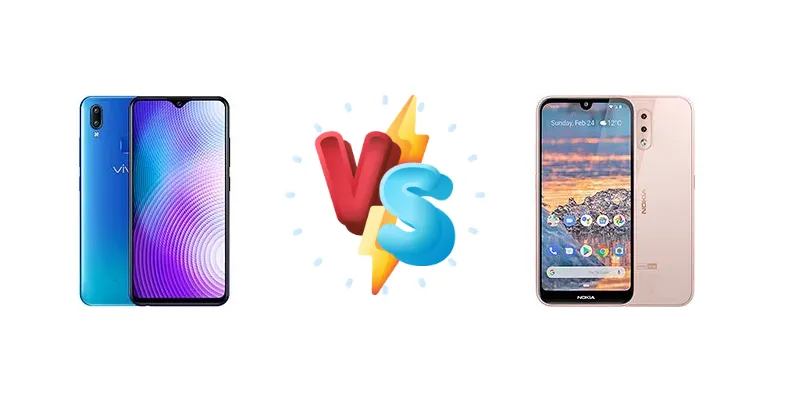
The vivo Y91i and Nokia 4.2 represent a common segment in the smartphone market: affordable devices aimed at first-time smartphone users or those seeking a reliable secondary device. Both phones share the Qualcomm Snapdragon 439 chipset, leading to a surprisingly even playing field. This comparison will dissect the nuances beyond the core processor to determine which device delivers a superior overall experience.
🏆 Quick Verdict
For the average user prioritizing software experience and potential for updates, the Nokia 4.2 emerges as the slightly better choice. While both phones offer similar performance due to the Snapdragon 439, Nokia’s commitment to clean Android and timely security patches provides a longer-term benefit.
| Network |
|---|
| 2G bands | GSM 850 / 900 / 1800 / 1900 | GSM 850 / 900 / 1800 / 1900 |
| 3G bands | HSDPA 850 / 900 / 2100 | HSDPA 850 / 900 / 2100 - Global |
| 4G bands | 1, 3, 5, 8, 28, 38, 40, 41 | 1, 3, 5, 7, 8, 20, 28, 38, 40, 41 - EMEA, APAC, MENA |
| Speed | HSPA, LTE | HSPA 42.2/5.76 Mbps, LTE Cat4 150/50 Mbps |
| Technology | GSM / HSPA / LTE | GSM / HSPA / LTE |
| | - | 1, 3, 5, 8, 40, 41 - India |
| Launch |
|---|
| Announced | 2018, November. Released 2018, November | 2019, February 24. Released 2019, May 07 |
| Status | Discontinued | Discontinued |
| Body |
|---|
| Build | - | Glass front, glass back, plastic frame |
| Dimensions | 155.1 x 75.1 x 8.3 mm (6.11 x 2.96 x 0.33 in) | 149 x 71.3 x 8.4 mm (5.87 x 2.81 x 0.33 in) |
| SIM | Nano-SIM + Nano-SIM | Nano-SIM + Nano-SIM |
| Weight | 163.5 g (5.78 oz) | 161 g (5.68 oz) |
| Display |
|---|
| Resolution | 720 x 1520 pixels, 19:9 ratio (~271 ppi density) | 720 x 1520 pixels, 19:9 ratio (~295 ppi density) |
| Size | 6.2 inches, 95.9 cm2 (~82.4% screen-to-body ratio) | 5.71 inches, 81.4 cm2 (~76.6% screen-to-body ratio) |
| Type | IPS LCD | IPS LCD |
| Platform |
|---|
| CPU | Octa-core (4x1.95 GHz Cortex-A53 & 4x1.45 GHz Cortex A53) | Octa-core (4x1.95 GHz Cortex-A53 & 4x1.45 GHz Cortex A53) |
| Chipset | Qualcomm SDM439 Snapdragon 439 (12 nm) | Qualcomm SDM439 Snapdragon 439 (12 nm) |
| GPU | Adreno 505 | Adreno 505 |
| OS | Android 8.1 (Oreo), Funtouch 4.5 | Android 9.0 (Pie), upgradable to Android 11, Android One |
| Memory |
|---|
| Card slot | microSDXC | microSDXC (dedicated slot) |
| Internal | 16GB 2GB RAM | 16GB 2GB RAM, 32GB 3GB RAM |
| | eMMC 5.1 | eMMC 5.1 |
| Main Camera |
|---|
| Dual | 13 MP, f/2.2, PDAF
Auxiliary lens | 13 MP, f/2.2, 1/3.1", 1.12µm, PDAF
Auxiliary lens |
| Features | LED flash, panorama | LED flash |
| Video | 1080p@30fps | 1080p@30fps |
| Selfie camera |
|---|
| Single | 8 MP, f/2.0 | 8 MP, f/2.0, 1/4.0", 1.12µm |
| Video | - | 1080p@30fps |
| Sound |
|---|
| 3.5mm jack | Yes | Yes |
| 35mm jack | Yes | Yes |
| Loudspeaker | Yes | Yes |
| Comms |
|---|
| Bluetooth | 4.2, A2DP, LE | 4.2, A2DP, LE, aptX |
| NFC | No | Yes (market dependent) |
| Positioning | GPS, GLONASS, BDS | GPS, GLONASS, BDS |
| Radio | FM radio | FM radio |
| USB | microUSB 2.0, OTG | microUSB 2.0, OTG |
| WLAN | Wi-Fi 802.11 b/g/n, Wi-Fi Direct | Wi-Fi 802.11 b/g/n |
| Features |
|---|
| Sensors | Fingerprint (rear-mounted), accelerometer, proximity, compass | Fingerprint (rear-mounted), accelerometer, proximity |
| Battery |
|---|
| Type | 4030 mAh, non-removable | Li-Ion 3000 mAh, non-removable |
| Misc |
|---|
| Colors | Starry Black, Ocean Blue, Red | Black, Pink Sand |
| Models | - | TA-1184, TA-1133, TA-1149, TA-1150, TA-1157, TA-1152 |
| Price | About 130 EUR | About 130 EUR |
| SAR | - | 0.43 W/kg (head) 1.08 W/kg (body) |
| SAR EU | - | 0.45 W/kg (head) 1.53 W/kg (body) |
vivo Y91i
- Potential for larger custom ROM community
- Often includes bundled accessories
- May offer more aggressive pricing
- Heavily customized Android skin (Funtouch OS)
- Potentially slower software updates
- Bloatware pre-installed
Nokia 4.2
- Clean, near-stock Android experience
- Guaranteed Android updates and security patches
- Better build quality (typically)
- Potentially higher price point
- Less customization options out-of-the-box
- Smaller community for custom ROMs
Display Comparison
Both the vivo Y91i and Nokia 4.2 likely feature LCD panels, typical for this price point. Without specific display specs like resolution or brightness, it’s difficult to definitively declare a winner. However, Nokia’s history suggests a focus on color accuracy, potentially offering a more natural viewing experience. The absence of high refresh rates or advanced panel technologies like AMOLED is expected, focusing instead on power efficiency for the Snapdragon 439 to handle.
Camera Comparison
Camera performance is likely to be similar, relying heavily on software processing given the shared chipset. Without detailed sensor information, it’s safe to assume both phones utilize budget sensors. The inclusion of a 2MP depth sensor on either device is largely for marketing purposes, offering limited real-world benefit. Image quality will be acceptable in good lighting conditions, but struggle in low-light scenarios. The Nokia 4.2’s image processing algorithms may lean towards a more natural look, while vivo often employs more aggressive sharpening and color boosting.
Performance
The core of both devices is the Qualcomm SDM439 Snapdragon 439 (12 nm) paired with an Octa-core CPU configuration (4x1.95 GHz Cortex-A53 & 4x1.45 GHz Cortex A53). This means performance will be nearly identical in CPU-bound tasks like web browsing and social media. The 12nm process node is relatively efficient, but sustained performance will be limited by thermal constraints. The Nokia 4.2, potentially benefiting from slightly better thermal design (based on brand reputation), *might* exhibit marginally less throttling during extended gaming sessions, though the difference will be minimal.
Battery Life
Battery life will be heavily dependent on usage patterns. While specific battery capacities are unknown, the Snapdragon 439’s efficiency suggests both phones should comfortably last a full day with moderate use. Charging speeds are also likely to be similar, utilizing standard 5W or 10W charging. The Nokia 4.2’s potentially cleaner software and optimized power management could translate to slightly longer screen-on time, but the difference will be marginal.
Buying Guide
Buy the vivo Y91i if you need a phone with a potentially larger community for custom ROM support and are comfortable with a more heavily customized Android experience. Buy the Nokia 4.2 if you prefer a cleaner, near-stock Android interface with guaranteed security updates and a more streamlined user experience, even if it means potentially less customization flexibility.
Frequently Asked Questions
❓ Will the Snapdragon 439 struggle with modern mobile games?
The Snapdragon 439 is an entry-level chipset. While it can handle less demanding games, you'll likely need to lower graphics settings and resolution for more intensive titles like PUBG Mobile or Call of Duty: Mobile to achieve playable frame rates. Expect some stuttering and lag during peak moments.
❓ How long will the Nokia 4.2 receive Android updates?
Nokia has a strong track record of providing timely Android updates, even for their budget devices. The Nokia 4.2 was originally launched with Android 9 Pie and has received updates to Android 10 and 11. While future updates are uncertain, it's likely to receive at least one more major Android version update and continued security patches for a reasonable period.
❓ Is the difference between Funtouch OS (vivo) and stock Android (Nokia) significant?
Yes, the difference is substantial. Funtouch OS is heavily customized with a unique user interface, pre-installed apps, and different settings menus. Stock Android, as found on the Nokia 4.2, offers a cleaner, more minimalist experience closer to Google's vision. This impacts usability and performance.