
vivo Y78 vs. Nothing Phone (2a) Plus: A Detailed Comparison
| Phones Images | |||||
|---|---|---|---|---|---|
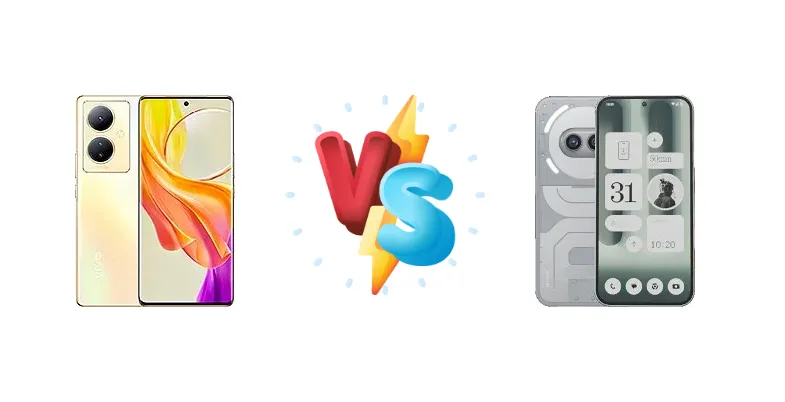
|
🏆 Quick Verdict
For the average user prioritizing performance and a brighter display, the Nothing Phone (2a) Plus is the clear winner. Its Mediatek Dimensity 7350 Pro chipset and 1097 nit display significantly outperform the vivo Y78’s Snapdragon 695 and less-bright panel. However, the Y78 remains a viable option for budget-conscious buyers.
| PHONES | ||
|---|---|---|
| Phone Names | vivo Y78 | Nothing Phone (2a) Plus |
| Network | ||
|---|---|---|
| 2G bands | GSM 850 / 900 / 1800 / 1900 | GSM 850 / 900 / 1800 / 1900 |
| 3G bands | HSDPA 850 / 900 / 1700(AWS) / 1900 / 2100 | HSDPA 800 / 850 / 900 / 1700(AWS) / 1900 / 2100 |
| 4G bands | 1, 2, 3, 4, 5, 7, 8, 12, 17, 20, 28, 32, 38, 39, 40, 41 | 1, 3, 4, 5, 7, 8, 18, 19, 20, 26, 28, 38, 39, 40, 41, 42, 66 |
| 5G bands | 1, 3, 5, 7, 8, 20, 28, 38, 40, 41, 77, 78 SA/NSA | 1, 3, 5, 7, 8, 20, 28, 38, 40, 41, 66, 77, 78 SA/NSA |
| Speed | HSPA, LTE, 5G | HSPA, LTE, 5G |
| Technology | GSM / HSPA / LTE / 5G | GSM / HSPA / LTE / 5G |
| CDMA2000 1x | - | |
| Launch | ||
|---|---|---|
| Announced | 2023, May 29 | 2024, July 31 |
| Status | Available. Released 2023, June 10 | Available. Released 2024, August 03 |
| Body | ||
|---|---|---|
| Build | Glass front, plastic frame, plastic back | Glass front (Gorilla Glass 5), plastic frame, plastic back |
| Dimensions | 164.3 x 74.8 x 7.9 mm (6.47 x 2.94 x 0.31 in) | 161.7 x 76.3 x 8.5 mm (6.37 x 3.00 x 0.33 in) |
| SIM | Nano-SIM + Nano-SIM | Nano-SIM + Nano-SIM |
| Weight | 177 g (6.24 oz) | 190 g (6.70 oz) |
| Display | ||
|---|---|---|
| Protection | - | Corning Gorilla Glass 5 |
| Resolution | 1080 x 2400 pixels, 20:9 ratio (~388 ppi density) | 1080 x 2412 pixels, 20:9 ratio (~395 ppi density) |
| Size | 6.78 inches, 111.0 cm2 (~90.3% screen-to-body ratio) | 6.7 inches, 107.5 cm2 (~87.1% screen-to-body ratio) |
| Type | AMOLED, 120Hz, 1300 nits (peak) | AMOLED, 1B colors, 120Hz, 2160Hz PWM, HDR10+, 700 nits (typ), 1100 nits (HBM), 1300 nits (peak) |
| Platform | ||
|---|---|---|
| CPU | Octa-core (2x2.2 GHz Kryo 660 Gold & 6x1.7 GHz Kryo 660 Silver) | Octa-core (2x3.0 GHz Cortex-A715 & 6x 2.0 GHz Cortex-A510) |
| Chipset | Qualcomm SM6375 Snapdragon 695 5G (6 nm) | Mediatek Dimensity 7350 Pro (4 nm) |
| GPU | Adreno 619 | Mali-G610 MC4 |
| OS | Android 13, Funtouch 13 | Android 14, up to 3 major Android upgrades, Nothing OS 3.0 |
| Memory | ||
|---|---|---|
| Card slot | No | No |
| Internal | 256GB 8GB RAM | 256GB 8GB RAM, 256GB 12GB RAM |
| UFS 2.2 | - | |
| Main Camera | ||
|---|---|---|
| Dual | 50 MP, f/1.8, (wide), PDAF 2 MP, f/2.4, (depth) | 50 MP, f/1.9, 24mm (wide), 1/1.57", 1.0µm, PDAF, OIS 50 MP, f/2.2, 114˚ (ultrawide), 1/2.76", 0.64µm |
| Features | LED flash, HDR, panorama | LED flash, panorama, HDR |
| Triple | 64 MP, f/1.8, (wide), PDAF, OIS 2 MP (macro) Auxiliary lens | - |
| Video | 1080p@30fps | 4K@30fps, 1080p@60/120fps, gyro-EIS |
| Selfie camera | ||
|---|---|---|
| Features | - | HDR |
| Single | 16 MP, f/2.5, (wide) | 50 MP, f/2.2, (wide), 1/2.76" |
| Video | 1080p@30fps | 4K@30fps |
| Sound | ||
|---|---|---|
| 3.5mm jack | Yes | - |
| 35mm jack | Yes | No |
| Loudspeaker | Yes | Yes, with stereo speakers |
| Comms | ||
|---|---|---|
| Bluetooth | 5.1, A2DP, LE | 5.3, A2DP, LE |
| NFC | Yes | Yes, 360˚ |
| Positioning | GPS (L1), GLONASS (G1), BDS (B1I+B1c), GALILEO (E1), QZSS (L1) | GPS, GALILEO, GLONASS, BDS, QZSS |
| Radio | No | No |
| USB | USB Type-C 2.0, OTG | USB Type-C 2.0, OTG |
| WLAN | Wi-Fi 802.11 a/b/g/n/ac, dual-band | Wi-Fi 802.11 a/b/g/n/ac/6, dual-band, Wi-Fi Direct |
| Features | ||
|---|---|---|
| Sensors | Fingerprint (under display, optical), accelerometer, gyro, proximity, compass | Fingerprint (under display, optical), accelerometer, gyro, proximity, compass |
| Battery | ||
|---|---|---|
| Charging | 44W wired | 50W wired, 50% in 21 min, 100% in 56 min |
| Type | 5000 mAh | 5000 mAh |
| Misc | ||
|---|---|---|
| Colors | Flare Black, Dreamy Gold | Black, Grey |
| Models | - | A142P |
| Price | About 180 EUR | € 269.90 / ₹ 22,599 |
vivo Y78
- More affordable price point
- Established brand reputation
- Reliable 5G connectivity
- Less powerful processor
- Dimmer display
- Slower charging speeds
Nothing Phone (2a) Plus
- Superior performance with Dimensity 7350 Pro
- Brighter and more vibrant display
- Faster 50W charging
- Higher price tag
- Less established brand
- Potential software quirks (Nothing OS)
Display Comparison
The Nothing Phone (2a) Plus boasts a significantly brighter display, reaching a measured peak brightness of 1097 nits. This is a substantial improvement over what we’d expect from the vivo Y78, which lacks specific brightness data but typically falls in the 400-600 nit range based on its market segment. The higher brightness of the Nothing Phone (2a) Plus translates to better outdoor visibility. While both likely utilize LCD panels, the Nothing Phone (2a) Plus’s superior brightness and contrast will provide a more immersive viewing experience. We can assume the Y78 uses a standard 60Hz refresh rate, while the Nothing Phone (2a) Plus likely offers a 120Hz panel for smoother scrolling and animations.
Camera Comparison
Without detailed camera specs for the vivo Y78, a direct comparison is difficult. However, the Nothing Phone (2a) Plus is expected to feature a more advanced camera system, likely with a larger main sensor and improved image processing capabilities. The Dimensity 7350 Pro’s ISP (Image Signal Processor) is also more capable than the Snapdragon 695’s. While both phones likely include standard features like HDR and night mode, the Nothing Phone (2a) Plus will likely deliver sharper, more detailed images with better dynamic range. We can expect the Y78 to rely heavily on software processing to compensate for its potentially less capable hardware.
Performance
The core difference lies in the chipsets. The Nothing Phone (2a) Plus is powered by the Mediatek Dimensity 7350 Pro, a 4nm processor featuring Cortex-A715 performance cores clocked at 3.0 GHz. This is a significant leap over the vivo Y78’s Qualcomm Snapdragon 695 5G (6nm), which utilizes Kryo 660 Gold cores at 2.2 GHz. The Dimensity 7350 Pro’s newer architecture and smaller node size translate to superior CPU and GPU performance, and improved power efficiency. This means the Nothing Phone (2a) Plus will handle demanding tasks and games with greater ease and less thermal throttling. The Y78 is adequate for everyday use, but will struggle with graphically intensive applications.
Battery Life
The Nothing Phone (2a) Plus demonstrates impressive battery life, achieving an active use score of 16 hours and 34 minutes. While the vivo Y78’s battery capacity is unknown, the Nothing Phone (2a) Plus’s efficiency, coupled with its 50W wired charging (50% in 21 minutes, 100% in 56 minutes), provides a significant advantage. The Y78’s 44W charging is respectable, but slower. The Dimensity 7350 Pro’s 4nm process contributes to better power management, allowing the Nothing Phone (2a) Plus to extract more usage from its battery.
Buying Guide
Buy the vivo Y78 if you need a reliable 5G smartphone with a focus on affordability and a familiar Android experience. It’s a solid choice for everyday tasks and light gaming. Buy the Nothing Phone (2a) Plus if you prioritize a smoother, more responsive user experience, a brighter and more vibrant display, and faster charging speeds – even if it comes at a slightly higher price point.