
Motorola Edge 20 Fusion vs. vivo Y73s: Which Mid-Range 5G Phone Wins?
| Phones Images | |||||
|---|---|---|---|---|---|
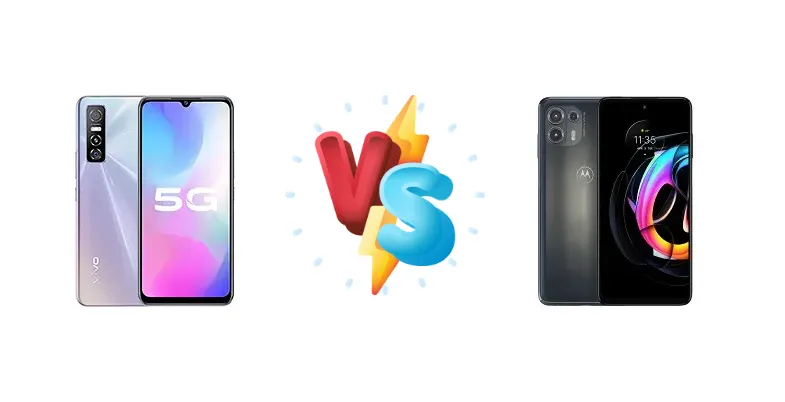
|
🏆 Quick Verdict
For most users, the Motorola Edge 20 Fusion is the superior choice. Its Mediatek Dimensity 800U chipset provides a noticeable performance uplift over the Y73s’ Dimensity 720, and the 30W charging significantly reduces downtime. While the Y73s is a capable device, the Fusion offers a more future-proof and responsive experience.
| PHONES | ||
|---|---|---|
| Phone Names | vivo Y73s | Motorola Edge 20 Fusion |
| Network | ||
|---|---|---|
| 2G bands | GSM 850 / 900 / 1800 / 1900 | GSM 850 / 900 / 1800 / 1900 |
| 3G bands | HSDPA 800 / 850 / 900 / 1700(AWS) / 1900 / 2100 | HSDPA 850 / 900 / 1700(AWS) / 1900 / 2100 |
| 4G bands | 1, 3, 4, 5, 8, 19, 26, 28, 34, 38, 39, 40, 41 | 1, 2, 3, 4, 5, 7, 8, 12, 13, 17, 18, 19, 20, 26, 28, 32, 34, 38, 39, 40, 41, 42, 43, 66 |
| 5G bands | 1, 3, 28, 41, 77, 78 SA/NSA | 1, 3, 5, 7, 8, 20, 28, 38, 40, 41, 77, 78, 66 SA/NSA/Sub6 |
| Speed | HSPA, LTE, 5G | HSPA 42.2/5.76 Mbps, LTE Cat18 1200/150 Mbps, 5G |
| Technology | GSM / CDMA / HSPA / LTE / 5G | GSM / HSPA / LTE / 5G |
| CDMA 800 / 1900 & TD-SCDMA | - | |
| Launch | ||
|---|---|---|
| Announced | 2020, October 12. Released 2020, October 16 | 2021, August 17 |
| Status | Discontinued | Available. Released 2021, August 27 |
| Body | ||
|---|---|---|
| Build | - | Glass front |
| Dimensions | 161 x 74 x 7.8 mm (6.34 x 2.91 x 0.31 in) | 166 x 76 x 8.3 mm (6.54 x 2.99 x 0.33 in) |
| SIM | Nano-SIM + Nano-SIM | Nano-SIM + Nano-SIM |
| Weight | 171.3 g (6.03 oz) | 185 g (6.53 oz) |
| - | Water-repellent design | |
| Display | ||
|---|---|---|
| Resolution | 1080 x 2400 pixels, 20:9 ratio (~409 ppi density) | 1080 x 2400 pixels, 20:9 ratio (~393 ppi density) |
| Size | 6.44 inches, 100.1 cm2 (~84.0% screen-to-body ratio) | 6.7 inches, 108.4 cm2 (~85.9% screen-to-body ratio) |
| Type | AMOLED, HDR10 | OLED, 1B colors, 90Hz, HDR10+ |
| Platform | ||
|---|---|---|
| CPU | Octa-core (2x2.0 GHz Cortex-A76 & 6x2.0 GHz Cortex-A55) | Octa-core (2x2.4 GHz Cortex-A76 & 6x2.0 GHz Cortex-A55) |
| Chipset | Mediatek Dimensity 720 (7 nm) | Mediatek Dimensity 800U (7 nm) |
| GPU | Mali-G57 MC3 | Mali-G57 MC3 |
| OS | Android 10, Funtouch 10.5 | Android 11 |
| Memory | ||
|---|---|---|
| Card slot | No | microSDXC |
| Internal | 128GB 6GB RAM, 128GB 8GB RAM, 256GB 8GB RAM | 128GB 6GB RAM, 128GB 8GB RAM |
| UFS 2.1 | - | |
| Main Camera | ||
|---|---|---|
| Features | LED flash, HDR, panorama | LED flash, HDR, panorama |
| Triple | 48 MP, f/1.8, 26mm (wide), 1/2.0", 0.8µm, PDAF 8 MP, f/2.2, 16mm, 120˚ (ultrawide), 1/4.0", 1.12µm Auxiliary lens | 108 MP, f/1.9, (wide), 1/1.52", 0.7µm, PDAF 8 MP, f/2.2, 118˚ (ultrawide) Auxiliary lens |
| Video | 4K@30fps, 1080p@30fps; gyro-EIS | 4K@30fps, 1080p@30/60/120fps, gyro-EIS |
| Selfie camera | ||
|---|---|---|
| Features | HDR | HDR |
| Single | 16 MP, f/2.0, (wide) | 32 MP, f/2.3, (wide), 0.7µm |
| Video | 1080p@30fps | 1080p@30fps |
| Sound | ||
|---|---|---|
| 3.5mm jack | Yes | Yes |
| 35mm jack | Yes | Yes |
| Loudspeaker | Yes | Yes |
| Comms | ||
|---|---|---|
| Bluetooth | 5.1, A2DP, LE, aptX HD | 5.0, A2DP, LE |
| NFC | No | Yes |
| Positioning | GPS, GLONASS, GALILEO, BDS | GPS, GLONASS, GALILEO |
| Radio | No | FM radio |
| USB | USB Type-C 2.0, OTG | USB Type-C 2.0 |
| WLAN | Wi-Fi 802.11 a/b/g/n/ac, dual-band, Wi-Fi Direct | Wi-Fi 802.11 a/b/g/n/ac, dual-band, Wi-Fi Direct |
| Features | ||
|---|---|---|
| Sensors | Fingerprint (under display, optical), accelerometer, proximity, compass | Fingerprint (side-mounted), accelerometer, gyro, proximity, compass |
| Battery | ||
|---|---|---|
| Charging | 18W wired | 30W wired |
| Type | 4100 mAh | Li-Po 5000 mAh |
| Misc | ||
|---|---|---|
| Colors | Black, Silver | Electric Graphite, Cyber Teal |
| Models | V2031A | - |
| Price | About 280 EUR | About 250 EUR |
vivo Y73s
- Potentially lower price point
- Streamlined user experience
- Efficient processor for basic tasks
- Slower charging speed (18W)
- Less powerful processor (Dimensity 720)
- Likely less capable camera system
Motorola Edge 20 Fusion
- Faster processor (Dimensity 800U)
- Faster charging speed (30W)
- Potentially better camera performance
- May be slightly more expensive
- Potentially larger physical size
- Motorola's software update history can be inconsistent
Display Comparison
Neither device boasts a standout display. Both likely utilize LCD panels, a common trait in this price bracket. The key difference lies under the hood: processing power. Display specs beyond panel type are not provided, so we can only assume typical 60Hz refresh rates. The focus here isn't on visual fidelity, but on the chipset's ability to drive the display smoothly.
Camera Comparison
Without detailed sensor information, a direct camera comparison is difficult. However, the market positioning suggests the Edge 20 Fusion likely features a more capable main sensor. Motorola typically prioritizes camera performance in its Edge series. The Y73s, being a more budget-focused device, likely employs a more cost-effective camera system. The absence of OIS information for either device suggests image stabilization relies heavily on software processing.
Performance
The Motorola Edge 20 Fusion’s Mediatek Dimensity 800U is the clear winner in the performance department. Its CPU features 2x2.4 GHz Cortex-A76 cores, compared to the Y73s’ 2x2.0 GHz Cortex-A76 cores. This 20% clock speed increase translates to faster app loading times and a more responsive user interface. While both chips are built on a 7nm process, the 800U’s architecture provides a tangible advantage in demanding tasks. Gamers and power users will appreciate the Fusion’s superior processing capabilities.
Battery Life
The Motorola Edge 20 Fusion’s 30W wired charging is a significant advantage over the vivo Y73s’ 18W charging. This means the Fusion can replenish its battery much faster, minimizing downtime. While battery capacity isn’t specified, the faster charging speed effectively mitigates any potential capacity difference. Users who frequently find themselves needing a quick top-up will greatly benefit from the Fusion’s charging capabilities.
Buying Guide
Buy the vivo Y73s if you prioritize a simple, efficient smartphone experience and are on a very tight budget. It’s a solid option for everyday tasks like browsing, social media, and light media consumption. Buy the Motorola Edge 20 Fusion if you value performance for gaming, multitasking, and demand faster charging speeds. It’s the better choice for users who want a phone that can keep up with a demanding lifestyle.