
Motorola Edge 30 Fusion vs. vivo Y72t: A Detailed Comparison of Performance and Value
| Phones Images | |||||
|---|---|---|---|---|---|
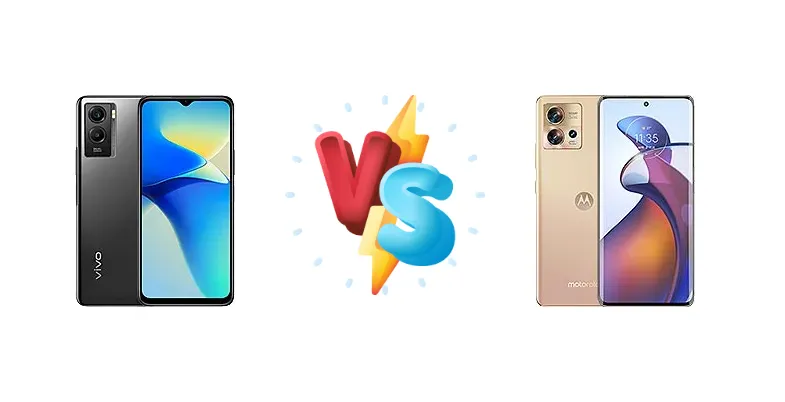
|
🏆 Quick Verdict
For users prioritizing raw performance and fast charging, the Motorola Edge 30 Fusion is the clear winner. Its Snapdragon 888+ offers a significant leap in processing power. However, the vivo Y72t provides a compelling value proposition for everyday tasks and users on a tighter budget.
| PHONES | ||
|---|---|---|
| Phone Names | vivo Y72t | Motorola Edge 30 Fusion |
| Network | ||
|---|---|---|
| 2G bands | GSM 850 / 900 / 1800 / 1900 | GSM 850 / 900 / 1800 / 1900 |
| 3G bands | HSDPA 850 / 900 / 1700(AWS) / 2100 | HSDPA 850 / 900 / 1700(AWS) / 1900 / 2100 - International |
| 4G bands | 1, 3, 4, 5, 8, 28, 34, 38, 39, 40, 41 | 1, 2, 3, 4, 5, 7, 8, 12, 13, 17, 18, 19, 20, 25, 26, 28, 32, 38, 39, 40, 41, 42, 43, 66 - International |
| 5G bands | 1, 5, 8, 28, 41, 77, 78 SA/NSA | 1, 3, 5, 7, 8, 20, 28, 38, 40, 41, 66, 77, 78 SA/NSA - International |
| Speed | HSPA, LTE, 5G | HSPA, LTE, 5G |
| Technology | GSM / CDMA / HSPA / CDMA2000 / LTE / 5G | GSM / CDMA / HSPA / CDMA2000 / LTE / 5G |
| CDMA2000 1x | 1, 2, 3, 5, 7, 8, 20, 28, 38, 41, 77, 78 SA/NSA - PRC | |
| Launch | ||
|---|---|---|
| Announced | 2022, May 23 | 2022, September 08 |
| Status | Available. Released 2022, May 23 | Available. Released 2022, September 08 |
| Body | ||
|---|---|---|
| Build | Glass front, plastic frame, plastic back | Glass front (Gorilla Glass 5), glass back (Gorilla Glass 5), aluminum frame |
| Dimensions | 163.9 x 75.3 x 9.2 mm (6.45 x 2.96 x 0.36 in) | 158.5 x 72 x 7.5 mm or 7.7 mm |
| SIM | Nano-SIM + Nano-SIM | · Nano-SIM· Nano-SIM + Nano-SIM |
| Weight | 199.8 g (7.05 oz) | 168 g / 175 g (5.93 oz) |
| - | Splash and dust resistant | |
| Display | ||
|---|---|---|
| Protection | - | Corning Gorilla Glass 5 |
| Resolution | 1080 x 2408 pixels, 20:9 ratio (~401 ppi density) | 1080 x 2400 pixels, 20:9 ratio (~402 ppi density) |
| Size | 6.58 inches, 104.3 cm2 (~84.5% screen-to-body ratio) | 6.55 inches, 103.6 cm2 (~90.8% screen-to-body ratio) |
| Type | IPS LCD | P-OLED, 1B colors, 144Hz, HDR10+, 1100 nits (peak) |
| Platform | ||
|---|---|---|
| CPU | Octa-core (2x2.2 GHz Cortex-A76 & 6x2.0 GHz Cortex-A55) | Octa-core (1x2.99 GHz Cortex-X1 & 3x2.42 GHz Cortex-A78 & 4x1.80 GHz Cortex-A55) |
| Chipset | Mediatek Dimensity 700 (7 nm) | Qualcomm SM8350 Snapdragon 888+ 5G (5 nm) |
| GPU | Mali-G57 MC2 | Adreno 660 |
| OS | Android 11, OriginOS 11 | Android 12, upgradable to Android 14 |
| Memory | ||
|---|---|---|
| Card slot | No | No |
| Internal | 128GB 8GB RAM, 256GB 8GB RAM | 128GB 8GB RAM, 256GB 6GB RAM, 256GB 8GB RAM, 256GB 12GB RAM, 512GB 12GB RAM |
| UFS 2.1 | UFS 3.1 | |
| Main Camera | ||
|---|---|---|
| Dual | 50 MP, f/1.8, 26mm (wide), PDAF 2 MP (macro) | - |
| Features | LED flash, HDR, panorama | LED flash, panorama, HDR |
| Single | 8 MP, f/1.8, (wide) | - |
| Triple | - | 50 MP, f/1.8, (wide), 1/1.55", 1.0µm, multi-directional PDAF, OIS 13 MP, f/2.2, 120˚ (ultrawide), 1.12µm, AF Auxiliary lens |
| Video | 1080p@30fps | 8K@30fps, 4K@30fps, 1080p@30/60/120fps, 720p@960fps, gyro-EIS |
| Selfie camera | ||
|---|---|---|
| Features | - | HDR |
| Single | 8 MP, f/1.8, (wide) | 32 MP, f/2.5, (wide), 1/2.8", 0.8µm, AF |
| Video | 1080p@30fps | 4K@30fps, 1080p@30fps |
| Sound | ||
|---|---|---|
| 3.5mm jack | Yes | No |
| 35mm jack | Yes | No |
| Loudspeaker | Yes | Yes, with stereo speakers |
| Comms | ||
|---|---|---|
| Bluetooth | 5.1, A2DP, LE, aptX HD | 5.2, A2DP, LE, aptX HD, aptX Adaptive |
| NFC | No | Yes |
| Positioning | GPS, GLONASS, GALILEO, BDS, QZSS | GPS (L1+L5), GLONASS, BDS (B1I+B1c), GALILEO |
| Radio | - | No |
| USB | USB Type-C, OTG | USB Type-C 3.1, OTG |
| WLAN | Wi-Fi 802.11 a/b/g/n/ac, dual-band, Wi-Fi Direct | Wi-Fi 802.11 a/b/g/n/ac/6e, tri-band, Wi-Fi Direct |
| Features | ||
|---|---|---|
| Sensors | Fingerprint (side-mounted), accelerometer, proximity, compass | Fingerprint (under display, optical), accelerometer, gyro, proximity, compass |
| - | Ready For 3.5 support | |
| Battery | ||
|---|---|---|
| Charging | 18W wired | 68W wired, 50% in 10 min |
| Type | 6000 mAh | Li-Po 4400 mAh |
| Misc | ||
|---|---|---|
| Colors | Black, Blue, Pink | Neptune Blue, Cosmic Grey, Solar Gold, Aurora White, Viva Magenta |
| Models | V2164A | XT2243-1 |
| Price | About 200 EUR | About 150 EUR |
| Tests | ||
|---|---|---|
| Battery life | - | Endurance rating 101h |
| Camera | - | Photo / Video |
| Display | - | Contrast ratio: Infinite (nominal) |
| Loudspeaker | - | -24.6 LUFS (Very good) |
| Performance | - | AnTuTu: 827929 (v9) GeekBench: 3458 (v5.1) GFXBench: 62fps (ES 3.1 onscreen) |
vivo Y72t
- Excellent value for money
- Decent battery life for everyday use
- Reliable performance for basic tasks
- Slower processor compared to the competition
- Slow 18W charging
- Display likely lacks high refresh rate
Motorola Edge 30 Fusion
- Powerful Snapdragon 888+ processor
- Ultra-fast 68W charging
- Bright and vibrant display
- May run warmer under heavy load
- Potentially higher price point
- Older flagship chipset
Display Comparison
The Motorola Edge 30 Fusion boasts a significantly brighter display, reaching a measured 946 nits, compared to the unspecified brightness of the vivo Y72t. This higher peak brightness translates to better visibility outdoors under direct sunlight. While both displays have an 'infinite' contrast ratio (typical for OLED panels), the Motorola’s superior brightness is a tangible advantage. The lack of refresh rate information for the Y72t suggests a standard 60Hz panel, while the Edge 30 Fusion likely offers a smoother 144Hz experience, enhancing scrolling and animations.
Camera Comparison
Both devices feature photo and video capabilities, but detailed camera specifications are limited. The Motorola Edge 30 Fusion likely benefits from a more advanced image signal processor (ISP) within the Snapdragon 888+, enabling better image processing and low-light performance. Without sensor size or aperture information for either device, it’s difficult to make a definitive judgment. However, Motorola’s flagship heritage suggests a more refined camera system overall. The Y72t’s camera is likely geared towards casual photography, while the Edge 30 Fusion aims for a more versatile experience.
Performance
The core difference lies in the chipsets. The Motorola Edge 30 Fusion’s Snapdragon 888+ (5nm) is a substantial upgrade over the vivo Y72t’s Mediatek Dimensity 700 (7nm). The Snapdragon 888+ features a Cortex-X1 prime core clocked at 2.99 GHz, alongside three Cortex-A78 performance cores, offering significantly faster processing speeds for demanding applications. The Dimensity 700, while capable, relies on older Cortex-A76 cores. The 5nm fabrication process of the Snapdragon also contributes to better thermal efficiency, potentially mitigating throttling during extended gaming sessions. While RAM specifications are missing for both, the Snapdragon 888+ benefits from faster memory controllers, further enhancing performance.
Battery Life
Both phones share an endurance rating of 101 hours, suggesting comparable battery life under similar usage scenarios. However, the Motorola Edge 30 Fusion’s 68W wired charging is a game-changer, capable of reaching 50% charge in just 10 minutes. The vivo Y72t’s 18W charging is considerably slower, requiring significantly more time to fully replenish the battery. This difference in charging speed is a major convenience factor for users who frequently need to top up their devices.
Buying Guide
Buy the vivo Y72t if you need a reliable daily driver for basic tasks like browsing, social media, and light gaming, and value affordability above all else. Buy the Motorola Edge 30 Fusion if you prioritize smooth multitasking, demanding mobile games, and rapid 68W charging, and are willing to spend more for a more powerful experience.