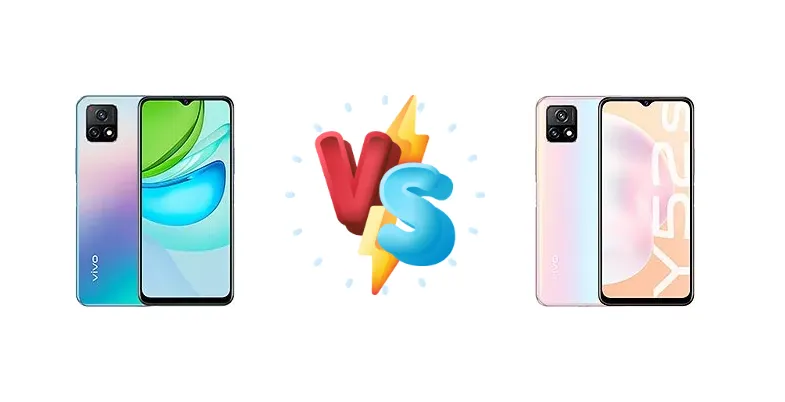
The vivo Y52s and its variant, the Y52s t1, represent vivo’s commitment to bringing 5G connectivity to the affordable smartphone market. While visually similar, these devices diverge significantly under the hood, employing different chipsets – Qualcomm’s Snapdragon 480 5G in the t1 and MediaTek’s Dimensity 720 in the original Y52s. This comparison dissects these key differences to determine which phone delivers the best experience for your money.
🏆 Quick Verdict
For most users, the vivo Y52s t1 emerges as the better choice. The Snapdragon 480 5G, built on a more efficient 8nm process, offers a slight performance edge and potentially better thermal management compared to the Dimensity 720’s 7nm node. Both offer 18W charging, making the chipset the primary differentiator.
| Network |
|---|
| 2G bands | GSM 850 / 900 / 1800 / 1900 | GSM 850 / 900 / 1800 / 1900 |
| 3G bands | HSDPA 850 / 900 / 1700(AWS) / 2100 | HSDPA 850 / 900 / 1700(AWS) / 2100 |
| 4G bands | 1, 3, 4, 5, 8, 28, 34, 38, 39, 40, 41 | 1, 3, 4, 5, 8, 28, 34, 38, 39, 40, 41 |
| 5G bands | 1, 28, 41, 77, 78 SA/NSA | 1, 28, 41, 77, 78 SA/NSA |
| Speed | HSPA, LTE, 5G | HSPA, LTE, 5G |
| Technology | GSM / CDMA / HSPA / LTE / 5G | GSM / CDMA / HSPA / LTE / 5G |
| | CDMA 800 | CDMA 800 |
| Launch |
|---|
| Announced | 2021, May 03 | 2020, December 07. Released 2020, December 12 |
| Status | Available. Released 2021, May 03 | Discontinued |
| Body |
|---|
| Dimensions | 164.2 x 75.4 x 8.4 mm (6.46 x 2.97 x 0.33 in) | 164.2 x 75.4 x 8.4 mm (6.46 x 2.97 x 0.33 in) |
| SIM | Nano-SIM + Nano-SIM | Nano-SIM + Nano-SIM |
| Weight | 185.5 g (6.56 oz) | 185.5 g (6.56 oz) |
| Display |
|---|
| Resolution | 1080 x 2408 pixels, 20:9 ratio (~401 ppi density) | 1080 x 2408 pixels, 20:9 ratio (~401 ppi density) |
| Size | 6.58 inches, 104.3 cm2 (~84.2% screen-to-body ratio) | 6.58 inches, 104.3 cm2 (~84.2% screen-to-body ratio) |
| Type | IPS LCD, 90Hz, HDR10, 460 nits (typ) | IPS LCD, 90Hz, HDR10, 460 nits (typ) |
| Platform |
|---|
| CPU | Octa-core (2x2.0 GHz Kryo 460 & 6x1.8 GHz Kryo 460) | Octa-core (2x2.0 GHz Cortex-A76 & 6x2.0 GHz Cortex-A55) |
| Chipset | Qualcomm SM4350 Snapdragon 480 5G (8 nm) | Mediatek Dimensity 720 (7 nm) |
| GPU | Adreno 619 | Mali-G57 MC3 |
| OS | Android 11, OriginOS 1.0 | Android 10, Funtouch 10.5 |
| Memory |
|---|
| Card slot | No | No |
| Internal | 128GB 8GB RAM, 256GB 8GB RAM | 128GB 6GB RAM, 128GB 8GB RAM, 256GB 8GB RAM |
| | UFS 2.1 | UFS 2.1 |
| Main Camera |
|---|
| Dual | 48 MP, f/1.8, 25mm (wide), 1/2.0", 0.8µm, PDAF
Auxiliary lens | 48 MP, f/1.8, 25mm (wide), 1/2.0", 0.8µm, PDAF
Auxiliary lens |
| Features | LED flash, HDR, panorama | LED flash, HDR, panorama |
| Single | 8 MP, f/1.8, (wide) | - |
| Video | 1080p@30fps | 4K@30fps, 1080p@30fps |
| Selfie camera |
|---|
| Features | HDR | HDR |
| Single | 8 MP, f/1.8, (wide) | 8 MP, f/2.0, (wide) |
| Video | 1080p@30fps | 1080p@30fps |
| Sound |
|---|
| 3.5mm jack | Yes | Yes |
| 35mm jack | Yes | Yes |
| Loudspeaker | Yes | Yes |
| Comms |
|---|
| Bluetooth | 5.1, A2DP, LE, aptX HD | 5.1, A2DP, LE, aptX HD |
| NFC | No | No |
| Positioning | GPS, GLONASS, BDS, GALILEO | GPS, GLONASS, BDS, GALILEO |
| Radio | No | No |
| USB | USB Type-C 2.0, OTG | USB Type-C 2.0, OTG |
| WLAN | Wi-Fi 802.11 a/b/g/n/ac, dual-band, Wi-Fi Direct | Wi-Fi 802.11 a/b/g/n/ac, dual-band, Wi-Fi Direct |
| Features |
|---|
| Sensors | Fingerprint (side-mounted), accelerometer, proximity, compass | Fingerprint (side-mounted), accelerometer, proximity, compass |
| Battery |
|---|
| Charging | 18W wired | 18W wired |
| Type | 5000 mAh | 5000 mAh |
| Misc |
|---|
| Colors | Gray, Coral, Aurora | Gray Coral, Aurora |
| Models | V2054A | V2057A |
| Price | About 270 EUR | About 200 EUR |
vivo Y52s t1
- More efficient Snapdragon 480 5G chipset
- Potentially better sustained performance
- Slightly improved single-core performance
- May be slightly more expensive than the Y52s
- No significant improvements in other areas
vivo Y52s
- Potentially lower price point
- Capable Dimensity 720 chipset for everyday tasks
- Similar battery life (estimated)
- Less efficient chipset compared to Snapdragon 480
- Potentially more thermal throttling under load
Display Comparison
Both the vivo Y52s and Y52s t1 are expected to feature similar LCD panels, though specific details like peak brightness and color gamut coverage aren’t provided. The focus here isn’t on display quality, but rather the internal components driving the experience. Bezels are likely comparable, and both will target a similar visual experience for the price point. Without specific display specs, it's difficult to declare a clear winner.
Camera Comparison
Without detailed camera sensor information beyond the presence of a likely standard main sensor and a 2MP macro (which is largely irrelevant), a direct comparison is challenging. Image processing will differ between the chipsets, potentially leading to variations in color science and dynamic range. The Snapdragon 480’s ISP (Image Signal Processor) may offer slightly more advanced features, but the real-world difference will likely be minimal without knowing the specific sensor details. We can assume both phones target similar image quality for their price bracket.
Performance
The core difference lies in the chipsets. The vivo Y52s t1’s Qualcomm Snapdragon 480 5G (8nm) utilizes Kryo 460 cores, offering a balance of performance and efficiency. The Y52s, with the MediaTek Dimensity 720 (7nm), employs Cortex-A76 and A55 cores. While both are octa-core CPUs clocked at 2.0 GHz for the performance cores, the Snapdragon 480’s architecture and smaller node size generally translate to better single-core performance and improved power efficiency. This means the t1 may handle multitasking and demanding apps slightly smoother and potentially run cooler under sustained load. The GPU performance will also favor the Snapdragon 480.
Battery Life
Both devices feature 18W wired charging, suggesting similar charging speeds – approximately 2-3 hours for a full charge. Battery capacity isn’t specified, but given the target market, we can estimate around 5000mAh for both. The Snapdragon 480’s improved efficiency in the Y52s t1 *could* translate to slightly longer battery life in real-world usage, but this will depend heavily on individual usage patterns. The 18W charging speed is a limiting factor for both, preventing exceptionally fast top-ups.
Buying Guide
Buy the vivo Y52s t1 if you prioritize slightly better performance in demanding apps and potentially longer sustained performance due to the more efficient Snapdragon 480 5G chipset. Buy the vivo Y52s if you find it at a significantly lower price point and your usage is primarily focused on everyday tasks like browsing, social media, and light multimedia consumption. The Dimensity 720 remains a capable performer for these scenarios.
Frequently Asked Questions
❓ Will the Snapdragon 480 in the Y52s t1 handle demanding games like PUBG Mobile smoothly?
The Snapdragon 480 is capable of running PUBG Mobile, but expect to play at medium settings for a consistently smooth experience. The Dimensity 720 in the Y52s will offer similar performance, but the t1 may maintain higher frame rates for longer periods due to better thermal management.
❓ Does the Dimensity 720 in the Y52s suffer from significant overheating during prolonged use?
The Dimensity 720 can experience some thermal throttling under sustained heavy load, such as extended gaming sessions. While not severe, it may lead to a slight drop in performance to prevent overheating. The Snapdragon 480 in the t1 is generally more efficient and less prone to throttling.
❓ Is the 18W charging speed sufficient for quick top-ups on either device?
18W charging is relatively slow by today's standards. Expect a full charge to take around 2-3 hours. It's adequate for overnight charging, but not ideal for quickly replenishing the battery during the day.