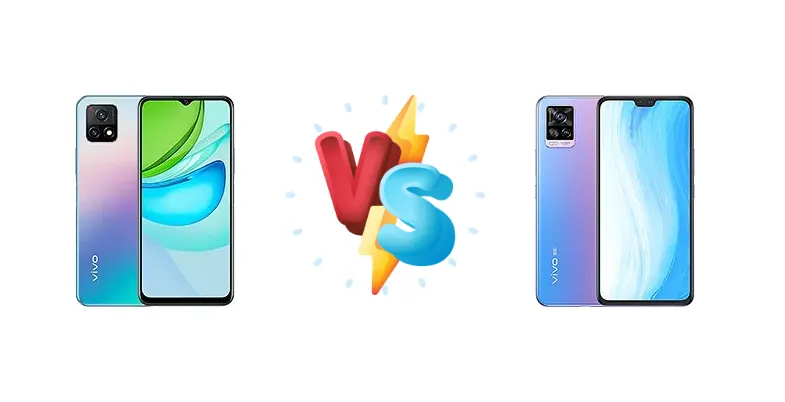
The vivo Y52s t1 and S7t represent different approaches within vivo’s lineup. The Y52s t1 focuses on affordability and 5G connectivity, powered by the Snapdragon 480. The S7t, meanwhile, aims for a more premium experience with the Dimensity 820, offering a significant performance uplift. This comparison dissects the key differences to determine which device best suits your needs.
🏆 Quick Verdict
For most users, the vivo S7t is the superior choice. Its Dimensity 820 chipset delivers substantially better performance for demanding tasks and gaming, and the 33W charging significantly reduces downtime. While the Y52s t1 offers 5G at a lower price, the performance trade-off is considerable.
| Network |
|---|
| 2G bands | GSM 850 / 900 / 1800 / 1900 | GSM 850 / 900 / 1800 / 1900 |
| 3G bands | HSDPA 850 / 900 / 1700(AWS) / 2100 | HSDPA 850 / 900 / 1700(AWS) / 1900 / 2100 |
| 4G bands | 1, 3, 4, 5, 8, 28, 34, 38, 39, 40, 41 | 1, 3, 4, 5, 8, 34, 38, 39, 40, 41 |
| 5G bands | 1, 28, 41, 77, 78 SA/NSA | 1, 3, 41, 77, 78, 79 SA/NSA |
| Speed | HSPA, LTE, 5G | HSPA, LTE, 5G |
| Technology | GSM / CDMA / HSPA / LTE / 5G | GSM / CDMA / HSPA / CDMA2000 / LTE / 5G |
| | CDMA 800 | CDMA2000 1x |
| Launch |
|---|
| Announced | 2021, May 03 | 2021, February 04 |
| Status | Available. Released 2021, May 03 | Available. Released 2021, February 04 |
| Body |
|---|
| Dimensions | 164.2 x 75.4 x 8.4 mm (6.46 x 2.97 x 0.33 in) | 158.8 x 74.2 x 7.4 mm (6.25 x 2.92 x 0.29 in) |
| SIM | Nano-SIM + Nano-SIM | Nano-SIM + Nano-SIM |
| Weight | 185.5 g (6.56 oz) | 169 g (5.96 oz) |
| Display |
|---|
| Resolution | 1080 x 2408 pixels, 20:9 ratio (~401 ppi density) | 1080 x 2400 pixels, 20:9 ratio (~409 ppi density) |
| Size | 6.58 inches, 104.3 cm2 (~84.2% screen-to-body ratio) | 6.44 inches, 100.1 cm2 (~85.0% screen-to-body ratio) |
| Type | IPS LCD, 90Hz, HDR10, 460 nits (typ) | AMOLED |
| Platform |
|---|
| CPU | Octa-core (2x2.0 GHz Kryo 460 & 6x1.8 GHz Kryo 460) | Octa-core (4x2.6 GHz Cortex-A76 & 4x2.0 GHz Cortex-A55) |
| Chipset | Qualcomm SM4350 Snapdragon 480 5G (8 nm) | Mediatek Dimensity 820 (7 nm) |
| GPU | Adreno 619 | Mali-G57 MC5 |
| OS | Android 11, OriginOS 1.0 | Android 11, OriginOS 1.0 |
| Memory |
|---|
| Card slot | No | No |
| Internal | 128GB 8GB RAM, 256GB 8GB RAM | 128GB 8GB RAM, 256GB 8GB RAM |
| | UFS 2.1 | UFS 2.1 |
| Main Camera |
|---|
| Dual | 48 MP, f/1.8, 25mm (wide), 1/2.0", 0.8µm, PDAF
Auxiliary lens | - |
| Features | LED flash, HDR, panorama | Dual-LED dual-tone flash, HDR, panorama |
| Single | 8 MP, f/1.8, (wide) | - |
| Triple | - | 64 MP, f/1.9, 26mm (wide), 1/1.72", 0.8µm, PDAF
8 MP, f/2.2, 120˚, 16mm (ultrawide), 1/4.0", 1.12µm
Auxiliary lens |
| Video | 1080p@30fps | 4K@30fps, 1080p@30fps, gyro-EIS |
| Selfie camera |
|---|
| Dual | - | 44 MP, f/2.0, (wide), AF
8 MP, f/2.3, 105˚ (ultrawide) |
| Features | HDR | HDR |
| Single | 8 MP, f/1.8, (wide) | - |
| Video | 1080p@30fps | 4K@30fps, 1080p@30fps |
| Sound |
|---|
| 3.5mm jack | Yes | No |
| 35mm jack | Yes | No |
| Loudspeaker | Yes | Yes |
| | - | 24-bit/192kHz audio |
| Comms |
|---|
| Bluetooth | 5.1, A2DP, LE, aptX HD | 5.1, A2DP, LE, aptX HD |
| NFC | No | Yes |
| Positioning | GPS, GLONASS, BDS, GALILEO | GPS, GLONASS, GALILEO, BDS, QZSS |
| Radio | No | No |
| USB | USB Type-C 2.0, OTG | USB Type-C, OTG |
| WLAN | Wi-Fi 802.11 a/b/g/n/ac, dual-band, Wi-Fi Direct | Wi-Fi 802.11 a/b/g/n/ac, dual-band, Wi-Fi Direct |
| Features |
|---|
| Sensors | Fingerprint (side-mounted), accelerometer, proximity, compass | Fingerprint (under display, optical), accelerometer, proximity, compass |
| Battery |
|---|
| Charging | 18W wired | 33W wired, 66% in 30 min |
| Type | 5000 mAh | 4000 mAh |
| Misc |
|---|
| Colors | Gray, Coral, Aurora | Black, White, Gradient Blue |
| Models | V2054A | V2080A |
| Price | About 270 EUR | About 340 EUR |
vivo Y52s t1
- More affordable price point
- 5G connectivity
- Potentially longer battery life (depending on capacity)
- Significantly weaker performance
- Slower charging speed
- Likely lower quality display
vivo S7t
- Superior performance with Dimensity 820
- Faster 33W charging
- Potentially better camera quality
- Higher price
- May not offer significantly better battery life (depending on capacity)
- Potential for more heat under heavy load
Display Comparison
Unfortunately, display specifications are missing for both devices. However, given the Y52s t1’s positioning, it likely features an LCD panel, while the S7t, being a more premium model, may utilize AMOLED technology. The S7t’s higher price point suggests a potentially higher peak brightness and more accurate color reproduction. Bezels are likely comparable, but the S7t may benefit from a slightly more refined design.
Camera Comparison
Camera details are limited. Without sensor size or aperture information, a direct comparison is difficult. However, the S7t’s positioning suggests a more capable camera system. The Dimensity 820’s image signal processor (ISP) is more advanced than the Snapdragon 480’s, enabling better image processing, noise reduction, and dynamic range. It’s reasonable to assume the S7t offers superior image quality, particularly in low-light conditions. The presence of a 2MP macro camera on either device is unlikely to significantly impact overall camera performance; these sensors often lack detail and clarity.
Performance
The core difference lies in the chipsets. The vivo S7t’s Mediatek Dimensity 820 (7nm) is a significant step up from the Qualcomm Snapdragon 480 5G (8nm) in the Y52s t1. The Dimensity 820’s octa-core configuration, with 4x2.6 GHz Cortex-A76 cores, provides substantially more processing power than the Snapdragon 480’s 2x2.0 GHz Kryo 460 and 6x1.8 GHz Kryo 460 setup. This translates to faster app loading times, smoother multitasking, and a more enjoyable gaming experience. The 7nm process node of the Dimensity 820 also contributes to better thermal efficiency, potentially reducing throttling during sustained workloads. While both support 5G, the Dimensity 820’s integrated 5G modem is generally considered more advanced.
Battery Life
Battery capacity is not specified for either device. However, the S7t’s 33W wired charging is a clear advantage over the Y52s t1’s 18W charging. Vivo claims the S7t can reach 66% charge in just 30 minutes, significantly reducing downtime. While a larger battery capacity on the Y52s t1 could partially offset the slower charging, the S7t’s faster charging speed provides a more convenient user experience.
Buying Guide
Buy the vivo Y52s t1 if you prioritize 5G connectivity on a strict budget and primarily use your phone for basic tasks like calling, texting, and light social media. Buy the vivo S7t if you value smoother multitasking, a more responsive gaming experience, and faster charging, even if it means spending a bit more.
Frequently Asked Questions
❓ Will the Snapdragon 480 in the Y52s t1 struggle with graphically demanding games like PUBG or Genshin Impact?
Yes, the Snapdragon 480 is an entry-level 5G chipset. While it can run these games, you'll likely need to lower graphics settings significantly to achieve playable frame rates. Expect noticeable lag and stuttering, especially in intense scenes. The Dimensity 820 in the S7t offers a much smoother and more enjoyable gaming experience.
❓ How much faster is the charging on the vivo S7t compared to the Y52s t1 in real-world use?
Vivo claims the S7t reaches 66% charge in 30 minutes with its 33W charging. The Y52s t1’s 18W charging will take considerably longer – likely over an hour to reach the same charge level. This difference is significant for users who need to quickly top up their battery before leaving the house.
❓ Is the Dimensity 820 prone to overheating during extended gaming sessions?
While the Dimensity 820 is a powerful chip, it can generate heat under sustained load. However, vivo typically implements thermal management solutions to mitigate overheating. The 7nm process node is more efficient than the 8nm Snapdragon 480, meaning the S7t is likely to manage heat better overall, even during demanding tasks.