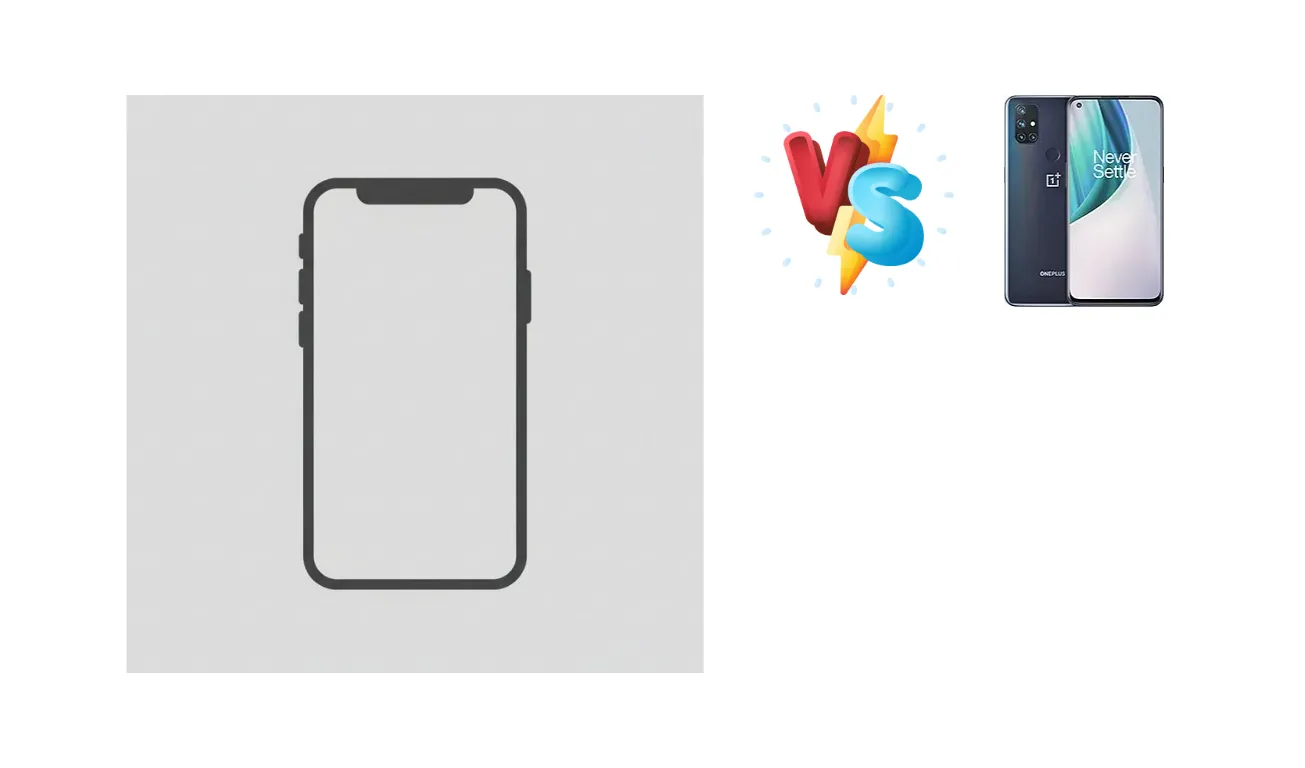
The sub-$250 smartphone market is fiercely competitive. The vivo Y50 and OnePlus Nord N10 5G both aim to deliver a solid experience without breaking the bank, but they take different approaches. The Y50 focuses on a reliable, if older, platform, while the Nord N10 5G prioritizes 5G connectivity and faster charging. This comparison dissects the key differences to help you choose the right device.
🏆 Quick Verdict
For most users, the OnePlus Nord N10 5G is the better buy. Its Snapdragon 690 chipset offers a noticeable performance boost over the Y50’s Snapdragon 665, and the 30W charging significantly reduces downtime. While both phones offer similar battery endurance ratings, the N10’s 5G capability and faster charging provide a more future-proof experience.
| Network |
|---|
| 2G bands | GSM 850 / 900 / 1800 / 1900 - SIM 1 & SIM 2 | GSM 850 / 900 / 1800 / 1900 |
| 3G bands | HSDPA 850 / 900 / 2100 | HSDPA 850 / 900 / 1700(AWS) / 1900 / 2100 |
| 4G bands | 1, 3, 5, 7, 8, 38, 40, 41 | 1, 2, 3, 4, 5, 7, 8, 12, 17, 20, 28, 38, 39, 40, 41, 66 - International |
| 5G bands | - | 1, 3, 7, 28, 41, 66, 78 SA/NSA - International |
| Speed | HSPA, LTE-A | HSPA 42.2/5.76 Mbps, LTE Cat18 1024/150 Mbps, 5G |
| Technology | GSM / HSPA / LTE | GSM / CDMA / HSPA / LTE / 5G |
| | - | 2, 5, 25, 41, 66, 71 SA/NSA - USA |
| Launch |
|---|
| Announced | 2020, April 06 | 2020, October 26 |
| Status | Available. Released 2020, April 12 | Available. Released 2020, November 21 |
| Body |
|---|
| Build | Glass front, plastic back, plastic frame | Glass front (Gorilla Glass 3), plastic back, plastic frame |
| Dimensions | 162 x 76.5 x 9.1 mm (6.38 x 3.01 x 0.36 in) | 163 x 74.7 x 9 mm (6.42 x 2.94 x 0.35 in) |
| SIM | Dual SIM (Nano-SIM, dual stand-by) | Nano-SIM + Nano-SIM |
| Weight | 197 g (6.95 oz) | 190 g (6.70 oz) |
| Display |
|---|
| Protection | - | Corning Gorilla Glass 3 |
| Resolution | 1080 x 2400 pixels, 20:9 ratio (~403 ppi density) | 1080 x 2400 pixels, 20:9 ratio (~406 ppi density) |
| Size | 6.53 inches, 102.9 cm2 (~83.1% screen-to-body ratio) | 6.49 inches, 101.7 cm2 (~83.5% screen-to-body ratio) |
| Type | IPS LCD | IPS LCD, 90Hz |
| Platform |
|---|
| CPU | Octa-core (4x2.0 GHz Kryo 260 Gold & 4x1.8 GHz Kryo 260 Silver) | Octa-core (2x2.0 GHz Kryo 560 Gold & 6x1.7 GHz Kryo 560 Silver) |
| Chipset | Qualcomm SM6125 Snapdragon 665 (11 nm) | Qualcomm SM6350 Snapdragon 690 5G (8 nm) |
| GPU | Adreno 610 | Adreno 619L |
| OS | Android 10, Funtouch 10.0 | Android 10, OxygenOS 10.5 |
| Memory |
|---|
| Card slot | microSDXC (dedicated slot) | microSDXC |
| Internal | 128GB 8GB RAM, 128GB 6GB RAM | 128GB 6GB RAM |
| | eMMC 5.1 | UFS 2.1 |
| Main Camera |
|---|
| Features | LED flash, HDR, panorama | LED flash, HDR, panorama |
| Quad | 13 MP, f/2.2, (wide), PDAF
8 MP, f/2.2, 13mm (ultrawide), 1/4.0", 1.12µm
2 MP, f/2.4, (macro)
2 MP, f/2.4, (depth) | 64 MP, f/1.8, (wide), 1/1.72", 0.8µm, PDAF
8 MP, f/2.3, 119˚ (ultrawide)
2 MP (macro)
Auxiliary lens |
| Video | 1080p@30fps | 4K@30fps, 1080p@30/60/120fps; gyro-EIS |
| Selfie camera |
|---|
| Features | - | HDR |
| Single | 16 MP, f/2.0, (wide) | 16 MP, f/2.1 |
| Video | 1080p@30fps | 1080p@30/60fps, gyro-EIS |
| Sound |
|---|
| 3.5mm jack | Yes | Yes |
| 35mm jack | - | Yes |
| Loudspeaker | Yes | Yes, with dual speakers |
| Comms |
|---|
| Bluetooth | 5.0, A2DP, LE | 5.1, A2DP, LE |
| NFC | No | Yes |
| Positioning | GPS, GLONASS, GALILEO | GPS (L1+L5), GLONASS, GALILEO, BDS |
| Radio | FM radio | No |
| USB | USB Type-C 2.0, OTG | USB Type-C 2.0, OTG |
| WLAN | Wi-Fi 802.11 a/b/g/n, dual-band, Wi-Fi Direct | Wi-Fi 802.11 a/b/g/n/ac, dual-band, Wi-Fi Direct |
| Features |
|---|
| Sensors | Fingerprint (rear-mounted), accelerometer, proximity, compass | Fingerprint (rear-mounted), accelerometer, gyro, proximity, compass |
| Battery |
|---|
| Charging | 15W wired | 30W wired |
| Type | Li-Po 5000 mAh, non-removable | Li-Po 4300 mAh |
| Misc |
|---|
| Colors | Starry Black, Iris Blue, Iris Blue, Pearl White | Midnight Ice |
| Models | 1935, V1965A | BE2029, BE2025, BE2026, BE2028 |
| Price | ₹ 18,000 | About 250 EUR |
| Tests |
|---|
| Battery life | - |
Endurance rating 99h
|
| Camera | - |
Photo / Video |
| Loudspeaker | - |
-25.8 LUFS (Very good)
|
| Performance | - |
AnTuTu: 279579 (v8)
GeekBench: 1848 (v5.1)
GFXBench: 13fps (ES 3.1 onscreen) |
vivo Y50
- Potentially lower price point
- Reliable Snapdragon 665 platform
- Stable software experience (typically)
- Older chipset with lower performance
- Slower 15W charging
- Lacks 5G connectivity
OnePlus Nord N10 5G
- Faster Snapdragon 690 chipset
- 30W fast charging
- 5G connectivity for future-proofing
- Potentially higher price
- OxygenOS can have occasional bugs
- Larger size may not suit all users
Display Comparison
The OnePlus Nord N10 5G boasts a brighter display, measured at 440 nits, compared to the unspecified brightness of the vivo Y50. This translates to better visibility outdoors. While both likely utilize IPS LCD panels, the N10’s 1447:1 contrast ratio suggests a more vibrant image. The Y50’s display specifications are less detailed, making a direct comparison difficult, but it’s reasonable to assume it offers a more standard viewing experience.
Camera Comparison
Both phones feature 'Photo / Video' capabilities, but detailed camera specs are lacking. Without sensor size or aperture information, it’s difficult to make a definitive judgment. However, the Snapdragon 690 in the N10 generally offers superior image signal processing (ISP) capabilities, potentially leading to better image quality, especially in low-light conditions. The Y50’s older chipset may struggle to keep up with more demanding computational photography tasks.
Performance
The core difference lies in the chipsets. The OnePlus Nord N10 5G’s Snapdragon 690 (8nm) is a significant upgrade over the vivo Y50’s Snapdragon 665 (11nm). The 8nm process node allows for greater transistor density and improved power efficiency, resulting in better sustained performance and less heat generation. The CPU configuration also favors the N10, with 2x2.0 GHz Kryo 560 Gold cores versus the Y50’s 4x2.0 GHz Kryo 260 Gold cores – the N10’s cores are architecturally superior. This translates to snappier app launches and smoother multitasking.
Battery Life
Interestingly, both phones achieve an endurance rating of 99 hours, suggesting similar real-world battery life despite the Y50’s unspecified battery capacity. However, the N10’s 30W wired charging is a game-changer. This allows for significantly faster top-ups compared to the Y50’s 15W charging. While both will likely last a full day for moderate users, the N10’s charging speed minimizes downtime and offers greater convenience.
Buying Guide
Buy the vivo Y50 if you prioritize a consistently stable experience with a known chipset and are less concerned with 5G or rapid charging. It’s a good choice for users on a very tight budget who primarily use their phone for basic tasks. Buy the OnePlus Nord N10 5G if you want a more responsive device, faster charging, and the potential for 5G connectivity, even if it means a slightly higher initial investment.
Frequently Asked Questions
❓ Does the Snapdragon 690 in the Nord N10 5G support carrier aggregation for faster 5G speeds?
Yes, the Snapdragon 690 supports carrier aggregation, allowing it to combine multiple 5G channels for significantly faster download and upload speeds, provided your carrier supports it. This is a key advantage over older 5G modems.
❓ Is the 15W charging on the vivo Y50 sufficient for overnight charging, or will it take a long time to fully charge?
15W charging is adequate for overnight charging, but it will take considerably longer than the Nord N10 5G’s 30W charging. Expect a full charge to take around 3-4 hours, depending on the battery capacity. It's best suited for topping up overnight rather than quick boosts during the day.
❓ How does the Snapdragon 665 in the Y50 handle graphically intensive games like PUBG Mobile?
The Snapdragon 665 can run PUBG Mobile, but you’ll likely need to lower the graphics settings to medium or low to maintain a stable frame rate. Expect some occasional stuttering, especially during intense firefights. The Snapdragon 690 in the N10 will provide a smoother and more consistent gaming experience.
❓ What type of USB port do both phones use, and does either support USB Power Delivery (USB-PD)?
Both phones utilize USB-C ports. However, neither is confirmed to support full USB Power Delivery (USB-PD). While they will charge with standard USB-C chargers, you won't get the fastest possible charging speeds with a USB-PD charger.