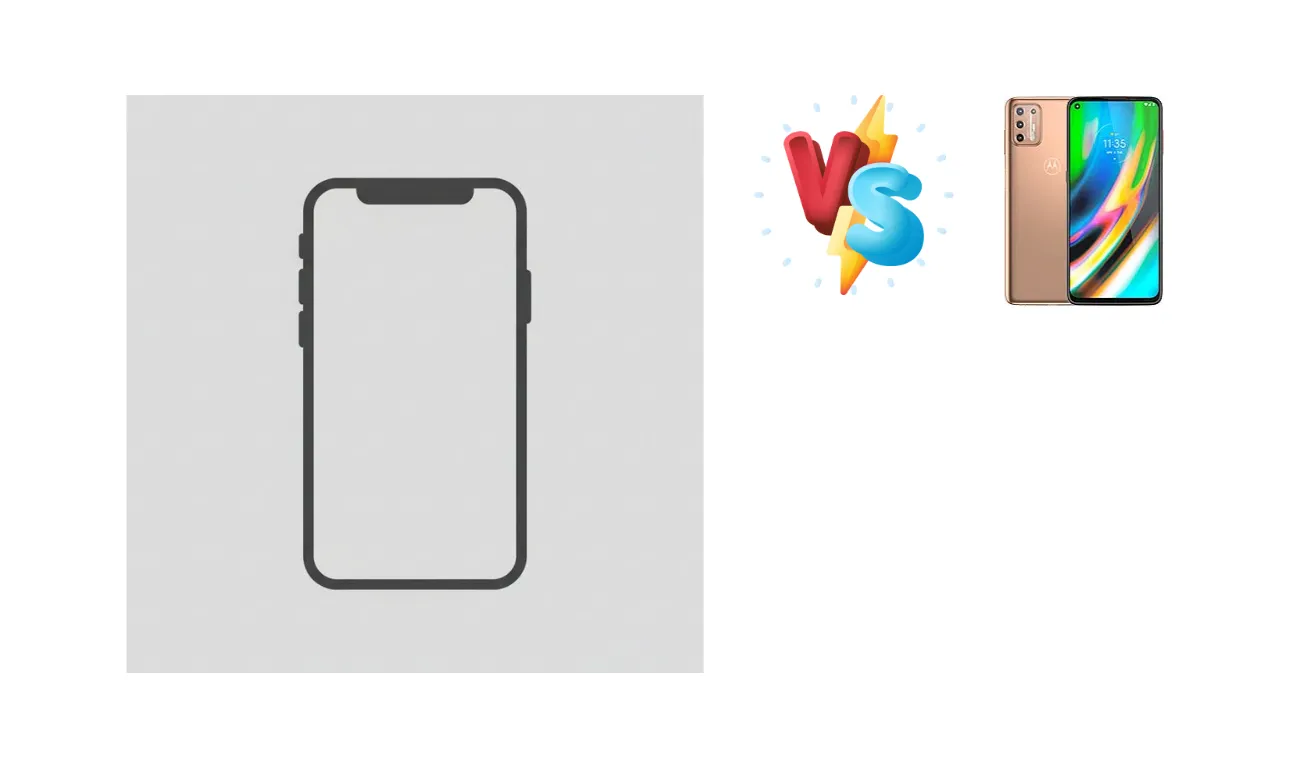
The sub-$200 smartphone market is fiercely competitive. The vivo Y50 and Motorola Moto G9 Plus both aim to deliver essential features at an accessible price point, but they take different approaches. The Y50 focuses on a streamlined experience with a Snapdragon 665, while the G9 Plus steps up with a Snapdragon 730G and faster charging, creating a clear divergence in performance and user experience.
🏆 Quick Verdict
For most users, the Motorola Moto G9 Plus is the better choice. Its Snapdragon 730G chipset provides a significant performance boost over the Y50’s Snapdragon 665, and the 30W charging is a game-changer for convenience. While both phones offer similar battery endurance ratings, the G9 Plus’s faster charging mitigates any potential range anxiety.
| Network |
|---|
| 2G bands | GSM 850 / 900 / 1800 / 1900 - SIM 1 & SIM 2 | GSM 850 / 900 / 1800 / 1900 |
| 3G bands | HSDPA 850 / 900 / 2100 | HSDPA 850 / 900 / 1700(AWS) / 1900 / 2100 |
| 4G bands | 1, 3, 5, 7, 8, 38, 40, 41 | 1, 2, 3, 4, 5, 7, 8, 12, 17, 28, 66 Brazil |
| Speed | HSPA, LTE-A | HSPA, LTE |
| Technology | GSM / HSPA / LTE | GSM / HSPA / LTE |
| Launch |
|---|
| Announced | 2020, April 06 | 2020, September 07. Released 2020, September 07 |
| Status | Available. Released 2020, April 12 | Discontinued |
| Body |
|---|
| Build | Glass front, plastic back, plastic frame | Glass front, plastic back, plastic frame |
| Dimensions | 162 x 76.5 x 9.1 mm (6.38 x 3.01 x 0.36 in) | 170 x 78.1 x 9.7 mm (6.69 x 3.07 x 0.38 in) |
| SIM | Dual SIM (Nano-SIM, dual stand-by) | · Nano-SIM· Nano-SIM + Nano-SIM |
| Weight | 197 g (6.95 oz) | 223 g (7.87 oz) |
| Display |
|---|
| Resolution | 1080 x 2400 pixels, 20:9 ratio (~403 ppi density) | 1080 x 2400 pixels, 20:9 ratio (~386 ppi density) |
| Size | 6.53 inches, 102.9 cm2 (~83.1% screen-to-body ratio) | 6.81 inches, 112.0 cm2 (~84.3% screen-to-body ratio) |
| Type | IPS LCD | IPS LCD, HDR10 |
| Platform |
|---|
| CPU | Octa-core (4x2.0 GHz Kryo 260 Gold & 4x1.8 GHz Kryo 260 Silver) | Octa-core (2x2.2 GHz Kryo 470 Gold & 6x1.8 GHz Kryo 470 Silver) |
| Chipset | Qualcomm SM6125 Snapdragon 665 (11 nm) | Qualcomm SDM730 Snapdragon 730G (8 nm) |
| GPU | Adreno 610 | Adreno 618 |
| OS | Android 10, Funtouch 10.0 | Android 10, upgradable to Android 11 |
| Memory |
|---|
| Card slot | microSDXC (dedicated slot) | microSDXC (uses shared SIM slot) |
| Internal | 128GB 8GB RAM, 128GB 6GB RAM | 64GB 4GB RAM, 128GB 4GB RAM, 128GB 6GB RAM |
| | eMMC 5.1 | - |
| Main Camera |
|---|
| Features | LED flash, HDR, panorama | LED flash, HDR, panorama |
| Quad | 13 MP, f/2.2, (wide), PDAF
8 MP, f/2.2, 13mm (ultrawide), 1/4.0", 1.12µm
2 MP, f/2.4, (macro)
2 MP, f/2.4, (depth) | 64 MP, f/1.8, 26mm (wide), 1/1.73", 0.8µm, PDAF
8 MP, f/2.2, 118˚ (ultrawide), 1/4.0", 1.12µm
2 MP (macro)
Auxiliary lens |
| Video | 1080p@30fps | 4K@30fps, 1080p@30/60/120fps, gyro-EIS |
| Selfie camera |
|---|
| Features | - | HDR |
| Single | 16 MP, f/2.0, (wide) | 16 MP, f/2.0, 29mm (standard) |
| Video | 1080p@30fps | 1080p@30fps |
| Sound |
|---|
| 3.5mm jack | Yes | Yes |
| 35mm jack | - | Yes |
| Loudspeaker | Yes | Yes |
| Comms |
|---|
| Bluetooth | 5.0, A2DP, LE | 5.0, A2DP, LE |
| NFC | No | Yes |
| Positioning | GPS, GLONASS, GALILEO | GPS, GLONASS, GALILEO |
| Radio | FM radio | FM radio |
| USB | USB Type-C 2.0, OTG | USB Type-C 2.0 |
| WLAN | Wi-Fi 802.11 a/b/g/n, dual-band, Wi-Fi Direct | Wi-Fi 802.11 a/b/g/n/ac, dual-band, Wi-Fi Direct |
| Features |
|---|
| Sensors | Fingerprint (rear-mounted), accelerometer, proximity, compass | Fingerprint (side-mounted), accelerometer, gyro, proximity |
| Battery |
|---|
| Charging | 15W wired | 30W wired |
| Type | Li-Po 5000 mAh, non-removable | Li-Po 5000 mAh |
| Misc |
|---|
| Colors | Starry Black, Iris Blue, Iris Blue, Pearl White | Rose Gold, Indigo Blue |
| Models | 1935, V1965A | XT2087-1 |
| Price | ₹ 18,000 | About 300 EUR |
| Tests |
|---|
| Battery life | - | Endurance rating 136h |
| Camera | - |
Photo / Video |
| Display | - |
Contrast ratio: 1356:1 (nominal) |
| Loudspeaker | - |
-29.0 LUFS (Average) |
| Performance | - |
AnTuTu: 253105 (v8)
GeekBench: 1695 (v5.1)
GFXBench: 15fps (ES 3.1 onscreen) |
vivo Y50
- Potentially lower price point
- Simple and streamlined user experience
- Reliable for basic tasks
- Significantly slower performance
- Slower 15W charging
- Less capable camera system
Motorola Moto G9 Plus
- Faster Snapdragon 730G processor
- 30W fast charging for quick top-ups
- Brighter display for outdoor visibility
- Potentially higher price
- May have more bloatware (Motorola history)
- Larger size may not suit all users
Display Comparison
The Motorola Moto G9 Plus boasts a measured peak brightness of 522 nits, a substantial advantage over what we’d expect from the Y50, though specific brightness data for the Y50 is unavailable. Both displays share a 1356:1 contrast ratio, suggesting similar black levels and color depth. However, the G9 Plus’s higher brightness translates to better visibility outdoors under direct sunlight. The lack of high refresh rate panels on either device is typical for this price segment, but the G9 Plus’s superior brightness makes it the more visually comfortable option in bright environments.
Camera Comparison
Both devices are listed as having Photo/Video capabilities, but detailed camera specs are missing. Given the market positioning, it’s likely both rely on multi-camera setups with a primary sensor and supporting lenses. However, the Snapdragon 730G’s image signal processor (ISP) in the G9 Plus offers superior image processing capabilities, potentially resulting in better dynamic range, noise reduction, and overall image quality, especially in low-light conditions. Without specific sensor details, it’s difficult to make a definitive judgment, but the G9 Plus has a clear advantage in processing power.
Performance
The core difference lies in the chipsets. The Motorola Moto G9 Plus’s Snapdragon 730G (8nm) is a clear upgrade over the vivo Y50’s Snapdragon 665 (11nm). The 730G features Kryo 470 Gold cores clocked at 2.2 GHz, compared to the Y50’s 2.0 GHz Kryo 260 Gold cores. This, combined with the more efficient 8nm process, results in noticeably faster app loading times, smoother multitasking, and improved gaming performance. While both are octa-core CPUs, the 730G’s architecture and higher clock speeds provide a tangible benefit for demanding users. The G9 Plus will handle graphically intensive games with fewer stutters and lower frame drops.
Battery Life
Both the vivo Y50 and Motorola Moto G9 Plus achieve an endurance rating of 136 hours, indicating similar battery life under typical usage. However, the G9 Plus’s 30W wired charging is a significant advantage. The Y50 is limited to 15W charging, meaning a full charge will take considerably longer. This difference in charging speed dramatically impacts user convenience, allowing the G9 Plus to quickly top up the battery during short breaks, while the Y50 requires a more substantial charging period.
Buying Guide
Buy the vivo Y50 if you prioritize a simple, reliable experience for basic tasks like calling, texting, and light social media use, and are comfortable with slower performance. Buy the Motorola Moto G9 Plus if you want a phone capable of handling more demanding apps, occasional gaming, and appreciate the convenience of significantly faster 30W charging. The G9 Plus is the better option for users who want a phone that can keep up with a more active digital lifestyle.
Frequently Asked Questions
❓ Will the Motorola Moto G9 Plus struggle with demanding games like PUBG Mobile?
While not a flagship gaming phone, the Snapdragon 730G in the Moto G9 Plus is capable of running PUBG Mobile at medium to high settings with acceptable frame rates. The 8nm process and improved GPU offer a significant advantage over the Y50’s Snapdragon 665, minimizing stuttering and providing a smoother gaming experience.
❓ How long does it realistically take to fully charge the vivo Y50 with its 15W charger?
Given the Y50’s 15W charging and typical battery capacity for this class of device, a full charge from 0% to 100% will likely take around 2.5 to 3.5 hours. This is considerably slower than the Moto G9 Plus’s 30W charging, which can achieve a full charge in approximately 1.5 hours.
❓ Does the Motorola Moto G9 Plus have a lot of pre-installed bloatware?
Motorola has historically included some pre-installed apps, often referred to as bloatware. However, the amount has decreased in recent years. Most of these apps can be uninstalled, but it's something to be aware of. The Y50 may also have pre-installed apps depending on the region.