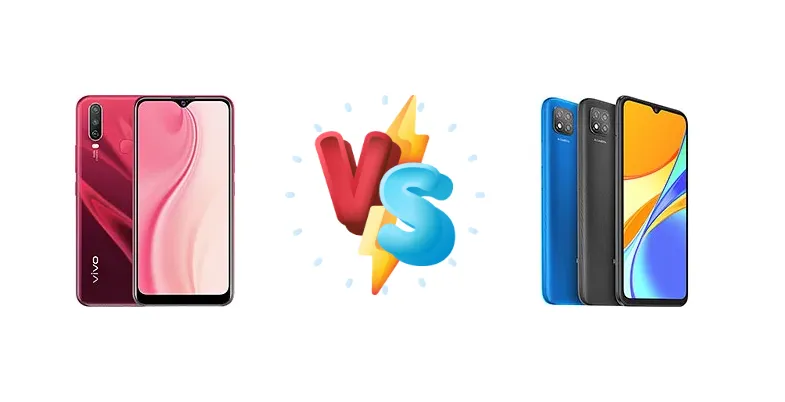
The sub-$150 smartphone market is fiercely competitive. Both the vivo Y3s and Xiaomi Redmi 9C NFC aim to deliver essential smartphone functionality at an accessible price. While appearing similar on the surface, a closer look at their chipsets – the MediaTek Helio P35 and Helio G35 respectively – reveals key differences impacting performance and user experience. This comparison dissects those nuances to help you choose the right device.
🏆 Quick Verdict
For the average user prioritizing basic tasks and NFC functionality, the Xiaomi Redmi 9C NFC edges out the vivo Y3s. The Helio G35 offers a slight GPU advantage, making it marginally better for light gaming, and the inclusion of NFC adds convenient contactless payment options. However, the difference is minimal, and both phones represent excellent value.
| Network |
|---|
| 2G bands | GSM 850 / 900 / 1800 / 1900 | GSM 850 / 900 / 1800 / 1900 |
| 3G bands | HSDPA 850 / 900 / 2100 | HSDPA 850 / 900 / 1700(AWS) / 1900 / 2100 |
| 4G bands | 1, 3, 5, 8, 34, 38, 39, 40, 41 | 1, 2, 3, 4, 5, 7, 8, 20, 38, 40 |
| Speed | HSPA 42.2/5.76 Mbps, LTE (2CA) Cat6 300/50 Mbps | HSPA, LTE |
| Technology | GSM / CDMA / HSPA / LTE | GSM / HSPA / LTE |
| | CDMA 800 & TD-SCDMA | - |
| Launch |
|---|
| Announced | 2020, September 21. Released 2020, October 26 | 2020, August 27. Released 2020, August 27 |
| Status | Discontinued | Discontinued |
| Body |
|---|
| Build | Glass front, plastic back, plastic frame | - |
| Dimensions | 159.4 x 76.8 x 8.9 mm (6.28 x 3.02 x 0.35 in) | 164.9 x 77.1 x 9 mm (6.49 x 3.04 x 0.35 in) |
| SIM | Nano-SIM + Nano-SIM | Nano-SIM + Nano-SIM |
| Weight | 190.5 g (6.74 oz) | 196 g (6.91 oz) |
| Display |
|---|
| Resolution | 720 x 1544 pixels, 19.3:9 ratio (~268 ppi density) | 720 x 1600 pixels, 20:9 ratio (~269 ppi density) |
| Size | 6.35 inches, 99.6 cm2 (~81.4% screen-to-body ratio) | 6.53 inches, 102.9 cm2 (~81.0% screen-to-body ratio) |
| Type | IPS LCD | IPS LCD, 400 nits (typ) |
| Platform |
|---|
| CPU | Octa-core (4x2.3 GHz Cortex-A53 & 4x1.8 GHz Cortex-A53) | Octa-core (4x2.3 GHz Cortex-A53 & 4x1.8 GHz Cortex-A53) |
| Chipset | Mediatek MT6765 Helio P35 (12 nm) | Mediatek MT6765G Helio G35 (12 nm) |
| GPU | PowerVR GE8320 | PowerVR GE8320 |
| OS | Android 9.0 (Pie), Funtouch 9 | Android 10, MIUI 12 |
| Memory |
|---|
| Card slot | microSDXC (dedicated slot) | microSDXC (dedicated slot) |
| Internal | 32GB 3GB RAM, 64GB 4GB RAM, 128GB 4GB RAM | 32GB 2GB RAM, 32GB 3GB RAM, 64GB 2GB RAM, 64GB 3GB RAM, 128GB 3GB RAM, 128GB 4GB RAM |
| | eMMC 5.1 | eMMC 5.1 |
| Main Camera |
|---|
| Dual | 13 MP, f/2.2, PDAF
Auxiliary lens | 13 MP, f/2.2, 28mm (wide), 1.0µm, PDAF
2 MP (macro) |
| Features | LED flash, HDR, panorama | LED flash, HDR |
| Video | 1080p@30fps, 720p@120fps | 1080p@30fps |
| Selfie camera |
|---|
| Features | - | HDR |
| Single | 8 MP, f/1.8 | 5 MP, f/2.2, (wide), 1.12µm |
| Video | 1080p@30fps | 1080p@30fps |
| Sound |
|---|
| 3.5mm jack | Yes | Yes |
| 35mm jack | Yes | Yes |
| Loudspeaker | Yes | Yes |
| Comms |
|---|
| Bluetooth | 5.0, A2DP, LE | 5.0, A2DP, LE |
| NFC | No | Yes |
| Positioning | GPS, GLONASS, GALILEO, BDS | GPS, GLONASS, BDS |
| Radio | FM radio | FM radio |
| USB | microUSB 2.0, OTG | microUSB 2.0, OTG |
| WLAN | Wi-Fi 802.11 b/g/n, Wi-Fi Direct | Wi-Fi 802.11 b/g/n, Wi-Fi Direct |
| Features |
|---|
| Sensors | Fingerprint (rear-mounted), accelerometer, proximity, compass | Fingerprint (rear-mounted), accelerometer, proximity |
| Battery |
|---|
| Charging | 10W wired | 10W wired |
| Type | 5000 mAh | Li-Po 5000 mAh |
| Misc |
|---|
| Colors | Dark Blue, Light Blue, Red | Midnight Gray, Sunshine Yellow, Twilight Blue |
| Models | V1901A, V1901T | M2006C3MNG |
| Price | About 150 EUR | About 100 EUR |
| SAR | - | 0.57 W/kg (head) 0.90 W/kg (body) |
| SAR EU | - | 0.37 W/kg (head) 1.14 W/kg (body) |
vivo Y3s
- Reliable performance for basic tasks
- Potentially more software optimizations for stability
- Simple and user-friendly interface
- Lacks NFC functionality
- Slightly weaker GPU performance compared to Redmi 9C NFC
Xiaomi Redmi 9C NFC
- Includes NFC for contactless payments
- Slightly better GPU performance for light gaming
- Potentially improved image processing
- May experience slightly more software bloat
- Potentially less optimized software compared to vivo
Display Comparison
Both the vivo Y3s and Redmi 9C NFC likely feature similar LCD panels, given their price point. Detailed specifications regarding brightness (nits) and color accuracy are unavailable, but we can assume both offer adequate, though not exceptional, viewing experiences. Bezels are expected to be noticeable on both devices, typical for this segment. The lack of high refresh rate or advanced panel technology like LTPO is standard at this price.
Camera Comparison
Camera performance is likely to be similar, relying heavily on software processing. Both phones likely feature a primary camera, alongside depth and macro sensors. Given the market segment, sensor sizes are expected to be small, and image quality will be acceptable in good lighting conditions. The Redmi 9C NFC may have a slight edge due to potentially better image signal processing (ISP) capabilities within the Helio G35, but detailed analysis requires sample images. The often-included 2MP macro cameras on both devices offer limited practical utility.
Performance
The core of the difference lies in the chipsets. Both phones utilize MediaTek’s 12nm process, but the Redmi 9C NFC’s Helio G35 is a slightly newer iteration. While both CPUs share the same octa-core configuration (4x2.3 GHz Cortex-A53 & 4x1.8 GHz Cortex-A53), the G35 features an improved GPU. This translates to a modest advantage in graphics performance for the Redmi 9C NFC, making it better suited for casual gaming. However, for everyday tasks like browsing and app switching, the performance difference will be negligible. RAM configurations are crucial, but unspecified; faster LPDDR4X RAM would benefit both devices.
Battery Life
Both devices are equipped with 10W wired charging, indicating similar charging speeds – expect around 2.5-3 hours for a full charge. Battery capacity is unspecified, but typical for this class is around 5000mAh. Real-world battery life will depend heavily on usage patterns, but both phones should comfortably last a full day with moderate use. The efficiency gains of the Helio G35 might translate to slightly longer battery life on the Redmi 9C NFC, but the difference will likely be minimal.
Buying Guide
Buy the vivo Y3s if you prioritize a consistently stable experience for everyday tasks like calling, texting, and social media, and NFC isn't a necessity. It's a reliable workhorse for basic smartphone needs. Buy the Xiaomi Redmi 9C NFC if you occasionally enjoy light mobile gaming or frequently use contactless payment systems. The Helio G35 provides a small performance boost, and NFC adds a layer of modern convenience.
Frequently Asked Questions
❓ Does the Helio G35 in the Redmi 9C NFC allow for playable frame rates in popular games like PUBG Mobile?
The Helio G35 can handle PUBG Mobile, but expect to play at low to medium settings with reduced frame rates (around 30-40fps) for a smooth experience. It's not a gaming powerhouse, but it's sufficient for casual gaming sessions.
❓ Is the NFC functionality on the Redmi 9C NFC compatible with all contactless payment systems?
The Redmi 9C NFC supports standard NFC protocols and is compatible with most contactless payment systems like Google Pay and various banking apps that support NFC payments. However, compatibility may vary depending on your region and bank.
❓ How does the software experience differ between vivo's Funtouch OS and Xiaomi's MIUI on these devices?
MIUI is generally known for its extensive customization options and feature set, but can also include more pre-installed apps (bloatware). Funtouch OS tends to be more streamlined and focused on simplicity, potentially offering a smoother experience for users who prefer a less cluttered interface.
❓ Are software updates guaranteed for both the vivo Y3s and the Xiaomi Redmi 9C NFC?
Software update support for these budget devices is often limited. While both brands provide updates, they are typically less frequent and for a shorter duration compared to flagship models. Expect security patches and minor updates, but major Android version upgrades are less likely.