
vivo Y32 vs Motorola Moto G71 5G: A Deep Dive into Budget 5G Performance
| Phones Images | |||||
|---|---|---|---|---|---|
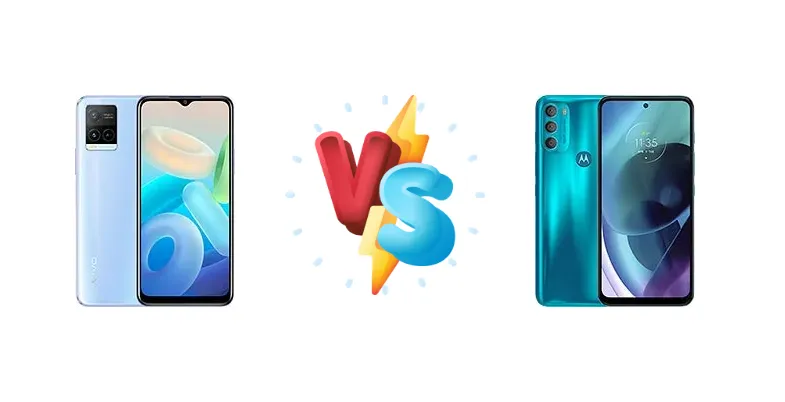
|
🏆 Quick Verdict
For most users, the Motorola Moto G71 5G emerges as the stronger choice. Its Snapdragon 695 5G chipset provides a noticeable performance uplift over the Y32’s Snapdragon 680, and the significantly faster 30W/33W charging is a game-changer for convenience. While the Y32 offers respectable battery life, the G71’s overall package is more compelling.
| PHONES | ||
|---|---|---|
| Phone Names | vivo Y32 | Motorola Moto G71 5G |
| Network | ||
|---|---|---|
| 2G bands | GSM 850 / 900 / 1800 / 1900 | GSM 850 / 900 / 1800 / 1900 |
| 3G bands | HSDPA 850 / 900 / 2100 | HSDPA 850 / 900 / 1900 / 2100 |
| 4G bands | 1, 3, 5, 8, 34, 38, 39, 40, 41 | 1, 2, 3, 4, 5, 7, 8, 12, 13, 17, 18, 19, 20, 26, 28, 32, 38, 40, 41, 42, 43, 66 - International |
| 5G bands | - | 1, 3, 5, 7, 8, 20, 28, 38, 40, 41, 66, 77, 78 SA/NSA/Sub6 - International |
| Speed | HSPA, LTE | HSPA 42.2/5.76 Mbps, LTE Cat15 800/150 Mbps, 5G |
| Technology | GSM / CDMA / HSPA / CDMA2000 / LTE | GSM / HSPA / LTE / 5G |
| CDMA2000 1x | 1, 3, 41, 77, 78 SA/NSA/Sub6 - PRC | |
| Launch | ||
|---|---|---|
| Announced | 2021, December 18 | 2021, November 18 |
| Status | Available. Released 2021, December 31 | Available. Released 2022, January 19 |
| Body | ||
|---|---|---|
| Build | Glass front, plastic back, plastic frame | - |
| Dimensions | 164.3 x 76.1 x 8 mm (6.47 x 3.00 x 0.31 in) | 161.2 x 73.9 x 8.5 mm (6.35 x 2.91 x 0.33 in) |
| SIM | Nano-SIM + Nano-SIM | · Nano-SIM· Nano-SIM + Nano-SIM |
| Weight | 182 g (6.42 oz) | 179 g (6.31 oz) |
| - | Water-repellent design | |
| Display | ||
|---|---|---|
| Resolution | 720 x 1600 pixels, 20:9 ratio (~270 ppi density) | 1080 x 2400 pixels, 20:9 ratio (~411 ppi density) |
| Size | 6.51 inches, 102.3 cm2 (~81.8% screen-to-body ratio) | 6.4 inches, 98.9 cm2 (~83.0% screen-to-body ratio) |
| Type | IPS LCD | AMOLED |
| Platform | ||
|---|---|---|
| CPU | Octa-core (4x2.4 GHz Kryo 265 Gold & 4x1.9 GHz Kryo 265 Silver) | Octa-core (2x2.2 GHz Kryo 660 Gold & 6x1.7 GHz Kryo 660 Silver) |
| Chipset | Qualcomm SM6225 Snapdragon 680 4G (6 nm) | Qualcomm SM6375 Snapdragon 695 5G (6 nm) |
| GPU | Adreno 610 | Adreno 619 |
| OS | Android 11, OriginOS 1.0 | Android 11, upgradable to Android 12 |
| Memory | ||
|---|---|---|
| Card slot | microSDXC | No |
| Internal | 64GB 4GB RAM, 128GB 4GB RAM, 128GB 6GB RAM, 128GB 8GB RAM | 128GB 4GB RAM, 128GB 6GB RAM, 128GB 6GB RAM, 128GB 8GB RAM |
| UFS 2.1 | - | |
| Main Camera | ||
|---|---|---|
| Dual | 13 MP, f/2.2, (wide), AF 2 MP (macro) | - |
| Features | LED flash, HDR, panorama | LED flash, HDR, panorama |
| Single | 8 MP, f/1.8 | - |
| Triple | - | 50 MP, f/1.8, (wide), 1/2.76", 0.64µm, PDAF 8 MP, f/2.2, 118˚ (ultrawide), 1/4.0", 1.12µm 2 MP (macro) |
| Video | 1080p@30fps | 1080p@30/60fps |
| Selfie camera | ||
|---|---|---|
| Single | 8 MP, f/1.8 | 16 MP, f/2.2, (wide), 1.0µm |
| Video | 1080p@30fps | 1080p@30fps |
| Sound | ||
|---|---|---|
| 3.5mm jack | Yes | Yes |
| 35mm jack | Yes | Yes |
| Loudspeaker | Yes | Yes |
| Comms | ||
|---|---|---|
| Bluetooth | 5.0, A2DP, LE, aptX Adaptive | 5.0, A2DP, LE |
| NFC | No | Yes (market/region dependent) |
| Positioning | GPS, GLONASS, GALILEO, BDS, QZSS | GPS, GLONASS, GALILEO |
| Radio | No | FM radio |
| USB | USB Type-C 2.0, OTG | USB Type-C 2.0, OTG |
| WLAN | Wi-Fi 802.11 a/b/g/n/ac, dual-band, Wi-Fi Direct | Wi-Fi 802.11 a/b/g/n/ac, dual-band, Wi-Fi Direct |
| Features | ||
|---|---|---|
| Sensors | Fingerprint (side-mounted), accelerometer, proximity, compass | Fingerprint (rear-mounted), accelerometer, gyro, proximity |
| Battery | ||
|---|---|---|
| Charging | 18W wired 5W reverse wired | 30W / 33W wired, 50% in 30 min |
| Type | 5000 mAh | Li-Po 5000 mAh |
| Misc | ||
|---|---|---|
| Colors | Dark Blue, Light Blue | Neptune Green, Arctic Blue, Iron Black |
| Models | V2158A | XT2169-1, XT2169-2 |
| Price | About 140 EUR | About 110 EUR |
| SAR | - | 1.03 W/kg (head) 1.16 W/kg (body) |
vivo Y32
- Reverse wired charging for accessories
- Potentially more efficient CPU clock speed
- Likely a more streamlined software experience (depending on FunTouch OS version)
- Limited to 4G connectivity
- Slower 18W charging
- Less powerful chipset compared to the Snapdragon 695
Motorola Moto G71 5G
- 5G connectivity for faster data speeds
- Faster 30W/33W charging
- More powerful Snapdragon 695 chipset
- Lacks reverse wired charging
- Motorola's software can be bloated with pre-installed apps
- Potentially larger physical size
Display Comparison
Neither device boasts a standout display. Both likely utilize LCD panels, a common cost-saving measure in this segment. The focus here isn't on visual fidelity, but on functionality. While specific display specs (resolution, brightness) are missing, the Motorola likely benefits from a slightly larger screen size, typical of the G-series. Bezels are expected to be moderate on both, prioritizing affordability over an immersive edge-to-edge experience.
Camera Comparison
Without detailed camera specs, a direct comparison is difficult. However, both phones likely employ a multi-camera setup with a primary sensor and supporting lenses (depth, macro). The Motorola, given its positioning, may have a slightly larger primary sensor, allowing for better low-light performance. Image processing will likely differ – vivo often emphasizes vibrant, saturated colors, while Motorola tends towards a more natural look. The presence of OIS (Optical Image Stabilization) is unlikely on either device at this price point.
Performance
The core difference lies in the chipsets. The Motorola Moto G71 5G’s Snapdragon 695 5G (6nm) represents a clear upgrade over the vivo Y32’s Snapdragon 680 4G (6nm). The 695 features a more modern CPU configuration – 2x2.2 GHz Kryo 660 Gold cores versus the Y32’s 4x2.4 GHz Kryo 265 Gold. This translates to faster application loading times and smoother multitasking. Crucially, the 695 integrates a 5G modem, offering future-proof connectivity, while the Y32 is limited to 4G. The Y32’s CPU clock speed is higher, but the architectural improvements in the 695, combined with the 5G modem, provide a more substantial real-world benefit.
Battery Life
The battery capacity is not specified for either device, but both likely fall in the 5000mAh range, typical for this segment. The key differentiator is charging speed. The Motorola Moto G71 5G’s 30W/33W charging support, with a claimed 50% charge in 30 minutes, is a significant advantage over the vivo Y32’s slower 18W charging. This faster charging dramatically improves usability, allowing for quick top-ups throughout the day. While the Y32 offers 5W reverse wired charging, a feature absent on the G71, this is a niche benefit unlikely to sway most buyers.
Buying Guide
Buy the vivo Y32 if you prioritize a consistently stable, if less powerful, experience and value the inclusion of reverse wired charging for topping up accessories. Buy the Motorola Moto G71 5G if you need a phone capable of handling more demanding tasks, appreciate faster charging speeds, and want the benefits of 5G connectivity for improved data speeds and network reliability.