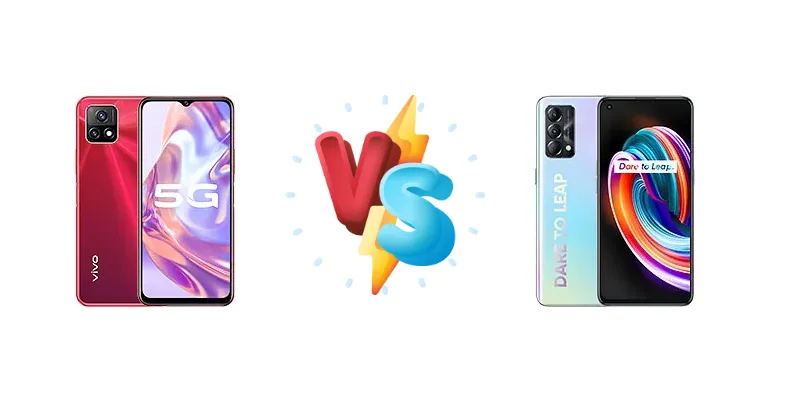
The Realme Q3 Pro Carnival and vivo Y31s both target the affordable 5G smartphone market, but they take distinctly different approaches. The Q3 Pro Carnival prioritizes performance with a Snapdragon 768G, while the Y31s focuses on a more budget-conscious experience with the Snapdragon 480. This comparison dissects the key differences to determine which device offers the best value for your money.
🏆 Quick Verdict
For most users, the Realme Q3 Pro Carnival is the superior choice. Its Snapdragon 768G chipset delivers significantly faster performance, and the 50W charging is a game-changer. While the Y31s offers a lower entry price, the performance gap is substantial enough to justify the extra cost of the Q3 Pro Carnival.
| Network |
|---|
| 2G bands | GSM 850 / 900 / 1800 / 1900 | GSM 850 / 900 / 1800 / 1900 |
| 3G bands | HSDPA 850 / 900 / 1700(AWS) / 2100 | HSDPA 800 / 850 / 900 / 1700(AWS) / 1900 / 2100 |
| 4G bands | 1, 3, 4, 5, 8, 28, 34, 38, 39, 40, 41 | LTE |
| 5G bands | 1, 3, 28, 41, 77, 78 SA/NSA | SA/NSA |
| Speed | HSPA, LTE, 5G | HSPA, LTE, 5G |
| Technology | GSM / CDMA / HSPA / CDMA2000 / LTE / 5G | GSM / CDMA / HSPA / CDMA2000 / LTE / 5G |
| | CDMA2000 1x | CDMA2000 1x |
| Launch |
|---|
| Announced | 2021, January 12 | 2021, May 25 |
| Status | Available. Released 2021, January 15 | Available. Released 2021, June 06 |
| Body |
|---|
| Dimensions | 164.2 x 75.4 x 8.4 mm (6.46 x 2.97 x 0.33 in) | 7.9 mm thickness |
| SIM | Nano-SIM + Nano-SIM | Nano-SIM + Nano-SIM |
| Weight | 185.5 g (6.56 oz) | 174 g (6.14 oz) |
| Display |
|---|
| Resolution | 1080 x 2408 pixels, 20:9 ratio (~400 ppi density) | 1080 x 2400 pixels, 20:9 ratio (~409 ppi density) |
| Size | 6.58 inches, 104.8 cm2 (~84.7% screen-to-body ratio) | 6.43 inches, 99.8 cm2 |
| Type | IPS LCD, 90Hz | Super AMOLED, 120Hz, 600 nits |
| Platform |
|---|
| CPU | Octa-core (2x2.0 GHz Kryo 460 & 6x1.8 GHz Kryo 460) | Octa-core (1x2.8 GHz Kryo 475 Prime & 1x2.4 GHz Kryo 475 Gold & 6x1.8 GHz Kryo 475 Silver) |
| Chipset | Qualcomm SM4350 Snapdragon 480 5G (8 nm) | Qualcomm SM7250-AC Snapdragon 768G 5G (7 nm) |
| GPU | Adreno 619 | Adreno 620 |
| OS | Android 11, Funtouch 10.5 | Android 11, Realme UI 2.0 |
| Memory |
|---|
| Card slot | No | No |
| Internal | 64GB 4GB RAM, 128GB 4GB RAM, 128GB 6GB RAM | 128GB 8GB RAM |
| | UFS 2.1 | UFS 3.1 |
| Main Camera |
|---|
| Dual | 13 MP, f/2.2, (wide), PDAF
Auxiliary lens | - |
| Features | LED flash, HDR, panorama | LED flash, HDR, panorama |
| Single | - | 32 MP, (wide), 1/2.74", 0.8µm |
| Triple | - | 64 MP, f/1.8, 26mm (wide), 1/1.73", 0.8µm, PDAF
8 MP, f/2.3, 16mm, 119˚ (ultrawide), 1/4.0", 1.12µm
2 MP (macro) |
| Video | 4K@30fps, 1080p@30fps | 4K@30/60fps, 1080p@30/60fps, gyro-EIS |
| Selfie camera |
|---|
| Features | HDR | HDR, panorama |
| Single | 8 MP, f/2.0, (wide) | 32 MP, (wide), 1/2.74", 0.8µm |
| Video | 1080p@30fps | 1080p@30fps |
| Sound |
|---|
| 3.5mm jack | Yes | Yes |
| 35mm jack | Yes | Yes |
| Loudspeaker | Yes | Yes, with stereo speakers |
| | - | 24-bit/192kHz audio |
| Comms |
|---|
| Bluetooth | 5.1, A2DP, LE, aptX HD | 5.1, A2DP, LE |
| NFC | No | No |
| Positioning | GPS, GLONASS, BDS, GALILEO | GPS, GLONASS, GALILEO, BDS, QZSS |
| Radio | No | No |
| USB | USB Type-C 2.0, OTG | USB Type-C 2.0 |
| WLAN | Wi-Fi 802.11 a/b/g/n/ac/6, dual-band, Wi-Fi Direct | Wi-Fi 802.11 a/b/g/n/ac/6, dual-band, Wi-Fi Direct |
| Features |
|---|
| Sensors | Fingerprint (side-mounted), accelerometer, proximity, compass | Fingerprint (under display, optical), accelerometer, gyro, proximity, compass |
| Battery |
|---|
| Charging | 18W wired | 50W wired, 100% in 45 min |
| Type | 5000 mAh | 4500 mAh |
| Misc |
|---|
| Colors | Red, Gray, Aurora | Black, Aurora |
| Models | V2054A, V2068A | RMX3142 |
| Price | About 190 EUR | About 230 EUR |
vivo Y31s
- More affordable entry price
- 5G connectivity
- Decent for basic tasks
- Significantly slower performance
- Slow 18W charging
- Limited gaming capabilities
Realme Q3 Pro Carnival
- Much faster Snapdragon 768G processor
- Ultra-fast 50W charging (45 minutes to 100%)
- Better image processing capabilities
- Improved thermal efficiency
- Slightly higher price point
- May not have a significantly larger battery capacity
Display Comparison
Neither device boasts a particularly standout display. While specific panel details (like peak brightness or color gamut coverage) are unavailable, the focus here is on the chipset impact on display smoothness. The Snapdragon 768G in the Q3 Pro Carnival has the headroom to drive higher refresh rate panels if Realme had chosen to include one, offering a potentially smoother visual experience. The Y31s, constrained by its lower-tier chipset, is likely limited to a standard 60Hz panel.
Camera Comparison
Without detailed camera specs beyond the chipsets, it's difficult to make a definitive judgment. However, the Snapdragon 768G’s image signal processor (ISP) is more advanced than the 480’s, enabling better image processing capabilities. This means the Q3 Pro Carnival is likely to produce sharper, more detailed photos with better dynamic range, even if both phones have similar sensor resolutions. The ISP also supports faster image capture and more advanced features like improved night mode performance.
Performance
The core difference lies in the chipsets. The Realme Q3 Pro Carnival’s Snapdragon 768G (7nm) is a substantial upgrade over the vivo Y31s’ Snapdragon 480 (8nm). The 768G features a Kryo 475 Prime core clocked at 2.8GHz, alongside a Kryo 475 Gold core, offering significantly improved CPU and GPU performance. This translates to faster app loading times, smoother multitasking, and a more enjoyable gaming experience. The Snapdragon 480, while capable for everyday tasks, will struggle with demanding games and applications. The 7nm process node of the 768G also contributes to better thermal efficiency, reducing the likelihood of throttling during sustained workloads.
Battery Life
The Realme Q3 Pro Carnival’s 50W wired charging is a massive advantage. Achieving a 100% charge in just 45 minutes is significantly faster than the vivo Y31s’ 18W charging. While battery capacity isn't specified, the faster charging speed mitigates any potential disadvantage if the Q3 Pro Carnival has a slightly smaller battery. The Snapdragon 768G’s improved efficiency also contributes to better battery life during typical usage, despite potentially powering a more demanding display.
Buying Guide
Buy the vivo Y31s if you prioritize absolute affordability and basic 5G connectivity for essential tasks like messaging and light browsing. You'll need to accept compromises in performance and charging speed. Buy the Realme Q3 Pro Carnival if you want a smoother, more responsive experience for gaming, multitasking, and content creation, and if you value significantly faster charging times. It's the better option for users who demand more from their smartphone.
Frequently Asked Questions
❓ Will the Snapdragon 480 in the vivo Y31s struggle with popular games like PUBG Mobile or Call of Duty?
Yes, the Snapdragon 480 is a budget-oriented chipset and will likely struggle to deliver a smooth gaming experience in demanding titles like PUBG Mobile or Call of Duty. You'll likely need to lower graphics settings significantly, and even then, expect frame drops and stuttering. The Q3 Pro Carnival’s Snapdragon 768G is far better suited for gaming.
❓ How much faster is the 50W charging on the Realme Q3 Pro Carnival compared to the 18W charging on the vivo Y31s in real-world use?
The difference is substantial. The Realme Q3 Pro Carnival can charge from 0% to 100% in approximately 45 minutes, while the vivo Y31s will likely take over 2 hours to achieve the same result. This means you can quickly top up your phone during short breaks, making the Q3 Pro Carnival much more convenient for users who are always on the go.
❓ Is the Snapdragon 768G in the Realme Q3 Pro Carnival capable of handling 5G networks effectively?
Absolutely. The Snapdragon 768G includes an integrated 5G modem that supports both Sub-6GHz and mmWave 5G frequencies, ensuring a fast and reliable 5G connection when available. It's a significant upgrade over the 5G capabilities of the Snapdragon 480.