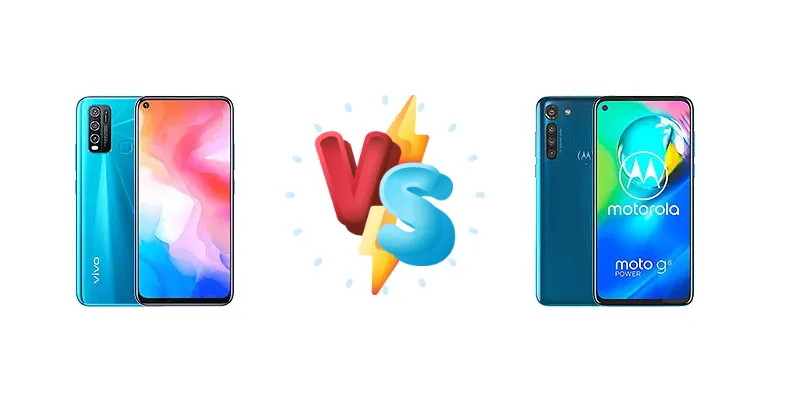
The sub-$150 smartphone market is fiercely competitive. Both the vivo Y30 and Motorola Moto G8 Power aim to deliver essential features at an accessible price. However, they take different approaches: the Y30 focuses on a newer, albeit less powerful, chipset, while the G8 Power prioritizes extended battery endurance and faster charging. This comparison dissects their strengths and weaknesses to determine which device offers the best value.
🏆 Quick Verdict
For most users, the Motorola Moto G8 Power is the better choice. While the vivo Y30’s Helio P35 is a more recent design, the Snapdragon 665 in the G8 Power offers a more balanced experience, coupled with significantly faster 18W charging. Both phones offer similar battery life ratings, but the charging speed gives the Motorola a practical edge.
| Network |
|---|
| 2G bands | GSM 850 / 900 / 1800 / 1900 | GSM 850 / 900 / 1800 / 1900 |
| 3G bands | HSDPA 850 / 900 / 2100 | HSDPA 850 / 900 / 1700(AWS) / 1900 / 2100 |
| 4G bands | 1, 3, 5, 7, 8, 38, 40, 41 | 1, 2, 3, 4, 5, 7, 8, 12, 17, 28, 66 |
| Speed | HSPA, LTE | HSPA 42.2/5.76 Mbps, LTE (2CA) Cat13 600/100 Mbps |
| Technology | GSM / HSPA / LTE | GSM / HSPA / LTE |
| | - | 1, 2, 3, 4, 5, 7, 8, 18, 19, 20, 26, 28, 38, 40, 41 |
| Launch |
|---|
| Announced | 2020, May 07. Released 2020, May 09 | 2020, February 07. Released 2020, April 16 |
| Status | Discontinued | Discontinued |
| Body |
|---|
| Build | Glass front, plastic back, plastic frame | Glass front, plastic back, aluminum frame (6000 series) |
| Dimensions | 162 x 76.5 x 9.1 mm (6.38 x 3.01 x 0.36 in) | 156 x 75.8 x 9.6 mm (6.14 x 2.98 x 0.38 in) |
| SIM | Nano-SIM + Nano-SIM | Nano-SIM + Nano-SIM |
| Weight | 197 g (6.95 oz) | 197 g (6.95 oz) |
| | - | Water-repellent coating |
| Display |
|---|
| Resolution | 720 x 1560 pixels, 19.5:9 ratio (~266 ppi density) | 1080 x 2300 pixels (~399 ppi density) |
| Size | 6.47 inches, 102.8 cm2 (~82.9% screen-to-body ratio) | 6.4 inches, 100.7 cm2 (~85.1% screen-to-body ratio) |
| Type | IPS LCD | IPS LCD |
| Platform |
|---|
| CPU | Octa-core (4x2.35 GHz Cortex-A53 & 4x1.8 GHz Cortex-A53) | Octa-core (4x2.0 GHz Kryo 260 Gold & 4x1.8 GHz Kryo 260 Silver) |
| Chipset | Mediatek MT6765 Helio P35 (12 nm) | Qualcomm SDM665 Snapdragon 665 (11 nm) |
| GPU | PowerVR GE8320 | Adreno 610 |
| OS | Android 10, Funtouch 10.0 | Android 10, upgradable to Android 11 |
| Memory |
|---|
| Card slot | microSDXC (dedicated slot) | microSDXC (uses shared SIM slot) |
| Internal | 64GB 3GB RAM, 64GB 4GB RAM, 128GB 4GB RAM, 128GB 6GB RAM, 128GB 8GB RAM | 32GB 2GB RAM, 32GB 4GB RAM, 64GB 4GB RAM |
| | eMMC 5.1 | eMMC 5.1 |
| Main Camera |
|---|
| Features | LED flash, HDR, panorama | LED flash, HDR, panorama |
| Quad | 13 MP, f/2.2, (wide), PDAF
8 MP, f/2.2, (ultrawide), 1/4.0", 1.12µm
2 MP (macro)
Auxiliary lens | 16 MP, f/1.7, (wide), 1/2.8", 1.12µm, PDAF
8 MP, f/2.2, (telephoto), 1/4.0", 1.12µm, PDAF, 2x optical zoom
8 MP, f/2.2, 118˚ (ultrawide), 1/4.0", 1.12µm
2 MP (macro) |
| Video | 1080p@30fps | 4K@30fps, 1080p@30/60fps, 1080p@30fps (gyro-EIS) |
| Selfie camera |
|---|
| Features | - | HDR |
| Single | 8 MP, (wide) | 16 MP, f/2.0, (wide), 1/3.06", 1.0µm |
| Video | 1080p@30fps | 1080p@30fps |
| Sound |
|---|
| 3.5mm jack | Yes | Yes |
| 35mm jack | Yes | Yes |
| Loudspeaker | Yes | Yes, with stereo speakers |
| Comms |
|---|
| Bluetooth | 5.0, A2DP, LE | 5.0, A2DP, LE |
| NFC | No | No |
| Positioning | GPS, GLONASS, BDS | GPS, GLONASS, BDS, GALILEO |
| Radio | FM radio | FM radio |
| USB | USB Type-C 2.0, OTG | USB Type-C 2.0 |
| WLAN | Wi-Fi 802.11 b/g/n, Wi-Fi Direct | Wi-Fi 802.11 b/g/n, Wi-Fi Direct |
| Features |
|---|
| Sensors | Fingerprint (rear-mounted), accelerometer, proximity, compass | Fingerprint (rear-mounted), accelerometer, gyro, proximity |
| Battery |
|---|
| Charging | 10W wired | 18W wired |
| Type | 5000 mAh | Li-Po 5000 mAh |
| Misc |
|---|
| Colors | Dazzle Blue, Moonstone White | Smoke Black, Capri Blue |
| Models | 1938 | XT2041-1, XT2041-3 |
| Price | About 190 EUR | About 180 EUR |
| Tests |
|---|
| Battery life | - |
Endurance rating 136h
|
| Camera | - |
Photo / Video |
| Display | - |
Contrast ratio: 1466:1 (nominal) |
| Loudspeaker | - |
-24.6 LUFS (Very good)
|
| Performance | - |
AnTuTu: 173607 (v8)
GeekBench: 1394 (v5.1)
GFXBench: 6.6fps (ES 3.1 onscreen) |
vivo Y30
- Slightly newer chipset (Helio P35)
- Potentially lower price point (depending on retailer)
- Modern design aesthetic (subjective)
- Slower 10W charging
- Less efficient processor (Helio P35)
- Potentially lower sustained performance
Motorola Moto G8 Power
- Faster 18W charging
- More efficient processor (Snapdragon 665)
- Proven battery endurance
- Better overall performance for everyday tasks
- Older chipset (Snapdragon 665)
- May be slightly more expensive
- Design may appear dated
Display Comparison
Both devices share a nominal contrast ratio of 1466:1, suggesting similar visual pop. However, detailed display specs like brightness (nits) and color gamut coverage are missing for the Y30. Given the G8 Power’s market positioning, it’s unlikely to feature advanced panel technology like LTPO. The focus on both devices is clearly on affordability, meaning expect standard LCD panels with acceptable, but not exceptional, viewing angles and color accuracy. Bezels are likely comparable, reflecting the budget nature of both phones.
Camera Comparison
Both phones list 'Photo / Video' capabilities, but lack specific details. Without sensor size or aperture information, a direct comparison is difficult. However, the prevalence of 2MP macro lenses on budget phones suggests both may include such a sensor, offering limited practical benefit. Image processing will likely be the differentiating factor, with Motorola’s software generally prioritizing natural colors and detail, while vivo often leans towards more saturated and vibrant images. The Snapdragon 665’s ISP (Image Signal Processor) is also more capable than the Helio P35’s, potentially leading to better low-light performance and dynamic range.
Performance
The Motorola Moto G8 Power’s Qualcomm Snapdragon 665 (11nm) holds a clear advantage over the vivo Y30’s MediaTek Helio P35 (12nm). The 11nm process node generally translates to better power efficiency and thermal management. While both are octa-core CPUs, the Snapdragon 665 utilizes Kryo 260 Gold cores for peak performance, while the Y30 relies on Cortex-A53 cores. This means the G8 Power will handle multitasking and moderately demanding apps more smoothly. The Helio P35’s architecture is older, and while adequate for basic tasks, it will likely struggle with sustained loads and more complex applications. Neither phone is a gaming powerhouse, but the Snapdragon 665 will offer a more playable experience.
Battery Life
Both the vivo Y30 and Motorola Moto G8 Power boast an endurance rating of 136 hours, indicating comparable battery life under typical usage. However, the charging capabilities are vastly different. The G8 Power supports 18W wired charging, significantly faster than the Y30’s 10W charging. This translates to a much quicker 0-100% charge time, reducing downtime. While both phones likely have similar battery capacities (estimated around 5000mAh), the faster charging of the G8 Power provides a more convenient user experience.
Buying Guide
Buy the vivo Y30 if you prioritize a slightly newer processor and are willing to accept slower charging speeds and potentially lower sustained performance in demanding tasks. Buy the Motorola Moto G8 Power if you value faster charging, a more efficient chipset for everyday use, and a proven track record of long battery life. The G8 Power is ideal for users who prioritize practicality and reliability over raw processing power.
Frequently Asked Questions
❓ Will the Motorola Moto G8 Power struggle with demanding apps like PUBG Mobile?
While the Snapdragon 665 isn't a high-end gaming chip, it can run PUBG Mobile at medium settings with acceptable frame rates. Expect some frame drops during intense action. The vivo Y30’s Helio P35 will likely require even lower settings and may exhibit more noticeable lag.
❓ How long does it *actually* take to fully charge the vivo Y30 with its 10W charger?
With a 10W charger, the vivo Y30 will likely take over 3 hours to fully charge from 0%. This is significantly slower than the Moto G8 Power’s 18W charging, which can achieve a full charge in around 2 hours.
❓ Is the camera on either phone good enough for casual social media photos?
Both phones are capable of taking acceptable photos in good lighting conditions for casual social media use. However, don't expect flagship-level image quality. The Motorola Moto G8 Power’s more capable ISP may provide slightly better results in challenging lighting scenarios.
❓ Does the Motorola Moto G8 Power support fast charging protocols beyond 18W?
The Moto G8 Power officially supports up to 18W charging. While it *might* negotiate a slightly higher wattage with some compatible chargers, it won't benefit significantly from chargers exceeding 18W.