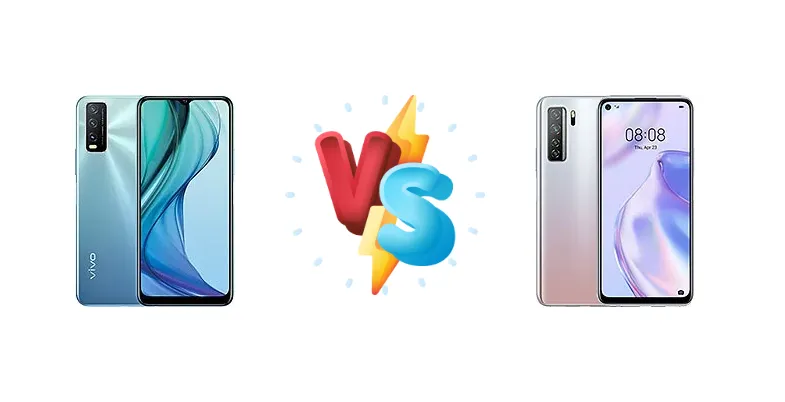
Both the Huawei nova 7 SE 5G Youth and the vivo Y30 target the budget-conscious smartphone user, but they take drastically different approaches to achieving affordability. The nova 7 SE 5G Youth leverages a more powerful chipset for enhanced performance, while the Y30 prioritizes a lower price point with a more energy-efficient processor. This comparison dissects these trade-offs to determine which device delivers the best experience for your needs.
🏆 Quick Verdict
For the average user prioritizing responsiveness and future-proofing, the Huawei nova 7 SE 5G Youth is the clear winner. Its Dimensity 800U chipset offers significantly better performance than the Snapdragon 460 in the vivo Y30, and the 40W fast charging is a game-changer. However, the Y30 remains a viable option for those on an extremely tight budget and primarily focused on basic smartphone tasks.
| Network |
|---|
| 2G bands | GSM 850 / 900 / 1800 / 1900 | GSM 850 / 900 / 1800 / 1900 |
| 3G bands | HSDPA 850 / 900 / 2100 | HSDPA 800 / 850 / 900 / 1700(AWS) / 1900 / 2100 |
| 4G bands | 1, 3, 5, 8, 34, 38, 39, 40, 41 | 1, 2, 3, 4, 5, 8, 18, 19, 26, 34, 38, 39, 40, 41 |
| 5G bands | - | 1, 41, 77, 78 SA/NSA |
| Speed | HSPA, LTE | HSPA, LTE, 5G |
| Technology | GSM / CDMA / HSPA / LTE | GSM / CDMA / HSPA / LTE / 5G |
| | CDMA 800 & TD-SCDMA | CDMA 800 & TD-SCDMA |
| Launch |
|---|
| Announced | 2020, October 22. Released 2020, October 26 | 2020, October 16. Released 2020, October 16 |
| Status | Discontinued | Discontinued |
| Body |
|---|
| Build | Glass front, plastic back, plastic frame | - |
| Dimensions | 164.4 x 76.3 x 8.4 mm (6.47 x 3.00 x 0.33 in) | 162.3 x 75 x 8.6 mm (6.39 x 2.95 x 0.34 in) |
| SIM | Nano-SIM + Nano-SIM | Nano-SIM + Nano-SIM |
| Weight | 192.3 g (6.77 oz) | 189 g (6.67 oz) |
| Display |
|---|
| Resolution | 720 x 1600 pixels, 20:9 ratio (~270 ppi density) | 1080 x 2400 pixels, 20:9 ratio (~405 ppi density) |
| Size | 6.51 inches, 102.3 cm2 (~81.6% screen-to-body ratio) | 6.5 inches, 102.0 cm2 (~83.8% screen-to-body ratio) |
| Type | IPS LCD | IPS LCD, HDR10 |
| Platform |
|---|
| CPU | Octa-core (4x1.8 GHz Kryo 240 & 4x1.6 GHz Kryo 240) | Octa-core (2x2.4 GHz Cortex-A76 & 6x2.0 GHz Cortex-A55) |
| Chipset | Qualcomm SM4250 Snapdragon 460 (11 nm) | Mediatek Dimensity 800U (7 nm) |
| GPU | Adreno 610 | Mali-G57 MC3 |
| OS | Android 10, Funtouch 10.5 | Android 10, EMUI 10.1, no Google Play Services |
| Memory |
|---|
| Card slot | microSDXC | No |
| Internal | 128GB 8GB RAM | 128GB 8GB RAM |
| | UFS 2.1 | - |
| Main Camera |
|---|
| Features | LED flash, panorama | LED flash, Panorama, HDR |
| Quad | - | 64 MP, f/1.8, 26mm (wide), PDAF
8 MP, f/2.4, 17mm (ultrawide)
2 MP (macro)
Auxiliary lens |
| Triple | 13 MP, f/2.2, (wide), PDAF
2 MP (macro)
Auxiliary lens | - |
| Video | 1080p@30fps | 4K@30fps, 1080p@30fps |
| Selfie camera |
|---|
| Features | - | HDR |
| Single | 8 MP, f/1.8, (wide) | 16 MP, f/2.0, (wide) |
| Video | 1080p@30fps | 1080p@30fps |
| Sound |
|---|
| 3.5mm jack | Yes | Yes |
| 35mm jack | Yes | Yes |
| Loudspeaker | Yes | Yes |
| Comms |
|---|
| Bluetooth | 5.0, A2DP, LE, aptX HD | 5.1, A2DP, LE |
| NFC | No | No |
| Positioning | GPS, GLONASS, BDS | GPS, GLONASS, GALILEO, BDS, QZSS |
| Radio | FM radio | No |
| USB | microUSB 2.0, OTG | USB Type-C 2.0, OTG |
| WLAN | Wi-Fi 802.11 a/b/g/n/ac, dual-band, Wi-Fi Direct | Wi-Fi 802.11 a/b/g/n/ac, dual-band, Wi-Fi Direct |
| Features |
|---|
| Sensors | Fingerprint (side-mounted), accelerometer, proximity, compass | Fingerprint (side-mounted), accelerometer, proximity, compass |
| Battery |
|---|
| Charging | 18W wired | 40W wired, 70% in 30 min
5W reverse wired |
| Type | 5000 mAh | Li-Po 4000 mAh |
| Misc |
|---|
| Colors | Obsidian Black, Dawn White, Blue | Crush Green, Space Silver, Midnight Black, Purple |
| Models | V2034A | CND-AN00 |
| Price | About 190 EUR | About 290 EUR |
vivo Y30 (China)
- More powerful Dimensity 800U chipset for smoother performance
- 40W fast charging significantly reduces charging time
- 5G connectivity for faster data speeds
- Potentially higher price point than the vivo Y30
- Software experience may be limited due to Huawei's restrictions
Huawei nova 7 SE 5G Youth
- Lower price point makes it more accessible
- Snapdragon 460 offers good power efficiency for basic tasks
- Simple and straightforward user experience
- Significantly slower performance compared to the nova 7 SE 5G Youth
- Slower 18W charging
- Limited gaming capabilities
Display Comparison
Neither device boasts a standout display. While specific panel details (like OLED vs. LCD) are missing for the Y30, its market positioning suggests an LCD panel. The nova 7 SE 5G Youth also likely uses an LCD. The focus here isn't on visual fidelity, but on functionality. Both will likely offer adequate viewing angles and color reproduction for everyday use, but don't expect vibrant colors or high peak brightness. Bezels are expected to be moderate on both, reflecting their budget nature.
Camera Comparison
Without detailed sensor information beyond the presence of a main camera, a direct comparison is limited. However, the nova 7 SE 5G Youth’s chipset has a more powerful ISP (Image Signal Processor) capable of handling more complex image processing algorithms. This suggests potentially better image quality, especially in low-light conditions. The Y30’s Snapdragon 460 ISP is adequate for basic photography, but won’t offer the same level of detail or dynamic range. The inclusion of a 2MP macro camera on either device is largely a marketing gimmick and unlikely to deliver significant improvements in image quality.
Performance
The performance gap is the most significant differentiator. The Huawei nova 7 SE 5G Youth’s Mediatek Dimensity 800U (7nm) is a substantial upgrade over the Qualcomm Snapdragon 460 (11nm) in the vivo Y30. The Dimensity 800U’s Cortex-A76 cores, clocked at 2.4 GHz, provide a noticeable boost in CPU performance for demanding tasks. The Snapdragon 460’s Kryo 240 cores, while efficient, are less powerful. This translates to smoother multitasking, faster app loading times, and a more enjoyable gaming experience on the Huawei. The 7nm process node of the Dimensity 800U also contributes to better thermal efficiency, reducing the likelihood of performance throttling during extended use. The Y30 will handle basic tasks adequately, but will struggle with more intensive applications.
Battery Life
Battery capacity is not specified for either device, but the charging capabilities tell a compelling story. The Huawei nova 7 SE 5G Youth’s 40W wired charging, capable of reaching 70% charge in just 30 minutes, is a massive advantage. This significantly reduces downtime and provides a much more convenient charging experience. The vivo Y30’s 18W charging is considerably slower. While a larger battery capacity on the Y30 could partially offset this, the convenience of rapid charging on the nova 7 SE 5G Youth is a major benefit for users who are frequently on the go. The nova 7 SE also offers 5W reverse wired charging, allowing it to top up other devices – a feature absent on the Y30.
Buying Guide
Buy the vivo Y30 (China) if you need a functional smartphone for essential tasks like calls, messaging, and light social media use, and your budget is the absolute primary concern. Buy the Huawei nova 7 SE 5G Youth if you prefer a smoother, more responsive experience for gaming, multitasking, and demanding applications, and you value faster charging speeds and 5G connectivity.
Frequently Asked Questions
❓ Does the Huawei nova 7 SE 5G Youth suffer from significant overheating during prolonged gaming sessions?
The Mediatek Dimensity 800U’s 7nm process node and the phone’s thermal design should mitigate overheating during gaming. While some warmth is expected, it’s unlikely to cause significant throttling or performance degradation compared to the Snapdragon 460 in the Y30, which is more prone to throttling under load.
❓ Is the 5G connectivity on the Huawei nova 7 SE 5G Youth actually useful, or is it just a marketing feature?
The usefulness of 5G depends on your location and carrier coverage. If you live in an area with robust 5G infrastructure, you’ll experience significantly faster download and upload speeds compared to 4G. However, if 5G coverage is limited, the benefit will be minimal. The Snapdragon 460 in the Y30 lacks 5G support entirely.
❓ How does Huawei's AppGallery compare to the Google Play Store on the nova 7 SE 5G Youth?
Huawei's AppGallery has grown significantly, but it still lacks the breadth of apps available on the Google Play Store. While many popular apps are available, you may need to sideload some apps or use alternative app stores. This is a key consideration for users heavily reliant on specific Google services.