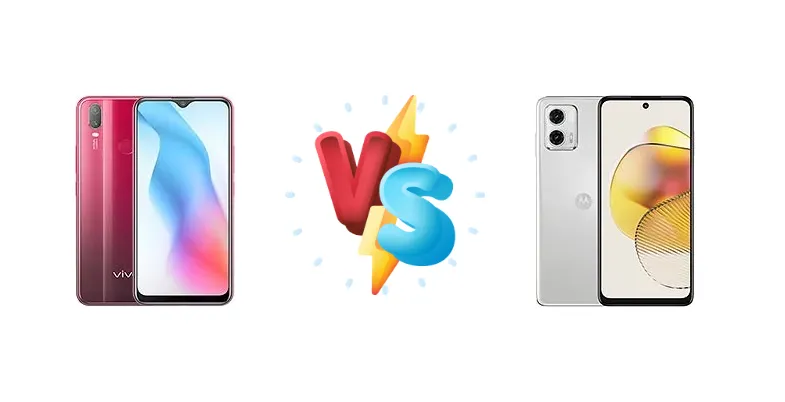
The smartphone market is flooded with options under $200, but performance and features vary wildly. We pit the vivo Y3 Standard, a reliable entry-level device, against the Motorola Moto G73, which aims to deliver a more modern experience with a faster processor and quicker charging. This comparison will dissect the key differences to help you determine which phone best suits your needs.
🏆 Quick Verdict
For the average user prioritizing responsiveness and future-proofing, the Motorola Moto G73 is the clear winner. Its Mediatek Dimensity 930 chipset offers a substantial performance leap over the vivo Y3 Standard’s Snapdragon 439, and the 30W charging significantly reduces downtime. While the Y3 Standard is cheaper, the G73 provides a better overall experience.
| Network |
|---|
| 2G bands | GSM 850 / 900 / 1800 / 1900 | GSM 850 / 900 / 1800 / 1900 |
| 3G bands | HSDPA 850 / 900 / 2100 | HSDPA 850 / 900 / 1900 / 2100 |
| 4G bands | 1, 3, 5, 8, 34, 38, 39, 40, 41 | 1, 2, 3, 5, 7, 8, 18, 19, 20, 26, 28, 32, 38, 40, 41, 42 |
| 5G bands | - | 1, 3, 5, 7, 8, 20, 28, 38, 40, 41, 77, 78 SA/NSA |
| Speed | HSPA, LTE | HSPA, LTE, 5G |
| Technology | GSM / CDMA / HSPA / EVDO / LTE | GSM / HSPA / LTE / 5G |
| | CDMA2000 1xEV-DO | - |
| Launch |
|---|
| Announced | 2019, November. Released 2019, November | 2023, January 24 |
| Status | Discontinued | Available. Released 2023, January 24 |
| Body |
|---|
| Build | - | Glass front, plastic back, plastic frame |
| Dimensions | 159.4 x 76.7 x 8.9 mm (6.28 x 3.02 x 0.35 in) | 161.4 x 73.8 x 8.3 mm (6.35 x 2.91 x 0.33 in) |
| SIM | Nano-SIM + Nano-SIM | Nano-SIM + Nano-SIM |
| Weight | 191.5 g (6.77 oz) | 181 g (6.38 oz) |
| | - | Water-resistant design |
| Display |
|---|
| Resolution | 720 x 1544 pixels, 19.3:9 ratio (~268 ppi density) | 1080 x 2400 pixels, 20:9 ratio (~405 ppi density) |
| Size | 6.35 inches, 99.6 cm2 (~81.5% screen-to-body ratio) | 6.5 inches, 102.0 cm2 (~85.6% screen-to-body ratio) |
| Type | IPS LCD | IPS LCD, 120Hz |
| Platform |
|---|
| CPU | Octa-core (4x1.95 GHz Cortex-A53 & 4x1.45 GHz Cortex A53) | Octa-core (2x2.2 GHz Cortex-A78 & 6x2.0 GHz Cortex-A55) |
| Chipset | Qualcomm SDM439 Snapdragon 439 (12 nm) | Mediatek Dimensity 930 (6 nm) |
| GPU | Adreno 505 | IMG BXM-8-256 |
| OS | Android 9.0 (Pie), Funtouch 9.1 | Android 13, planned upgrade to Android 14 |
| Memory |
|---|
| Card slot | microSDXC (dedicated slot) | microSDXC (uses shared SIM slot) |
| Internal | 64GB 3GB RAM | 128GB 8GB RAM, 256GB 8GB RAM |
| | eMMC 5.1 | - |
| Main Camera |
|---|
| Dual | - | 50 MP, f/1.8, (wide), 1.0µm, PDAF
8 MP, f/2.2, 118˚ (ultrawide), 1.12µm, AF |
| Features | LED flash, HDR, panorama | LED flash, HDR, panorama |
| Triple | 13 MP, f/2.2, (wide), PDAF
Auxiliary lens | - |
| Video | 1080p@30fps | 1080p@30/60fps |
| Selfie camera |
|---|
| Single | 8 MP, f/1.8 | 16 MP, f/2.4, (wide), 1.0µm |
| Video | 1080p@30fps | 1080p@30fps |
| Sound |
|---|
| 3.5mm jack | Yes | Yes |
| 35mm jack | Yes | Yes |
| Loudspeaker | Yes | Yes, with stereo speakers |
| Comms |
|---|
| Bluetooth | 4.2, A2DP, LE | 5.3, A2DP, LE |
| NFC | No | Yes |
| Positioning | GPS, GLONASS, BDS | GPS, GLONASS, GALILEO |
| Radio | FM radio | Unspecified |
| USB | microUSB 2.0, OTG | USB Type-C 2.0, OTG |
| WLAN | Wi-Fi 802.11 b/g/n | Wi-Fi 802.11 a/b/g/n/ac, dual-band |
| Features |
|---|
| Sensors | Fingerprint (rear-mounted), accelerometer, proximity, compass | Fingerprint (side-mounted), accelerometer, proximity, compass |
| Battery |
|---|
| Charging | 10W wired | 30W wired |
| Type | 5000 mAh, non-removable | Li-Po 5000 mAh |
| Misc |
|---|
| Colors | Ink blue, Jade Red | Lucent White, Midnight Blue |
| Models | V1930A | - |
| Price | About 130 EUR | About 190 EUR |
vivo Y3 Standard
- Lowest possible price point
- Simple and easy-to-use interface
- Reliable for basic tasks
- Slow Snapdragon 439 processor
- Extremely slow 10W charging
- Likely outdated display technology
Motorola Moto G73
- Significantly faster Dimensity 930 processor
- 30W fast charging
- Likely superior display quality
- Higher price than the vivo Y3 Standard
- May still lack premium features like NFC (unspecified)
- Software updates may be limited
Display Comparison
Neither device's display specifications are provided, so we must infer. Given the price point of the Y3 Standard, it likely features a 720p LCD panel with standard 60Hz refresh rate. The Moto G73, being a more recent release, likely boasts a 1080p LCD panel, potentially with a higher refresh rate (90Hz is common in this segment). The Dimensity 930’s integrated display engine also supports higher resolution and refresh rate panels, suggesting a superior visual experience on the G73. Bezels are likely larger on the Y3 Standard due to its older design.
Camera Comparison
Without detailed camera specs, it’s difficult to make a precise comparison. However, the Moto G73 likely features a more capable main sensor. The Dimensity 930’s ISP (Image Signal Processor) is also more advanced, enabling better image processing, noise reduction, and dynamic range. The Y3 Standard likely relies on basic image processing algorithms. While both phones may include multiple rear cameras, the quality of secondary sensors (like macro lenses) is often negligible in this price range. The G73’s superior processing power allows for features like better low-light photography and potentially video stabilization.
Performance
The performance disparity is the most significant difference. The Motorola Moto G73’s Mediatek Dimensity 930, built on a 6nm process, is a substantial upgrade over the vivo Y3 Standard’s 12nm Qualcomm Snapdragon 439. The Dimensity 930 features a more modern CPU architecture – Cortex-A78 cores versus the Y3’s Cortex-A53 – resulting in significantly faster single-core and multi-core performance. This translates to snappier app launches, smoother multitasking, and a more enjoyable overall user experience. The G73’s GPU will also handle graphics-intensive tasks, like gaming, far better than the Snapdragon 439’s Adreno 505. The 6nm process also contributes to better thermal efficiency, reducing the likelihood of throttling under sustained load.
Battery Life
Battery capacity isn’t specified for either device, but the charging speed difference is crucial. The vivo Y3 Standard’s 10W charging is painfully slow in 2024, requiring several hours for a full charge. The Motorola Moto G73’s 30W charging significantly reduces this downtime, potentially delivering a full charge in under 90 minutes. Even if the Y3 Standard has a slightly larger battery, the G73’s faster charging will likely result in less time tethered to a wall socket. The Dimensity 930’s power efficiency also contributes to potentially better battery life despite the faster charging.
Buying Guide
Buy the vivo Y3 Standard if you need a basic, functional smartphone for essential tasks like calls, texts, and light social media use, and your budget is extremely limited. You'll be sacrificing performance and convenience for the lowest possible price. Buy the Motorola Moto G73 if you prefer a smoother, more responsive experience for multitasking, streaming, and occasional gaming, and value faster charging to minimize downtime. The G73 offers a better long-term investment.
Frequently Asked Questions
❓ Will the Mediatek Dimensity 930 in the Moto G73 overheat during extended gaming sessions?
The Dimensity 930 is built on a 6nm process, which offers improved thermal efficiency compared to the Snapdragon 439’s 12nm process. While some heat generation is inevitable during gaming, the G73 is less likely to experience significant throttling than the Y3 Standard, allowing for longer, more consistent gameplay.
❓ Is the 10W charging on the vivo Y3 Standard realistically usable in 2024?
10W charging is exceptionally slow by modern standards. Expect a full charge to take several hours, making it inconvenient for users who need to quickly top up their battery. The Motorola Moto G73’s 30W charging is a far more practical solution.
❓ Does the Motorola Moto G73 support 5G connectivity?
The Mediatek Dimensity 930 chipset inherently supports 5G connectivity. This means the Moto G73 can take advantage of faster data speeds where 5G networks are available, offering a significant advantage over the Y3 Standard which likely only supports 4G.
❓ How will the older processor in the vivo Y3 Standard affect app performance over time?
As apps become more demanding, the Snapdragon 439 in the Y3 Standard will struggle to keep up. This will result in slower app launches, laggy performance, and potentially compatibility issues with newer apps. The Dimensity 930 in the Moto G73 offers more headroom for future software updates and app requirements.