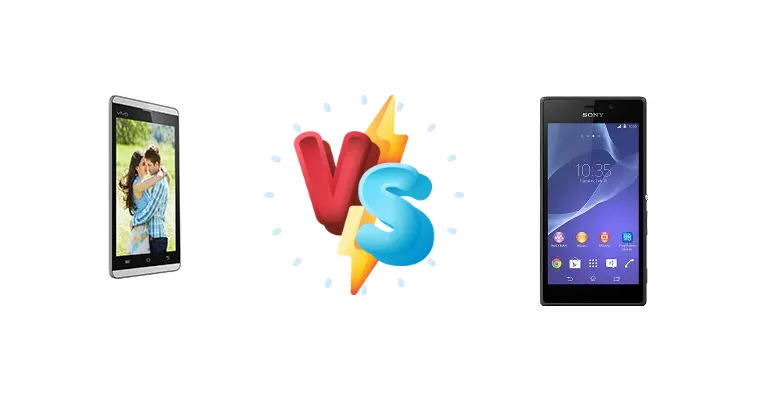
Released in the same year, the vivo Y28 (2014) and Sony Xperia M2 Aqua represent competing approaches to the budget smartphone market. While both aimed for affordability, they differed in chipset choice and brand philosophy. This comparison dissects their specifications to determine which device offered the better experience for the price-conscious consumer.
🏆 Quick Verdict
For the average user seeking a slightly more responsive experience, the Sony Xperia M2 Aqua edges out the vivo Y28 (2014). The Qualcomm Snapdragon 400, despite a marginally lower clock speed, generally provides smoother performance than the Mediatek MT6582, making it better suited for multitasking and app loading.
| Network |
|---|
| 2G bands | GSM 850 / 900 / 1800 / 1900 | GSM 850 / 900 / 1800 / 1900 - all models |
| 3G bands | HSDPA 850 / 900 / 2100 | HSDPA 850 / 900 / 2100 - D2403 |
| 4G bands | - | 1, 3, 5, 7, 8, 20 - D2403 |
| Speed | HSPA 21.1/5.76 Mbps | HSPA 42.2/5.76 Mbps, LTE Cat4 150/50 Mbps |
| Technology | GSM / HSPA | GSM / HSPA / LTE |
| | - | 2, 4, 7, 17 - D2406 |
| Launch |
|---|
| Announced | 2014, December. Released 2014, December | 2014, August. Released 2014, September |
| Status | Discontinued | Discontinued |
| Body |
|---|
| Dimensions | 137.4 x 68.6 x 9.8 mm (5.41 x 2.70 x 0.39 in) | 140 x 72 x 8.6 mm (5.51 x 2.83 x 0.34 in) |
| SIM | Micro-SIM | Micro-SIM |
| Weight | 156 g (5.50 oz) | 149 g (5.26 oz) |
| | - | IP68 dust/water resistant (up to 1.5m for 30 min) |
| Display |
|---|
| Protection | - | Scratch-resistant glass |
| Resolution | 540 x 960 pixels, 16:10 ratio (~216 ppi density) | 540 x 960 pixels, 16:9 ratio (~229 ppi density) |
| Size | 4.7 inches, 64.2 cm2 (~68.1% screen-to-body ratio) | 4.8 inches, 63.5 cm2 (~63.0% screen-to-body ratio) |
| Type | IPS LCD | IPS LCD |
| Platform |
|---|
| CPU | Quad-core 1.3 GHz Cortex-A7 | Quad-core 1.2 GHz Cortex-A7 |
| Chipset | Mediatek MT6582 (28 nm) | Qualcomm MSM8926-2 Snapdragon 400 (28 nm) |
| GPU | Mali-400MP2 | Adreno 305 |
| OS | Android 4.2.2 (Jelly Bean) | Android 4.4.2 (KitKat), upgradable to 5.1.1 (Lollipop) |
| Memory |
|---|
| Card slot | microSDXC (dedicated slot) | microSDHC (dedicated slot) |
| Internal | 8GB 1GB RAM | 8GB 1GB RAM |
| | - | eMMC 4.5 |
| Main Camera |
|---|
| Features | LED flash | LED flash, HDR, panorama |
| Single | 8 MP, AF | 8 MP, f/2.4, AF |
| Video | 1080p@30fps | 1080p@30fps, HDR |
| Selfie camera |
|---|
| Single | 5 MP | VGA |
| Video | - | 480p |
| Sound |
|---|
| 3.5mm jack | - | Yes |
| 35mm jack | Yes | Yes |
| Loudspeaker | Yes | Yes |
| Comms |
|---|
| Bluetooth | 4.0, A2DP, EDR | 4.0, A2DP, aptX, LE |
| Infrared port | Yes | - |
| NFC | No | Yes |
| Positioning | GPS | GPS, GLONASS |
| Radio | FM radio | FM radio, RDS |
| USB | microUSB 2.0 | microUSB 2.0, OTG |
| WLAN | Wi-Fi 802.11 b/g/n, hotspot | Wi-Fi 802.11 a/b/g/n, dual-band, Wi-Fi Direct, DLNA, hotspot |
| Features |
|---|
| Sensors | Accelerometer, proximity, compass | Accelerometer, proximity, compass |
| | - | ANT+ |
| Battery |
|---|
| Music play | Up to 32 h | Up to 37 h 11 min |
| Stand-by | Up to 430 h (2G) / Up to 430 h (3G) | Up to 595 h (2G) / Up to 641 h (3G) |
| Talk time | Up to 14 h (2G) / Up to 13 h (3G) | Up to 11 h 23 min (2G) / Up to 12 h 11 min (3G) |
| Type | 2100 mAh, removable | Li-Ion 2300 mAh, non-removable |
| Misc |
|---|
| Colors | White | Black, White, Copper |
| Models | Y28 | D2403, D2406 |
| Price | About 100 EUR | About 200 EUR |
| SAR | - | 0.69 W/kg (head) 1.25 W/kg (body) |
| SAR EU | - | 0.66 W/kg (head) 0.86 W/kg (body) |
| Tests |
|---|
| Battery life | - |
Endurance rating 71h
|
| Camera | - |
Photo / Video |
vivo Y28 (2014)
- Potentially lower price point at launch.
- Simple and straightforward user experience.
- Decent battery life (71h endurance).
- Less powerful chipset (Mediatek MT6582).
- Likely slower app loading and multitasking.
- Potentially inferior camera image processing.
Sony Xperia M2 Aqua
- More efficient Snapdragon 400 chipset.
- Better graphics performance for casual gaming.
- Potentially superior camera image quality.
- Sony’s brand reputation for software support.
- May have been slightly more expensive at launch.
- Similar battery life to the vivo Y28.
- Still a budget device with limitations.
Display Comparison
Neither device boasts a standout display. Given the era, both likely utilized IPS LCD panels, though specific details like resolution and color gamut are unavailable. The focus was on cost reduction, meaning expect standard viewing angles and color reproduction. Bezels were likely substantial on both, typical for 2014 smartphones. Without specific nit brightness data, it's difficult to declare a clear winner; however, Sony generally prioritized display quality even in their budget offerings, suggesting a potentially slightly better viewing experience on the Xperia M2 Aqua.
Camera Comparison
Both devices feature 'Photo / Video' capabilities, but specifics are lacking. In 2014, megapixel count wasn't the sole determinant of image quality. Sony, with its camera expertise, likely implemented superior image processing algorithms within the Xperia M2 Aqua, potentially resulting in more detailed and vibrant photos, even with a similar sensor size to the vivo Y28. The absence of Optical Image Stabilization (OIS) on either device means low-light performance will be limited. Without sensor size data, it’s difficult to definitively declare a winner, but Sony’s brand reputation suggests a slight edge in camera quality.
Performance
The core difference lies in the chipsets. The Sony Xperia M2 Aqua’s Qualcomm MSM8926-2 Snapdragon 400, built on a 28nm process, offers a more efficient architecture than the vivo Y28’s Mediatek MT6582, also 28nm. While both feature quad-core Cortex-A7 CPUs, the Snapdragon 400’s Adreno 305 GPU provides a noticeable advantage in graphics performance. This translates to smoother scrolling, faster app launches, and a better experience with casual games. The Snapdragon’s superior architecture also contributes to better thermal management, reducing the likelihood of throttling during sustained use. Users prioritizing responsiveness will find the Xperia M2 Aqua the more capable device.
Battery Life
Interestingly, both the vivo Y28 (2014) and the Sony Xperia M2 Aqua share an endurance rating of 71 hours. This suggests similar battery capacities and power efficiency despite the different chipsets. The Snapdragon 400’s architectural advantages likely offset the MT6582’s potentially lower power draw. Charging speeds were likely slow on both devices, typical for the era. The identical endurance rating indicates that real-world battery life will be comparable, with both phones comfortably lasting a full day of moderate use.
Buying Guide
Buy the vivo Y28 (2014) if you prioritize a simple, functional smartphone experience and are less concerned with demanding applications. Buy the Sony Xperia M2 Aqua if you value a slightly more responsive user interface and potentially better long-term software support, given Sony’s brand reputation at the time. Both are excellent choices for basic communication and media consumption.
Frequently Asked Questions
❓ Is the Snapdragon 400 in the Xperia M2 Aqua capable of running modern apps?
While the Snapdragon 400 was a capable processor for its time, running demanding modern apps on the Xperia M2 Aqua will likely result in significant slowdowns and lag. It's best suited for basic tasks like calling, texting, and light web browsing. Expect limited performance with resource-intensive applications.
❓ How does the Mediatek MT6582 handle multitasking compared to the Snapdragon 400?
The Mediatek MT6582 generally struggles with multitasking compared to the Snapdragon 400. The Snapdragon’s more efficient architecture and better GPU allow it to handle multiple apps running simultaneously with greater ease. Expect more app reloading and slower switching times on the vivo Y28 (2014).
❓ Are software updates still available for either of these phones?
It is highly unlikely that either the vivo Y28 (2014) or the Sony Xperia M2 Aqua are receiving official software updates at this point. Both devices are quite old, and manufacturers typically cease support after a few years. Users should be aware of potential security vulnerabilities.
❓ Which phone is better for taking quick snapshots in good lighting conditions?
While both phones can take acceptable photos in good lighting, the Sony Xperia M2 Aqua likely produces slightly more detailed and vibrant images due to Sony’s image processing expertise. However, the difference will be minimal, and both cameras will struggle in low-light scenarios.