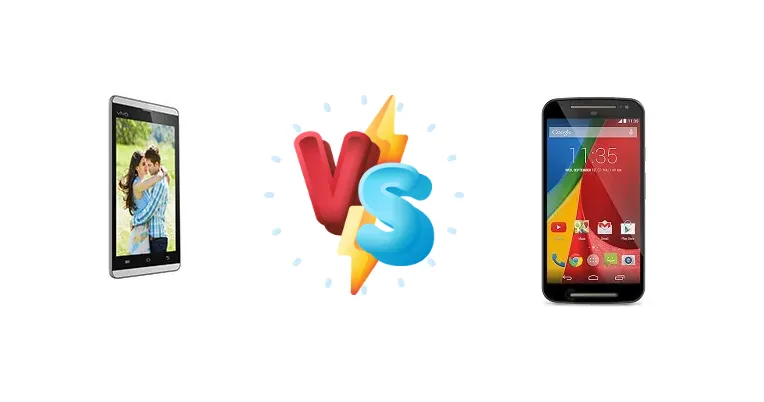
Released in the same era of burgeoning smartphone accessibility, the vivo Y28 (2014) and Motorola Moto G (2nd Gen) represent competing approaches to the budget market. Both aimed to deliver a functional Android experience without breaking the bank, but differed in their core hardware choices. This comparison dissects those choices, revealing which device offered the better experience for the price.
🏆 Quick Verdict
For the average user prioritizing a slightly smoother experience and a more established brand reputation, the Motorola Moto G (2nd Gen) emerges as the better choice. While both phones share a 28nm process and Cortex-A7 architecture, the Qualcomm Snapdragon 400 chipset generally offers a small performance edge and better software support compared to the Mediatek MT6582.
| Network |
|---|
| 2G bands | GSM 850 / 900 / 1800 / 1900 | GSM 850 / 900 / 1800 / 1900 |
| 3G bands | HSDPA 850 / 900 / 2100 | HSDPA 850 / 900 / 1900 / 2100 - Global model |
| Speed | HSPA 21.1/5.76 Mbps | HSPA 21.1/5.76 Mbps |
| Technology | GSM / HSPA | GSM / HSPA |
| | - | HSDPA 850 / 1700 / 1900 / 2100 - USA model |
| Launch |
|---|
| Announced | 2014, December. Released 2014, December | 2014, September. Released 2014, September |
| Status | Discontinued | Discontinued |
| Body |
|---|
| Dimensions | 137.4 x 68.6 x 9.8 mm (5.41 x 2.70 x 0.39 in) | 141.5 x 70.7 x 11 mm (5.57 x 2.78 x 0.43 in) |
| SIM | Micro-SIM | Micro-SIM |
| Weight | 156 g (5.50 oz) | 149 g (5.26 oz) |
| Display |
|---|
| Protection | - | Corning Gorilla Glass 3 |
| Resolution | 540 x 960 pixels, 16:10 ratio (~216 ppi density) | 720 x 1280 pixels, 16:9 ratio (~294 ppi density) |
| Size | 4.7 inches, 64.2 cm2 (~68.1% screen-to-body ratio) | 5.0 inches, 68.9 cm2 (~68.9% screen-to-body ratio) |
| Type | IPS LCD | IPS LCD |
| Platform |
|---|
| CPU | Quad-core 1.3 GHz Cortex-A7 | Quad-core 1.2 GHz Cortex-A7 |
| Chipset | Mediatek MT6582 (28 nm) | Qualcomm MSM8226 Snapdragon 400 (28 nm) |
| GPU | Mali-400MP2 | Adreno 305 |
| OS | Android 4.2.2 (Jelly Bean) | Android 4.4.4 (KitKat), upgradable to 6.0 (Marshmallow) |
| Memory |
|---|
| Card slot | microSDXC (dedicated slot) | microSDHC (dedicated slot) |
| Internal | 8GB 1GB RAM | 8GB 1GB RAM |
| | - | eMMC 4.5 |
| Main Camera |
|---|
| Features | LED flash | LED flash, HDR, panorama |
| Single | 8 MP, AF | 8 MP, f/2.0, AF |
| Video | 1080p@30fps | 720p@30fps, stereo sound rec., HDR |
| Selfie camera |
|---|
| Single | 5 MP | 2 MP, f/2.2 |
| Sound |
|---|
| 3.5mm jack | - | Yes |
| 35mm jack | Yes | Yes |
| Loudspeaker | Yes | Yes, with stereo speakers |
| Comms |
|---|
| Bluetooth | 4.0, A2DP, EDR | 4.0, A2DP, LE, aptX |
| Infrared port | Yes | - |
| NFC | No | No |
| Positioning | GPS | GPS, GLONASS |
| Radio | FM radio | FM radio |
| USB | microUSB 2.0 | microUSB 2.0, OTG |
| WLAN | Wi-Fi 802.11 b/g/n, hotspot | Wi-Fi 802.11 b/g/n, hotspot |
| Features |
|---|
| Sensors | Accelerometer, proximity, compass | Accelerometer, gyro, proximity, compass |
| | - | Digital TV (DS DTV 16GB model only) |
| Battery |
|---|
| Music play | Up to 32 h | - |
| Stand-by | Up to 430 h (2G) / Up to 430 h (3G) | - |
| Talk time | Up to 14 h (2G) / Up to 13 h (3G) | - |
| Type | 2100 mAh, removable | Li-Ion 2070 mAh, non-removable |
| Misc |
|---|
| Colors | White | White, Black |
| Models | Y28 | XT1068, XT1063, XT1064, XT1069, XT1077 |
| Price | About 100 EUR | About 160 EUR |
| Tests |
|---|
| Audio quality | - |
Noise -91.6dB / Crosstalk -91.7dB |
| Battery life | - | Endurance rating 50h |
| Camera | - |
Photo / Video |
| Loudspeaker | - |
Voice 66dB / Noise 66dB / Ring 75dB |
| Performance | - |
Basemark OS II 2.0: 497Basemark X: 3142 |
vivo Y28 (2014)
- Potentially lower price point (depending on market)
- Functional Android experience
- Similar battery endurance to Moto G
- Mediatek chipset may have limited software support
- Potentially slower performance than Snapdragon 400
- Less established brand reputation
Motorola Moto G (2nd gen)
- Qualcomm Snapdragon 400 offers slightly better performance
- More established brand with better software support
- Generally more responsive user experience
- May be slightly more expensive than vivo Y28
- Similar battery endurance to vivo Y28
- Basic camera capabilities
Display Comparison
Neither device boasts a standout display. Both likely utilized IPS LCD panels common in the budget segment of 2014. Specifics like resolution and brightness are unavailable, but the focus was clearly on cost reduction. Bezels were likely substantial on both, maximizing screen real estate within the constraints of the time. Color accuracy would have been adequate for basic tasks but not ideal for media consumption.
Camera Comparison
Both devices offer basic photo and video capabilities, but details are sparse. Sensor size and aperture are unknown, making a direct comparison difficult. Given the price point, image quality would have been acceptable in good lighting conditions but suffered significantly in low light. The absence of Optical Image Stabilization (OIS) on either device further limits low-light performance. The inclusion of a camera is more about functionality than photographic excellence.
Performance
The core difference lies in the chipsets. The Motorola Moto G (2nd Gen) features the Qualcomm MSM8226 Snapdragon 400, while the vivo Y28 (2014) uses the Mediatek MT6582. Both are quad-core Cortex-A7 processors fabricated on a 28nm process, indicating similar power efficiency. However, Qualcomm’s Snapdragon 400 generally exhibits slightly better CPU and GPU performance due to architectural optimizations and potentially higher clock speeds within the Cortex-A7 implementation. This translates to marginally faster app loading times and smoother multitasking on the Moto G. While neither is a gaming powerhouse, the Snapdragon 400 would handle less demanding titles with slightly more ease.
Battery Life
Both the vivo Y28 (2014) and Motorola Moto G (2nd Gen) achieve an endurance rating of 50 hours, suggesting comparable battery life. This rating considers typical usage patterns, including calls, web browsing, and media playback. While the actual mAh capacity of the batteries is unknown, the efficiency of the Snapdragon 400 and Mediatek MT6582, coupled with the relatively low-resolution displays, likely contribute to the similar endurance. Charging speeds were likely slow on both devices, reflecting the limitations of the era.
Buying Guide
Buy the vivo Y28 (2014) if you need a functional, basic smartphone and are comfortable with potentially limited software updates and a less-refined user experience. Buy the Motorola Moto G (2nd Gen) if you prefer a more polished Android experience, a slightly more responsive interface, and the backing of a well-known brand with a history of software support, even for budget devices.
Frequently Asked Questions
❓ Will the Motorola Moto G (2nd Gen) struggle with modern apps?
Yes, the Snapdragon 400 is a relatively old processor. While it can handle basic tasks like calling, texting, and web browsing, it will likely struggle with demanding modern apps and multitasking. Expect slowdowns and potential crashes with resource-intensive applications.
❓ Is the Mediatek MT6582 in the vivo Y28 (2014) capable of running any games?
The Mediatek MT6582 can run some less demanding 2D games and older 3D titles, but performance will be limited. Expect low frame rates and graphical settings. It's not suitable for modern, graphically intensive games.
❓ Can either of these phones be upgraded to a newer version of Android?
Upgrading to a newer version of Android is highly unlikely for both devices. Software support for these budget phones was limited even at their release, and they are well past their end-of-life support dates. Expect to be stuck with the version of Android they shipped with.
❓ Which phone is better for basic social media use (Facebook, WhatsApp)?
The Motorola Moto G (2nd Gen) will provide a slightly smoother experience for basic social media use due to the Snapdragon 400's marginally better performance. However, both phones are capable of handling these tasks, albeit with potential slowdowns if multiple apps are open simultaneously.