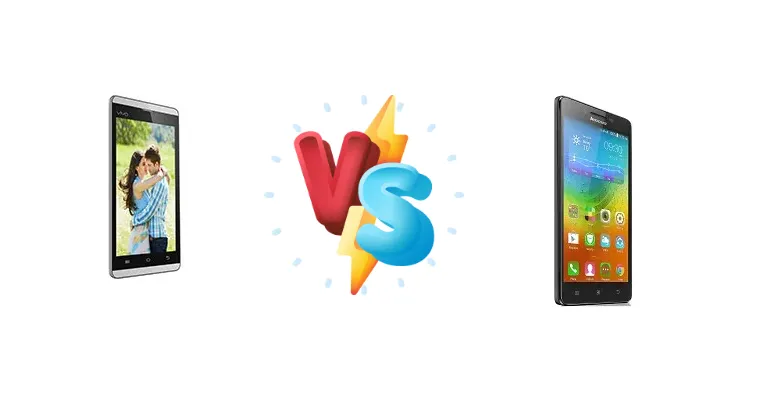
Released in the same era of rapidly expanding smartphone accessibility, the Lenovo A6000 Plus and vivo Y28 (2014) represent competing approaches to the entry-level market. Both aimed to deliver smartphone functionality at an affordable price, but differed significantly in their core hardware. This comparison dissects those differences, focusing on the impact of their respective chipsets on real-world performance.
🏆 Quick Verdict
For the average user in 2014 (and those seeking a retro experience today), the Lenovo A6000 Plus is the superior choice. Its Qualcomm Snapdragon 410 chipset, built on the ARM Cortex-A53 architecture, offers a noticeable performance advantage over the vivo Y28’s Mediatek MT6582, translating to smoother multitasking and app loading.
| Network |
|---|
| 2G bands | GSM 850 / 900 / 1800 / 1900 | GSM 900 / 1800 / 1900 - SIM 1 & SIM 2 |
| 3G bands | HSDPA 850 / 900 / 2100 | HSDPA 2100 |
| 4G bands | - | 1, 3, 7, 20, 40 - Data only, no voice |
| Speed | HSPA 21.1/5.76 Mbps | HSPA, LTE Cat4 150/50 Mbps |
| Technology | GSM / HSPA | GSM / HSPA / LTE |
| Launch |
|---|
| Announced | 2014, December. Released 2014, December | 2015, April. Released 2015, April |
| Status | Discontinued | Discontinued |
| Body |
|---|
| Dimensions | 137.4 x 68.6 x 9.8 mm (5.41 x 2.70 x 0.39 in) | 141 x 70 x 8.2 mm (5.55 x 2.76 x 0.32 in) |
| SIM | Micro-SIM | Dual SIM (Micro-SIM, dual stand-by) |
| Weight | 156 g (5.50 oz) | 128 g (4.52 oz) |
| Display |
|---|
| Resolution | 540 x 960 pixels, 16:10 ratio (~216 ppi density) | 720 x 1280 pixels, 16:9 ratio (~294 ppi density) |
| Size | 4.7 inches, 64.2 cm2 (~68.1% screen-to-body ratio) | 5.0 inches, 68.9 cm2 (~69.8% screen-to-body ratio) |
| Type | IPS LCD | IPS LCD |
| Platform |
|---|
| CPU | Quad-core 1.3 GHz Cortex-A7 | Quad-core 1.2 GHz Cortex-A53 |
| Chipset | Mediatek MT6582 (28 nm) | Qualcomm MSM8916 Snapdragon 410 (28 nm) |
| GPU | Mali-400MP2 | Adreno 306 |
| OS | Android 4.2.2 (Jelly Bean) | Android 4.4.4 (KitKat), upgradable to 5.2 (Lollipop) |
| Memory |
|---|
| Card slot | microSDXC (dedicated slot) | microSDHC (dedicated slot) |
| Internal | 8GB 1GB RAM | 16GB 2GB RAM |
| | - | eMMC 4.5 |
| Main Camera |
|---|
| Features | LED flash | LED flash |
| Single | 8 MP, AF | 8 MP, f/2.2, AF |
| Video | 1080p@30fps | 720p@30fps |
| Selfie camera |
|---|
| Single | 5 MP | 2 MP |
| Sound |
|---|
| 3.5mm jack | - | Yes |
| 35mm jack | Yes | Yes |
| Loudspeaker | Yes | Yes, with stereo speakers |
| Comms |
|---|
| Bluetooth | 4.0, A2DP, EDR | 4.0, A2DP |
| Infrared port | Yes | - |
| NFC | No | No |
| Positioning | GPS | GPS |
| Radio | FM radio | FM radio |
| USB | microUSB 2.0 | microUSB 2.0 |
| WLAN | Wi-Fi 802.11 b/g/n, hotspot | Wi-Fi 802.11 b/g/n, hotspot |
| Features |
|---|
| Sensors | Accelerometer, proximity, compass | Accelerometer, proximity |
| Battery |
|---|
| Music play | Up to 32 h | - |
| Stand-by | Up to 430 h (2G) / Up to 430 h (3G) | Up to 264 h (2G) / Up to 264 h (3G) |
| Talk time | Up to 14 h (2G) / Up to 13 h (3G) | Up to 22 h (2G) / Up to 13 h (3G) |
| Type | 2100 mAh, removable | Li-Po 2300 mAh, removable |
| Misc |
|---|
| Colors | White | Black, White, Yellow, Red |
| Models | Y28 | - |
| Price | About 100 EUR | About 110 EUR |
vivo Y28 (2014)
- More modern CPU architecture (Cortex-A53)
- Better multitasking performance
- Potentially better image processing
- Slightly lower CPU clock speed
- May have been priced slightly higher at launch
Lenovo A6000 Plus
- Higher CPU clock speed (on paper)
- Potentially lower initial cost
- Simpler software experience (potentially)
- Older CPU architecture (Cortex-A7)
- Less efficient performance
- Slower app loading times
Display Comparison
Neither device boasts a particularly impressive display by modern standards. Both are likely to feature 720p panels, typical for this price point in 2014. However, details regarding panel technology (IPS vs. TFT) and brightness are unavailable. The focus here is on the processing power needed to drive the display, where the A6000 Plus has an edge. A more efficient GPU within the Snapdragon 410 could translate to slightly better battery life during video playback.
Camera Comparison
Without detailed sensor specifications, a direct camera comparison is difficult. Both phones likely featured basic camera setups geared towards casual photography. The image signal processor (ISP) within the Snapdragon 410 generally offers more advanced image processing capabilities than the ISP found in the MT6582, potentially resulting in slightly better image quality, particularly in low-light conditions. Any differences would be subtle, however, given the limitations of the sensors themselves.
Performance
The core difference lies in the chipsets. The Lenovo A6000 Plus utilizes the Qualcomm MSM8916 Snapdragon 410, featuring quad-core Cortex-A53 processors clocked at 1.2 GHz. This architecture is significantly more efficient and offers better per-core performance than the Mediatek MT6582’s quad-core 1.3 GHz Cortex-A7 cores. While the Y28’s clock speed is higher, the A53 architecture provides superior instructions per clock (IPC). This means the A6000 Plus will handle demanding tasks and multitasking more effectively. Both chipsets are fabricated on a 28nm process, so thermal efficiency differences are likely minimal, but the A53’s architecture is inherently more power-efficient.
Battery Life
Battery capacity details are missing for both devices. However, the Snapdragon 410’s more efficient Cortex-A53 cores will contribute to longer battery life during typical usage. While the Y28’s chipset might consume slightly less power at idle, the A6000 Plus will maintain that advantage during active use, especially when running apps or multitasking. Charging wattage is also unknown, making a direct comparison of 0-100% charge times impossible.
Buying Guide
Buy the vivo Y28 (2014) if you prioritize a potentially simpler software experience and are comfortable with a slightly less responsive device. Buy the Lenovo A6000 Plus if you value a more modern processor architecture, better multitasking capabilities, and a generally snappier user interface, even within the constraints of the budget segment.
Frequently Asked Questions
❓ Will the Lenovo A6000 Plus handle basic social media apps and web browsing smoothly?
Yes, the Snapdragon 410 is more than capable of handling everyday tasks like social media, web browsing, and light app usage. The Cortex-A53 architecture provides a noticeable improvement in responsiveness compared to the Mediatek MT6582, resulting in a smoother user experience.
❓ Is the difference in performance between these two phones noticeable for casual users?
While both phones are entry-level devices, the difference in performance is noticeable, especially when multitasking or launching apps. The Lenovo A6000 Plus will feel snappier and more responsive, making it a better choice for users who want a more fluid experience.
❓ Which phone is better for playing older Android games?
The Lenovo A6000 Plus has a slight advantage due to its more capable GPU integrated within the Snapdragon 410. It will likely achieve slightly higher frame rates and smoother gameplay in older, less demanding Android titles.