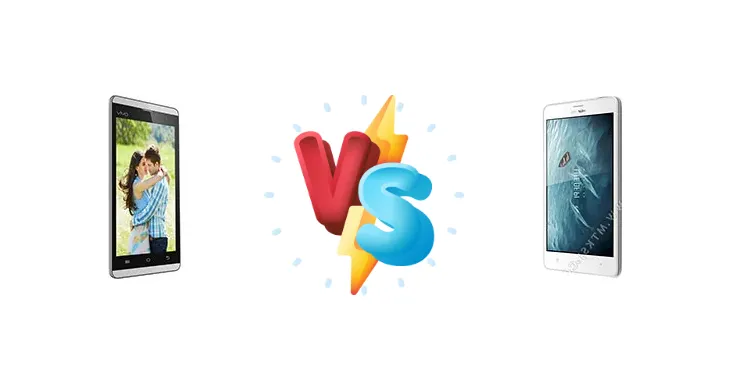
Released in the same timeframe, the vivo Y28 (2014) and Huawei Ascend G628 represent competing approaches to the budget smartphone market. While both devices utilize Mediatek chipsets fabricated on a 28nm process, their core configurations differ significantly, impacting performance and user experience. This comparison dissects these differences to determine which device offers the best value.
🏆 Quick Verdict
For users prioritizing multitasking and smoother application performance, the Huawei Ascend G628 is the clear winner. Its octa-core MT6752 processor provides a substantial performance uplift over the vivo Y28’s quad-core MT6582, despite both being built on the same 28nm node. However, the Y28 may offer slightly better battery life due to the less demanding processor.
| Network |
|---|
| 2G bands | GSM 850 / 900 / 1800 / 1900 | GSM 850 / 900 / 1800 / 1900 - SIM 1 & SIM 2 (dual-SIM model only) |
| 3G bands | HSDPA 850 / 900 / 2100 | HSDPA 900 / 2100 |
| 4G bands | - | LTE |
| Speed | HSPA 21.1/5.76 Mbps | HSPA, TD-SCDMA, LTE, TD-LTE |
| Technology | GSM / HSPA | GSM / HSPA / LTE |
| | - | LTE (unspecified) |
| Launch |
|---|
| Announced | 2014, December. Released 2014, December | Exp. announcement 2015, Q3 |
| Status | Discontinued | Cancelled |
| Body |
|---|
| Dimensions | 137.4 x 68.6 x 9.8 mm (5.41 x 2.70 x 0.39 in) | - |
| SIM | Micro-SIM | Single SIM (Micro-SIM) or Dual SIM (Micro-SIM, dual stand-by) |
| Weight | 156 g (5.50 oz) | - |
| Display |
|---|
| Resolution | 540 x 960 pixels, 16:10 ratio (~216 ppi density) | 720 x 1280 pixels, 16:9 ratio (~294 ppi density) |
| Size | 4.7 inches, 64.2 cm2 (~68.1% screen-to-body ratio) | 5.0 inches, 68.9 cm2 |
| Type | IPS LCD | IPS LCD |
| Platform |
|---|
| CPU | Quad-core 1.3 GHz Cortex-A7 | Octa-core 1.7 GHz Cortex-A53 |
| Chipset | Mediatek MT6582 (28 nm) | Mediatek MT6752 (28 nm) |
| GPU | Mali-400MP2 | Mali-T760 |
| OS | Android 4.2.2 (Jelly Bean) | Android 4.4.4 (KitKat), EMUI 2.3 |
| Memory |
|---|
| Card slot | microSDXC (dedicated slot) | microSDXC (dedicated slot) |
| Internal | 8GB 1GB RAM | 8GB 1GB RAM |
| Main Camera |
|---|
| Features | LED flash | LED flash |
| Single | 8 MP, AF | 8 MP, AF |
| Video | 1080p@30fps | Yes |
| Selfie camera |
|---|
| Single | 5 MP | 2 MP |
| Sound |
|---|
| 3.5mm jack | - | Yes |
| 35mm jack | Yes | Yes |
| Loudspeaker | Yes | Yes |
| Comms |
|---|
| Bluetooth | 4.0, A2DP, EDR | 4.0, A2DP |
| Infrared port | Yes | - |
| NFC | No | No |
| Positioning | GPS | GPS |
| Radio | FM radio | FM radio |
| USB | microUSB 2.0 | microUSB 2.0 |
| WLAN | Wi-Fi 802.11 b/g/n, hotspot | Wi-Fi 802.11 b/g/n |
| Features |
|---|
| Sensors | Accelerometer, proximity, compass | Accelerometer, proximity |
| Battery |
|---|
| Music play | Up to 32 h | - |
| Stand-by | Up to 430 h (2G) / Up to 430 h (3G) | - |
| Talk time | Up to 14 h (2G) / Up to 13 h (3G) | - |
| Type | 2100 mAh, removable | Li-Ion, removable |
| Misc |
|---|
| Colors | White | Black, White |
| Models | Y28 | - |
| Price | About 100 EUR | About 140 EUR |
vivo Y28 (2014)
- Potentially better battery life due to less powerful processor.
- Simpler processor architecture may lead to greater software stability.
- Likely more affordable at the time of release.
- Significantly slower performance compared to the G628.
- Limited multitasking capabilities.
- Outdated processor architecture.
Huawei Ascend G628
- Superior performance thanks to the octa-core processor.
- Improved multitasking and app responsiveness.
- 64-bit architecture offers future compatibility.
- Potentially shorter battery life under heavy use.
- May experience more heat generation during intensive tasks.
- Likely more expensive than the Y28 at the time of release.
Display Comparison
Neither device boasts a particularly advanced display. Given the 2014 release dates, both likely utilize IPS LCD panels. Specifics regarding resolution and brightness are unavailable, but the focus here is on processing power, not visual fidelity. Bezels were substantial on both devices, typical for the era. Color accuracy is likely similar, leaning towards the warmer side, common in budget displays of this period.
Camera Comparison
Without detailed sensor information, a direct camera comparison is difficult. However, given the market positioning, both devices likely feature modest camera setups. The focus would have been on megapixel count rather than sensor size or image quality. It’s probable that the G628’s image signal processor (ISP), integrated within the MT6752, offers slightly better image processing capabilities, potentially resulting in more detailed and less noisy photos, especially in low-light conditions. Any 2MP macro lens on either device would offer limited practical benefit.
Performance
The core difference lies in the processors. The Huawei Ascend G628’s Mediatek MT6752 features an octa-core Cortex-A53 configuration clocked at 1.7 GHz, while the vivo Y28 (2014) utilizes a quad-core Cortex-A7 processor running at 1.3 GHz. The A53 architecture, while less powerful per core than the A7, compensates with sheer core count. This translates to significantly improved multitasking and responsiveness on the G628. The MT6752 also supports 64-bit computing, a feature absent in the MT6582. While both are 28nm, the increased transistor density of the MT6752 and its more efficient architecture will result in better performance per watt, though potentially at the cost of slightly increased heat generation under sustained load.
Battery Life
Battery capacity details are unavailable. However, the vivo Y28 (2014), with its less demanding quad-core processor, likely exhibits slightly better battery life under typical usage scenarios. The Huawei Ascend G628’s octa-core processor will consume more power, especially during intensive tasks. Charging wattage is also unknown, but both devices likely supported standard 5W charging, resulting in relatively slow charge times.
Buying Guide
Buy the vivo Y28 (2014) if you need a basic smartphone for essential tasks like calls, texts, and light web browsing, and prioritize potential longevity through lower processor stress. Buy the Huawei Ascend G628 if you prefer a more responsive experience for app switching, moderate gaming, and handling multiple tasks simultaneously, accepting a potentially shorter battery lifespan under heavy use.
Frequently Asked Questions
❓ Will the Huawei Ascend G628 struggle with modern apps designed for newer processors?
While the MT6752 was a capable processor for its time, it will undoubtedly struggle with demanding modern applications. Expect slower loading times, occasional lag, and potential compatibility issues with newer software. It's best suited for lightweight apps and basic tasks.
❓ Is the difference in performance between the MT6752 and MT6582 noticeable in everyday use?
Absolutely. The difference is most apparent when multitasking or running multiple apps simultaneously. The G628 will handle app switching and background processes far more smoothly than the Y28, which may exhibit noticeable lag and slowdowns. Even simple tasks like browsing the web will feel more responsive on the G628.
❓ Given the age of both devices, should I be concerned about software updates and security patches?
Yes, this is a significant concern. Both devices are well past their end-of-life support dates. They are highly vulnerable to security threats and will not receive any further software updates. Using these devices with internet connectivity carries inherent risks.