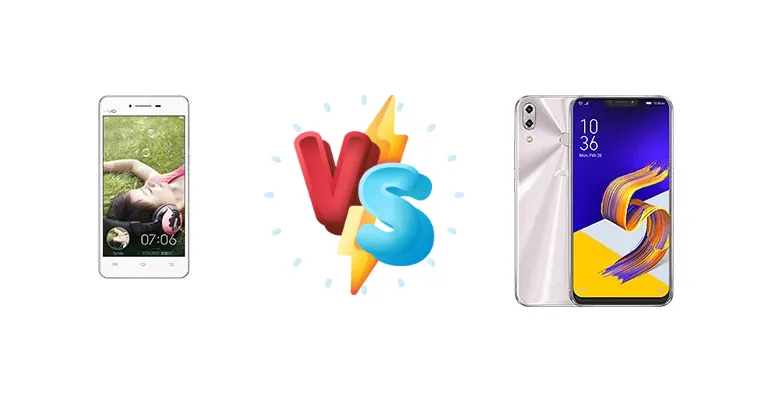
Released six years apart, the vivo Y27 (2014) and Asus Zenfone 5z represent vastly different eras in smartphone technology. The Y27 aimed for affordability in a burgeoning market, while the Zenfone 5z sought to deliver flagship performance at a competitive price. This comparison dissects the core differences between these devices, focusing on how their chipsets and overall hardware impact the user experience.
🏆 Quick Verdict
For the average user in 2024, the Asus Zenfone 5z is the clear winner. Its Snapdragon 845 chipset offers significantly superior performance, enabling smoother multitasking, faster app loading, and a more enjoyable gaming experience. While the Y27 served its purpose in 2014, it's simply outmatched by the Zenfone 5z's more advanced architecture and capabilities.
| Network |
|---|
| 2G bands | GSM 850 / 900 / 1800 / 1900 - SIM 1 & SIM 2 | GSM 850 / 900 / 1800 / 1900 |
| 3G bands | HSDPA 850 / 900 / 2100 | HSDPA 800 / 850 / 900 / 1700(AWS) / 1800 / 1900 / 2100 - B version, C version |
| 4G bands | 1, 3, 7 | 1, 2, 3, 4, 5, 7, 8, 12, 17, 18, 19, 20, 26, 28, 29, 30, 32, 34, 38, 39, 40, 41 - B version, C version |
| Speed | HSPA 42.2/5.76 Mbps, LTE Cat4 150/50 Mbps | HSPA 42.2/5.76 Mbps, LTE (5CA) Cat18 1200/150 Mbps |
| Technology | GSM / HSPA / LTE | GSM / CDMA / HSPA / LTE |
| | - | 1, 2, 3, 5, 7, 8, 18, 19, 20, 26, 28, 38, 39, 40, 41 - A version |
| Launch |
|---|
| Announced | 2014, December. Released 2014, December | 2018, February. Released 2018, June |
| Status | Discontinued | Discontinued |
| Body |
|---|
| Build | - | Glass front (Gorilla Glass), aluminum back, aluminum frame |
| Dimensions | 136.9 x 68.1 x 7 mm (5.39 x 2.68 x 0.28 in) | 153 x 75.7 x 7.9 mm (6.02 x 2.98 x 0.31 in) |
| SIM | Dual SIM (Micro-SIM, dual stand-by) | Nano-SIM + Nano-SIM |
| Weight | 137 g (4.83 oz) | 165 g (5.82 oz) |
| Display |
|---|
| Protection | - | Corning Gorilla Glass (unspecified version) |
| Resolution | 720 x 1280 pixels, 16:9 ratio (~312 ppi density) | 1080 x 2246 pixels, 18.7:9 ratio (~402 ppi density) |
| Size | 4.7 inches, 60.9 cm2 (~65.3% screen-to-body ratio) | 6.2 inches, 96.9 cm2 (~83.6% screen-to-body ratio) |
| Type | IPS LCD | IPS LCD |
| Platform |
|---|
| CPU | Quad-core 1.2 GHz Cortex-A53 | Octa-core (4x2.7 GHz Kryo 385 Gold & 4x1.7 GHz Kryo 385 Silver) |
| Chipset | Qualcomm MSM8916 Snapdragon 410 (28 nm) | Qualcomm SDM845 Snapdragon 845 (10 nm) |
| GPU | Adreno 306 | Adreno 630 |
| OS | Android 4.4.4 (KitKat) | Android 8.0 (Oreo), upgradable to Android 10 |
| Memory |
|---|
| Card slot | microSDXC (dedicated slot) | microSDXC (uses shared SIM slot) |
| Internal | 16GB 1GB RAM | 64GB 4GB RAM, 64GB 6GB RAM, 128GB 6GB RAM, 256GB 8GB RAM |
| Main Camera |
|---|
| Dual | - | 12 MP, f/1.8, 24mm (wide), 1/2.55", 1.4µm, PDAF, 4-axis OIS
8 MP, f/2.0, 12mm (ultrawide), 1/4.0", 1.12µm, no AF |
| Features | LED flash | Dual-LED dual-tone flash, HDR, panorama |
| Single | 8 MP, AF | - |
| Video | 1080p@30fps | 4K@30fps, 1080p@60/120fps, 1080p@30fps (gyro-EIS), 720p@240fps |
| Selfie camera |
|---|
| Features | - | HDR |
| Single | 5 MP | 8 MP, f/2.0, 24mm (wide), 1/4.0", 1.12µm |
| Video | - | 1080p@30fps (gyro-EIS) |
| Sound |
|---|
| 3.5mm jack | - | Yes |
| 35mm jack | Yes | Yes |
| Loudspeaker | Yes | Yes, with dual speakers |
| | - | 24-bit/192kHz audio |
| Comms |
|---|
| Bluetooth | 4.0, A2DP, EDR | v5.0, A2DP, LE |
| Infrared port | Yes | - |
| NFC | No | Yes |
| Positioning | GPS, GLONASS, BDS | GPS, GLONASS, BDS |
| Radio | FM radio | FM radio |
| USB | microUSB 2.0 | USB Type-C 2.0, OTG |
| WLAN | Wi-Fi 802.11 b/g/n, Wi-Fi Direct, hotspot | Wi-Fi 802.11 a/b/g/n/ac, Wi-Fi Direct |
| Features |
|---|
| Sensors | Accelerometer, gyro, proximity, compass | Fingerprint (rear-mounted), accelerometer, gyro, proximity, compass |
| Battery |
|---|
| Charging | - | 18W wired |
| Music play | Up to 32 h | - |
| Stand-by | Up to 410 h (2G) / Up to 410 h (3G) | - |
| Talk time | Up to 13 h (2G) / Up to 13 h (3G) | - |
| Type | 2260 mAh, non-removable | Li-Ion 3300 mAh, non-removable |
| Misc |
|---|
| Colors | White | Midnight Blue, Meteor Silver |
| Models | Y27L | Z01RD |
| Price | - | About 500 EUR |
| SAR EU | 0.40 W/kg (head) 0.48 W/kg (body) | - |
| Tests |
|---|
| Performance | - |
AnTuTu: 266590 (v7)
GeekBench: 9030 (v4.4)
GFXBench: 33fps (ES 3.1 onscreen) |
vivo Y27 (2014)
- Extremely affordable (at its original release)
- Simple and easy to use
- Lightweight and compact
- Very limited performance
- Outdated hardware
- Poor camera quality (likely)
- Slow charging (likely)
Asus Zenfone 5z ZS620KL
- Flagship-level performance
- Fast charging (18W)
- Capable camera system
- More efficient processor
- May be difficult to find in good condition
- Battery life may be degraded due to age
- Software updates are no longer available
Display Comparison
Information regarding the displays of both devices is unavailable. However, given the Y27's 2014 release, it likely features a standard LCD panel with a lower resolution and brightness compared to the Zenfone 5z. The Zenfone 5z, being a more premium device, likely boasts a higher resolution display and potentially better color accuracy. The Zenfone 5z's more modern manufacturing process likely allowed for slimmer bezels, maximizing screen real estate.
Camera Comparison
Details on camera sensors are limited. However, the Zenfone 5z, as a flagship contender, likely features a larger main sensor and more sophisticated image processing algorithms than the Y27. The 845's image signal processor (ISP) is far more capable, enabling better dynamic range, noise reduction, and overall image quality. While the Y27 may suffice for casual snapshots, the Zenfone 5z is expected to deliver significantly better photos and videos, especially in low-light conditions. The Y27 likely relies on simpler software processing, while the Zenfone 5z could offer features like HDR and portrait mode.
Performance
The performance gap between these devices is immense. The vivo Y27's Qualcomm MSM8916 Snapdragon 410, with its quad-core 1.2 GHz Cortex-A53 CPU, is designed for basic functionality. In contrast, the Asus Zenfone 5z's Qualcomm SDM845 Snapdragon 845 features an octa-core configuration (4x2.7 GHz Kryo 385 Gold & 4x1.7 GHz Kryo 385 Silver). The 845, built on a 10nm process, offers significantly higher clock speeds and a more efficient architecture. This translates to a dramatically faster and more responsive user experience on the Zenfone 5z. The Kryo cores also provide better sustained performance under load, crucial for gaming and demanding apps. The Y27 would struggle with modern mobile games, while the Zenfone 5z can handle most titles at medium to high settings.
Battery Life
Battery capacity information is unavailable for both devices. However, the Zenfone 5z's 18W wired charging is a significant advantage. The Snapdragon 845, despite its power, is more efficient than the Snapdragon 410 due to its 10nm manufacturing process. This means the Zenfone 5z can deliver comparable or even better battery life despite potentially having a similar or smaller battery capacity. The faster charging also reduces downtime, allowing users to quickly top up their device.
Buying Guide
Buy the vivo Y27 (2014) if you need a basic, extremely affordable device for essential tasks like calls, texts, and light web browsing, and are willing to accept significant performance limitations. Buy the Asus Zenfone 5z if you prioritize performance, enjoy mobile gaming, and want a phone that can handle demanding applications without lag or slowdown, even years after its release.
Frequently Asked Questions
❓ Will the vivo Y27 (2014) be able to run modern apps like TikTok or Instagram smoothly?
The vivo Y27's Snapdragon 410 processor and limited RAM will likely struggle with modern, resource-intensive apps like TikTok and Instagram. Expect significant lag, slow loading times, and potential crashes. These apps have evolved considerably since 2014 and require far more processing power.
❓ Is the Asus Zenfone 5z still a viable option for gaming in 2024?
Yes, the Asus Zenfone 5z remains a surprisingly capable gaming device in 2024. The Snapdragon 845 can handle many popular mobile games at medium to high settings. However, demanding titles may require lower graphics settings to maintain a smooth frame rate. Battery life during gaming will be a consideration.
❓ Can I expect any software updates for either of these phones?
No. Both the vivo Y27 (2014) and the Asus Zenfone 5z are well past their end-of-life for software updates. This means they will no longer receive security patches or new features, potentially making them vulnerable to security threats.