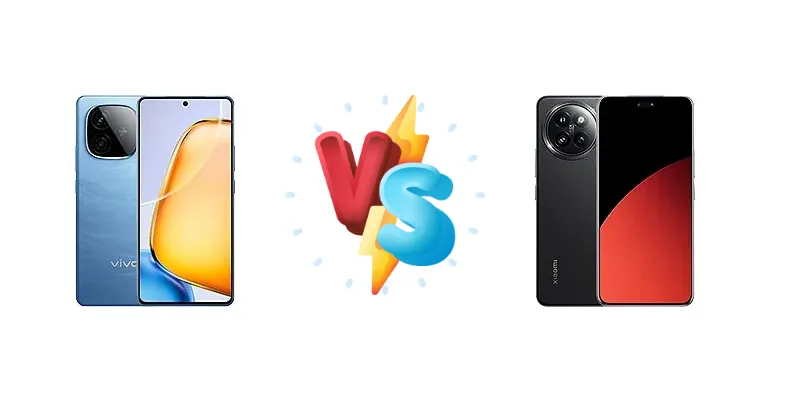
The vivo Y200 GT and Xiaomi Civi 4 Pro represent compelling options in the increasingly competitive mid-range smartphone market. While both aim for a premium feel, they diverge significantly in their core processing power and charging strategies. This comparison dissects these differences to determine which device best suits your needs, focusing on performance, battery life, and overall value.
🏆 Quick Verdict
For the average user prioritizing raw performance and faster charging, the Xiaomi Civi 4 Pro emerges as the winner. Its Snapdragon 8s Gen 3 chipset delivers a noticeable performance uplift over the Y200 GT’s Snapdragon 7 Gen 3. However, the Y200 GT offers a strong value proposition for those seeking a balanced experience without breaking the bank.
| Network |
|---|
| 2G bands | GSM 850 / 900 / 1800 / 1900 | GSM 850 / 900 / 1800 / 1900 |
| 3G bands | HSDPA 850 / 900 / 2100 | HSDPA 800 / 850 / 900 / 1700(AWS) / 1900 / 2100 |
| 4G bands | 1, 3, 5, 8, 28, 34, 38, 39, 40, 41 | 1, 3, 4, 5, 8, 18, 19, 26, 28, 34, 38, 39, 40, 41, 42, 48, 66 |
| 5G bands | 1, 5, 8, 28, 38, 41, 77, 78 SA/NSA | 1, 3, 5, 8, 28, 38, 40, 41, 48, 66, 77, 78 SA/NSA |
| Speed | HSPA, LTE, 5G | HSPA, LTE, 5G |
| Technology | GSM / CDMA / HSPA / LTE / 5G | GSM / CDMA / HSPA / CDMA2000 / LTE / 5G |
| Launch |
|---|
| Announced | 2024, May 20 | 2024, March 21 |
| Status | Available. Released 2024, May 20 | Available. Released 2024, March 21 |
| Body |
|---|
| Build | - | Glass front (Gorilla Glass Victus 2), glass back or silicone polymer back (eco leather), aluminum frame |
| Dimensions | 163.7 x 75.9 x 8 mm (6.44 x 2.99 x 0.31 in) | 157.2 x 72.8 x 7.5 mm or 7.8 mm |
| SIM | Nano-SIM + Nano-SIM | Nano-SIM + Nano-SIM |
| Weight | 194.6 g (6.88 oz) | 177.6 or 179.3 g or 180.9 g (6.28 oz) |
| Display |
|---|
| Protection | - | Corning Gorilla Glass Victus 2 |
| Resolution | 1260 x 2800 pixels, 20:9 ratio (~453 ppi density) | 1236 x 2750 pixels, 20:9 ratio (~460 ppi density) |
| Size | 6.78 inches, 111.0 cm2 (~89.3% screen-to-body ratio) | 6.55 inches, 103.5 cm2 (~90.4% screen-to-body ratio) |
| Type | AMOLED, 1B colors, 144Hz, HDR, 4500 nits (peak) | AMOLED, 68B colors, 120Hz, Dolby Vision, HDR10+, 3000 nits (peak) |
| Platform |
|---|
| CPU | Octa-core (1x2.63 GHz Cortex-A715 & 4x2.4 GHz Cortex-A715 & 3x1.8 GHz Cortex-A510) | Octa-core (1x3.0 GHz Cortex-X4 & 4x2.8 GHz Cortex-A720 & 3x2.0 GHz Cortex-A520) |
| Chipset | Qualcomm SM7550-AB Snapdragon 7 Gen 3 (4 nm) | Qualcomm SM8635 Snapdragon 8s Gen 3 (4 nm) |
| GPU | Adreno 720 | Adreno 735 |
| OS | Android 14, OriginOS 4 | Android 14, HyperOS |
| Memory |
|---|
| Card slot | No | No |
| Internal | 128GB 8GB RAM, 256GB 8GB RAM, 256GB 12GB RAM, 512GB 12GB RAM | 256GB 12GB RAM, 512GB 12GB RAM, 512GB 16GB RAM |
| Main Camera |
|---|
| Dual | 50 MP, f/1.8, (wide), 1/1.95", 0.8µm, PDAF
Auxiliary lens | - |
| Features | LED flash, panorama, HDR | Color spectrum sensor, Dual-LED flash, HDR, panorama, Leica lenses |
| Triple | - | 50 MP, f/1.6, 25mm (wide), 1/1.55", 1.0µm, PDAF, OIS
50 MP, f/2.0, 50mm (telephoto), 0.64µm, PDAF, 2x optical zoom
12 MP, f/2.2, 15mm, 120˚ (ultrawide), 1.12µm |
| Video | 4K@30fps, 1080p, gyro-EIS | 4K@24/30/60fps, 1080p@30/60/120/240/960fps, 720p@1920fps, HDR10+, BT.2020, 10-bit video, gyro-EIS |
| Selfie camera |
|---|
| Dual | - | 32 MP, f/2.0, 26mm (wide), 1/2.8", 0.8µm, AF
32 MP, f/2.4, 100˚ (ultrawide), 1/2.8", 0.8µm |
| Features | - | HDR, panorama |
| Single | 16 MP, f/2.5, (wide), 1/3.0", 1.0µm | - |
| Video | 1080p@30fps | 4K@30fps, 1080p@30/60fps; gyro-EIS |
| Sound |
|---|
| 35mm jack | No | No |
| Loudspeaker | Yes, with stereo speakers | Yes, with stereo speakers |
| Comms |
|---|
| Bluetooth | 5.4, A2DP, LE, aptX HD, aptX Adaptive, aptX Lossless | 5.4, A2DP, LE, LHDC |
| Infrared port | Yes | Yes |
| NFC | Yes | Yes |
| Positioning | GPS, GALILEO, GLONASS, QZSS, BDS (B1I+B1c) | GPS (L1), GLONASS (G1), BDS (B1I+B1c), GALILEO (E1), QZSS (L1) |
| Radio | No | No |
| USB | USB Type-C 2.0, OTG | USB Type-C 2.0, OTG |
| WLAN | Wi-Fi 802.11 a/b/g/n/ac/6, dual-band | Wi-Fi 802.11 a/b/g/n/ac/6, dual-band, Wi-Fi Direct |
| Features |
|---|
| Sensors | Fingerprint (under display, optical), accelerometer, gyro, proximity, compass | Fingerprint (under display, optical), accelerometer, gyro, proximity, compass |
| Battery |
|---|
| Charging | 80W wired, 50% in 26 min
7.5W reverse wired | 67W wired, PD3.0, 100% in 40 minutes |
| Type | 6000 mAh | Li-Po 4700 mAh |
| Misc |
|---|
| Colors | Black, Blue | Black, Pink, Blue, Green |
| Models | V2361GA | 24053PY09C |
| Price | About 230 EUR | About 380 EUR |
vivo Y200 GT
- Faster 50% charge time (26 minutes)
- Reverse wired charging support
- Potentially more affordable price point
- Less powerful Snapdragon 7 Gen 3 chipset
- Likely less advanced camera system
- Potentially lower peak display brightness
Xiaomi Civi 4 Pro
- Significantly more powerful Snapdragon 8s Gen 3 chipset
- Faster overall charging experience with PD3.0
- Likely superior camera performance
- No reverse wired charging
- Higher price tag
- Slightly longer 0-100% charge time (40 minutes)
Display Comparison
While display specifications are absent, both devices likely feature AMOLED panels given their market positioning. However, the core difference lies beneath the surface. The Xiaomi Civi 4 Pro, being positioned as a more premium device, likely benefits from a higher peak brightness and potentially LTPO technology for adaptive refresh rates, leading to improved power efficiency. The Y200 GT, while still offering a vibrant display, may prioritize cost savings with a standard AMOLED panel. Bezels are expected to be minimal on both, reflecting current design trends.
Camera Comparison
Without detailed camera specs, it’s difficult to make definitive claims. However, Xiaomi typically invests heavily in camera technology for its 'Civi' line, suggesting the Civi 4 Pro likely features a more sophisticated camera system. The Snapdragon 8s Gen 3’s ISP (Image Signal Processor) is also more advanced, enabling better image processing and low-light performance. The Y200 GT will likely offer a capable camera, but may rely more on software optimization to compensate for potentially less advanced hardware. We anticipate both phones will include standard features like portrait modes and night modes, but the Civi 4 Pro is expected to deliver superior image quality and detail.
Performance
The performance gap is the most significant differentiator. The Xiaomi Civi 4 Pro’s Snapdragon 8s Gen 3 (4nm) boasts a Cortex-X4 prime core clocked at 3.0 GHz, alongside Cortex-A720 performance cores, offering a substantial advantage over the vivo Y200 GT’s Snapdragon 7 Gen 3 (4nm). The 7 Gen 3 utilizes Cortex-A715 cores, which, while efficient, are a generation behind and clocked lower (2.63 GHz peak). This translates to faster app loading, smoother multitasking, and superior gaming performance on the Civi 4 Pro. The Civi 4 Pro’s GPU will also significantly outperform the Y200 GT’s, making it the better choice for graphically intensive games. Both utilize a 4nm process, ensuring reasonable thermal efficiency, but the 8s Gen 3’s architecture is inherently more efficient.
Battery Life
The Xiaomi Civi 4 Pro’s 67W wired charging, with a full charge in 40 minutes, is a clear advantage over the vivo Y200 GT’s 80W charging, which takes 26 minutes to reach 50% but lacks a specified 0-100% time. While 80W sounds faster, the Civi 4 Pro’s PD3.0 support ensures wider compatibility and potentially more efficient charging. Battery capacity is not specified, but the Civi 4 Pro’s more efficient chipset may offset a potentially smaller battery size, resulting in comparable real-world battery life. The Y200 GT also offers 7.5W reverse wired charging, a feature absent in the Civi 4 Pro.
Buying Guide
Buy the vivo Y200 GT if you need a reliable daily driver with good performance for everyday tasks and moderate gaming, and prioritize a slightly more affordable price point. Buy the Xiaomi Civi 4 Pro if you prefer a smoother experience with demanding applications, enjoy faster charging, and are willing to invest a bit more for a more powerful chipset and potentially better long-term software support.
Frequently Asked Questions
❓ Does the Snapdragon 7 Gen 3 in the vivo Y200 GT struggle with demanding games like Genshin Impact?
While the Snapdragon 7 Gen 3 is capable, Genshin Impact and similar graphically intensive games will likely require reduced graphics settings for a smooth experience on the Y200 GT. The Xiaomi Civi 4 Pro’s Snapdragon 8s Gen 3 will handle these games with higher settings and more consistent frame rates.
❓ How does the 67W charging on the Xiaomi Civi 4 Pro compare to other phones with 80W or 120W charging?
While the wattage is lower, the Xiaomi Civi 4 Pro’s 67W charging with PD3.0 support is highly efficient and delivers a full charge in a reasonable 40 minutes. The efficiency of the charging protocol and battery management are often more important than peak wattage, and the Civi 4 Pro excels in this regard.
❓ Is the lack of reverse wireless charging on the Xiaomi Civi 4 Pro a significant drawback?
For most users, the absence of reverse wireless charging is unlikely to be a major issue. Reverse wired charging, present on the Y200 GT, is more practical for topping up accessories like earbuds, but the convenience is limited. The Civi 4 Pro prioritizes faster overall charging and a more efficient power delivery system.