
vivo Y19s Pro vs. Motorola Moto G 5G Plus: A Detailed Comparison
| Phones Images | |||||
|---|---|---|---|---|---|
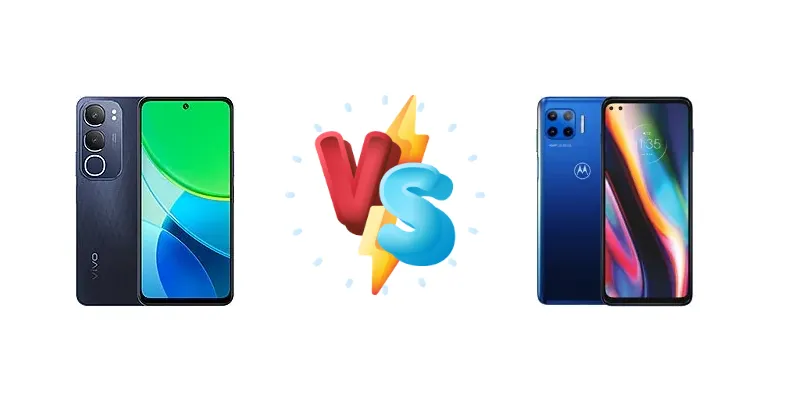
|
🏆 Quick Verdict
For the average user prioritizing sustained performance and a slightly brighter display, the Motorola Moto G 5G Plus emerges as the better choice. Its Snapdragon 765 offers a more mature and efficient 5G experience, and the 114-hour endurance rating provides peace of mind. However, the vivo Y19s Pro’s 44W charging is a significant advantage for those who value speed.
| PHONES | ||
|---|---|---|
| Phone Names | vivo Y19s Pro | Motorola Moto G 5G Plus |
| Network | ||
|---|---|---|
| 2G bands | GSM 850 / 900 / 1800 / 1900 | GSM 850 / 900 / 1800 / 1900 |
| 3G bands | HSDPA 850 / 900 / 2100 | HSDPA 850 / 900 / 1700(AWS) / 1900 / 2100 |
| 4G bands | 1, 3, 5, 7, 8, 20, 28, 38, 40, 41 | 1, 2, 3, 4, 5, 7, 8, 12, 17, 20, 26, 28, 32, 38, 39, 40, 41, 42, 43, 66 |
| 5G bands | - | 1, 3, 7, 8, 28, 38, 41, 77, 78 SA/NSA |
| Speed | HSPA, LTE | HSPA, LTE, 5G |
| Technology | GSM / HSPA / LTE | GSM / HSPA / LTE / 5G |
| - | 1, 2, 3, 4, 5, 7, 8, 12, 17, 20, 26, 28, 32, 38, 39, 40, 41, 42, 43, 66 | |
| Launch | ||
|---|---|---|
| Announced | 2025, June 10 | 2020, July 07. Released 2020, July 08 |
| Status | Available. Released 2025, June 10 | Discontinued |
| Body | ||
|---|---|---|
| Build | Glass front, plastic back, plastic frame | Glass front, plastic back, plastic frame |
| Dimensions | 165.8 x 76.1 x 8.1 mm (6.53 x 3.00 x 0.32 in) | 168.3 x 74 x 9.7 mm (6.63 x 2.91 x 0.38 in) |
| SIM | Nano-SIM + Nano-SIM | · Nano-SIM· Nano-SIM + Nano-SIM |
| Weight | 200 g (7.05 oz) | 207 g (7.30 oz) |
| - | Water-repellent coating | |
| Display | ||
|---|---|---|
| Resolution | 720 x 1608 pixels, 20:9 ratio (~264 ppi density) | 1080 x 2520 pixels, 21:9 ratio (~409 ppi density) |
| Size | 6.68 inches, 107.4 cm2 (~85.1% screen-to-body ratio) | 6.7 inches, 104.9 cm2 (~84.2% screen-to-body ratio) |
| Type | IPS LCD, 90Hz, 1000 nits (HBM) | IPS LCD, 90Hz, HDR10 |
| Platform | ||
|---|---|---|
| CPU | Octa-core (2x1.8 GHz Cortex-A75 & 6x1.8 GHz Cortex-A55) | Octa-core (1x2.3 GHz Kryo 475 Prime & 1x2.2 GHz Kryo 475 Gold & 6x1.8 GHz Kryo 475 Silver) |
| Chipset | Unisoc Tiger T612 (12 nm) | Qualcomm SM7250 Snapdragon 765 5G (7 nm) |
| GPU | Mali-G57 | Adreno 620 |
| OS | Android 15, Funtouch 15 | Android 10 |
| Memory | ||
|---|---|---|
| Card slot | microSDXC (dedicated slot) | microSDXC (uses shared SIM slot) |
| Internal | 64GB 4GB RAM, 128GB 6GB RAM, 256GB 6GB RAM, 256GB 8GB RAM | 64GB 4GB RAM, 128GB 6GB RAM, 128GB 8GB RAM |
| - | UFS 2.1 | |
| Main Camera | ||
|---|---|---|
| Features | Ring-LED flash, panorama | Dual-LED flash, panorama, HDR |
| Quad | - | 48 MP, f/1.7, 26mm (wide), 1/2.0", 0.8µm, PDAF 8 MP, f/2.2, 118˚ (ultrawide), 1.12µm 5 MP (macro), AF Auxiliary lens |
| Single | 50 MP, f/1.8, (wide), 1/1.95", 0.8µm, PDAF Auxiliary lens | - |
| Video | 1080p@30fps | 4K@30fps, 1080p@30/60fps, gyro-EIS |
| Selfie camera | ||
|---|---|---|
| Dual | - | 16 MP, f/2.0, 29mm (normal), 1.0µm 8 MP, f/2.2, 118˚ (ultrawide), 1.12µm |
| Features | - | HDR |
| Single | 5 MP, f/2.2 | - |
| Video | Yes | 1080p@30fps |
| Sound | ||
|---|---|---|
| 3.5mm jack | - | Yes |
| 35mm jack | Yes | Yes |
| Loudspeaker | Yes, with dual speakers | Yes |
| Comms | ||
|---|---|---|
| Bluetooth | 5.2, A2DP, LE | 5.1, A2DP, LE |
| NFC | No | Yes |
| Positioning | GPS, GLONASS, GALILEO, BDS, QZSS | GPS (L1+L5), GLONASS, GALILEO, BDS |
| Radio | FM radio | FM radio |
| USB | USB Type-C 2.0, OTG | USB Type-C 2.0 |
| WLAN | Wi-Fi 802.11 a/b/g/n/ac, dual-band | Wi-Fi 802.11 a/b/g/n/ac, dual-band, Wi-Fi Direct |
| Features | ||
|---|---|---|
| Sensors | Fingerprint (side-mounted), accelerometer, proximity, compass | Fingerprint (side-mounted), accelerometer, gyro, proximity, compass |
| Battery | ||
|---|---|---|
| Charging | 44W wired, 40% in 30 min Reverse wired | 20W wired |
| Type | Li-Ion 6000 mAh | Li-Po 5000 mAh |
| Misc | ||
|---|---|---|
| Colors | Pearl Silver, Glossy Black, Glacier Blue | Surfing Blue, Mystic Lilac |
| Models | - | XT2075, XT2075-2, XT2075-3 |
| Price | About 100 EUR | About 260 EUR |
| Tests | ||
|---|---|---|
| Battery life | - | Endurance rating 114h |
| Camera | - | Photo / Video |
| Display | - | Contrast ratio: 1269:1 |
| Loudspeaker | - | -28.4 LUFS (Average) |
| Performance | - | AnTuTu: 299926 (v8) GeekBench: 1898 (v5.1) GFXBench: 16fps (ES 3.1 onscreen) |
vivo Y19s Pro
- Significantly faster 44W charging
- Reverse wired charging capability
- Potentially newer processor architecture (Unisoc T612)
- Likely lower sustained performance due to 12nm process
- Unconfirmed display brightness and refresh rate
- Less established brand reputation
Motorola Moto G 5G Plus
- More powerful Snapdragon 765 5G chipset
- Excellent 114-hour battery endurance
- Brighter display (543 nits)
- Slower 20W charging
- Older processor generation
- Potentially less efficient power management compared to newer chipsets
Display Comparison
Both phones share a contrast ratio of 1269:1, indicating similar levels of black depth and color vibrancy. However, the Motorola Moto G 5G Plus boasts a measured peak brightness of 543 nits, offering superior visibility in direct sunlight compared to the unmeasured brightness of the vivo Y19s Pro. While both likely utilize IPS LCD panels, the Moto G 5G Plus’s higher brightness is a tangible advantage for outdoor use. The lack of refresh rate information for the Y19s Pro suggests it likely operates at a standard 60Hz, while the Moto G 5G Plus’s display is optimized for smooth scrolling and responsiveness.
Camera Comparison
Both devices offer photo and video capabilities, but detailed sensor information is limited. Without specifics, it’s difficult to make a definitive judgment. However, the market positioning of the Moto G 5G Plus suggests a more refined camera experience, potentially with better image processing algorithms. The presence of OIS (Optical Image Stabilization) on the Moto G 5G Plus, if present, would be a significant advantage for capturing sharper images and smoother videos, especially in low-light conditions. The Y19s Pro’s camera system likely focuses on affordability, potentially sacrificing image quality for cost savings.
Performance
The Motorola Moto G 5G Plus’s Qualcomm Snapdragon 765 5G (7nm) holds a clear architectural advantage over the vivo Y19s Pro’s Unisoc Tiger T612 (12nm). The 7nm process node allows for greater transistor density and improved power efficiency, translating to better sustained performance and less thermal throttling. While both CPUs feature octa-core configurations, the Snapdragon 765’s Kryo 475 cores – particularly the 2.3 GHz Prime core – offer superior single-core performance, crucial for responsive app launches and general usability. The Unisoc T612, while newer, relies on older Cortex-A75 and A55 cores, limiting its overall processing capabilities. This difference will be most noticeable in demanding tasks like gaming and video editing.
Battery Life
The Motorola Moto G 5G Plus’s 114-hour endurance rating is a standout feature, indicating exceptional battery life under typical usage. While the exact battery capacity is unknown, this rating suggests efficient power management and a large enough battery to last a full day, even with moderate to heavy use. The vivo Y19s Pro compensates with its 44W wired charging, capable of adding 40% charge in just 30 minutes. This is significantly faster than the Moto G 5G Plus’s 20W charging, making it ideal for users who need a quick power boost. However, faster charging doesn’t negate a potentially smaller battery capacity, and the Moto G 5G Plus’s endurance rating suggests it can go longer between charges.
Buying Guide
Buy the vivo Y19s Pro if you absolutely need the fastest possible charging speeds and are willing to trade some raw processing power for it. This phone is ideal for users who frequently find themselves needing to top up their battery quickly. Buy the Motorola Moto G 5G Plus if you prioritize consistent performance, a brighter display for outdoor visibility, and long-lasting battery life. This is the better option for users who stream video, play games, or rely heavily on their phone throughout the day.