
Xiaomi Redmi 13C 5G vs vivo Y18: A Deep Dive into Budget 5G Contenders
| Phones Images | |||||
|---|---|---|---|---|---|
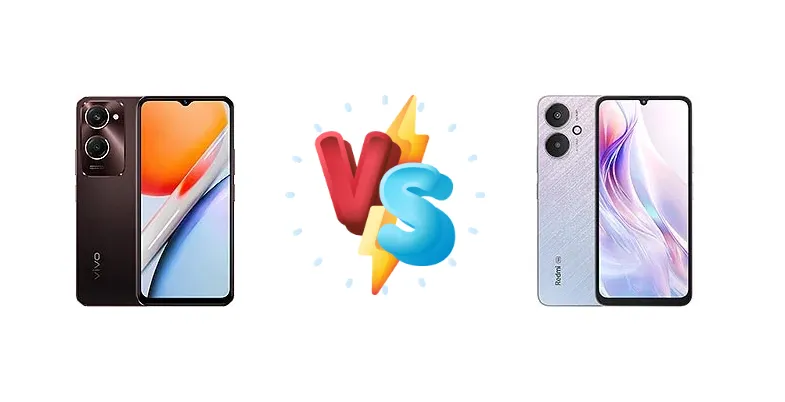
|
🏆 Quick Verdict
For most users, the Xiaomi Redmi 13C 5G is the superior choice. Its Mediatek Dimensity 6100+ chipset, built on a more efficient 6nm process, provides a noticeable performance boost over the vivo Y18’s Helio G85, especially in multitasking and demanding applications. While the Y18 offers a slightly simpler software experience, the Redmi 13C 5G’s advantages outweigh this for the majority of buyers.
| PHONES | ||
|---|---|---|
| Phone Names | vivo Y18 | Xiaomi Redmi 13C 5G |
| Network | ||
|---|---|---|
| 2G bands | GSM 850 / 900 / 1800 / 1900 | GSM 850 / 900 / 1800 / 1900 |
| 3G bands | HSDPA 850 / 900 / 1700(AWS) / 1900 / 2100 | HSDPA 800 / 850 / 900 / 1700(AWS) / 1900 / 2100 - International |
| 4G bands | 1, 2, 3, 4, 5, 7, 8, 13, 18, 19, 26, 28, 38, 40, 41, 66 | 1, 2, 3, 4, 5, 7, 8, 12, 13, 17, 18, 19, 20, 26, 28, 32, 38, 40, 41, 66 - International |
| 5G bands | - | 1, 3, 5, 7, 8, 20, 28, 38, 40, 41, 66, 77, 78 SA/NSA - International |
| Speed | HSPA, LTE | HSPA, LTE, 5G |
| Technology | GSM / HSPA / LTE | GSM / HSPA / LTE / 5G |
| Launch | ||
|---|---|---|
| Announced | 2024, May 06 | 2023, December 06 |
| Status | Available. Released 2024, May | Available. Released 2023, December 16 |
| Body | ||
|---|---|---|
| Build | Glass front, plastic frame, plastic back | Glass front (Gorilla Glass 3), plastic frame, plastic back |
| Dimensions | 163.6 x 75.6 x 8.4 mm (6.44 x 2.98 x 0.33 in) | 168.1 x 77.9 x 8.2 mm (6.62 x 3.07 x 0.32 in) |
| SIM | Nano-SIM + Nano-SIM | Nano-SIM + Nano-SIM |
| Weight | 185 g (6.53 oz) | 192 g or 195 g (6.77 oz) |
| Display | ||
|---|---|---|
| Protection | - | Corning Gorilla Glass 3 |
| Resolution | 720 x 1612 pixels, 20:9 ratio (~269 ppi density) | 720 x 1600 pixels, 20:9 ratio (~260 ppi density) |
| Size | 6.56 inches, 103.4 cm2 (~83.6% screen-to-body ratio) | 6.74 inches, 109.7 cm2 (~83.8% screen-to-body ratio) |
| Type | IPS LCD, 90Hz, 840 nits (HBM) | IPS LCD, 90Hz, 450 nits (typ), 600 nits (HBM) |
| Platform | ||
|---|---|---|
| CPU | Octa-core (2x2.0 GHz Cortex-A75 & 6x1.8 GHz Cortex-A55) | Octa-core (2x2.2 GHz Cortex-A76 & 6x2.0 GHz Cortex-A55) |
| Chipset | Mediatek Helio G85 (12 nm) | Mediatek Dimensity 6100+ (6 nm) |
| GPU | Mali-G52 MC2 | Mali-G57 MC2 |
| OS | Android 14, Funtouch 14 | Android 13, MIUI 14 |
| Memory | ||
|---|---|---|
| Card slot | microSDXC (dedicated slot) | microSDXC (dedicated slot) |
| Internal | 64GB 4GB RAM, 128GB 4GB RAM, 128GB 6GB RAM, 128GB 8GB RAM, 256GB 8GB RAM | 64GB 4GB RAM, 128GB 4GB RAM, 128GB 6GB RAM, 256GB 8GB RAM |
| Main Camera | ||
|---|---|---|
| Features | LED flash, panorama | LED flash, HDR |
| Single | 50 MP, f/1.8, (wide), PDAF Auxiliary lens | 50 MP, f/1.8, 28mm (wide), 1/2.76", 1.12µm, PDAF Auxiliary lens |
| Video | 1080p@30fps | 1080p@30fps |
| Selfie camera | ||
|---|---|---|
| Features | - | HDR |
| Single | 8 MP, f/2.0, (wide) | 5 MP, f/2.2, (wide) |
| Video | Yes | 1080p@30fps |
| Sound | ||
|---|---|---|
| 35mm jack | Yes | Yes |
| Loudspeaker | Yes | Yes |
| Comms | ||
|---|---|---|
| Bluetooth | 5.0, A2DP, LE | 5.3, A2DP, LE |
| NFC | Yes (market/region dependent) | Yes (market/region dependent) |
| Positioning | GPS, GALILEO, GLONASS, BDS, QZSS | GPS, GLONASS, GALILEO, BDS |
| Radio | FM radio | FM radio |
| USB | USB Type-C 2.0, OTG | USB Type-C 2.0, OTG |
| WLAN | Wi-Fi 802.11 a/b/g/n/ac, dual-band | Wi-Fi 802.11 a/b/g/n/ac, dual-band |
| Features | ||
|---|---|---|
| Sensors | Fingerprint (side-mounted), accelerometer, proximity, compass | Fingerprint (side-mounted), accelerometer, compass |
| Battery | ||
|---|---|---|
| Charging | 15W wired | 18W wired, PD |
| Type | Li-Ion 5000 mAh | 5000 mAh |
| Misc | ||
|---|---|---|
| Colors | Mocha Brown, Wave Aqua | Starry Black, Twilight Blue, Starry Silver, Starlight Black, Startrail Green, Startrail Silver |
| Models | - | 23124RN87G, 23124RN87I, 23124RN87C |
| Price | About 120 EUR | $ 198.99 / £ 119.00 / € 116.99 / ₹ 10,895 |
| SAR | - | 1.09 W/kg (head) 1.09 W/kg (body) |
| SAR EU | - | 0.98 W/kg (head) 0.98 W/kg (body) |
vivo Y18
- Simpler, potentially cleaner software experience.
- Reliable performance for basic tasks.
- Generally lower price point (depending on region).
- Older, less efficient Helio G85 chipset.
- Slower charging speed (15W).
- Limited performance headroom for demanding apps.
Xiaomi Redmi 13C 5G
- Significantly more powerful Dimensity 6100+ chipset.
- Faster 18W charging with Power Delivery.
- Better 5G connectivity and future-proofing.
- Improved image processing capabilities.
- Xiaomi’s MIUI software can be feature-rich but sometimes bloated.
- Potentially slightly higher price (depending on region).
Display Comparison
Neither device boasts a standout display. Both likely utilize LCD panels, a common cost-saving measure in this segment. However, the focus should be on the underlying processing power to drive the display smoothly. While specific display specs (resolution, brightness) are missing, the Redmi 13C 5G’s more powerful chipset will likely handle UI animations and video playback with greater fluidity. The absence of high refresh rates on both devices suggests a focus on power efficiency rather than visual fidelity.
Camera Comparison
Without detailed camera specifications, a direct comparison is difficult. However, it’s safe to assume both phones feature modest camera setups geared towards casual photography. The Redmi 13C 5G’s processing capabilities, stemming from the Dimensity 6100+, will likely result in better image processing, particularly in low-light conditions. Expect improved noise reduction and dynamic range. The presence of a more powerful ISP (Image Signal Processor) within the Dimensity 6100+ is a key advantage. The Y18’s Helio G85 will deliver acceptable results in good lighting, but will fall behind in challenging scenarios.
Performance
The core difference lies in the chipsets. The Xiaomi Redmi 13C 5G’s Mediatek Dimensity 6100+ (6nm) is a substantial upgrade over the vivo Y18’s Mediatek Helio G85 (12nm). The 6nm process inherently offers better power efficiency, translating to less heat generation and potentially longer sustained performance. Furthermore, the Dimensity 6100+ features newer CPU cores – Cortex-A76 (2.2 GHz) versus the Y18’s Cortex-A75 (2.0 GHz) – providing a tangible performance advantage in CPU-intensive tasks. The Redmi 13C 5G will exhibit faster app loading times, smoother multitasking, and a more responsive overall experience. The Helio G85 is adequate for basic use, but will struggle with more demanding applications.
Battery Life
Both phones feature relatively modest battery capacities, typical for their price range. The Redmi 13C 5G’s 18W charging with Power Delivery (PD) support is a clear advantage over the Y18’s 15W charging. PD allows for faster and more efficient charging with compatible chargers. While the 6nm process of the Dimensity 6100+ contributes to better power efficiency, the actual battery life will depend heavily on usage patterns. The Redmi 13C 5G is likely to offer comparable, if not slightly better, battery life due to its more efficient chipset, and the faster charging will minimize downtime.
Buying Guide
Buy the vivo Y18 if you prioritize a minimalist software experience and are primarily focused on basic tasks like calls, messaging, and light social media use. You’ll appreciate its simplicity and potentially longer software support due to fewer features. Buy the Xiaomi Redmi 13C 5G if you want a phone capable of handling more demanding apps, enjoy occasional gaming, and value the benefits of 5G connectivity. The Dimensity 6100+ offers a future-proofed experience and better overall responsiveness.