
Xiaomi 13 Pro vs. vivo X90: A Deep Dive into Flagship Android Performance
| Phones Images | |||||
|---|---|---|---|---|---|
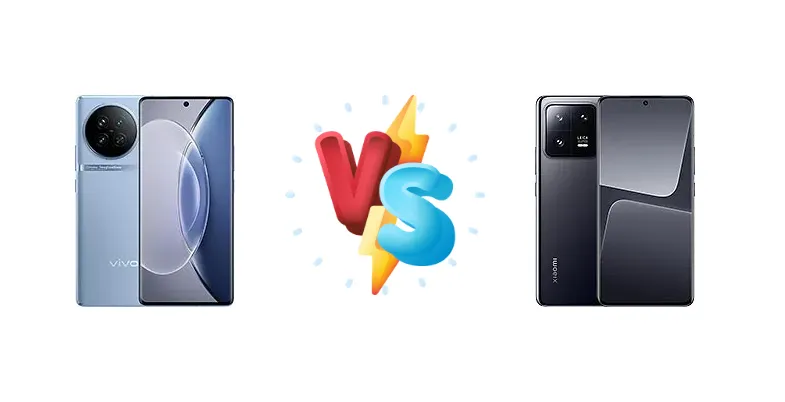
|
🏆 Quick Verdict
For most users, the Xiaomi 13 Pro emerges as the stronger contender. Its Snapdragon 8 Gen 2 offers a demonstrable performance edge, particularly in sustained workloads, and its slightly better battery endurance rating provides a bit more peace of mind. However, the vivo X90 remains a compelling option for those prioritizing a potentially smoother software experience and a different camera tuning.
| PHONES | ||
|---|---|---|
| Phone Names | vivo X90 | Xiaomi 13 Pro |
| Network | ||
|---|---|---|
| 2G bands | GSM 850 / 900 / 1800 / 1900 | GSM 850 / 900 / 1800 / 1900 |
| 3G bands | HSDPA 800 / 850 / 900 / 1700(AWS) / 1900 / 2100 | HSDPA 800 / 850 / 900 / 1700(AWS) / 1900 / 2100 |
| 4G bands | 1, 2, 3, 4, 5, 7, 8, 18, 19, 20, 26, 28, 34, 38, 39, 40, 41 - International | 1, 2, 3, 4, 5, 7, 8, 12, 13, 17, 18, 19, 20, 25, 26, 28, 32, 38, 39, 40, 41, 42, 48, 66 - International |
| 5G bands | 1, 3, 5, 7, 8, 28, 38, 40, 41, 77, 78 SA/NSA - International | 1, 3, 5, 7, 8, 20, 28, 38, 40, 41, 66, 71, 75, 77, 78 SA/NSA - International |
| Speed | HSPA, LTE, 5G | HSPA, LTE, 5G |
| Technology | GSM / CDMA / HSPA / CDMA2000 / LTE / 5G | GSM / CDMA / HSPA / CDMA2000 / LTE / 5G |
| 1, 3, 5, 8, 28, 41, 77, 78 SA/NSA - China | 1, 3, 5, 8, 28, 38, 40, 41, 77, 78, 79 SA/NSA - China | |
| Launch | ||
|---|---|---|
| Announced | 2022, November 22 | 2022, December 11 |
| Status | Available. Released 2022, November 30 | Available. Released 2022, December 14 |
| Body | ||
|---|---|---|
| Build | Glass front, glass back or eco leather back | Glass front (Gorilla Glass Victus), ceramic back or silicone polymer back, aluminum frame |
| Dimensions | 164.1 x 74.4 x 8.5 mm or 8.9 mm | 162.9 x 74.6 x 8.4 mm or 8.7 mm |
| SIM | Nano-SIM + Nano-SIM | · Nano-SIM + eSIM· Nano-SIM + Nano-SIM |
| Weight | 196 g / 200 g (6.91 oz) | 210 g or 229 g (7.41 oz) |
| IP64 dust/water resistant | IP68 dust/water resistant (up to 1.5m for 30 min) | |
| Display | ||
|---|---|---|
| Protection | - | Corning Gorilla Glass Victus |
| Resolution | 1260 x 2800 pixels, 20:9 ratio (~452 ppi density) | 1440 x 3200 pixels, 20:9 ratio (~522 ppi density) |
| Size | 6.78 inches, 111.5 cm2 (~91.3% screen-to-body ratio) | 6.73 inches, 108.9 cm2 (~89.6% screen-to-body ratio) |
| Type | AMOLED, 1B colors, 120Hz, HDR10+ | LTPO AMOLED, 1B colors, 120Hz, Dolby Vision, HDR10+, 1200 nits (HBM), 1900 nits (peak) |
| Platform | ||
|---|---|---|
| CPU | Octa-core (1x3.05 GHz Cortex-X3 & 3x2.85 GHz Cortex-A715 & 4x1.80 GHz Cortex-A510) | Octa-core (1x3.2 GHz Cortex-X3 & 2x2.8 GHz Cortex-A715 & 2x2.8 GHz Cortex-A710 & 3x2.0 GHz Cortex-A510) |
| Chipset | Mediatek Dimensity 9200 (4 nm) | Qualcomm SM8550-AB Snapdragon 8 Gen 2 (4 nm) |
| GPU | Immortalis-G715 MC11 | Adreno 740 |
| OS | Android 13, Funtouch 13 (Global), OriginOS 3 (China) | Android 13, upgradable to Android 14, HyperOS |
| Memory | ||
|---|---|---|
| Card slot | No | No |
| Internal | 128GB 8GB RAM, 256GB 8GB RAM, 256GB 12GB RAM, 512GB 12GB RAM | 128GB 8GB RAM, 256GB 8GB RAM, 256GB 12GB RAM, 512GB 12GB RAM |
| UFS 4.0 - 256/512GB UFS 3.1 - 128GB | UFS 3.1 - 128GB UFS 4.0 - 256/512GB | |
| Main Camera | ||
|---|---|---|
| Features | Laser AF, color spectrum sensor, Zeiss optics, Zeiss T* lens coating, Pixel Shift, dual-LED dual-tone flash, HDR, panorama | Laser AF, color spectrum sensor, Leica lens, Dual-LED dual-tone flash, HDR, panorama |
| Single | 32 MP, f/2.5, 24mm (wide), 1/2.8", 0.8µm | - |
| Triple | 50 MP, f/1.8, (wide), 1/1.49", 1.0µm, PDAF, OIS 12 MP, f/2.0, 50mm (telephoto), 1/2.93", 1.22µm, AF, 2x optical zoom 12 MP, f/2.0, 16mm (ultrawide), 1/2.93", 1.22µm, AF | 50.3 MP, f/1.9, 23mm (wide), 1.0"-type, 1.6µm, dual pixel PDAF, OIS 50 MP, f/2.0, 75mm (telephoto), PDAF (10cm - ∞), 3.2x optical zoom 50 MP, f/2.2, 14mm, 115˚ (ultrawide), AF |
| Video | 4K@30/60fps, 1080p@30/60fps, gyro-EIS | 8K@24fps (HDR), 4K@24/30/60fps (HDR10+, 10-bit Dolby Vision HDR, 10-bit LOG), 1080p@30/120/240/960fps, 1080p@1920fps, gyro-EIS |
| Selfie camera | ||
|---|---|---|
| Features | HDR | HDR, panorama |
| Single | 32 MP, f/2.5, 24mm (wide), 1/2.8", 0.8µm | 32 MP, f/2.0, 22mm (wide), 1/3.14", 0.7µm |
| Video | 1080p@30/60fps | 1080p@30fps |
| Sound | ||
|---|---|---|
| 3.5mm jack | No | No |
| 35mm jack | No | No |
| Loudspeaker | Yes, with stereo speakers | Yes, with stereo speakers |
| 24-bit/192kHz audio | 24-bit/192kHz audio | |
| Comms | ||
|---|---|---|
| Bluetooth | 5.3, A2DP, LE, aptX HD | 5.3, A2DP, aptX HD, aptX Adaptive |
| Infrared port | Yes | Yes |
| NFC | Yes | Yes |
| Positioning | GPS (L1+L5), GLONASS, BDS, GALILEO, QZSS, NavIC | GPS (L1+L5), GLONASS (G1), BDS (B1I+B1c+B2a), GALILEO (E1+E5a), QZSS (L1+L5), NavIC (L5) |
| Radio | No | No |
| USB | USB Type-C 2.0, OTG | USB Type-C 2.0, OTG |
| WLAN | Wi-Fi 802.11 a/b/g/n/ac/6, dual-band, Wi-Fi Direct | Wi-Fi 802.11 a/b/g/n/ac/6e, dual-band, Wi-Fi Direct |
| Features | ||
|---|---|---|
| Sensors | Fingerprint (under display, optical), accelerometer, gyro, proximity, compass | Fingerprint (under display, optical), accelerometer, proximity, gyro, compass, barometer |
| Battery | ||
|---|---|---|
| Charging | 120W wired, 50% in 8 min Reverse wired | 120W wired, PD3.0, QC4, 100% in 19 min 50W wireless, 100% in 36 min 10W reverse wireless |
| Type | 4810 mAh | Li-Po 4820 mAh |
| Misc | ||
|---|---|---|
| Colors | Asteroid Black, Breeze Blue, Red | Ceramic White, Ceramic Black, Ceramic Flora Green, Mountain Blue |
| Models | V2241A | 2210132G, 2210132C |
| Price | About 300 EUR | About 750 EUR |
| Tests | ||
|---|---|---|
| Battery life | - | Endurance rating 115h |
| Camera | - | Photo / Video |
| Display | - | Contrast ratio: Infinite (nominal) |
| Loudspeaker | - | -25.6 LUFS (Very good) |
| Performance | - | AnTuTu: 1281666 (v9) GeekBench: 5087 (v5.1), 5323 (v6) GFXBench: 64fps (ES 3.1 onscreen) |
vivo X90
- Superior chipset performance (Snapdragon 8 Gen 2)
- Faster wired charging (19 minutes to 100%)
- Wireless charging support (50W)
- Potentially more aggressive image processing
- May run slightly warmer under sustained load
Xiaomi 13 Pro
- Potentially more natural camera color science
- Efficient Dimensity 9200 chipset
- Fast 120W wired charging
- Slightly less powerful chipset overall
- No wireless charging
Display Comparison
The Xiaomi 13 Pro boasts a display capable of reaching a measured 1253 nits of peak brightness, ensuring excellent visibility even in direct sunlight. While the vivo X90’s brightness isn’t specified, both devices likely utilize high-quality AMOLED panels. The Xiaomi 13 Pro’s ‘Infinite’ contrast ratio (nominal) is standard for AMOLED technology. The absence of PWM frequency data for both phones makes it difficult to assess flicker-related eye strain, but both are expected to employ modern techniques to mitigate this issue. Bezels are likely comparable, with both aiming for a premium, immersive viewing experience.
Camera Comparison
Both phones are equipped for excellent photo and video capture, but their approaches differ. Without detailed sensor information, it’s difficult to make definitive claims. However, the Xiaomi 13 Pro’s camera system is likely tuned for vibrant, saturated colors, a hallmark of Xiaomi’s image processing. The vivo X90, historically, leans towards more natural and accurate color reproduction. The presence of OIS (Optical Image Stabilization) is assumed on both main sensors. The absence of details regarding secondary lenses (ultrawide, telephoto) prevents a comprehensive comparison, but the primary sensor quality and image processing algorithms will be the deciding factors for most users.
Performance
The core difference lies in the chipsets. The Xiaomi 13 Pro’s Snapdragon 8 Gen 2 (4nm) features a 3.2 GHz Cortex-X3 prime core, alongside 2x Cortex-A715 and 2x Cortex-A710 cores, and 3x Cortex-A510 efficiency cores. This configuration, built on TSMC’s 4nm process, generally delivers superior sustained performance and thermal efficiency compared to the vivo X90’s MediaTek Dimensity 9200. The Dimensity 9200, while also 4nm, utilizes a 3.05 GHz Cortex-X3, 3x Cortex-A715, and 4x Cortex-A510 cores. While the Dimensity 9200 is no slouch, the Snapdragon 8 Gen 2’s architecture and optimizations give it an edge in GPU-intensive tasks and prolonged gaming sessions. Both phones likely utilize LPDDR5x RAM, but the specific speed isn’t provided.
Battery Life
The Xiaomi 13 Pro’s endurance rating of 115 hours suggests solid battery life, and its active use score of 10:55h confirms this. The vivo X90’s battery capacity isn’t specified, but its 120W wired charging (50% in 8 minutes) is comparable to the Xiaomi 13 Pro’s (100% in 19 minutes). The Xiaomi 13 Pro further offers 50W wireless charging (100% in 36 minutes) and 10W reverse wireless charging, providing greater versatility. While the X90 offers reverse wired charging, the wattage isn’t specified. The faster wired charging of the Xiaomi 13 Pro is a significant advantage for users who frequently need to top up their battery quickly.
Buying Guide
Buy the vivo X90 if you prioritize a potentially more refined software experience, value a camera system tuned for natural colors, and appreciate the benefits of a slightly more power-efficient chipset in everyday tasks. Buy the Xiaomi 13 Pro if you demand the absolute best performance for gaming and demanding applications, need the fastest possible charging speeds, and prefer a camera system that leans towards vibrant, punchy images.