
vivo X80 Pro vs vivo X80 Lite: A Detailed Comparison
| Phones Images | |||||
|---|---|---|---|---|---|
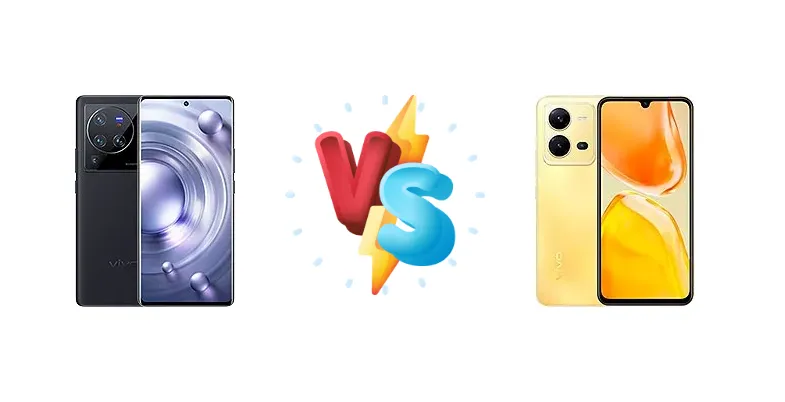
|
🏆 Quick Verdict
The vivo X80 Pro delivers flagship performance, a brighter display, and a more advanced camera system. However, the X80 Lite shines with exceptional battery life and a more accessible price point. For power users and photography enthusiasts, the Pro is the clear winner, while budget-conscious users prioritizing longevity will favor the Lite.
| PHONES | ||
|---|---|---|
| Phone Names | vivo X80 Pro | vivo X80 Lite |
| Network | ||
|---|---|---|
| 2G bands | GSM 850 / 900 / 1800 / 1900 | GSM 850 / 900 / 1800 / 1900 |
| 3G bands | HSDPA 800 / 850 / 900 / 1700(AWS) / 1900 / 2100 | HSDPA 850 / 900 / 1700(AWS) / 1900 / 2100 |
| 4G bands | 1, 2, 3, 4, 5, 7, 8, 12, 13, 17, 18, 19, 20, 26, 28, 32, 38, 39, 40, 41, 42, 66 - International | 1, 2, 3, 4, 5, 7, 8, 12, 17, 20, 28, 32, 38, 40, 41 |
| 5G bands | 1, 2, 3, 5, 7, 8, 20, 28, 38, 40, 41, 66, 77, 78 SA/NSA - International | 1, 3, 5, 7, 8, 20, 28, 38, 40, 41, 77, 78 SA/NSA |
| Speed | HSPA, LTE, 5G | HSPA, LTE, 5G |
| Technology | GSM / CDMA / HSPA / EVDO / LTE / 5G | GSM / HSPA / LTE / 5G |
| 1, 3, 5, 7, 8, 12, 20, 28, 66, 38, 40, 41, 77, 78, 79 SA/NSA - China | - | |
| Launch | ||
|---|---|---|
| Announced | 2022, April 25 | 2022, September 22 |
| Status | Available. Released 2022, April 29 | Available. Released 2022, September 22 |
| Body | ||
|---|---|---|
| Build | Glass front (Schott Xensation Up), glass back or ceramic back or eco leather back, aluminum frame | Glass front, glass back |
| Dimensions | 164.6 x 75.3 x 9.1 mm (6.48 x 2.96 x 0.36 in) | 159.2 x 74.2 x 7.8 mm (6.27 x 2.92 x 0.31 in) |
| SIM | Nano-SIM + Nano-SIM | Nano-SIM + Nano-SIM |
| Weight | 215 g / 219 g (7.58 oz) | 186 g (6.56 oz) |
| IP68 dust/water resistant (up to 1.5m for 30 min) | - | |
| Display | ||
|---|---|---|
| Protection | Schott Xensation Up | - |
| Resolution | 1440 x 3200 pixels, 20:9 ratio (~517 ppi density) | 1080 x 2404 pixels, 20:9 ratio (~409 ppi density) |
| Size | 6.78 inches, 111.4 cm2 (~89.9% screen-to-body ratio) | 6.44 inches, 100.0 cm2 (~84.7% screen-to-body ratio) |
| Type | LTPO3 AMOLED, 1B colors, 120Hz, HDR10+, 1500 nits (peak) | AMOLED, 90Hz, HDR10+, 1300 nits (peak) |
| Platform | ||
|---|---|---|
| CPU | Octa-core (1x3.00 GHz Cortex-X2 & 3x2.50 GHz Cortex-A710 & 4x1.80 GHz Cortex-A510)Octa-core (1x3.05 GHz Cortex-X2 & 3x2.85 GHz Cortex-A710 & 4x1.80 GHz Cortex-A510) | Octa-core (2x2.4 GHz Cortex-A78 & 6x2.0 GHz Cortex-A55) |
| Chipset | Qualcomm SM8450 Snapdragon 8 Gen 1 (4 nm)Mediatek Dimensity 9000 (4 nm) | Mediatek Dimensity 900 (6 nm) |
| GPU | Adreno 730Mali-G710 MC10 | Mali-G68 MC4 |
| OS | Android 12, upgradable to Android 14, Funtouch 14 (Global), OriginOS Ocean (China) | Android 12, Funtouch 12 |
| Memory | ||
|---|---|---|
| Card slot | No | microSDXC (uses shared SIM slot) |
| Internal | 256GB 8GB RAM, 256GB 12GB RAM, 512GB 12GB RAM | 256GB 8GB RAM |
| UFS 3.1 | - | |
| Main Camera | ||
|---|---|---|
| Features | Laser AF, color spectrum sensor, Zeiss optics, Zeiss T* lens coating, Pixel Shift, dual-LED dual-tone flash, HDR, panorama | LED flash, HDR, panorama |
| Quad | 50 MP, f/1.6, (wide), 1/1.3", PDAF, OIS 8 MP, f/3.4, (periscope telephoto), 1/4.4", 1.0µm, PDAF, OIS, 5x optical zoom 12 MP, f/1.9, 50mm (telephoto), 1/2.93", 1.22µm, dual pixel PDAF, 2x optical zoom, gimbal OIS 48 MP, f/2.2, 114˚ (ultrawide), 1/2.0", AF | - |
| Single | 32 MP, f/2.5, 24mm (wide), 1/2.8", 0.8µm | 50 MP, f/2.0, (wide), AF |
| Triple | - | 64 MP, f/1.8, (wide), 0.7µm, PDAF, OIS 8 MP, f/2.2, 16mm, 120˚ (ultrawide), 1/4.0", 1.12µm 2 MP (macro) |
| Video | 8K@30fps, 4K@30/60fps, 1080p@30/60fps, gyro-EIS | 4K@30fps, 1080p@30fps |
| Selfie camera | ||
|---|---|---|
| Features | HDR | HDR |
| Single | 32 MP, f/2.5, 24mm (wide), 1/2.8", 0.8µm | 50 MP, f/2.0, (wide), AF |
| Video | 1080p@30fps | 4K@30fps, 1080p@30fps, HDR |
| Sound | ||
|---|---|---|
| 3.5mm jack | No | No |
| 35mm jack | No | No |
| Loudspeaker | Yes, with stereo speakers | Yes |
| 32-bit/192kHz audio | 24-bit/192kHz audio | |
| Comms | ||
|---|---|---|
| Bluetooth | 5.2 (Snapdragon)/ 5.3 (Dimensity), A2DP, LE, aptX HD, aptX Adaptive, aptX Lossless | 5.2, A2DP, LE |
| Infrared port | Yes | - |
| NFC | Yes | Yes |
| Positioning | GPS (L1+L5), GLONASS, BDS, GALILEO, QZSS, NavIC | GPS, GLONASS, BDS, GALILEO, QZSS |
| Radio | No | No |
| USB | USB Type-C 3.1 (Global)/ 3.2 (China), OTG | USB Type-C 2.0, OTG |
| WLAN | Wi-Fi 802.11 a/b/g/n/ac/6, dual-band, Wi-Fi Direct | Wi-Fi 802.11 a/b/g/n/ac, dual-band, Wi-Fi Direct |
| Features | ||
|---|---|---|
| Sensors | Fingerprint (under display, ultrasonic), accelerometer, gyro, proximity, compass | Fingerprint (under display, optical), accelerometer, gyro, proximity, compass |
| - | Color changing back panel color | |
| Battery | ||
|---|---|---|
| Charging | 80W wired, 100% in 38 min 50W wireless, 100% in 50 min Reverse wired | 44W wired, 61% in 30 min |
| Type | 4700 mAh | 4500 mAh |
| Misc | ||
|---|---|---|
| Colors | Cosmic Black, Blue, Orange | Diamond Black, Sunrise Gold |
| Models | V2185A, V2145 | V2208 |
| Price | About 850 EUR | - |
| Tests | ||
|---|---|---|
| Battery life | Endurance rating 79h | Endurance rating 120h |
| Camera | Photo / Video | Photo / Video |
| Display | Contrast ratio: Infinite (nominal) | Contrast ratio: Infinite (nominal) |
| Loudspeaker | -25.1 LUFS (Very good) | -28.3 LUFS (Average) |
| Performance | - | AnTuTu: 461428 (v9) GeekBench: 2023 (v5.1) GFXBench: 21fps (ES 3.1 onscreen) |
vivo X80 Pro
- Flagship Performance
- Brighter Display
- Superior Camera System
- Faster Charging
- Shorter Battery Life
- Higher Price
vivo X80 Lite
- Exceptional Battery Life
- More Affordable Price
- Reliable Performance for Everyday Tasks
- Lower Performance
- Less Bright Display
- Less Advanced Camera
Display Comparison
The vivo X80 Pro boasts a significantly brighter display, reaching a measured 1014 nits compared to the X80 Lite's 781 nits. This translates to better visibility in direct sunlight. Both offer excellent contrast ratios (infinite nominal), but the Pro's higher brightness provides a more immersive viewing experience. The Pro likely utilizes a higher resolution AMOLED panel, while the Lite may use an LCD, contributing to the brightness difference.
Camera Comparison
While both phones offer capable camera systems, the X80 Pro is expected to have a more advanced setup. It likely features a larger primary sensor, improved image processing capabilities, and potentially telephoto and ultrawide lenses with higher resolutions. The X80 Lite will still deliver good photos, but the Pro will offer superior image quality, especially in challenging lighting conditions and with zoom.
Performance
The X80 Pro's Snapdragon 8 Gen 1 (or Dimensity 9000) chipset provides a substantial performance advantage over the X80 Lite's Dimensity 900. Expect smoother multitasking, faster app loading times, and better gaming performance on the Pro. The Pro's CPU configuration also indicates a higher potential for sustained performance under heavy loads.
Battery Life
The X80 Lite takes a clear lead in battery life, boasting an endurance rating of 120 hours compared to the X80 Pro's 79 hours. This difference is likely due to the Pro's more power-hungry chipset and brighter display. While the Pro offers faster charging speeds (80W wired, 50W wireless), the X80 Lite's larger battery capacity provides significantly longer usage time between charges.
Buying Guide
Who should buy the vivo X80 Pro? Users seeking top-tier performance, a vibrant display, and a premium camera experience, especially those who frequently capture photos and videos. Who should buy the vivo X80 Lite? Users prioritizing long battery life, a more affordable price, and a reliable everyday smartphone experience.