
vivo X70 vs. Google Pixel 6a: A Deep Dive into Mid-Range Champions
| Phones Images | |||||
|---|---|---|---|---|---|
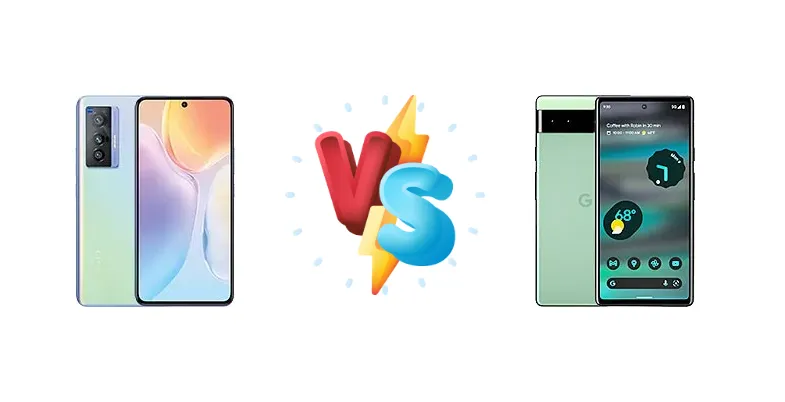
|
🏆 Quick Verdict
For the average user prioritizing computational photography and long-term software support, the Google Pixel 6a emerges as the winner. However, the vivo X70’s faster charging and potentially higher sustained performance in demanding tasks make it a strong contender for power users.
| PHONES | ||
|---|---|---|
| Phone Names | vivo X70 | Google Pixel 6a |
| Network | ||
|---|---|---|
| 2G bands | GSM 850 / 900 / 1800 / 1900 | GSM 850 / 900 / 1800 / 1900 |
| 3G bands | HSDPA 850 / 900 / 1700(AWS) / 1900 / 2100 | HSDPA 800 / 850 / 900 / 1700(AWS) / 1900 / 2100 |
| 4G bands | 1, 2, 3, 4, 5, 7, 8, 18, 19, 20, 26, 28, 38, 39, 40, 41 - International | 1, 2, 3, 4, 5, 7, 8, 12, 13, 14, 17, 18, 19, 20, 25, 26, 28, 29, 30, 38, 39, 40, 41, 42, 48, 66, 71 - GX7AS, GB62Z (USA/Canada) |
| 5G bands | 1, 3, 5, 7, 28, 40, 41, 78 SA/NSA - International | 1, 2, 3, 5, 7, 8, 12, 20, 25, 28, 30, 38, 40, 41, 48, 66, 71, 77, 78 SA/NSA/Sub6 - GX7AS (USA/Canada) |
| Speed | HSPA, LTE, 5G | HSPA, LTE, 5G |
| Technology | GSM / CDMA / HSPA / EVDO / LTE / 5G | GSM / HSPA / LTE / 5G |
| - | 1, 2, 3, 5, 7, 8, 12, 20, 25, 28, 30, 40, 48, 66, 71, 77, 78 SA/NSA/Sub6 - G1AZG (International) | |
| Launch | ||
|---|---|---|
| Announced | 2021, September 09 | 2022, May 11 |
| Status | Available. Released 2021, September 30 | Available. Released 2022, July 21 |
| Body | ||
|---|---|---|
| Build | - | Glass front (Gorilla Glass 3), aluminum frame, plastic back |
| Dimensions | 160.1 x 75.4 x 7.6 mm (6.30 x 2.97 x 0.30 in) | 152.2 x 71.8 x 8.9 mm (5.99 x 2.83 x 0.35 in) |
| SIM | Nano-SIM + Nano-SIM | Nano-SIM + eSIM |
| Weight | 181/182 g (6.42 oz) | 178 g (6.28 oz) |
| - | IP67 dust/water resistant (up to 1m for 30 min) | |
| Display | ||
|---|---|---|
| Protection | - | Corning Gorilla Glass 3 |
| Resolution | 1080 x 2376 pixels (~398 ppi density) | 1080 x 2400 pixels, 20:9 ratio (~429 ppi density) |
| Size | 6.56 inches, 104.6 cm2 (~86.6% screen-to-body ratio) | 6.1 inches, 90.7 cm2 (~83.0% screen-to-body ratio) |
| Type | AMOLED, 120Hz, HDR10+ | OLED, HDR |
| - | Always-on display | |
| Platform | ||
|---|---|---|
| CPU | Octa-core (1x3.0 GHz Cortex-A78 & 3x2.6 GHz Cortex-A78 & 4x2.0 GHz Cortex-A55) | Octa-core (2x2.80 GHz Cortex-X1 & 2x2.25 GHz Cortex-A76 & 4x1.80 GHz Cortex-A55) |
| Chipset | Mediatek Dimensity 1200 (6 nm) | Google Tensor (5 nm) |
| GPU | Mali-G77 MC9 | Mali-G78 MP20 |
| OS | Android 11, upgradable to Android 14, Funtouch OS 14 (International), OriginOS (China) | Android 12, upgradable to Android 15, up to 5 major Android upgrades |
| Memory | ||
|---|---|---|
| Card slot | No | No |
| Internal | 128GB 8GB RAM, 128GB 12GB RAM, 256GB 8GB RAM, 256GB 12GB RAM | 128GB 6GB RAM |
| - | UFS 3.1 | |
| Main Camera | ||
|---|---|---|
| Dual | - | 12.2 MP, f/1.7, 27mm, (wide), 1/2.55", 1.4µm, dual pixel PDAF, OIS 12 MP, f/2.2, 17mm, 114˚ (ultrawide), 1.25µm |
| Features | Zeiss optics, Zeiss T* lens coating, color spectrum sensor, Pixel Shift, dual-LED dual-tone flash, HDR, panorama | Dual-LED flash, Pixel Shift, Auto-HDR, panorama |
| Quad | 40 MP, f/1.9, (wide), 1.0µm, PDAF 12 MP, f/2.0, 50mm (telephoto), 1/2.93", 1.22µm, PDAF, 2x optical zoom 12 MP, f/2.2, 16mm, 116˚ (ultrawide), 1/3.1", 1.12µm | - |
| Single | - | 8 MP, f/2.0, 24mm (wide), 1.12µm |
| Video | 4K@30/60fps, 1080p@30/60fps, gyro-EIS, HDR10+ | 4K@30/60fps, 1080p@30/60/120/240fps; gyro-EIS, OIS |
| Selfie camera | ||
|---|---|---|
| Features | HDR | HDR, panorama |
| Single | 32 MP, f/2.5, 24mm (wide), 1/2.8", 0.8µm | 8 MP, f/2.0, 24mm (wide), 1.12µm |
| Video | 1080p@30fps | 1080p@30fps |
| Sound | ||
|---|---|---|
| 3.5mm jack | No | No |
| 35mm jack | No | No |
| Loudspeaker | Yes | Yes, with stereo speakers |
| Comms | ||
|---|---|---|
| Bluetooth | 5.2, A2DP, LE, aptX HD | 5.2, A2DP, LE |
| NFC | Yes | Yes |
| Positioning | GPS (L1+L5), GLONASS, BDS, GALILEO, QZSS, NavIC | GPS, GLONASS, GALILEO, QZSS |
| Radio | No | No |
| USB | USB Type-C 2.0, OTG | USB Type-C 3.1 |
| WLAN | Wi-Fi 802.11 a/b/g/n/ac/6, dual-band, Wi-Fi Direct | Wi-Fi 802.11 a/b/g/n/ac/6e, dual-band, Wi-Fi Direct |
| Features | ||
|---|---|---|
| Sensors | Fingerprint (under display, optical), accelerometer, gyro, proximity, compass | Fingerprint (under display, optical), accelerometer, gyro, proximity, compass, barometer |
| Battery | ||
|---|---|---|
| Charging | 44W wired 5W reverse wired | 18W wired, PD3.0 |
| Type | 4400 mAh | Li-Po 4410 mAh |
| Misc | ||
|---|---|---|
| Colors | Cosmic Black, Aurora Dawn, White | Chalk, Charcoal, Sage |
| Models | V2133A, V2104 | GX7AS, GB62Z, G1AZG, GB17L |
| Price | About 520 EUR | $ 138.99 / C$ 228.74 / ₹ 23,999 |
| Tests | ||
|---|---|---|
| Battery life | - | Endurance rating 94h |
| Display | - | Contrast ratio: Infinite (nominal) |
vivo X70
- Faster 44W wired charging
- Potentially higher sustained CPU performance
- 5W reverse wired charging
- Software update support may be less consistent
- Camera image processing may not be as refined as Pixel
Google Pixel 6a
- Exceptional camera image processing
- Guaranteed software updates from Google
- Optimized for Google’s AI features
- Slower 18W wired charging
- Less powerful GPU for demanding games
Display Comparison
The Pixel 6a boasts a brighter display, reaching a measured 876 nits, which translates to better outdoor visibility compared to the X70 (brightness data unavailable). While the X70’s panel specifics are unknown, the Pixel 6a’s ‘Infinite’ contrast ratio (nominal) suggests a superior OLED experience. Both phones likely utilize OLED technology, but the Pixel 6a’s higher peak brightness is a tangible advantage for users frequently exposed to sunlight. The lack of high refresh rate on either device is a notable omission in this price bracket.
Camera Comparison
Both phones excel in photography, but approach it differently. The Pixel 6a leverages Google’s renowned computational photography, extracting detail and dynamic range through software. While the X70’s camera specs are not detailed, vivo often focuses on hardware – larger sensors and advanced optics. The Pixel 6a’s image processing is known for its realistic color reproduction and excellent low-light performance. The X70 may offer more versatility with potentially more manual controls, but the Pixel 6a’s consistent results and software features are a significant draw. The absence of telephoto lenses on both phones limits optical zoom capabilities.
Performance
The core difference lies in the chipsets. The vivo X70’s Mediatek Dimensity 1200 (6nm) features a tri-cluster configuration with a high-clocked Cortex-A78 core at 3.0 GHz, geared towards peak performance. Conversely, the Google Pixel 6a’s Tensor chip (5nm) prioritizes AI and machine learning tasks. The 5nm process node of the Tensor chip offers better power efficiency, potentially leading to improved sustained performance and thermal management. While the X70’s CPU clock speeds appear higher on paper, the Tensor’s architecture and dedicated AI cores give it an edge in tasks like image processing and voice recognition. The Pixel 6a’s Tensor chip is also optimized for Google’s software features.
Battery Life
Both the vivo X70 and Google Pixel 6a achieve an endurance rating of 94 hours, indicating similar overall battery life. However, their charging approaches differ significantly. The X70 supports 44W wired charging, allowing for a much faster 0-100% charge compared to the Pixel 6a’s 18W wired charging with PD3.0. The X70 also offers 5W reverse wired charging, a feature absent on the Pixel 6a. While both phones provide all-day battery life for typical usage, the X70’s faster charging is a clear convenience advantage.
Buying Guide
Buy the vivo X70 if you need consistently fast performance for gaming or demanding applications and value quicker charging speeds. Buy the Google Pixel 6a if you prioritize a clean Android experience, exceptional camera image processing, and guaranteed software updates directly from Google. The Pixel 6a is the better choice for those deeply integrated into the Google ecosystem.