
Vivo X70 Pro+ vs Sony Xperia 1 III: A Deep Dive into Flagship Android
| Phones Images | |||||
|---|---|---|---|---|---|
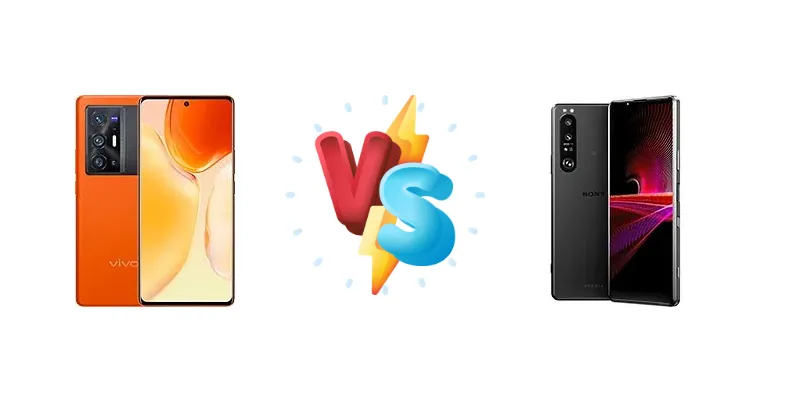
|
🏆 Quick Verdict
For most users, the vivo X70 Pro+ emerges as the stronger all-rounder. Its superior camera system, coupled with significantly faster charging speeds (55W vs 30W), provides a more convenient and feature-rich experience. However, the Xperia 1 III’s display and creator tools appeal to a niche audience.
| PHONES | ||
|---|---|---|
| Phone Names | vivo X70 Pro+ | Sony Xperia 1 III |
| Network | ||
|---|---|---|
| 2G bands | GSM 850 / 900 / 1800 / 1900 | GSM 850 / 900 / 1800 / 1900 |
| 3G bands | HSDPA 850 / 900 / 1700(AWS) / 1900 / 2100 | HSDPA 800 / 850 / 900 / 1700(AWS) / 1900 / 2100 |
| 4G bands | 1, 2, 3, 4, 5, 7, 8, 12, 17, 18, 19, 20, 26, 28, 34, 38, 39, 40, 41, 42, 66 | 1, 2, 3, 4, 5, 7, 8, 12, 13, 17, 19, 20, 25, 26, 28, 29, 32, 34, 38, 39, 40, 41, 46, 66 - Europe |
| 5G bands | 1, 3, 5, 8, 28, 38, 40, 41, 77, 78, 79 SA/NSA | 1, 3, 5, 7, 8, 20, 28, 38, 40, 41, 77, 78 SA/NSA/Sub6 - Europe |
| Speed | HSPA, LTE, 5G | HSPA, LTE, 5G |
| Technology | GSM / CDMA / HSPA / EVDO / LTE / 5G | GSM / HSPA / LTE / 5G |
| - | SA/NSA/Sub6/mmWave - USA (specific) | |
| Launch | ||
|---|---|---|
| Announced | 2021, September 09 | 2021, April 14 |
| Status | Available. Released 2021, September 17 | Available. Released 2021, August 25 |
| Body | ||
|---|---|---|
| Build | Glass front, glass back or silicone polymer back (eco leather), aluminum frame | Glass front (Gorilla Glass Victus), glass back (Gorilla Glass 6), aluminum frame |
| Dimensions | 164.5 x 75.2 x 8.9 mm (6.48 x 2.96 x 0.35 in) | 165 x 71 x 8.2 mm (6.50 x 2.80 x 0.32 in) |
| SIM | Nano-SIM + Nano-SIM | Nano-SIM + Nano-SIM |
| Weight | 209 g / 213 g (7.37 oz) | 186 g / 187.1 g (mmWave) (6.56 oz) |
| - | IP65/IP68 dust/water resistant (up to 1.5m for 30 min) | |
| Display | ||
|---|---|---|
| Protection | - | Corning Gorilla Glass Victus |
| Resolution | 1440 x 3200 pixels, 20:9 ratio (~517 ppi density) | 1644 x 3840 pixels, 21:9 ratio (~643 ppi density) |
| Size | 6.78 inches, 111.4 cm2 (~90.1% screen-to-body ratio) | 6.5 inches, 98.6 cm2 (~84.2% screen-to-body ratio) |
| Type | LTPO AMOLED, 1B colors, 120Hz, HDR10+, 500 nits (typ), 1000 nits (HBM), 1500 nits (peak) | OLED, 1B colors, 120Hz, HDR BT.2020 |
| - | Runs at 1096 x 2560 pixels except for select use cases | |
| Platform | ||
|---|---|---|
| CPU | Octa-core (1x3.0 GHz Cortex-X1 & 3x2.42 GHz Cortex-A78 & 4x1.80 GHz Cortex-A55) | Octa-core (1x2.84 GHz Cortex-X1 & 3x2.42 GHz Cortex-A78 & 4x1.80 GHz Cortex-A55) |
| Chipset | Qualcomm SM8350 Snapdragon 888+ 5G (5 nm) | Qualcomm SM8350 Snapdragon 888 5G (5 nm) |
| GPU | Adreno 660 | Adreno 660 |
| OS | Android 11, upgradable to Android 14, Funtouch OS 14 (International), OriginOS 1.0 (China) | Android 11, upgradable to Android 13 |
| Memory | ||
|---|---|---|
| Card slot | No | microSDXC (uses shared SIM slot) |
| Internal | 256GB 8GB RAM, 256GB 12GB RAM, 512GB 12GB RAM | 256GB 12GB RAM, 512GB 12GB RAM |
| - | UFS 3.X | |
| Main Camera | ||
|---|---|---|
| Features | Laser AF, color spectrum sensor, Zeiss optics, Zeiss T* lens coating, Pixel Shift, dual-LED dual-tone flash, HDR, panorama | Zeiss optics, Zeiss T* lens coating, color spectrum sensor, LED flash, panorama, HDR, eye tracking |
| Quad | 50 MP, f/1.6, (wide), 1/1.31", 1.2µm, PDAF, OIS 8 MP, f/3.4, 125mm (periscope telephoto), 1/4.4", 1.0µm, PDAF, OIS, 5x optical zoom 12 MP, f/1.6, 50mm (telephoto), 1/2.93", 1.22µm, PDAF, OIS, 2x optical zoom 48 MP, f/2.2, 14mm, 114˚ (ultrawide), 1/2.0", 0.8µm, AF, gimbal OIS | - |
| Single | - | 8 MP, f/2.0, 24mm (wide), 1/4", 1.12µm |
| Triple | - | 12 MP, f/1.7, 24mm (wide), 1/1.7", 1.8µm, dual pixel PDAF, OIS 12 MP, f/2.3, 70mm (telephoto), f/2.8, 105mm (telephoto), 1/2.9", dual pixel PDAF, 3x/4.4x optical zoom, OIS 12 MP, f/2.2, 124˚, 16mm (ultrawide), 1/2.6", dual pixel PDAF 0.3 MP, TOF 3D, (depth) |
| Video | 8K@30fps, 4K@30/60fps, 1080p@30/60fps, gyro-EIS, HDR10+ | 4K@24/25/30/60/120fps HDR, 1080p@30/60/120fps; 5-axis gyro-EIS, OIS |
| Selfie camera | ||
|---|---|---|
| Features | HDR | HDR |
| Single | 32 MP, f/2.5, 24mm (wide), 1/2.8", 0.8µm | 8 MP, f/2.0, 24mm (wide), 1/4.0", 1.12µm |
| Video | 1080p@30fps | 1080p@30fps, 5-axis gyro-EIS |
| Sound | ||
|---|---|---|
| 3.5mm jack | - | Yes |
| 35mm jack | No | Yes |
| Loudspeaker | Yes, with stereo speakers | Yes, with stereo speakers |
| - | 24-bit/192kHz audio Dynamic vibration system | |
| Comms | ||
|---|---|---|
| Bluetooth | 5.2, A2DP, LE, aptX HD, aptX Adaptive | 5.2, A2DP, LE, aptX HD, aptX Adaptive |
| Infrared port | Yes | - |
| NFC | Yes | Yes |
| Positioning | GPS (L1+L5), GLONASS, BDS, GALILEO, QZSS | GPS, GLONASS, BDS, GALILEO, QZSS |
| Radio | No | No |
| USB | USB Type-C 3.1, OTG | USB Type-C 3.1, OTG, video output |
| WLAN | Wi-Fi 802.11 a/b/g/n/ac/6, dual-band, Wi-Fi Direct | Wi-Fi 802.11 a/b/g/n/ac/6, dual-band, Wi-Fi Direct, DLNA |
| Features | ||
|---|---|---|
| Sensors | Fingerprint (under display, optical), accelerometer, gyro, proximity, compass | Fingerprint (side-mounted), accelerometer, gyro, proximity, barometer, compass |
| - | Native Sony Alpha camera support | |
| Battery | ||
|---|---|---|
| Charging | 55W wired 50W wireless 10W reverse wireless 5W reverse wired | 30W wired, PD, 50% in 30 min Wireless Reverse wireless |
| Type | 4500 mAh | Li-Po 4500 mAh |
| Misc | ||
|---|---|---|
| Colors | Black, Blue, Orange | Frosted Black, Frosted Gray, Frosted Purple |
| Models | V2145A, V2114 | XQBC62/V, XQBC52V.UKCX, SO-51B, SOG03, A101SO, XQ-BC62, XQ-BC72, XQ-BC52, XQ-BC01, XQ-BC11, XQ-BC21, XQ-BC72 |
| Price | About 720 EUR | € 505.26 / $ 903.43 |
| Tests | ||
|---|---|---|
| Battery life | - | Endurance rating 82h |
| Camera | - | Photo / Video |
| Display | - | Contrast ratio: Infinite (nominal) |
| Loudspeaker | - | -26.5 LUFS (Good) |
| Performance | - | AnTuTu: 607423 (v8) GeekBench: 3515 (v5.1) GFXBench: 54fps (ES 3.1 onscreen) |
vivo X70 Pro+
- Significantly faster charging (55W wired, 50W wireless)
- Potentially superior camera performance in various scenarios
- Higher peak display brightness for outdoor visibility
- Software experience may not appeal to purists
- Lack of detailed display specifications (PWM dimming)
Sony Xperia 1 III
- Unique 21:9 display for immersive multimedia
- Emphasis on manual camera controls and natural image processing
- Creator-focused features and software
- Slower charging speeds (30W wired)
- Lower peak display brightness
- 21:9 aspect ratio may cause app compatibility issues
Display Comparison
The Xperia 1 III boasts an infinite contrast ratio, indicative of its OLED panel, but falls behind the X70 Pro+ in peak brightness, measuring 620 nits compared to the vivo’s 1022 nits. This difference translates to better outdoor visibility for the X70 Pro+. While both utilize the Snapdragon 888 series, the Xperia 1 III’s 21:9 aspect ratio is a defining feature, catering to multimedia consumption and multitasking, but potentially causing compatibility issues with some apps. The X70 Pro+’s more conventional aspect ratio offers broader compatibility. Neither specification details PWM dimming rates, a crucial factor for users sensitive to flicker.
Camera Comparison
Both devices excel in camera capabilities, but approach it differently. While both are capable of excellent photo and video, the X70 Pro+’s camera system is likely to be more versatile due to its focus on computational photography and potentially larger sensors (details not provided). Sony emphasizes manual control and a more ‘natural’ image processing style, appealing to photography enthusiasts. The lack of specific sensor size information prevents a definitive comparison, but the X70 Pro+’s reputation suggests a stronger emphasis on low-light performance. Both phones offer video recording, but the X70 Pro+'s faster charging allows for more recording time between charges.
Performance
Both phones are powered by the Qualcomm Snapdragon 888 series, but the X70 Pro+ features the slightly more powerful Snapdragon 888+ 5G (5nm) versus the standard Snapdragon 888 (5nm) in the Xperia 1 III. While the CPU core configuration is largely identical – Octa-core (1x3.0 GHz Cortex-X1 & 3x2.42 GHz Cortex-A78 & 4x1.80 GHz Cortex-A55) for the X70 Pro+ and (1x2.84 GHz Cortex-X1 & 3x2.42 GHz Cortex-A78 & 4x1.80 GHz Cortex-A55) for the Xperia 1 III – the higher clock speed of the X70 Pro+’s prime core offers a marginal performance advantage. Thermal management will be key, and without detailed testing data, it’s difficult to definitively say which phone sustains peak performance for longer.
Battery Life
Both phones achieve similar endurance ratings – 84 hours for the X70 Pro+ and 82 hours for the Xperia 1 III – despite the X70 Pro+ having a potentially smaller battery (size not specified). This is largely due to the X70 Pro+’s significantly faster charging capabilities. 55W wired, 50W wireless, and even 10W reverse wireless charging provide unparalleled convenience, allowing for a full charge in under an hour. The Xperia 1 III’s 30W wired charging, while supporting PD and reaching 50% in 30 minutes, is considerably slower. The inclusion of reverse wireless and wired charging on the X70 Pro+ adds further utility.
Buying Guide
Buy the vivo X70 Pro+ if you need a consistently excellent camera system, particularly for stills, and value blazing-fast charging. It’s ideal for social media enthusiasts and those who prioritize convenience. Buy the Sony Xperia 1 III if you’re a content creator who demands precise color accuracy, manual camera controls, and a unique cinematic display experience, and are willing to trade some battery convenience for these features.