
vivo X60t Pro+ vs vivo X70 Pro+: A Detailed Showdown
| Phones Images | |||||
|---|---|---|---|---|---|
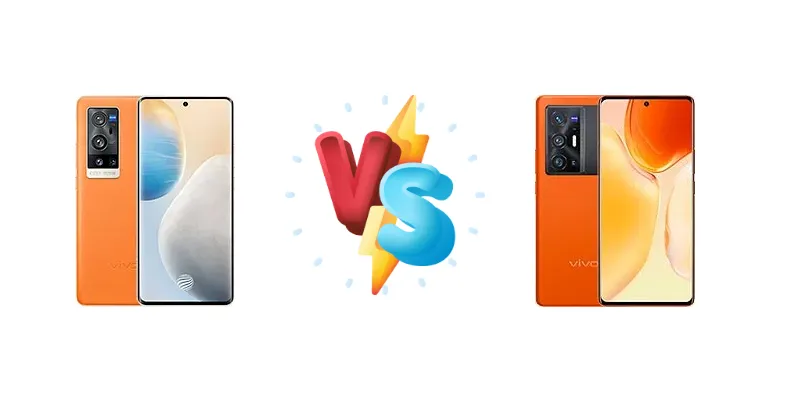
|
🏆 Quick Verdict
The vivo X70 Pro+ edges out the X60t Pro+ thanks to its improved CPU clock speed, wireless charging, reverse wireless charging, and potentially superior camera capabilities. While the X60t Pro+ remains a strong contender, the X70 Pro+ offers a more complete and refined flagship experience.
| PHONES | ||
|---|---|---|
| Phone Names | vivo X60t Pro+ | vivo X70 Pro+ |
| Network | ||
|---|---|---|
| 2G bands | GSM 850 / 900 / 1800 / 1900 - SIM 1 & SIM 2 | GSM 850 / 900 / 1800 / 1900 - SIM 1 & SIM 2 |
| 3G bands | HSDPA 850 / 900 / 1700(AWS) / 1900 / 2100 | HSDPA 850 / 900 / 1700(AWS) / 1900 / 2100 |
| 4G bands | 1, 2, 3, 4, 7, 8, 12, 17, 20, 26, 28, 34, 38, 39, 40, 41 | 1, 2, 3, 4, 5, 7, 8, 12, 17, 18, 19, 20, 26, 28, 34, 38, 39, 40, 41, 42, 66 |
| 5G bands | 1, 3, 28, 38, 41, 77, 78, 79 SA/NSA | 1, 3, 5, 8, 28, 38, 40, 41, 77, 78 SA/NSA - International |
| Speed | HSPA, LTE-A, 5G | HSPA, LTE-A, 5G |
| Technology | GSM / CDMA / HSPA / CDMA2000 / LTE / 5G | GSM / CDMA / HSPA / EVDO / LTE / 5G |
| CDMA2000 1x | 1, 3, 5, 8, 28, 38, 40, 41, 77, 78, 79 SA/NSA - China | |
| Launch | ||
|---|---|---|
| Announced | 2021, June 28 | 2021, September 09 |
| Status | Available. Released 2021, June 28 | Available. Released 2021, September 17 |
| Body | ||
|---|---|---|
| Build | Glass front, eco leather back, aluminum frame | - |
| Dimensions | 158.6 x 73.4 x 9.1 mm (6.24 x 2.89 x 0.36 in) | 164.5 x 75.2 x 8.9 mm (6.48 x 2.96 x 0.35 in) |
| SIM | Dual SIM (Nano-SIM, dual stand-by) | Dual SIM (Nano-SIM, dual stand-by) |
| Weight | 191 g (6.74 oz) | 209 g / 213 g (7.37 oz) |
| - | IP68 dust/water resistant (up to 1.5m for 30 min) | |
| Display | ||
|---|---|---|
| Resolution | 1080 x 2376 pixels (~398 ppi density) | 1440 x 3200 pixels, 20:9 ratio (~517 ppi density) |
| Size | 6.56 inches, 104.6 cm2 (~89.8% screen-to-body ratio) | 6.78 inches, 111.4 cm2 (~90.1% screen-to-body ratio) |
| Type | Super AMOLED, 120Hz, HDR10+, 1300 nits (peak) | LTPO AMOLED, 1B colors, 120Hz, HDR10+, 500 nits (typ), 1000 nits (HBM), 1500 nits (peak) |
| Platform | ||
|---|---|---|
| CPU | Octa-core (1x2.84 GHz Cortex-X1 & 3x2.42 GHz Cortex-A78 & 4x1.80 GHz Cortex-A55 | Octa-core (1x3.0 GHz Cortex-X1 & 3x2.42 GHz Cortex-A78 & 4x1.80 GHz Cortex-A55) |
| Chipset | Qualcomm SM8350 Snapdragon 888 5G (5 nm) | Qualcomm SM8350 Snapdragon 888+ 5G (5 nm) |
| GPU | Adreno 660 | Adreno 660 |
| OS | Android 11, OriginOS 1.0 | Android 11, Funtouch OS 12 (International), OriginOS 1.0 (China) |
| Memory | ||
|---|---|---|
| Card slot | No | No |
| Internal | 128GB 8GB RAM, 256GB 8GB RAM, 256GB 12GB RAM | 256GB 8GB RAM, 256GB 12GB RAM, 512GB 12GB RAM |
| UFS 3.1 | UFS 3.1 | |
| Main Camera | ||
|---|---|---|
| Features | Zeiss optics, Zeiss T* lens coating, Pixel Shift, dual-LED dual-tone flash, HDR, panorama | Zeiss optics, Zeiss T* lens coating, Pixel Shift, dual-LED dual-tone flash, HDR, panorama |
| Quad | 50 MP, f/1.6, (wide), 1/1.31", 1.2µm, dual pixel PDAF, Laser AF, OIS 8 MP, f/3.4, 125mm (periscope telephoto), 1/4.0", PDAF, OIS, 5x optical zoom 12 MP, f/2.0, 50mm (telephoto), PDAF, 2x optical zoom 48 MP, 114˚ (ultrawide), 1/2.0", 0.8µm, gimbal OIS, PDAF | 50 MP, f/1.6, (wide), 1/1.31", 1.2µm, PDAF, Laser AF, OIS 8 MP, f/3.4, 125mm (periscope telephoto), 1/4.4", 1.0µm, PDAF, OIS, 5x optical zoom 12 MP, f/1.6, 50mm (telephoto), 1/2.93", 1.22µm, PDAF, OIS, 2x optical zoom 48 MP, f/2.2, 14mm, 114˚ (ultrawide), 1/2.0", 0.8µm, AF, gimbal OIS |
| Single | 32 MP, f/2.5, 24mm (wide), 1/2.8", 0.8µm | 32 MP, f/2.5, 24mm (wide), 1/2.8", 0.8µm |
| Video | 8K@30fps, 4K@30/60fps, 1080p@30/60fps, gyro-EIS, HDR10+ | 8K@30fps, 4K@30/60fps, 1080p@30/60fps, gyro-EIS, HDR10+ |
| Selfie camera | ||
|---|---|---|
| Features | HDR | HDR |
| Single | 32 MP, f/2.5, 24mm (wide), 1/2.8", 0.8µm | 32 MP, f/2.5, 24mm (wide), 1/2.8", 0.8µm |
| Video | 1080p@30fps | 1080p@30fps |
| Sound | ||
|---|---|---|
| 3.5mm jack | No | No |
| Loudspeaker | Yes | Yes, with stereo speakers |
| 32-bit/192kHz audio | 32-bit/192kHz audio | |
| Comms | ||
|---|---|---|
| Bluetooth | 5.2, A2DP, LE, aptX HD | 5.2, A2DP, LE, aptX HD, aptX Adaptive |
| Infrared port | - | Yes |
| NFC | Yes | Yes |
| Positioning | GPS (L1+L5), GLONASS, BDS, GALILEO, NavIC | GPS (L1+L5), GLONASS, BDS, GALILEO, QZSS |
| Radio | No | No |
| USB | USB Type-C 2.0, OTG | USB Type-C 3.1, OTG |
| WLAN | Wi-Fi 802.11 a/b/g/n/ac/6, dual-band, Wi-Fi Direct | Wi-Fi 802.11 a/b/g/n/ac/6, dual-band, Wi-Fi Direct |
| Features | ||
|---|---|---|
| Sensors | Fingerprint (under display, optical), accelerometer, gyro, compass, color spectrum | Fingerprint (under display, optical), accelerometer, gyro, proximity, compass, color spectrum |
| Virtual proximity sensing | - | |
| Battery | ||
|---|---|---|
| Charging | 55W wired | 55W wired 50W wireless Reverse wireless 5W reverse wired |
| Type | Li-Po 4200 mAh, non-removable | Li-Po 4500 mAh, non-removable |
| Misc | ||
|---|---|---|
| Colors | Orange, Emperor Blue | Black, Blue, Orange |
| Models | V2056A | V2145A, V2114 |
| Price | About 650 EUR | About 720 EUR |
| SAR | 0.80 W/kg (head) 0.47 W/kg (body) | - |
| Tests | ||
|---|---|---|
| Battery life | - | Endurance rating 84h |
| Camera | - | Photo / Video |
| Display | - | Contrast ratio: Infinite (nominal) |
| Loudspeaker | - | -24.8 LUFS (Very good) |
| Performance | - | AnTuTu: 837833 (v9) GeekBench: 3469 (v5.1) GFXBench: 33fps (ES 3.1 onscreen) |
vivo X60t Pro+
- Excellent performance with Snapdragon 888
- Sleek design
- Fast 55W wired charging
- Competitive price
- No wireless charging
- Potentially slightly less advanced camera than X70 Pro+
vivo X70 Pro+
- Improved CPU clock speed (Snapdragon 888+)
- 50W wireless charging
- Reverse wireless charging
- Potentially superior camera system
- Excellent battery life (84h endurance)
- Higher price
- Design may be similar to X60t Pro+
Display Comparison
Both phones likely feature high-quality AMOLED displays with vibrant colors and excellent brightness. The X70 Pro+ boasts a 'nominal infinite' contrast ratio, suggesting exceptional blacks and dynamic range, though real-world performance may vary. Expect similar resolution and refresh rates (likely 120Hz) on both devices.
Camera Comparison
vivo is known for its camera prowess. While both phones feature excellent camera systems, the X70 Pro+ is expected to have improvements in image processing and potentially hardware. Expect excellent low-light performance and detailed photos on both, but the X70 Pro+ may offer a more refined and consistent experience. Specific camera specs (sensor sizes, aperture) would be needed for a more precise comparison.
Performance
The X70 Pro+ holds a slight advantage with its Snapdragon 888+ chipset, featuring a slightly higher CPU clock speed (3.0 GHz vs 2.84 GHz on the X60t Pro+). This translates to marginally faster performance in demanding tasks and games. Both phones will handle everyday use and multitasking with ease.
Battery Life
The X70 Pro+ boasts an impressive endurance rating of 84h, suggesting superior battery optimization or a slightly larger battery capacity. Both phones offer 55W wired charging, but the X70 Pro+ adds 50W wireless charging and reverse wireless charging capabilities, providing added convenience.
Buying Guide
The vivo X60t Pro+ is a great choice for users prioritizing raw performance and a slightly more budget-friendly price point. The vivo X70 Pro+ is ideal for those who value wireless charging, reverse wireless charging, and potentially a more advanced camera system, and are willing to pay a premium for those features.