
vivo X60t Pro+ vs Sony Xperia 1 III: A Deep Dive into Snapdragon 888 Flagships
| Phones Images | |||||
|---|---|---|---|---|---|
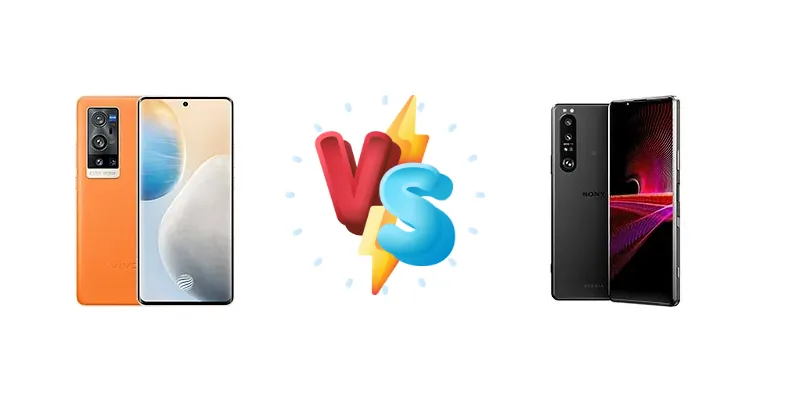
|
🏆 Quick Verdict
For most users, the vivo X60t Pro+ emerges as the more compelling option. Its significantly faster 55W charging and comparable performance, given the identical Snapdragon 888 chipset, offer a more convenient daily experience. While the Xperia 1 III boasts excellent battery endurance, the charging trade-off is substantial.
| PHONES | ||
|---|---|---|
| Phone Names | vivo X60t Pro+ | Sony Xperia 1 III |
| Network | ||
|---|---|---|
| 2G bands | GSM 850 / 900 / 1800 / 1900 - SIM 1 & SIM 2 | GSM 850 / 900 / 1800 / 1900 |
| 3G bands | HSDPA 850 / 900 / 1700(AWS) / 1900 / 2100 | HSDPA 800 / 850 / 900 / 1700(AWS) / 1900 / 2100 |
| 4G bands | 1, 2, 3, 4, 7, 8, 12, 17, 20, 26, 28, 34, 38, 39, 40, 41 | 1, 2, 3, 4, 5, 7, 8, 12, 13, 17, 19, 20, 25, 26, 28, 29, 32, 34, 38, 39, 40, 41, 46, 66 - Europe |
| 5G bands | 1, 3, 28, 38, 41, 77, 78, 79 SA/NSA | 1, 3, 5, 7, 8, 20, 28, 38, 40, 41, 77, 78 SA/NSA/Sub6 - Europe |
| Speed | HSPA, LTE-A, 5G | HSPA, LTE, 5G |
| Technology | GSM / CDMA / HSPA / CDMA2000 / LTE / 5G | GSM / HSPA / LTE / 5G |
| CDMA2000 1x | SA/NSA/Sub6/mmWave - USA (specific) | |
| Launch | ||
|---|---|---|
| Announced | 2021, June 28 | 2021, April 14 |
| Status | Available. Released 2021, June 28 | Available. Released 2021, August 25 |
| Body | ||
|---|---|---|
| Build | Glass front, eco leather back, aluminum frame | Glass front (Gorilla Glass Victus), glass back (Gorilla Glass 6), aluminum frame |
| Dimensions | 158.6 x 73.4 x 9.1 mm (6.24 x 2.89 x 0.36 in) | 165 x 71 x 8.2 mm (6.50 x 2.80 x 0.32 in) |
| SIM | Dual SIM (Nano-SIM, dual stand-by) | Nano-SIM + Nano-SIM |
| Weight | 191 g (6.74 oz) | 186 g / 187.1 g (mmWave) (6.56 oz) |
| - | IP65/IP68 dust/water resistant (up to 1.5m for 30 min) | |
| Display | ||
|---|---|---|
| Protection | - | Corning Gorilla Glass Victus |
| Resolution | 1080 x 2376 pixels (~398 ppi density) | 1644 x 3840 pixels, 21:9 ratio (~643 ppi density) |
| Size | 6.56 inches, 104.6 cm2 (~89.8% screen-to-body ratio) | 6.5 inches, 98.6 cm2 (~84.2% screen-to-body ratio) |
| Type | Super AMOLED, 120Hz, HDR10+, 1300 nits (peak) | OLED, 1B colors, 120Hz, HDR BT.2020 |
| - | Runs at 1096 x 2560 pixels except for select use cases | |
| Platform | ||
|---|---|---|
| CPU | Octa-core (1x2.84 GHz Cortex-X1 & 3x2.42 GHz Cortex-A78 & 4x1.80 GHz Cortex-A55 | Octa-core (1x2.84 GHz Cortex-X1 & 3x2.42 GHz Cortex-A78 & 4x1.80 GHz Cortex-A55) |
| Chipset | Qualcomm SM8350 Snapdragon 888 5G (5 nm) | Qualcomm SM8350 Snapdragon 888 5G (5 nm) |
| GPU | Adreno 660 | Adreno 660 |
| OS | Android 11, OriginOS 1.0 | Android 11, upgradable to Android 13 |
| Memory | ||
|---|---|---|
| Card slot | No | microSDXC (uses shared SIM slot) |
| Internal | 128GB 8GB RAM, 256GB 8GB RAM, 256GB 12GB RAM | 256GB 12GB RAM, 512GB 12GB RAM |
| UFS 3.1 | UFS 3.X | |
| Main Camera | ||
|---|---|---|
| Features | Zeiss optics, Zeiss T* lens coating, Pixel Shift, dual-LED dual-tone flash, HDR, panorama | Zeiss optics, Zeiss T* lens coating, color spectrum sensor, LED flash, panorama, HDR, eye tracking |
| Quad | 50 MP, f/1.6, (wide), 1/1.31", 1.2µm, dual pixel PDAF, Laser AF, OIS 8 MP, f/3.4, 125mm (periscope telephoto), 1/4.0", PDAF, OIS, 5x optical zoom 12 MP, f/2.0, 50mm (telephoto), PDAF, 2x optical zoom 48 MP, 114˚ (ultrawide), 1/2.0", 0.8µm, gimbal OIS, PDAF | - |
| Single | 32 MP, f/2.5, 24mm (wide), 1/2.8", 0.8µm | 8 MP, f/2.0, 24mm (wide), 1/4", 1.12µm |
| Triple | - | 12 MP, f/1.7, 24mm (wide), 1/1.7", 1.8µm, dual pixel PDAF, OIS 12 MP, f/2.3, 70mm (telephoto), f/2.8, 105mm (telephoto), 1/2.9", dual pixel PDAF, 3x/4.4x optical zoom, OIS 12 MP, f/2.2, 124˚, 16mm (ultrawide), 1/2.6", dual pixel PDAF 0.3 MP, TOF 3D, (depth) |
| Video | 8K@30fps, 4K@30/60fps, 1080p@30/60fps, gyro-EIS, HDR10+ | 4K@24/25/30/60/120fps HDR, 1080p@30/60/120fps; 5-axis gyro-EIS, OIS |
| Selfie camera | ||
|---|---|---|
| Features | HDR | HDR |
| Single | 32 MP, f/2.5, 24mm (wide), 1/2.8", 0.8µm | 8 MP, f/2.0, 24mm (wide), 1/4.0", 1.12µm |
| Video | 1080p@30fps | 1080p@30fps, 5-axis gyro-EIS |
| Sound | ||
|---|---|---|
| 3.5mm jack | No | Yes |
| 35mm jack | - | Yes |
| Loudspeaker | Yes | Yes, with stereo speakers |
| 32-bit/192kHz audio | 24-bit/192kHz audio Dynamic vibration system | |
| Comms | ||
|---|---|---|
| Bluetooth | 5.2, A2DP, LE, aptX HD | 5.2, A2DP, LE, aptX HD, aptX Adaptive |
| NFC | Yes | Yes |
| Positioning | GPS (L1+L5), GLONASS, BDS, GALILEO, NavIC | GPS, GLONASS, BDS, GALILEO, QZSS |
| Radio | No | No |
| USB | USB Type-C 2.0, OTG | USB Type-C 3.1, OTG, video output |
| WLAN | Wi-Fi 802.11 a/b/g/n/ac/6, dual-band, Wi-Fi Direct | Wi-Fi 802.11 a/b/g/n/ac/6, dual-band, Wi-Fi Direct, DLNA |
| Features | ||
|---|---|---|
| Sensors | Fingerprint (under display, optical), accelerometer, gyro, compass, color spectrum | Fingerprint (side-mounted), accelerometer, gyro, proximity, barometer, compass |
| Virtual proximity sensing | Native Sony Alpha camera support | |
| Battery | ||
|---|---|---|
| Charging | 55W wired | 30W wired, PD, 50% in 30 min Wireless Reverse wireless |
| Type | Li-Po 4200 mAh, non-removable | Li-Po 4500 mAh |
| Misc | ||
|---|---|---|
| Colors | Orange, Emperor Blue | Frosted Black, Frosted Gray, Frosted Purple |
| Models | V2056A | XQBC62/V, XQBC52V.UKCX, SO-51B, SOG03, A101SO, XQ-BC62, XQ-BC72, XQ-BC52, XQ-BC01, XQ-BC11, XQ-BC21, XQ-BC72 |
| Price | About 650 EUR | € 505.26 / $ 903.43 |
| SAR | 0.80 W/kg (head) 0.47 W/kg (body) | - |
| Tests | ||
|---|---|---|
| Battery life | - | Endurance rating 82h |
| Camera | - | Photo / Video |
| Display | - | Contrast ratio: Infinite (nominal) |
| Loudspeaker | - | -26.5 LUFS (Good) |
| Performance | - | AnTuTu: 607423 (v8) GeekBench: 3515 (v5.1) GFXBench: 54fps (ES 3.1 onscreen) |
vivo X60t Pro+
- Significantly faster 55W charging
- Potentially more vibrant display (based on vivo's typical tuning)
- Competitive performance with Snapdragon 888
- Battery endurance not explicitly stated
- Camera details are lacking for a thorough comparison
Sony Xperia 1 III
- Excellent 82-hour battery endurance
- Brighter display (620 nits)
- Wireless and reverse wireless charging
- Slower 30W charging
- Potential for throttling under sustained load
Display Comparison
Both devices share a similar core processor, but their displays differ in subtle ways. The Sony Xperia 1 III boasts a measured peak brightness of 620 nits, suggesting a brighter outdoor viewing experience. While the X60t Pro+'s display specs aren't provided, vivo typically prioritizes color accuracy and vibrancy. The Xperia 1 III’s ‘Infinite’ contrast ratio (nominal) indicates a true black level, likely due to an OLED panel, which is standard for flagships. Without specific details on the X60t Pro+'s panel technology, it’s difficult to definitively declare a winner, but the Xperia 1 III’s brightness gives it a slight edge for outdoor usability.
Camera Comparison
Both phones are described as having 'Photo / Video' capabilities, but the specifics are absent. The Xperia 1 III is known for its emphasis on professional-grade photography and videography features, including extensive manual controls and support for various creative modes. The X60t Pro+ likely focuses on computational photography and AI-powered scene optimization. Without sensor size, aperture, or OIS details for either device, a direct comparison is challenging. However, Sony’s history suggests a focus on natural color reproduction and detail preservation, while vivo often leans towards more vibrant and saturated images. The absence of details on secondary cameras (ultrawide, telephoto) further complicates the assessment.
Performance
Both the vivo X60t Pro+ and the Sony Xperia 1 III are powered by the Qualcomm SM8350 Snapdragon 888 5G (5 nm) chipset, featuring an Octa-core CPU configuration (1x2.84 GHz Cortex-X1, 3x2.42 GHz Cortex-A78, and 4x1.80 GHz Cortex-A55). This means raw processing power will be nearly identical. However, thermal management and sustained performance could vary. The Xperia 1 III’s larger chassis *potentially* allows for a more effective cooling solution, mitigating the Snapdragon 888’s known tendency to throttle under prolonged load. Without detailed thermal testing data, it’s difficult to assess which device maintains peak performance for longer durations. Both devices likely utilize LPDDR5 RAM, contributing to fast application loading and multitasking.
Battery Life
The Sony Xperia 1 III boasts an impressive endurance rating of 82 hours, indicating excellent battery life. This is likely due to a combination of efficient software optimization and a potentially larger battery capacity (though the exact mAh is not specified). The vivo X60t Pro+ offers 55W wired charging, significantly faster than the Xperia 1 III’s 30W wired charging with PD, which achieves 50% charge in 30 minutes. The Xperia 1 III also supports wireless and reverse wireless charging, adding convenience. While the Xperia 1 III excels in longevity, the X60t Pro+'s faster charging is a significant advantage for users who frequently need to top up their battery quickly.
Buying Guide
Buy the vivo X60t Pro+ if you prioritize rapid charging and a generally more streamlined user experience. It’s ideal for power users who need to quickly top up their battery throughout the day. Buy the Sony Xperia 1 III if you value exceptional battery life and a more photography-focused experience, and are willing to accept slower charging speeds. It caters to users who prefer a more deliberate, professional approach to mobile photography and videography.