
vivo X60 Pro+ vs Sony Xperia 1 III: A Detailed Comparison of Snapdragon Flagships
| Phones Images | |||||
|---|---|---|---|---|---|
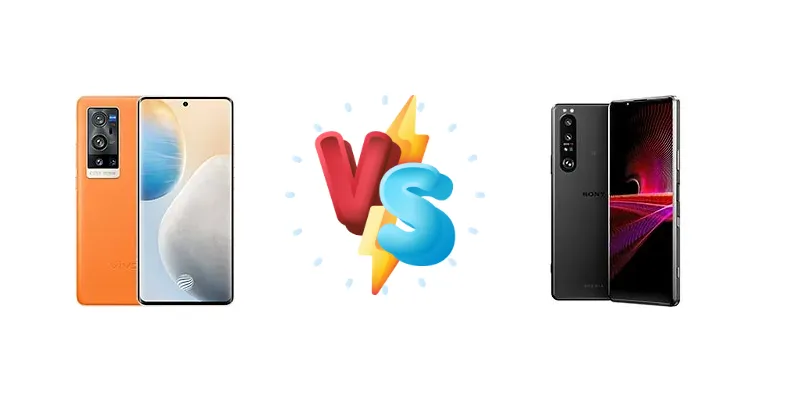
|
🏆 Quick Verdict
For the average user prioritizing all-around performance and faster charging, the vivo X60 Pro+ emerges as the stronger contender. Its higher peak display brightness and 55W charging offer a more immediately noticeable benefit, despite the Xperia 1 III’s wireless charging options. However, Sony’s focus on creative control will appeal to enthusiasts.
| PHONES | ||
|---|---|---|
| Phone Names | vivo X60 Pro+ | Sony Xperia 1 III |
| Network | ||
|---|---|---|
| 2G bands | GSM 850 / 900 / 1800 / 1900 | GSM 850 / 900 / 1800 / 1900 |
| 3G bands | HSDPA 850 / 900 / 1700(AWS) / 1900 / 2100 | HSDPA 800 / 850 / 900 / 1700(AWS) / 1900 / 2100 |
| 4G bands | 1, 2, 3, 4, 5, 7, 8, 12, 17, 18, 19, 20, 26, 28, 34, 38, 39, 40, 41 - International | 1, 2, 3, 4, 5, 7, 8, 12, 13, 17, 19, 20, 25, 26, 28, 29, 32, 34, 38, 39, 40, 41, 46, 66 - Europe |
| 5G bands | 1, 28, 41, 77, 78 SA/NSA - International | 1, 3, 5, 7, 8, 20, 28, 38, 40, 41, 77, 78 SA/NSA/Sub6 - Europe |
| Speed | HSPA, LTE, 5G | HSPA, LTE, 5G |
| Technology | GSM / CDMA / HSPA / CDMA2000 / LTE / 5G | GSM / HSPA / LTE / 5G |
| - | SA/NSA/Sub6/mmWave - USA (specific) | |
| Launch | ||
|---|---|---|
| Announced | 2021, January 21 | 2021, April 14 |
| Status | Available. Released 2021, January 30 | Available. Released 2021, August 25 |
| Body | ||
|---|---|---|
| Build | Glass front, eco leather back, aluminum frame | Glass front (Gorilla Glass Victus), glass back (Gorilla Glass 6), aluminum frame |
| Dimensions | 158.6 x 73.4 x 9.1 mm (6.24 x 2.89 x 0.36 in) | 165 x 71 x 8.2 mm (6.50 x 2.80 x 0.32 in) |
| SIM | Nano-SIM + Nano-SIM | Nano-SIM + Nano-SIM |
| Weight | 191 g (6.74 oz) | 186 g / 187.1 g (mmWave) (6.56 oz) |
| - | IP65/IP68 dust/water resistant (up to 1.5m for 30 min) | |
| Display | ||
|---|---|---|
| Protection | - | Corning Gorilla Glass Victus |
| Resolution | 1080 x 2376 pixels (~398 ppi density) | 1644 x 3840 pixels, 21:9 ratio (~643 ppi density) |
| Size | 6.56 inches, 104.6 cm2 (~89.8% screen-to-body ratio) | 6.5 inches, 98.6 cm2 (~84.2% screen-to-body ratio) |
| Type | Super AMOLED, 120Hz, HDR10+, 1300 nits (peak) | OLED, 1B colors, 120Hz, HDR BT.2020 |
| - | Runs at 1096 x 2560 pixels except for select use cases | |
| Platform | ||
|---|---|---|
| CPU | Octa-core (1x2.84 GHz Cortex-X1 & 3x2.42 GHz Cortex-A78 & 4x1.80 GHz Cortex-A55 | Octa-core (1x2.84 GHz Cortex-X1 & 3x2.42 GHz Cortex-A78 & 4x1.80 GHz Cortex-A55) |
| Chipset | Qualcomm SM8350 Snapdragon 888 5G (5 nm) | Qualcomm SM8350 Snapdragon 888 5G (5 nm) |
| GPU | Adreno 660 | Adreno 660 |
| OS | Android 11, Funtouch 12 (International), OriginOS 1.0 (China) | Android 11, upgradable to Android 13 |
| Memory | ||
|---|---|---|
| Card slot | No | microSDXC (uses shared SIM slot) |
| Internal | 128GB 8GB RAM, 256GB 12GB RAM | 256GB 12GB RAM, 512GB 12GB RAM |
| - | UFS 3.X | |
| Main Camera | ||
|---|---|---|
| Features | Laser AF, color spectrum sensor, Zeiss optics, Zeiss T* lens coating, Pixel Shift, dual-LED dual-tone flash, HDR, panorama | Zeiss optics, Zeiss T* lens coating, color spectrum sensor, LED flash, panorama, HDR, eye tracking |
| Quad | 50 MP, f/1.6, (wide), 1/1.31", 1.2µm, dual pixel PDAF, OIS 8 MP, f/3.4, 125mm (periscope telephoto), 1/4.0", PDAF, OIS, 5x optical zoom 32 MP, f/2.1, 50mm (telephoto), 1/2.8", 0.8µm, PDAF, 2x optical zoom 48 MP, f/2.2, 114˚ (ultrawide), 1/2.0", 0.8µm, gimbal OIS, PDAF | - |
| Single | - | 8 MP, f/2.0, 24mm (wide), 1/4", 1.12µm |
| Triple | - | 12 MP, f/1.7, 24mm (wide), 1/1.7", 1.8µm, dual pixel PDAF, OIS 12 MP, f/2.3, 70mm (telephoto), f/2.8, 105mm (telephoto), 1/2.9", dual pixel PDAF, 3x/4.4x optical zoom, OIS 12 MP, f/2.2, 124˚, 16mm (ultrawide), 1/2.6", dual pixel PDAF 0.3 MP, TOF 3D, (depth) |
| Video | 8K@30fps, 4K@30/60fps, 1080p@30/60fps, gyro-EIS, HDR10+ | 4K@24/25/30/60/120fps HDR, 1080p@30/60/120fps; 5-axis gyro-EIS, OIS |
| Selfie camera | ||
|---|---|---|
| Features | HDR | HDR |
| Single | 32 MP, f/2.5, 24mm (wide), 1/2.8", 0.8µm | 8 MP, f/2.0, 24mm (wide), 1/4.0", 1.12µm |
| Video | 1080p@30fps | 1080p@30fps, 5-axis gyro-EIS |
| Sound | ||
|---|---|---|
| 3.5mm jack | - | Yes |
| 35mm jack | No | Yes |
| Loudspeaker | Yes | Yes, with stereo speakers |
| - | 24-bit/192kHz audio Dynamic vibration system | |
| Comms | ||
|---|---|---|
| Bluetooth | 5.2, A2DP, LE, aptX HD | 5.2, A2DP, LE, aptX HD, aptX Adaptive |
| NFC | Yes | Yes |
| Positioning | GPS (L1+L5), GLONASS, BDS, GALILEO, NavIC | GPS, GLONASS, BDS, GALILEO, QZSS |
| Radio | No | No |
| USB | USB Type-C 2.0, OTG | USB Type-C 3.1, OTG, video output |
| WLAN | Wi-Fi 802.11 a/b/g/n/ac/6, dual-band, Wi-Fi Direct | Wi-Fi 802.11 a/b/g/n/ac/6, dual-band, Wi-Fi Direct, DLNA |
| Features | ||
|---|---|---|
| Sensors | Fingerprint (under display, optical), accelerometer, gyro, compass | Fingerprint (side-mounted), accelerometer, gyro, proximity, barometer, compass |
| - | Native Sony Alpha camera support | |
| Battery | ||
|---|---|---|
| Charging | 55W wired | 30W wired, PD, 50% in 30 min Wireless Reverse wireless |
| Type | 4200 mAh | Li-Po 4500 mAh |
| Misc | ||
|---|---|---|
| Colors | Orange, Emperor Blue | Frosted Black, Frosted Gray, Frosted Purple |
| Models | V2056A, V2047 | XQBC62/V, XQBC52V.UKCX, SO-51B, SOG03, A101SO, XQ-BC62, XQ-BC72, XQ-BC52, XQ-BC01, XQ-BC11, XQ-BC21, XQ-BC72 |
| Price | About 800 EUR | € 505.26 / $ 903.43 |
| SAR | 0.80 W/kg (head) 0.47 W/kg (body) | - |
| Tests | ||
|---|---|---|
| Battery life | - | Endurance rating 82h |
| Camera | - | Photo / Video |
| Display | - | Contrast ratio: Infinite (nominal) |
| Loudspeaker | - | -26.5 LUFS (Good) |
| Performance | - | AnTuTu: 607423 (v8) GeekBench: 3515 (v5.1) GFXBench: 54fps (ES 3.1 onscreen) |
vivo X60 Pro+
- Faster 55W wired charging
- Higher peak display brightness
- Potentially better battery endurance
- Lacks wireless charging
- Software can be more intrusive
Sony Xperia 1 III
- Wireless and reverse wireless charging
- Extensive camera manual controls
- Minimalist software experience
- Slower 30W wired charging
- Lower peak display brightness
Display Comparison
Both the vivo X60 Pro+ and Sony Xperia 1 III feature 6.55-inch displays, but their characteristics differ. The vivo boasts a measured peak brightness of 816 nits, significantly exceeding the Xperia 1 III’s 620 nits. This translates to superior visibility under direct sunlight. While Sony touts an 'infinite' contrast ratio, this is a nominal value common to OLED panels. The Xperia 1 III’s display is geared towards color accuracy, a hallmark of Sony’s displays, while the vivo’s panel prioritizes brightness and vibrancy. Neither manufacturer specifies PWM dimming rates, but the Xperia 1 III’s display is known for its natural color reproduction, potentially benefiting users sensitive to overly saturated colors.
Camera Comparison
Both phones offer versatile camera systems, but their philosophies diverge. Both are capable of excellent photo and video capture. The Xperia 1 III emphasizes manual control and a 'professional' experience, mirroring Sony’s Alpha camera line. The vivo X60 Pro+ focuses on computational photography and a more accessible user experience. While specific sensor details are not provided in the context data, the vivo’s camera system is known for its gimbal stabilization, offering superior video smoothness. The Xperia 1 III’s variable telephoto lens provides flexibility, but the vivo’s overall image processing tends to be more vibrant and shareable directly from the device. Ignoring the typical 2MP macro lenses found on many phones, the primary and ultrawide sensors are the key differentiators.
Performance
Both devices are powered by the Qualcomm Snapdragon 888 5G (5nm), featuring an Octa-core CPU configuration (1x2.84 GHz Cortex-X1, 3x2.42 GHz Cortex-A78, 4x1.80 GHz Cortex-A55). This means CPU performance will be largely identical. The key differentiator lies in thermal management and sustained performance. While both phones can experience throttling under prolonged heavy load, the vivo X60 Pro+’s larger chassis *may* offer slightly better heat dissipation. Neither device specifies RAM speed, but both are expected to utilize LPDDR5, ensuring smooth multitasking. The real-world performance difference will likely be minimal for most users.
Battery Life
The vivo X60 Pro+ has an endurance rating of 91 hours, while the Sony Xperia 1 III scores 82 hours. This suggests the vivo offers superior battery life, despite having a similar capacity (not specified in the data). The vivo’s 55W wired charging is a significant advantage, allowing for a much faster recharge compared to the Xperia 1 III’s 30W wired charging, which is advertised to reach 50% in 30 minutes. The Xperia 1 III compensates with wireless and reverse wireless charging capabilities, offering added convenience, but at the cost of charging speed. The vivo’s faster charging is more beneficial for users who frequently need to top up their battery quickly.
Buying Guide
Buy the vivo X60 Pro+ if you need a consistently bright display for outdoor use, prioritize rapid charging speeds, and want a versatile camera system that excels in both photo and video. Buy the Sony Xperia 1 III if you prefer a more cinematic camera experience with extensive manual controls, value wireless charging convenience, and appreciate a minimalist software approach.