
vivo X50 5G vs Motorola Moto G 5G Plus: A Detailed Comparison
| Phones Images | |||||
|---|---|---|---|---|---|
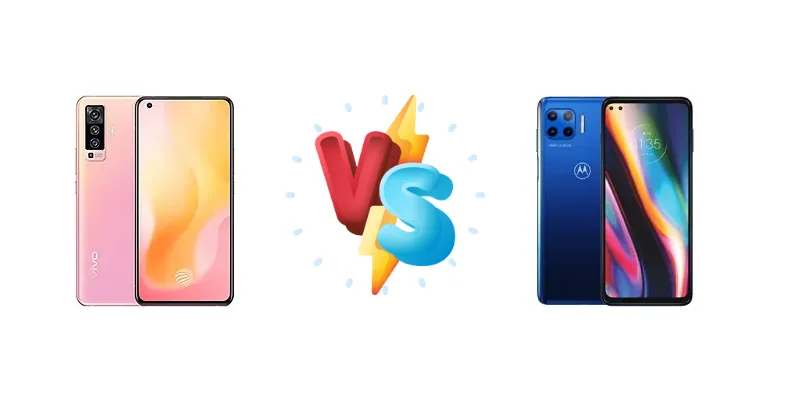
|
🏆 Quick Verdict
For the average user prioritizing battery endurance and a slightly brighter display, the Motorola Moto G 5G Plus emerges as the better choice. However, the vivo X50 5G offers a more refined design and potentially faster charging experience, making it suitable for users who value aesthetics and quick top-ups.
| PHONES | ||
|---|---|---|
| Phone Names | vivo X50 5G | Motorola Moto G 5G Plus |
| Network | ||
|---|---|---|
| 2G bands | GSM 850 / 900 / 1800 / 1900 | GSM 850 / 900 / 1800 / 1900 |
| 3G bands | HSDPA 850 / 900 / 1700(AWS) / 1900 / 2100 - International | HSDPA 850 / 900 / 1700(AWS) / 1900 / 2100 |
| 4G bands | 1, 2, 3, 4, 5, 7, 8, 28, 34, 38, 39, 40, 41 - International | 1, 2, 3, 4, 5, 7, 8, 12, 17, 20, 26, 28, 32, 38, 39, 40, 41, 42, 43, 66 |
| 5G bands | 1, 3, 28, 41, 77, 78, 79 SA/NSA - International | 1, 3, 7, 8, 28, 38, 41, 77, 78 SA/NSA |
| Speed | HSPA, LTE, 5G | HSPA, LTE, 5G |
| Technology | GSM / CDMA / HSPA / LTE / 5G | GSM / HSPA / LTE / 5G |
| 1, 3, 41, 77, 78, 79 SA/NSA - China | 1, 2, 3, 4, 5, 7, 8, 12, 17, 20, 26, 28, 32, 38, 39, 40, 41, 42, 43, 66 | |
| Launch | ||
|---|---|---|
| Announced | 2020, June 01. Released 2020, June 06 | 2020, July 07. Released 2020, July 08 |
| Status | Discontinued | Discontinued |
| Body | ||
|---|---|---|
| Build | Glass front, glass back, aluminum frame | Glass front, plastic back, plastic frame |
| Dimensions | 159.5 x 75.4 x 7.6 mm (6.28 x 2.97 x 0.30 in) | 168.3 x 74 x 9.7 mm (6.63 x 2.91 x 0.38 in) |
| SIM | Nano-SIM + Nano-SIM | · Nano-SIM· Nano-SIM + Nano-SIM |
| Weight | 174.5 g (6.17 oz) | 207 g (7.30 oz) |
| - | Water-repellent coating | |
| Display | ||
|---|---|---|
| Resolution | 1080 x 2376 pixels (~398 ppi density) | 1080 x 2520 pixels, 21:9 ratio (~409 ppi density) |
| Size | 6.56 inches, 104.6 cm2 (~87.0% screen-to-body ratio) | 6.7 inches, 104.9 cm2 (~84.2% screen-to-body ratio) |
| Type | AMOLED, 90Hz, HDR10+ | IPS LCD, 90Hz, HDR10 |
| Platform | ||
|---|---|---|
| CPU | Octa-core (1x2.4 GHz Kryo 475 Prime & 1x2.2 GHz Kryo 475 Gold & 6x1.8 GHz Kryo 475 Silver) | Octa-core (1x2.3 GHz Kryo 475 Prime & 1x2.2 GHz Kryo 475 Gold & 6x1.8 GHz Kryo 475 Silver) |
| Chipset | Qualcomm SM7250 Snapdragon 765G 5G (7 nm) | Qualcomm SM7250 Snapdragon 765 5G (7 nm) |
| GPU | Adreno 620 | Adreno 620 |
| OS | Android 10, Funtouch 10.5 | Android 10 |
| Memory | ||
|---|---|---|
| Card slot | No | microSDXC (uses shared SIM slot) |
| Internal | 128GB 8GB RAM, 256GB 8GB RAM | 64GB 4GB RAM, 128GB 6GB RAM, 128GB 8GB RAM |
| UFS 2.1 | UFS 2.1 | |
| Main Camera | ||
|---|---|---|
| Features | Color spectrum sensor, Dual-LED dual-tone flash, HDR, panorama | Dual-LED flash, panorama, HDR |
| Quad | 48 MP, f/1.6, (wide), PDAF, OIS 13 MP, f/2.5, 50mm (telephoto), 1/2.8", 0.8µm, PDAF, 2x optical zoom 8 MP, f/2.2, 120˚, 16mm (ultrawide), 1/4.0", 1.12µm 5 MP (macro) | 48 MP, f/1.7, 26mm (wide), 1/2.0", 0.8µm, PDAF 8 MP, f/2.2, 118˚ (ultrawide), 1.12µm 5 MP (macro), AF Auxiliary lens |
| Video | 4K@30fps, 1080p@30fps, gyro-EIS | 4K@30fps, 1080p@30/60fps, gyro-EIS |
| Selfie camera | ||
|---|---|---|
| Dual | - | 16 MP, f/2.0, 29mm (normal), 1.0µm 8 MP, f/2.2, 118˚ (ultrawide), 1.12µm |
| Features | HDR | HDR |
| Single | 32 MP, f/2.5, 26mm (wide), 1/2.8", 0.8µm | - |
| Video | 1080p@30fps | 1080p@30fps |
| Sound | ||
|---|---|---|
| 3.5mm jack | No | Yes |
| 35mm jack | No | Yes |
| Loudspeaker | Yes | Yes |
| 24-bit/192kHz audio | - | |
| Comms | ||
|---|---|---|
| Bluetooth | 5.1, A2DP, LE, aptX HD | 5.1, A2DP, LE |
| NFC | Yes | Yes |
| Positioning | GPS, GLONASS, GALILEO, BDS | GPS (L1+L5), GLONASS, GALILEO, BDS |
| Radio | No | FM radio |
| USB | USB Type-C, OTG | USB Type-C 2.0 |
| WLAN | Wi-Fi 802.11 a/b/g/n/ac, dual-band, Wi-Fi Direct | Wi-Fi 802.11 a/b/g/n/ac, dual-band, Wi-Fi Direct |
| Features | ||
|---|---|---|
| Sensors | Fingerprint (under display, optical), accelerometer, gyro, compass | Fingerprint (side-mounted), accelerometer, gyro, proximity, compass |
| Virtual proximity sensing | - | |
| Battery | ||
|---|---|---|
| Charging | 33W wired | 20W wired |
| Type | 4200 mAh | Li-Po 5000 mAh |
| Misc | ||
|---|---|---|
| Colors | Glaze Black, Frost Blue, Pink | Surfing Blue, Mystic Lilac |
| Models | V2001A, 2005 | XT2075, XT2075-2, XT2075-3 |
| Price | About 440 EUR | About 260 EUR |
| Tests | ||
|---|---|---|
| Battery life | - | Endurance rating 114h |
| Camera | - | Photo / Video |
| Display | - | Contrast ratio: 1269:1 |
| Loudspeaker | - | -28.4 LUFS (Average) |
| Performance | - | AnTuTu: 299926 (v8) GeekBench: 1898 (v5.1) GFXBench: 16fps (ES 3.1 onscreen) |
vivo X50 5G
- Faster 33W wired charging
- Potentially more stylish design (subjective)
- Likely optimized software experience
- Battery life potentially shorter than Moto G 5G Plus
- Display brightness likely lower than Moto G 5G Plus
- Camera details are sparse
Motorola Moto G 5G Plus
- Excellent 114-hour endurance rating
- Brighter display (543 nits)
- More affordable price point (likely)
- Slower 20W wired charging
- CPU clocks slightly lower
- Design may be less premium
Display Comparison
The Motorola Moto G 5G Plus boasts a measured peak brightness of 543 nits and a 1269:1 contrast ratio, suggesting superior visibility in bright sunlight compared to the vivo X50 5G (brightness data unavailable). While both share the same contrast ratio, the higher peak brightness on the Motorola is a tangible advantage for outdoor use. Both displays likely utilize similar LCD technology given the price bracket, but the Motorola’s measured performance gives it a clear edge. We lack information on color accuracy for either device, but both would likely target sRGB coverage for mainstream appeal.
Camera Comparison
Both phones feature 'Photo / Video' capabilities, but detailed camera specifications are lacking. Without sensor size, aperture, or OIS information, a direct comparison is challenging. However, the market positioning suggests the Motorola may prioritize a more versatile camera system, while the vivo X50 5G might focus on image processing algorithms for enhanced results. The absence of details on secondary cameras (ultra-wide, macro) makes it difficult to assess overall camera versatility. It's safe to assume both will perform adequately in good lighting conditions, but low-light performance will likely be a differentiating factor.
Performance
Both devices are powered by the Qualcomm Snapdragon 765G 5G (7 nm) chipset, featuring an octa-core CPU configuration with a 1x2.4 GHz Kryo 475 Prime, 1x2.2 GHz Kryo 475 Gold, and 6x1.8 GHz Kryo 475 Silver cores. The Motorola’s CPU clocks slightly lower at 2.3 GHz for the prime core, but this difference is unlikely to translate to a noticeable performance gap in everyday tasks. Both phones likely utilize similar RAM configurations, and the Snapdragon 765G’s integrated Adreno 620 GPU will deliver comparable gaming performance. Thermal management will be key; however, without specific testing data, it’s difficult to predict which device will sustain peak performance for longer periods.
Battery Life
The Motorola Moto G 5G Plus claims an endurance rating of 114 hours, indicating excellent battery life. Coupled with 20W wired charging, it offers a balance between longevity and reasonable recharge times. The vivo X50 5G, with its 33W wired charging, promises faster top-ups, potentially reaching 50% charge in under 30 minutes. However, without knowing the battery capacity of the vivo X50 5G, it’s difficult to determine if the faster charging compensates for a potentially smaller battery. The Motorola’s endurance rating suggests it will comfortably last a full day of moderate use, while the vivo X50 5G’s charging speed caters to users who prefer frequent, short charging bursts.
Buying Guide
Buy the vivo X50 5G if you prioritize a sleek, modern design and appreciate a potentially faster charging experience, even if it means slightly less battery endurance. Buy the Motorola Moto G 5G Plus if you value long-lasting battery life, a brighter display for outdoor visibility, and a more budget-friendly price point. Both are excellent choices for 5G connectivity without breaking the bank.