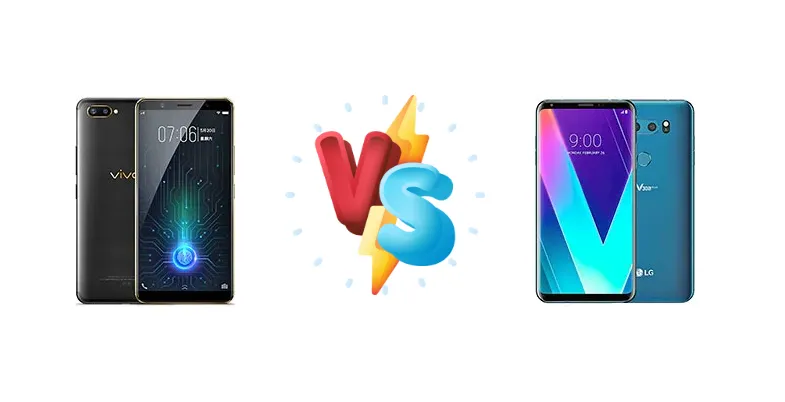
The vivo X20 Plus UD and LG V30S ThinQ represent different eras of smartphone design and performance. The X20 Plus UD aimed for an innovative in-display fingerprint sensor, while the V30S ThinQ focused on a premium camera experience and refined design. Let's dive into a head-to-head comparison to see which phone holds up best today.
🏆 Quick Verdict
The LG V30S ThinQ ultimately edges out the vivo X20 Plus UD. While the X20 Plus UD's in-display fingerprint was a novelty, the V30S's superior Snapdragon 835 chipset, better camera capabilities, and faster charging make it the more compelling choice for most users, especially considering its age.
| Network |
|---|
| 2G bands | GSM 900 / 1800 | GSM 850 / 900 / 1800 / 1900 |
| 3G bands | HSDPA 850 / 900 / 1900 / 2100 | HSDPA 850 / 900 / 1700(AWS) / 1800 / 1900 / 2100 |
| 4G bands | 1, 2, 3, 4, 5, 8, 38, 39, 40, 41 | 1, 2, 3, 4, 5, 7, 12, 13, 20, 25, 26, 41 |
| Speed | HSPA 42.2/5.76 Mbps, LTE (2CA) Cat6 300/50 Mbps | HSPA 42.2/5.76 Mbps, LTE (4CA) Cat16 1024/150 Mbps |
| Technology | GSM / CDMA / HSPA / LTE | GSM / HSPA / LTE |
| | CDMA 800 & TD-SCDMA | - |
| Launch |
|---|
| Announced | 2018, January. Released 2018, January | 2018, February. Released 2018, March |
| Status | Discontinued | Discontinued |
| Body |
|---|
| Build | Glass front, aluminum back, aluminum frame | Glass front (Gorilla Glass 5), glass back (Gorilla Glass 5), aluminum frame |
| Dimensions | 155.3 x 80.1 x 7.5 mm (6.11 x 3.15 x 0.30 in) | 151.7 x 75.4 x 7.3 mm (5.97 x 2.97 x 0.29 in) |
| SIM | Nano-SIM + Nano-SIM | · Nano-SIM· Nano-SIM + Nano-SIM |
| Weight | 181.5 g (6.42 oz) | 158 g (5.57 oz) |
| | - | IP68 dust/water resistant (up to 1.5m for 30 mins)
MIL-STD-810G compliant*
*does not guarantee ruggedness or use in extreme conditions |
| Display |
|---|
| Protection | - | Corning Gorilla Glass 5 |
| Resolution | 1080 x 2160 pixels, 18:9 ratio (~376 ppi density) | 1440 x 2880 pixels, 18:9 ratio (~538 ppi density) |
| Size | 6.43 inches, 106.7 cm2 (~85.8% screen-to-body ratio) | 6.0 inches, 92.6 cm2 (~80.9% screen-to-body ratio) |
| Type | Super AMOLED | P-OLED, HDR10, Dolby Vision |
| | - | Always-on display |
| Platform |
|---|
| CPU | Octa-core (4x2.2 GHz Kryo 260 Gold & 4x1.8 GHz Kryo 260 Silver) | Octa-core (4x2.45 GHz Kryo & 4x1.9 GHz Kryo) |
| Chipset | Qualcomm SDM660 Snapdragon 660 (14 nm) | Qualcomm MSM8998 Snapdragon 835 (10 nm) |
| GPU | Adreno 512 | Adreno 540 |
| OS | Android 7.1.1 (Nougat), Funtouch 3.2 | Android 8.0 (Oreo), LG UX 6 |
| Memory |
|---|
| Card slot | microSDXC (uses shared SIM slot) | microSDXC (dedicated slot) - single-SIM modelmicroSDXC (uses shared SIM slot) - dual-SIM model |
| Internal | 128GB 4GB RAM | 128GB 6GB RAM, 256GB 6GB RAM |
| | eMMC 5.1 | - |
| Main Camera |
|---|
| Dual | 12 MP, f/1.8, AF
Auxiliary lens | 16 MP, f/1.6, 30mm (standard), 1/3.1", 1.0µm, PDAF, 3-axis OIS
13 MP, f/1.9, 13mm (ultrawide), 1/3.4", 1.0µm |
| Features | LED flash, HDR, panorama | Laser AF, color spectrum sensor, LED flash, HDR, panorama |
| Video | 1080p@30fps | 4K@30fps, 1080p@30/60fps, 720p@120fps, 24-bit/192kHz stereo sound rec., HDR video |
| Selfie camera |
|---|
| Single | 12 MP, f/2.0, (wide), 1/2.8", 1.28µm | 5 MP, f/2.2, 22mm (wide), 1/5.0", 1.12µm |
| Video | - | 1080p@30fps |
| Sound |
|---|
| 3.5mm jack | Yes | Yes |
| 35mm jack | Yes | Yes |
| Loudspeaker | Yes | Yes |
| | 32-bit/192kHz audio
| 32-bit/192kHz audio
B&O Play certified
24-bit/48kHz audio recording
|
| Comms |
|---|
| Bluetooth | 5.0, A2DP, LE | 5.0, A2DP, LE, aptX HD |
| NFC | No | Yes |
| Positioning | GPS | GPS, GLONASS, GALILEO |
| Radio | No | Stereo FM radio with RDS |
| USB | microUSB 2.0, OTG | USB Type-C 3.1 |
| WLAN | Wi-Fi 802.11 a/b/g/n/ac, dual-band, Wi-Fi Direct | Wi-Fi 802.11 a/b/g/n/ac, dual-band, Wi-Fi Direct, DLNA |
| Features |
|---|
| Sensors | Fingerprint (under display, optical), accelerometer, proximity, compass | Fingerprint (rear-mounted), accelerometer, gyro, proximity, compass, barometer |
| Battery |
|---|
| Charging | 22.5W wired | 18W wired, PD2.0, QC3, 50% in 36 min
10W wireless |
| Type | Li-Ion 3900 mAh, non-removable | Li-Po 3300 mAh, non-removable |
| Misc |
|---|
| Colors | Matte Black, Gold, Rose gold | New Maroccan Blue, New Platinum Gray |
| Models | - | US998R |
| Price | About 550 EUR | About 300 EUR |
vivo X20 Plus UD
- Large 6.41-inch display
- In-display fingerprint sensor (early implementation)
- Decent battery capacity
- Weaker processor
- Less impressive camera
- Slower charging compared to V30S
LG V30S ThinQ
- Powerful Snapdragon 835 chipset
- Excellent camera system
- Fast charging (PD2.0, QC3)
- Wireless charging
- Smaller battery capacity than X20 Plus UD
- Older design
Display Comparison
The vivo X20 Plus UD boasts a larger 6.41-inch AMOLED display, offering a more immersive viewing experience. The LG V30S ThinQ features a 6.0-inch OLED display with a slightly higher resolution (QHD+ vs FHD+). Both offer vibrant colors and deep blacks, but the V30S's smaller size might be preferred by those who find larger phones unwieldy.
Camera Comparison
The LG V30S ThinQ consistently received praise for its camera system. It features a dual-lens setup with a wide-angle lens, offering versatility in photography. While the vivo X20 Plus UD has a dual-lens setup as well, the V30S's image processing and overall camera quality are noticeably superior, especially in low-light conditions.
Performance
Here, the LG V30S ThinQ shines. Its Snapdragon 835 chipset is significantly more powerful than the vivo X20 Plus UD's Snapdragon 660. This translates to smoother multitasking, faster app loading times, and better performance in demanding games. The V30S simply offers a more responsive and fluid user experience.
Battery Life
The vivo X20 Plus UD has a larger battery capacity (3905 mAh) compared to the LG V30S ThinQ (3300 mAh). However, the V30S's more efficient Snapdragon 835 and faster charging (including PD2.0 and QC3) often result in comparable or even better real-world battery life. The 22.5W charging on the X20 Plus UD is decent, but not as versatile as the V30S's options.
Buying Guide
The vivo X20 Plus UD might appeal to those fascinated by early in-display fingerprint technology and who prioritize a larger screen. However, the LG V30S ThinQ is a better option for users seeking a more powerful processor, a consistently excellent camera, and faster charging, even if it's an older device.
Frequently Asked Questions
❓ Is the in-display fingerprint sensor on the vivo X20 Plus UD reliable?
The in-display fingerprint sensor on the X20 Plus UD was a pioneering feature, but it wasn't as fast or reliable as traditional fingerprint sensors of the time. It's also likely to be less accurate now due to software updates.
❓ Which phone is better for gaming?
The LG V30S ThinQ is significantly better for gaming due to its more powerful Snapdragon 835 chipset. It will handle demanding games with smoother performance and less lag.