
vivo X100s Pro vs OnePlus 12R: A Head-to-Head Flagship Showdown
| Phones Images | |||||
|---|---|---|---|---|---|
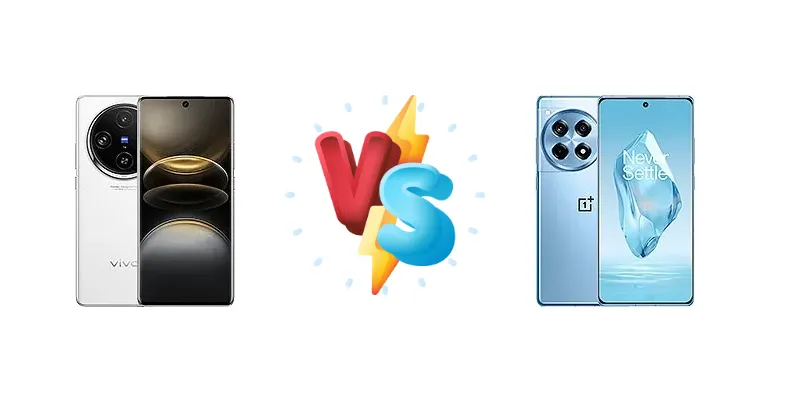
|
🏆 Quick Verdict
For the power user prioritizing raw performance and fastest charging, the vivo X100s Pro takes the lead. However, the OnePlus 12R delivers exceptional battery life and a very competitive experience at a potentially lower price point, making it the smarter choice for those valuing longevity and value.
| PHONES | ||
|---|---|---|
| Phone Names | vivo X100s Pro | OnePlus 12R |
| Network | ||
|---|---|---|
| 2G bands | GSM 850 / 900 / 1800 / 1900 | GSM 850 / 900 / 1800 / 1900 |
| 3G bands | HSDPA 800 / 850 / 900 / 1700(AWS) / 1900 / 2100 | HSDPA 850 / 900 / 1700(AWS) / 1900 / 2100 |
| 4G bands | 1, 2, 3, 4, 5, 7, 8, 12, 17, 18, 19, 26, 28, 34, 38, 39, 40, 41 | 1, 2, 3, 4, 5, 7, 8, 12, 17, 18, 19, 20, 26, 28, 32, 38, 39, 40, 41, 66 |
| 5G bands | 1, 3, 5, 8, 28, 38, 40, 41, 77, 78, 79 SA/NSA | 1, 2, 3, 5, 7, 8, 12, 20, 28, 38, 40, 41, 66, 77, 78 SA/NSA |
| Speed | HSPA, LTE, 5G | HSPA, LTE, 5G |
| Technology | GSM / CDMA / HSPA / LTE / 5G | GSM / CDMA / HSPA / LTE / 5G |
| Launch | ||
|---|---|---|
| Announced | 2024, May 13 | 2024, January 23 |
| Status | Available. Released 2024, May 17 | Available. Released 2024, February 06 |
| Body | ||
|---|---|---|
| Build | Glass front, aluminum frame, glass back | Glass front (Gorilla Glass Victus 2), aluminum frame, glass back |
| Dimensions | 164.1 x 75.3 x 8.9 mm (6.46 x 2.96 x 0.35 in) | 163.3 x 75.3 x 8.8 mm (6.43 x 2.96 x 0.35 in) |
| SIM | Nano-SIM + Nano-SIM | · Nano-SIM + Nano-SIM + eSIM (max 2 at a time)· Nano-SIM + Nano-SIM |
| Weight | 224 g (7.90 oz) | 207 g (7.30 oz) |
| Display | ||
|---|---|---|
| Protection | - | Corning Gorilla Glass Victus 2 |
| Resolution | 1260 x 2800 pixels, 20:9 ratio (~453 ppi density) | 1264 x 2780 pixels (~450 ppi density) |
| Size | 6.78 inches, 111.0 cm2 (~89.8% screen-to-body ratio) | 6.78 inches, 111.7 cm2 (~90.9% screen-to-body ratio) |
| Type | LTPO AMOLED, 1B colors, 120Hz, 3000 nits (peak) | LTPO4 AMOLED, 1B colors, 120Hz, HDR10+, Dolby Vision, 1600 nits (HBM), 4500 nits (peak) |
| Platform | ||
|---|---|---|
| CPU | Octa-core (1x3.4 GHz Cortex-X4 & 3x2.85 GHz Cortex-X4 & 4x2.0 GHz Cortex-A720) | Octa-core (1x3.2 GHz Cortex-X3 & 2x2.8 GHz Cortex-A715 & 2x2.8 GHz Cortex-A710 & 3x2.0 GHz Cortex-A510) |
| Chipset | Mediatek Dimensity 9300+ (4 nm) | Qualcomm SM8550-AB Snapdragon 8 Gen 2 (4 nm) |
| GPU | Immortalis-G720 MC12 | Adreno 740 |
| OS | Android 14, OriginOS 4 | Android 14, up to 3 major Android upgrades, OxygenOS 15 |
| Memory | ||
|---|---|---|
| Card slot | No | No |
| Internal | 256GB 12GB RAM, 512GB 16GB RAM, 1TB 16GB RAM | 128GB 8GB RAM, 256GB 8GB RAM, 256GB 12GB RAM, 256GB 16GB RAM |
| Main Camera | ||
|---|---|---|
| Features | Laser AF, color spectrum sensor, Zeiss optics, Zeiss T* lens coating, LED flash, panorama, HDR, 3D LUT import | Laser AF, color spectrum sensor, LED flash, HDR, panorama |
| Triple | 50 MP, f/1.8, 23mm (wide), 1/0.98", 1.6µm, dual pixel PDAF, OIS 50 MP, f/2.5, 100mm (periscope telephoto), 1/2", 0.7µm, PDAF (18cm - ∞), OIS, 4.3x optical zoom 50 MP, f/2.0, 15mm, 119˚ (ultrawide), 1/2.76", 0.64µm, AF | 50 MP, f/1.8, 24mm (wide), 1/1.56", 1.0µm, multi-directional PDAF, OIS 8 MP, f/2.2, 16mm, 112˚ (ultrawide), 1/4.0", 1.12µm 2 MP (macro) |
| Video | 8K@30fps (China model only), 4K@30/60fps, 1080p, gyro-EIS | 4K@30/60fps, 1080p@30/60/120/240fps, gyro-EIS, OIS |
| Selfie camera | ||
|---|---|---|
| Features | HDR | HDR, panorama |
| Single | 32 MP, f/2.0, 20mm (ultrawide) | 16 MP, f/2.4, 26mm (wide), 1/3", 1.0µm |
| Video | 4K@30/60fps, 1080p@30/60fps | 1080p@30fps, gyro-EIS |
| Sound | ||
|---|---|---|
| 35mm jack | No | No |
| Loudspeaker | Yes, with stereo speakers | Yes, with stereo speakers |
| Comms | ||
|---|---|---|
| Bluetooth | 5.4, A2DP, LE, aptX HD, LHDC | 5.3, A2DP, LE, aptX HD |
| Infrared port | Yes | Yes |
| NFC | Yes | Yes |
| Positioning | GPS (L1+L5), BDS (B1I+B1c+B2a+B2b), GALILEO (E1+E5a+E5b), QZSS (L1+L5), NavIC (L5), GLONASS | GPS, GALILEO, GLONASS, BDS, QZSS |
| Radio | No | No |
| USB | USB Type-C 3.2, OTG, DisplayPort | USB Type-C 2.0 |
| WLAN | Wi-Fi 802.11 a/b/g/n/ac/6/7, dual-band | Wi-Fi 802.11 a/b/g/n/ac/6/7, dual-band |
| Features | ||
|---|---|---|
| Sensors | Fingerprint (under display, optical), accelerometer, gyro, proximity, compass | Fingerprint (under display, optical), accelerometer, gyro, proximity, compass |
| Battery | ||
|---|---|---|
| Charging | 100W wired, 50% in 12 min 50W wireless Reverse wired | 100W wired, 100% in 26 min |
| Type | Li-Ion 5400 mAh | Li-Ion 5500 mAh |
| Misc | ||
|---|---|---|
| Colors | Titanium, White, Grey | Iron Gray, Cool Blue, Electric Violet, Sunset Dune |
| Models | V2324HA | CPH2609, CPH2585, CPH2611 |
| Price | About 640 EUR | € 410.84 / $ 399.95 / £ 649.00 |
| SAR | - | 1.19 W/kg (head) 0.82 W/kg (body) |
vivo X100s Pro
- Potentially faster CPU performance with Dimensity 9300+
- Ultra-fast 100W wired charging (50% in 12 mins)
- 50W wireless charging capability
- Battery life data currently unavailable
- Potential for thermal throttling under sustained load
OnePlus 12R
- Exceptional 14:32h active use battery life
- Mature Snapdragon 8 Gen 2 platform with optimized thermals
- Bright 1181 nit display for outdoor visibility
- Slightly slower charging speed (100% in 26 mins)
- May not match the X100s Pro in peak CPU performance
Display Comparison
The OnePlus 12R boasts a bright display, peaking at 1181 nits, ensuring excellent visibility outdoors. While the X100s Pro’s display specs are currently unavailable, vivo typically employs high-quality panels. The Snapdragon 8 Gen 2 in the 12R benefits from a mature display driver ecosystem, potentially offering optimized color accuracy and power efficiency. The 12R’s brightness is a concrete advantage, while the X100s Pro’s display quality will depend on its panel technology and calibration.
Camera Comparison
Without detailed camera specifications for the X100s Pro, a direct comparison is limited. However, vivo typically focuses on camera innovation. The Snapdragon 8 Gen 2 in the OnePlus 12R provides a robust image signal processor (ISP) capable of excellent image processing. The X100s Pro’s Dimensity 9300+ also includes a powerful ISP, but the ultimate image quality will depend on sensor size, lens quality, and software algorithms. We anticipate the X100s Pro will emphasize computational photography features, while the 12R will deliver a reliable and well-balanced camera experience.
Performance
The core difference lies in the chipsets: the vivo X100s Pro utilizes the Mediatek Dimensity 9300+ built on a 4nm process, featuring a unique CPU configuration with Cortex-X4 cores. This contrasts with the OnePlus 12R’s Snapdragon 8 Gen 2 (also 4nm) and its Cortex-X3 prime core. The Dimensity 9300+'s architecture, with more Cortex-X4 cores, suggests a potential edge in multi-threaded workloads. However, the Snapdragon 8 Gen 2 is renowned for its optimized thermal management, potentially leading to more sustained performance under heavy load. The 12R’s LPDDR5x RAM complements the Snapdragon, ensuring swift data access. The X100s Pro’s RAM specifications are unknown, but a similar configuration is expected.
Battery Life
The OnePlus 12R shines with a reported 14:32 hours of active use, indicating excellent battery endurance. The vivo X100s Pro, while offering 100W wired charging (50% in 12 minutes) and 50W wireless charging, lacks a comparable active use battery life figure. The 12R’s 100W charging achieves a full charge in 26 minutes. While the X100s Pro charges faster initially, the 12R’s longer battery life provides a more practical advantage for users who don’t want to constantly top up their device.
Buying Guide
Buy the vivo X100s Pro if you demand the absolute fastest processing speeds for demanding tasks like video editing or gaming, and if minimizing charging time is a top priority. Buy the OnePlus 12R if you prioritize all-day battery life, a consistently smooth experience, and a more budget-conscious approach to flagship features. The 12R is ideal for users who don't necessarily need the bleeding edge of performance but want a reliable and long-lasting device.